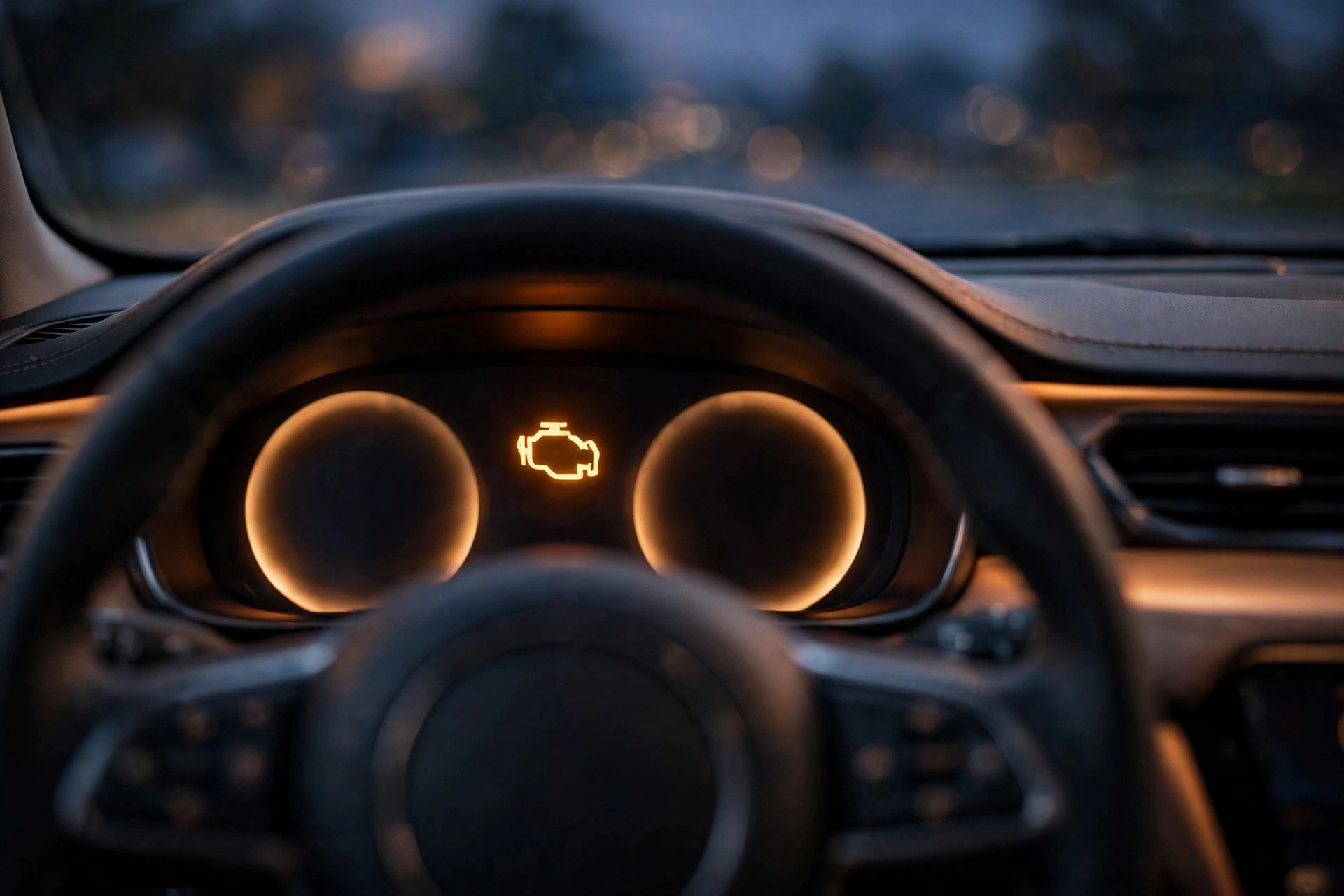
Your check engine light just came on, you plugged in a scanner (or a shop did), and now you're staring at a code like P0420 or P0171. It looks like a password. It isn't.
Every check engine code is a short message from your car's computer saying which system noticed a problem — and the 10 codes in this guide cover the large majority of the ones beginners ever see. For each one, you'll get the plain-English meaning, what you might notice while driving, the most common causes, how urgent it is, and the first check to make.
One important truth first: a code tells you where to look, not what part to replace. The code is the starting point of a diagnosis, never the diagnosis itself.
How to Read Any Code in 30 Seconds
Every code follows the same five-character pattern, set by the SAE J2012 standard. Take P0420 as an example:
- 1st character — letter: The system. P = powertrain (engine, transmission, emissions), B = body, C = chassis, U = network. In P0420, P means powertrain.
- 2nd character — digit: Who defined it. 0 = generic, same on every car; 1 = manufacturer-specific. In P0420, 0 means generic.
- 3rd character — digit: The sub-system. 0/1 = fuel and air, 2 = injectors/turbo, 3 = ignition/misfires, 4 = emissions/EVAP/catalyst. In P0420, 4 means emissions.
- Last two digits: The specific fault. In P0420, 20 means catalyst efficiency.
So P0420 reads as: powertrain, generic code, emissions system, catalyst efficiency problem. Almost every code a beginner sees starts with P0 — a generic powertrain code that means the same thing on a Honda, a Ford, or a Toyota. Codes starting with P1 are manufacturer-specific and need your car's own service information to decode properly.
A useful detail: not every stored code turns the light on. Your car can store "pending" codes — faults it has seen once but hasn't confirmed yet — which a scanner can still show you. That's one reason a free scan is worth doing even when the light is off but the car feels wrong.
Before You Chase a Code: 5 First Steps
Do these in order, before you buy anything or book anything.
- Look at how the light behaves. A solid light means a fault is stored — usually safe to drive cautiously while you get it checked, as long as the car feels normal. A flashing light means an active misfire is happening right now — slow down, ease off the accelerator, and get it checked as soon as possible. Unburned fuel from a misfire can overheat and damage the catalytic converter quickly.
- Note what the car is doing. Rough idle? Hesitation? Worse fuel economy? A smell? Write it down. Symptoms + code together are worth far more than either alone — and your mechanic will ask.
- Write the exact code down, letter for letter. P0171 and P0172 are opposites (too lean vs too rich). One wrong digit sends you down the wrong path entirely.
- Do NOT clear the code first. Clearing it erases the freeze-frame data — the snapshot of engine conditions when the fault happened — and it resets your car's emissions readiness monitors, which can cause a failed emissions test. Fix the cause first, then clear.
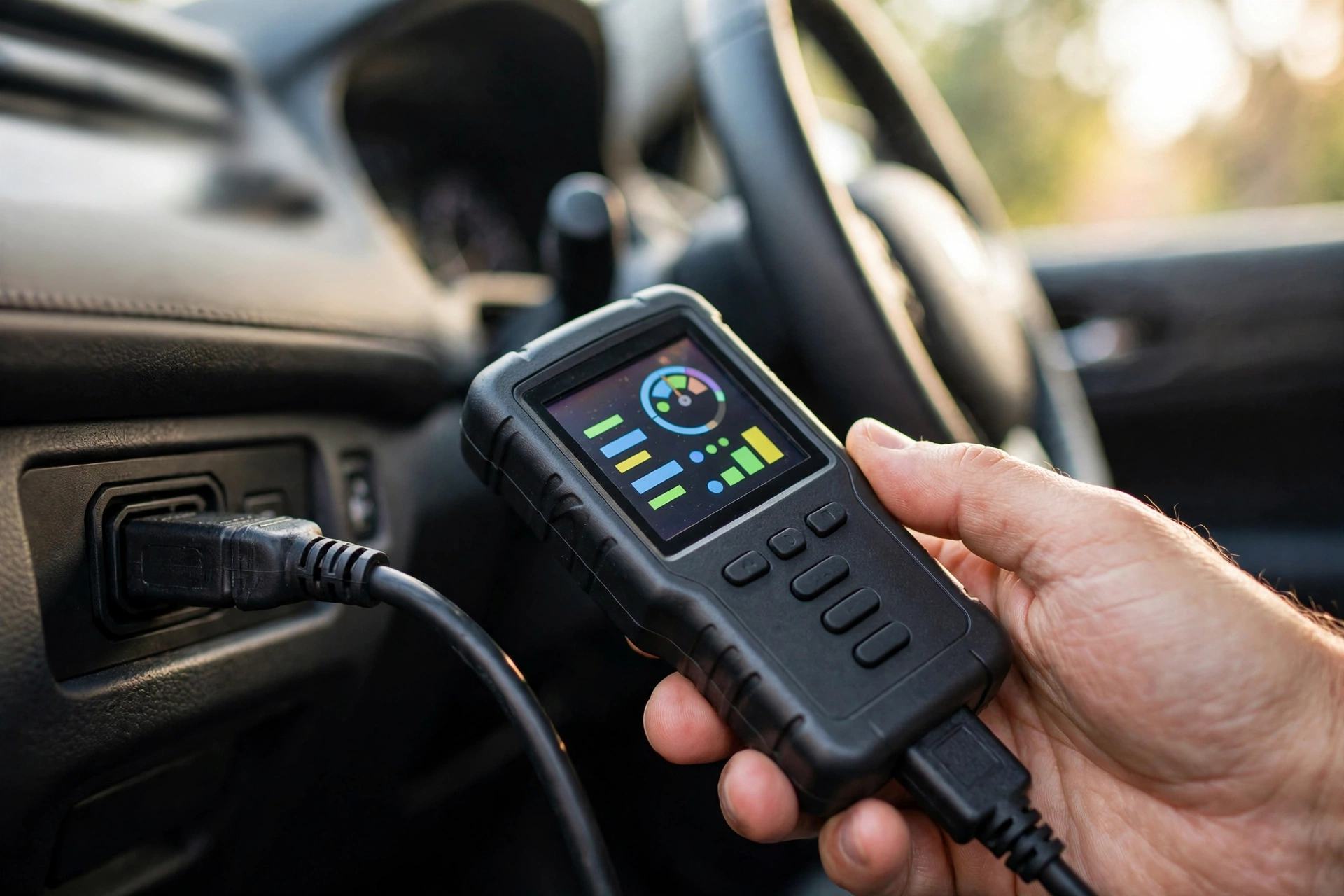
- Get the code read properly. If you don't own a scanner, many auto parts stores in the US will read codes for free, and a basic Bluetooth scanner costs less than one diagnostic visit. Our step-by-step guide walks you through your first scan: How to Use an OBD2 Scanner for the First Time.
The 10 Most Common Check Engine Light Codes
Each code below has an urgency rating so you know how fast to act: Low means book a visit soon, but no need to panic; Moderate means get it checked within days; High means limit driving and see a mechanic promptly — and stop driving if the light is flashing.
1. P0300 — Random or Multiple Cylinder Misfire
Plain English: One or more cylinders are failing to fire properly, and the computer can't pin it on a single cylinder.
What you might notice: Rough idle, shaking, hesitation when you accelerate, worse fuel economy. If the light is flashing with this code, the misfire is happening right now.
Most common causes: Worn spark plugs (the usual suspect — copper plugs last roughly 30,000 miles, iridium up to about 100,000), a failing ignition coil, a vacuum leak, or low fuel pressure.
Urgency: High — especially if the light is flashing. A misfire dumps unburned fuel into the exhaust, which can destroy the catalytic converter.
First check: When did the spark plugs last get changed? If you don't know, or it's been years, that's the first thing a mechanic will look at.
2. P0171 — System Too Lean (Bank 1)
Plain English: The engine is getting too much air (or too little fuel) on bank 1 — the side of the engine with cylinder 1. The computer is already adding as much fuel as it can, and it's still not enough.
What you might notice: Hesitation, rough idle, poor acceleration, sometimes a faint hissing sound from under the hood.
Most common causes: A vacuum leak (a cracked intake hose or PCV line is the classic one), a dirty mass airflow (MAF) sensor, or weak fuel pressure from a tired fuel pump or clogged fuel filter.
Urgency: Moderate — drive gently and book a visit within days. A lean engine runs hotter than it should.
First check: Listen for a hiss with the engine running and look for cracked or disconnected rubber hoses around the air intake. Don't spray anything into the engine bay — just look and listen.
3. P0420 — Catalyst System Efficiency Below Threshold (Bank 1)
Plain English: The catalytic converter — the part that cleans your exhaust — isn't cleaning as well as the computer expects.
What you might notice: Often nothing at all except the light. Sometimes slightly worse fuel economy, or a failed emissions test.
Most common causes: An ageing catalytic converter is the headline cause, but a bad downstream oxygen sensor or an exhaust leak near that sensor can set the exact same code — and those are far cheaper. An engine problem that damaged the converter (like a long-ignored misfire) is the other classic story.
Urgency: Moderate — but if P0420 shows up together with a misfire code like P0300, fix the misfire first. A misfire can kill a new converter too.
First check: Ask the mechanic to rule out an exhaust leak and check the oxygen sensor readings before anyone quotes you a new converter. Replacing a converter for a sensor problem is one of the most expensive beginner mistakes.
4. P0442 — EVAP System Small Leak Detected
Plain English: The EVAP system — which traps petrol vapour from your fuel tank so it doesn't escape into the air — found a small leak.
What you might notice: Usually nothing. The car drives exactly the same, which is why this code surprises people.
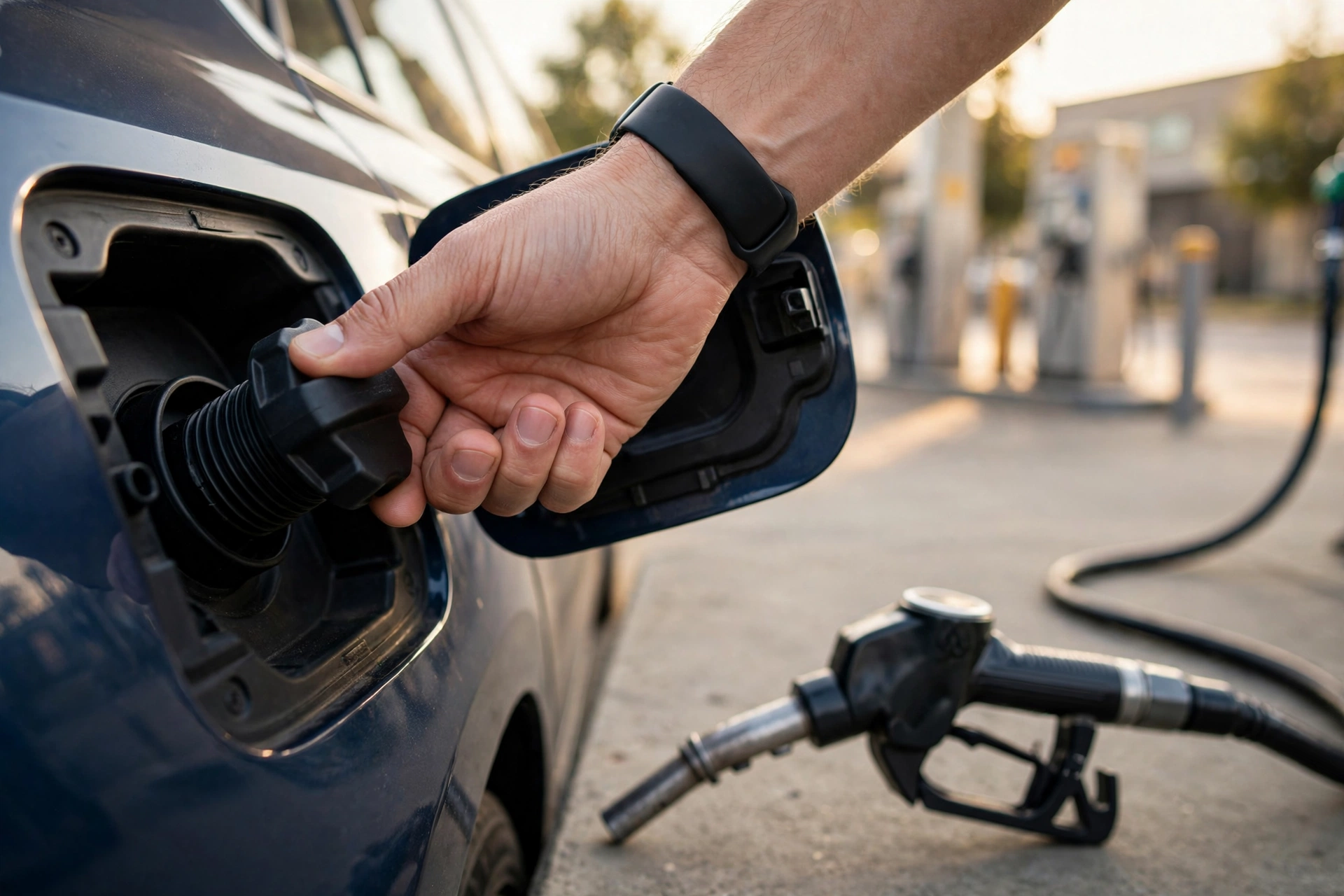
Most common causes: A loose or worn fuel cap is by far the most common cause, followed by a cracked EVAP hose or a purge or vent valve that doesn't seal fully.
Urgency: Low — but get it fixed before an emissions test, because a stored EVAP code can fail one.
First check: Tighten the fuel cap until it clicks, then drive normally for a few days. The light often clears by itself once the computer runs its EVAP self-test three times in a row without finding a problem — this can take several drive cycles over a few days. Our full guide to this exact moment: Check Engine Light Came On After Getting Gas?
5. P0455 — EVAP System Large Leak Detected
Plain English: Same system as P0442, but the leak is large — roughly a hole 0.04 inch across or bigger.
What you might notice: Usually nothing while driving. Sometimes a faint fuel smell near the car, or the fuel pump clicking off early when you fill up.
Most common causes: A missing or loose fuel cap, a disconnected EVAP hose, or a purge valve stuck open.
Urgency: Low — unless you smell fuel strongly, in which case get it checked the same day.
First check: Is the fuel cap even there, and is it tight? Then check whether the car is hard to start right after fuelling — that points to a purge valve stuck open, which is a useful detail for your mechanic.
6. P0128 — Coolant Temperature Below Thermostat Regulating Temperature
Plain English: The engine isn't warming up to its normal operating temperature — the thermostat is probably stuck open, so coolant flows through the radiator all the time.
What you might notice: The temperature gauge stays near cold or drops on the highway, the cabin heater blows lukewarm air, and fuel economy gets worse.
Most common causes: A thermostat stuck open is the usual answer. A faulty coolant temperature sensor, low coolant, or a cooling fan that won't shut off can also set it.
Urgency: Moderate — it's not an emergency like overheating, but a cold-running engine burns more fuel, heats poorly, and wears faster. Get it fixed soon.
First check: Watch the temperature gauge after 10 minutes of driving. If it never reaches the middle, tell the mechanic exactly that — it's the single most useful observation for this code.
7. P0101 — Mass Airflow (MAF) Sensor Circuit Range/Performance
Plain English: The sensor that measures how much air is entering the engine is reporting readings the computer doesn't trust.
What you might notice: Hesitation, rough idle, stalling at low speed, or the car feeling sluggish when you press the accelerator.
Most common causes: A dirty MAF sensor (dust and oil mist build up on its sensing wire), a damaged sensor, or an air leak between the sensor and the engine.
Urgency: Moderate — the car usually still drives, but a wrong air reading makes the engine run badly and can trigger other codes.
First check: Look at the air filter — a very dirty or damaged one lets debris reach the sensor. MAF sensors can sometimes be cleaned with a dedicated MAF cleaner spray, but never poke the sensing wire with anything; it's fragile and expensive.
8. P0172 — System Too Rich (Bank 1)
Plain English: The opposite of P0171 — the engine is getting too much fuel (or too little air) on bank 1.
What you might notice: Strong fuel smell from the exhaust, black smoke, rough idle, and noticeably worse fuel economy.
Most common causes: A leaking fuel injector, a faulty oxygen sensor, a clogged air filter, or a fuel pressure regulator letting pressure run too high.
Urgency: Moderate — extra fuel washes oil off the cylinder walls and can damage the catalytic converter over time, so don't leave it for months.
First check: When was the air filter last changed? A choked filter is the cheapest possible cause and the easiest to rule out.
9. P0401 — Exhaust Gas Recirculation (EGR) Flow Insufficient
Plain English: The EGR system — which routes a small amount of exhaust gas back into the engine to lower combustion temperatures and cut nitrogen-oxide emissions — isn't flowing enough.
What you might notice: Often nothing obvious. Sometimes a slightly rough idle, a pinging or knocking sound under load, or a failed emissions test.
Most common causes: Carbon buildup blocking the EGR valve or its passages is the classic one, especially on higher-mileage cars. A faulty EGR valve or a bad sensor can also set it.
Urgency: Low to moderate — the car usually drives fine, but a blocked EGR system raises combustion temperatures and can cause engine knocking if ignored.
First check: Note your mileage and whether the car has mostly done short trips — carbon buildup is far more common in stop-start, short-journey cars. That's useful context for the mechanic.
10. P0700 — Transmission Control System Malfunction
Plain English: The transmission's own computer has found a fault and asked the engine computer to turn the check engine light on. P0700 itself never tells you what the transmission fault is — it's a messenger code.
What you might notice: Harsh or delayed gear changes, the car stuck in one gear (limp mode), or slipping between gears.
Most common causes: There is always a second, transmission-specific code stored alongside P0700 — that's the one that matters. Low or dirty transmission fluid is a common root cause, but the real answer lives in the transmission codes.
Urgency: High — transmission problems get expensive fast if you keep driving on them. If the car is slipping or stuck in gear, limit driving and see a mechanic promptly.
First check: Ask whoever scans the car to read the transmission codes too, not just the engine codes. A basic scanner often only shows P0700; a proper scan shows the code behind it. Never let anyone quote a transmission repair based on P0700 alone.
Which Codes Mean "Stop Driving Now"?
Quick reference for the moment the light comes on:
- Light is flashing (any code, usually a misfire) — slow down, ease off the accelerator, get checked as soon as possible.
- P0300 with shaking or power loss — limit driving; the converter is at risk.
- P0700 with slipping or stuck gears — limit driving; transmission damage gets expensive fast.
- Any code plus overheating, stalling, or a strong fuel smell — treat as urgent, even if the light isn't flashing.
- Solid light, car feels normal (e.g. P0442, P0455) — drive cautiously, book a visit soon.
If you're ever unsure, our flashing-vs-solid guide explains the difference in detail: Check Engine Light Flashing vs Solid: What Each Means.
What to Tell Your Mechanic (Copy This Script)
A good mechanic diagnoses faster — and charges you less — when you arrive with facts instead of just "the light is on." Say this:
"The check engine light came on [today / three days ago]. It's solid, not flashing. The code is [P____]. The car [idles rough / hesitates when I accelerate / feels totally normal]. It started after [getting fuel / a long drive / nothing I noticed]. Can you check the code and the freeze-frame data before replacing anything?"
Three things that script does for you: it gives the mechanic the code, the symptoms, and the timeline — and asking for the freeze-frame data signals that you expect a diagnosis, not a parts-guessing game. If you need help choosing a shop, read How to Find a Trustworthy Mechanic first.
3 Mistakes Beginners Make With Check Engine Codes
1. Clearing the code and hoping it stays off. It almost always comes back — and you've deleted the freeze-frame data that would have helped diagnose it. Worse, clearing resets the emissions readiness monitors, so you can fail an emissions test even after the repair.
2. Replacing the part named in the code. P0420 says "catalyst efficiency," not "replace the catalytic converter." An oxygen sensor or an exhaust leak sets the same code for a fraction of the price. A code names a system, not a part.
3. Ignoring a flashing light. A solid light is usually a "book a visit" situation. A flashing light is an active misfire — keep driving on it and you can turn a spark-plug job into a catalytic-converter job.
Frequently Asked Questions
Can I drive with the check engine light on?
It depends on the code and how the car feels. A solid light with a car that drives normally (like an EVAP code) is usually fine for a short, gentle drive to a mechanic. A flashing light, shaking, stalling, overheating, or a strong fuel smell means limit driving and get help promptly. When in doubt, slow down and get it checked the same day.
Will the check engine light turn itself off?
Sometimes. If the fault was temporary — a loose fuel cap is the classic example — the light can clear by itself after the computer runs its self-test a few times without finding the problem, which usually takes several days of normal driving. If the fault is still there, the light stays on.
Do I need a scanner, or can a shop read the code for me?
Either works. A basic Bluetooth OBD2 scanner is inexpensive and lets you read codes yourself in minutes. Many auto parts stores in the US also read codes for free. A shop scan costs more but comes with a professional diagnosis, which is what you want for anything beyond a loose fuel cap.
Are all P0 codes the same on every car?
Yes — that's the point of the "0" in the second position. Generic P0 codes (like P0300 or P0420) have the same SAE-defined meaning on every car sold in the US since 1996. Manufacturer-specific P1 codes vary by brand and need that brand's own information to decode.
My car has two codes at once — which one do I fix first?
Start with the code that explains the other one. A misfire code (P0300) can cause a catalyst code (P0420), and a lean code (P0171) can cause a misfire code — so fix the misfire or the lean condition first, clear the codes, and see which ones come back. A good mechanic works in that order too.
The Bottom Line
Check engine codes look intimidating, but they follow one simple pattern: a letter for the system, a digit for who defined it, and digits for the sub-system and the fault. The 10 codes in this guide — P0300, P0171, P0420, P0442, P0455, P0128, P0101, P0172, P0401, and P0700 — account for most of what a beginner will ever see. Learn to read the code, note how the car feels, don't clear it before it's diagnosed, and remember that the code points to a system, not a part.
Keep a note of the code and the symptoms on your phone. The next time that amber light appears, you'll know exactly what to ask — and exactly what not to pay for.
Sources: Code definitions and first-check guidance cross-checked against MotorBiscuit's 5 most common codes guide and the 33gears OBD2 code lookup, which covers generic SAE J2012 code meanings.