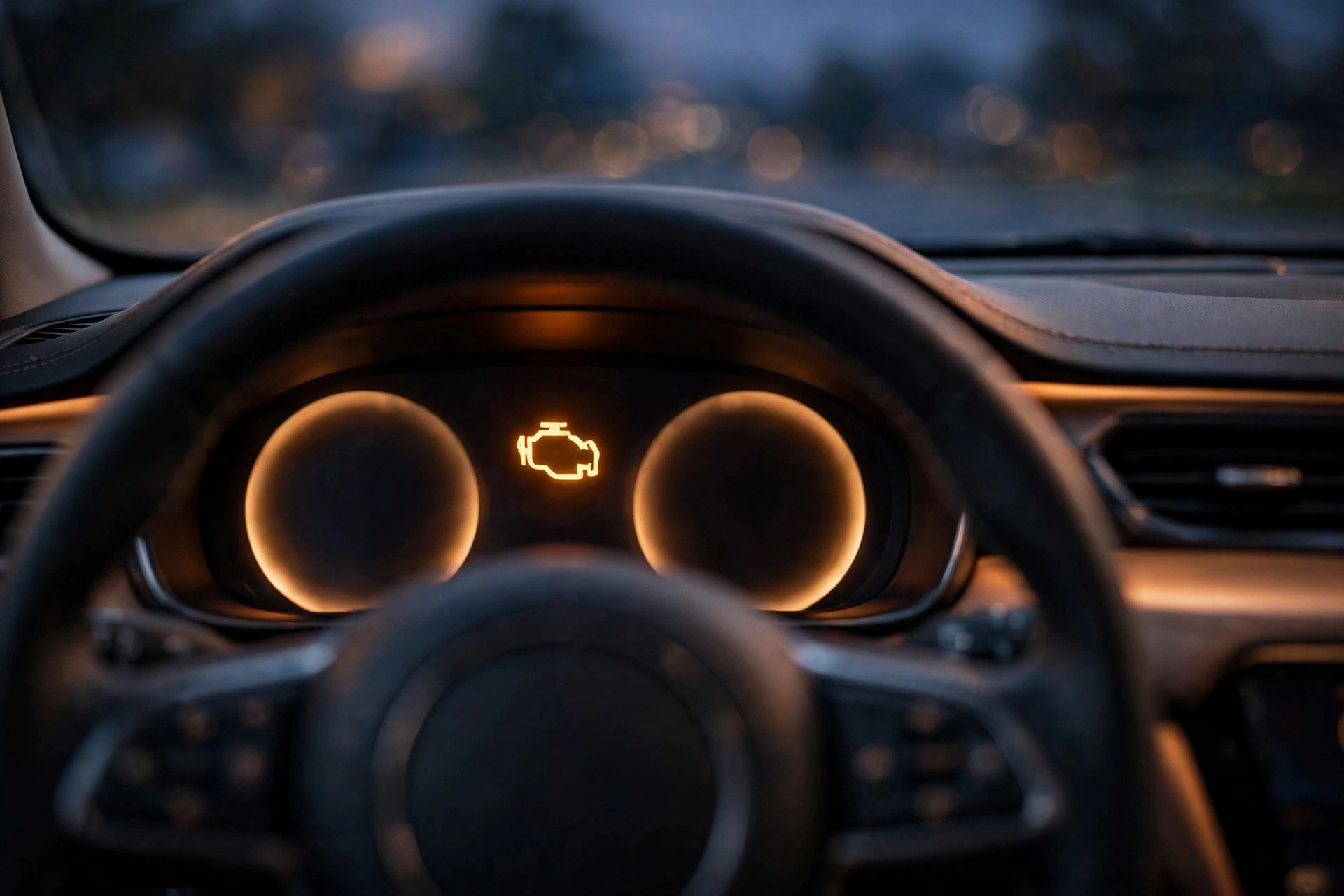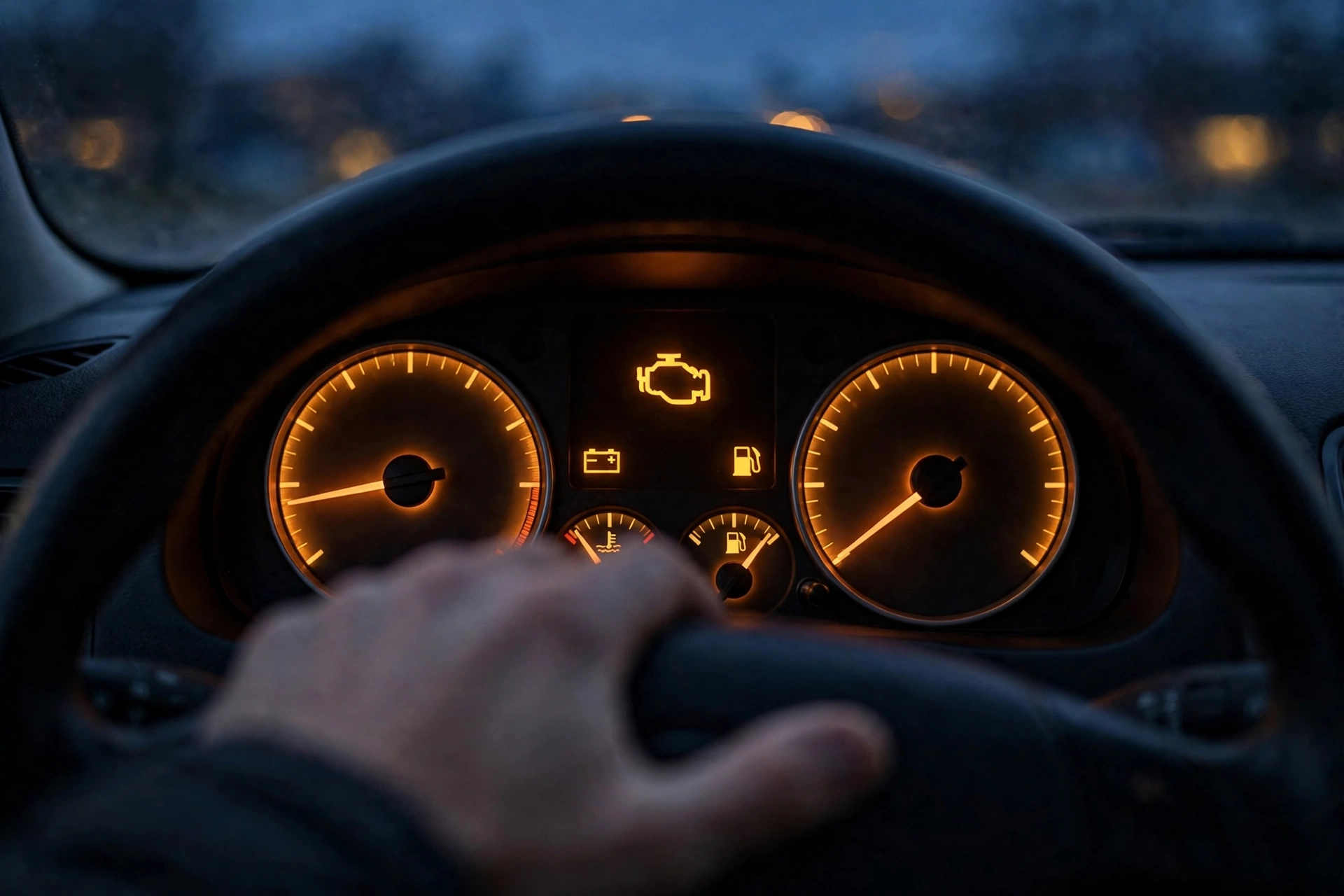
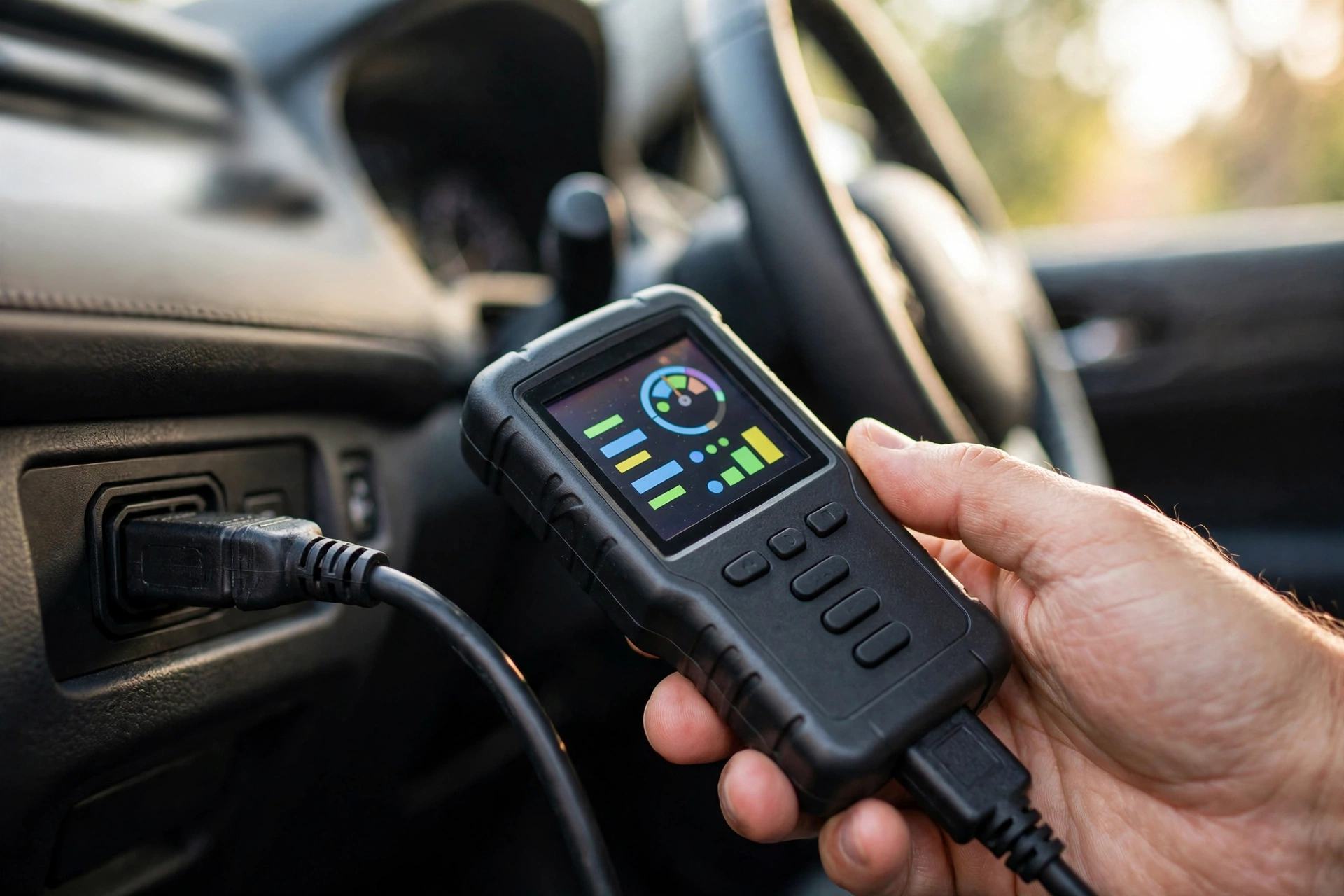
Your check engine light just came on — and your car is trying to tell you why. An OBD2 scanner lets you hear it: it plugs into a port under your dashboard, reads the fault codes your car's computer has stored, and turns a worrying orange light into a plain-English starting point.
A basic scan takes about ten minutes, needs no tools, and cannot damage your car if you follow the steps below.
What Is an OBD2 Scanner?
OBD2 stands for On-Board Diagnostics II. Since 1996, nearly every gasoline car and light truck sold in the US has carried the same standard system — petrol cars in Europe followed from 2001, diesels from 2004. When something goes wrong with the engine or emissions system, the car's computer stores a diagnostic trouble code (DTC) and usually switches on the check engine light.
A scanner reads those codes. Depending on the model, it can also show live data (engine speed, coolant temperature), freeze frame data (what the engine was doing when the fault was detected), and readiness monitors before an emissions test. It cannot repair anything, and a code is a clue, not a diagnosis: a "misfire on cylinder 2" code tells you where to look — not whether the cause is a spark plug, a coil, or a fuel injector.
What You Need Before You Start
- A scanner. A handheld code reader plugs into the port and has its own screen — simplest for a first scan. A small Bluetooth adapter sends results to a free app on your phone. Either works; avoid the cheapest unbranded adapters, which often drop the connection mid-scan.
- A compatible car. A 1996-or-newer gasoline model in the US (2001-or-newer petrol, 2004-or-newer diesel in Europe) has an OBD2 port; older cars use different systems.
- A safe place to park. Park on level ground, set the parking brake, and keep the car in Park — or Neutral with the brake on for a manual.
If the battery is weak, sort it first — low voltage can trigger misleading codes.
How to Use an OBD2 Scanner: 6 Steps
Step 1: Find the OBD2 Port
The port is a 16-pin trapezoid connector, usually under the dashboard on the driver's side, between the steering column and the door. In some cars it hides behind a small cover or just above the pedals — your owner's manual shows the exact spot. The plug only fits one way, so never force it.
Step 2: Plug In the Scanner
With the ignition off, push the connector firmly into the port until it seats. A handheld scanner usually powers on by itself; a Bluetooth adapter shows a small light. If nothing happens, wiggle it gently — a loose fit is the most common reason a scanner "doesn't work."
Step 3: Turn the Ignition to ON (Engine Off)
Turn the key to ON, or press the start button once without the brake, so the dashboard lights up but the engine does not start. This powers the car's computer so the scanner can talk to it. For a Bluetooth adapter, open the app and pair now.
Step 4: Enter Your Vehicle Information
Some scanners detect your car from its VIN; others ask for the year, make, model, and engine size. Either way, check the details are right — the wrong model gives the wrong code descriptions.
Step 5: Read the Codes — and the Freeze Frame
From the menu, choose "Read Codes." Write down each code in full, with its status — stored (confirmed), pending (seen once, not yet confirmed), or permanent (cannot be cleared until the fault is fixed). Photograph the screen as a backup. Then check "Freeze Frame": engine speed, temperature, and fuel trim when the fault was detected. A misfire code that only appears at high speed points somewhere very different from one at idle, so save this too.
Step 6: Look Up What Each Code Means
Your scanner shows a short description, but it is often too vague to act on. Search the full code (for example, "P0455") with your car's make and model to find the common causes. For a second walkthrough with screenshots, the beginner's guides from JB Tools and XTOOL cover the same steps.
How to Read an OBD2 Code
Every code has five characters, and each one means something. Take P0300:
- First character — the system: P = powertrain, B = body, C = chassis, U = network. Most beginner codes start with P.
- Second character: 0 means generic (same on every car); 1 means specific to your car's manufacturer.
- Third character — the subsystem: 3 means ignition or misfire; 4 means emissions control; 7 and 8 relate to the transmission.
- Last two digits — the specific fault: 00 in P0300 means random or multiple cylinder misfire. P0301 would be a misfire on cylinder 1 specifically.
The codes beginners meet most often:
- P0300 — Random/multiple cylinder misfire. Worn spark plugs, a failing ignition coil, or a vacuum leak are the usual causes. With a flashing check engine light, it means an active misfire — do not keep driving.
- P0420 — Catalyst efficiency below threshold. The catalytic converter is not cleaning exhaust gases as it should — but an exhaust leak or a tired oxygen sensor can cause it too, so do not order a converter on this code alone.
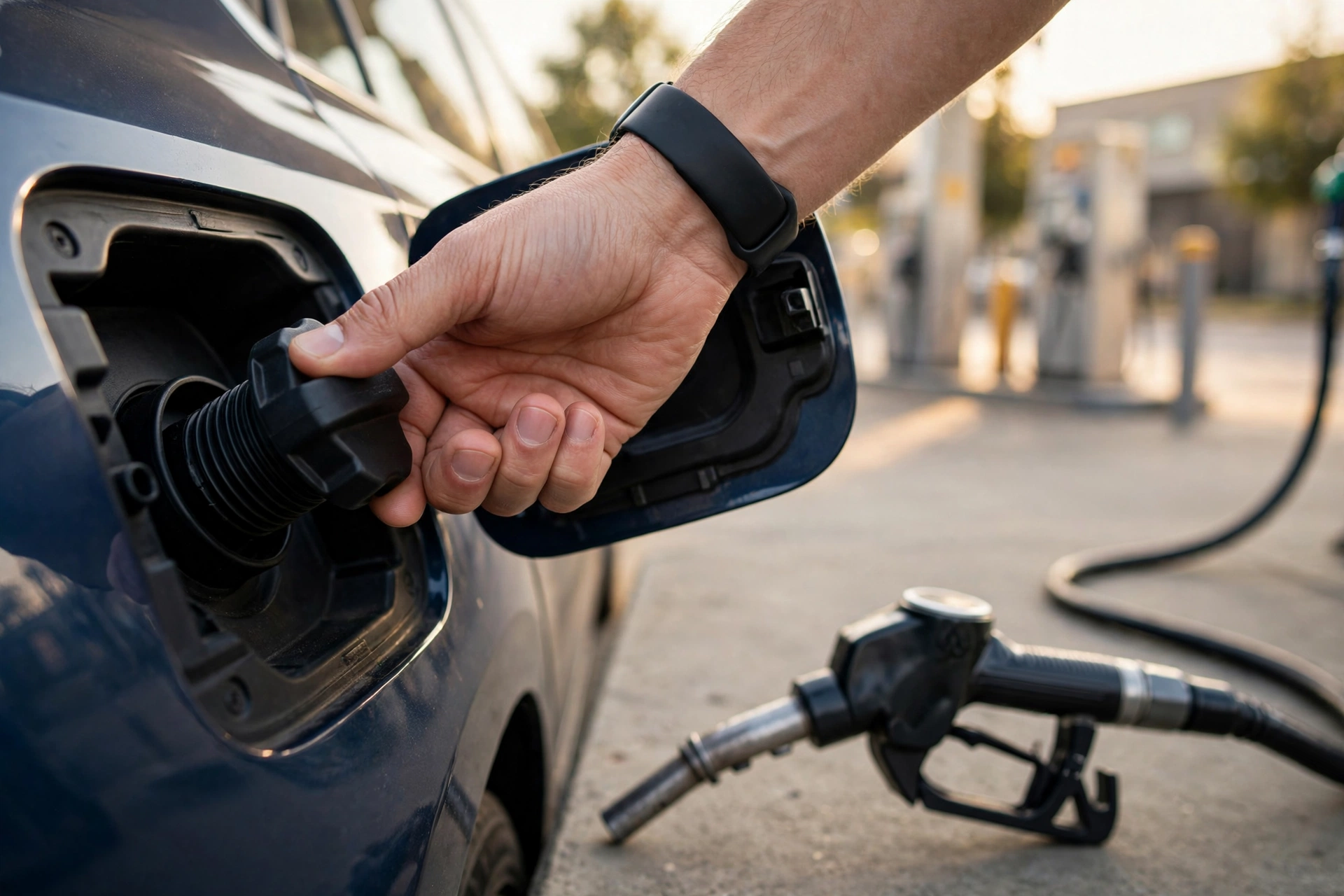
- P0455 — Evaporative emission leak (large). Often the simplest fix in car diagnostics: a loose, damaged, or missing fuel cap. Tighten it until it clicks and drive normally — the light often goes out on its own.
- P0442 — Evaporative emission leak (small). Same system as P0455, but a smaller leak — a cracked hose or worn fuel cap seal are typical causes.
- P0171 — System too lean (Bank 1). Too much air or too little fuel — a vacuum leak or a dirty mass airflow sensor are common causes. If the car also hesitates or idles roughly, get a mechanic's opinion.
The pattern matters: the same code can have several causes — check the cheap or simple one first.
What to Do After You Get a Code
- Safe to drive, fix soon: a steady check engine light with a code like P0455 (fuel cap) or P0442. Tighten the cap and book a repair if the light stays on.
- Book a mechanic this week: codes like P0420 or P0171 when the car still drives normally. Not emergencies, but they can turn expensive if ignored — a mechanic can confirm the cause before you buy parts.
- Stop driving and get help: a flashing check engine light, or any code with loud knocking, heavy smoke, a sudden loss of power, or the temperature gauge in the red. Continuing to drive can cause serious engine damage.
If you are unsure which category your code falls into, treat it as the more serious one and ask a mechanic — the exact code gets a far better answer than describing the light alone. With more than one code, start with the first that appeared: one fault often triggers the others.
4 Beginner Mistakes to Avoid
- Clearing the code before fixing the problem. Clearing turns the light off, but it also erases the code and freeze frame data your mechanic needs, and resets the readiness monitors — so your car may fail an emissions test until it completes a full drive cycle. Fix first, clear last — only after writing everything down.
- Ignoring pending codes. A pending code is an early warning, not a false alarm — if it appears more than once, the fault is real and developing.
- Replacing a part based on one code. A P0420 does not automatically mean a new catalytic converter, and a P0300 does not automatically mean new spark plugs. Confirm the cause first — or pay a mechanic for a diagnosis — before buying parts.
- Scanning with a dying battery. Low voltage creates phantom codes across several systems. Sort the battery first, then clear the codes and scan again after a normal drive.
Frequently Asked Questions
Can an OBD2 scanner damage my car?
Reading codes is safe — the scanner only asks the car's computer questions. Just avoid unplugging it mid-scan, and never touch settings or resets you do not understand. If a menu option says "reset," "relearn," or "calibration," leave it alone.
Will an OBD2 scanner work on my car?
It will if your car is a 1996-or-newer gasoline model in the US, a 2001-or-newer petrol car in Europe, or a 2004-or-newer diesel. Very old cars and some motorcycles use different systems — check your owner's manual if you are unsure.
Do I need to start the engine to scan?
No. For your first scan, ignition ON and engine OFF is right — some live-data checks need the engine running, but read the codes with it off first.
Why did my check engine light come back after I cleared the code?
Because clearing a code does not fix the fault — the computer re-runs its tests on the next few drives, finds the same problem, and switches the light back on.
The Bottom Line
An OBD2 scanner turns the check engine light from a mystery into a message. Plug it into the port under your dash, turn the ignition on, read the codes, and write them down first. Check the cheap and simple causes first, then use the decision guide above: drive on, book a mechanic this week, or stop right away. Ten minutes with a scanner will not make you a mechanic — but you will arrive with facts instead of guesses.