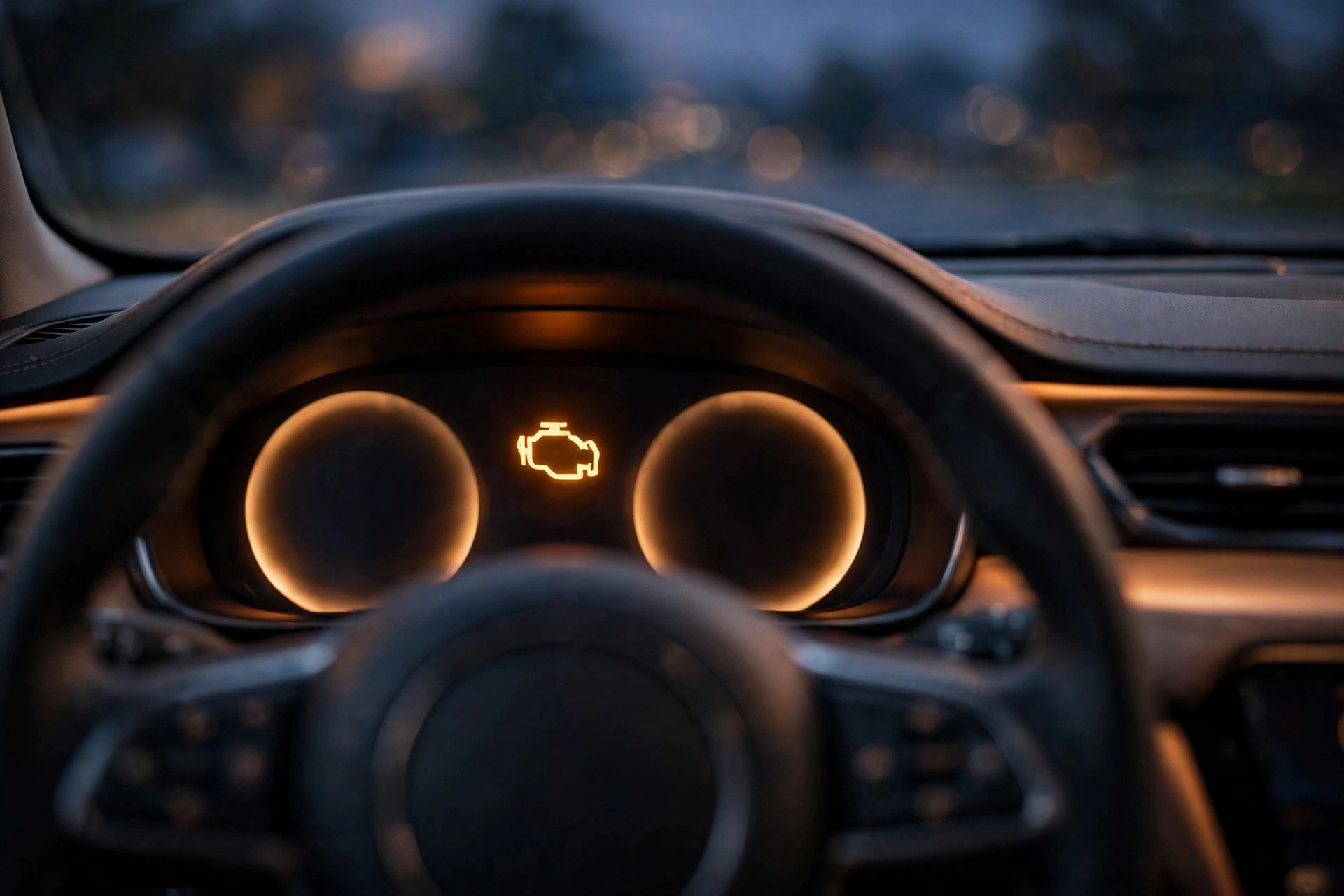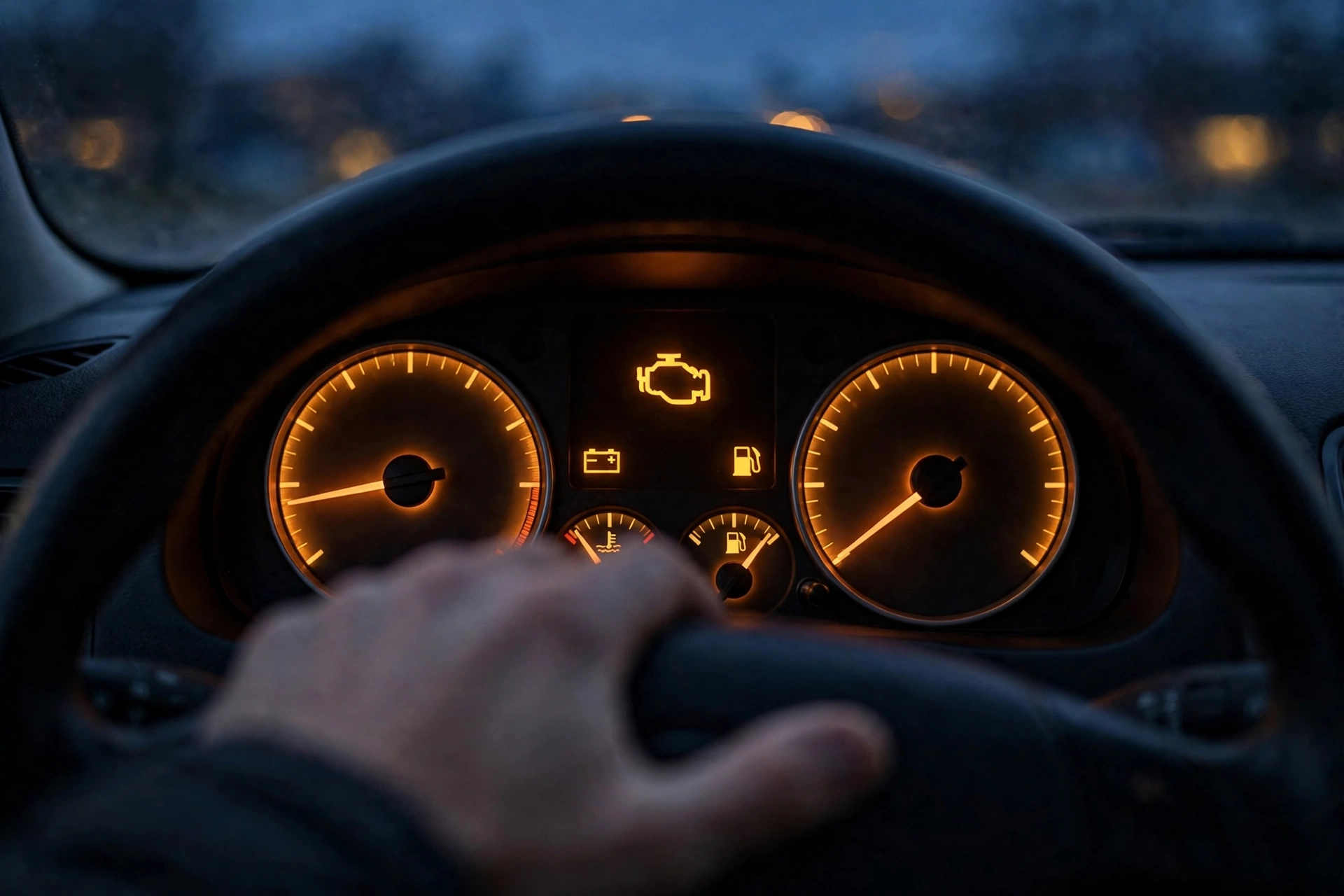
You fill up, pull away from the pump, and there it is: the amber check engine light, glowing on your dashboard. Your stomach drops. But before you imagine a huge repair bill, take a breath. If the light appeared right after getting gas, the most common cause is also the cheapest and easiest to fix: a loose or worn gas cap.
This guide walks you through the five-minute check, explains why the light does not switch off the second you tighten the cap, and shows you exactly when the problem is something else. No tools needed, no mechanical experience required.
Why a Loose Gas Cap Turns the Light On
Your car has a system called EVAP — short for evaporative emissions control — whose only job is to trap petrol vapour from the fuel tank so it does not escape into the air. The fuel system is sealed, and the gas cap is part of that seal. When the cap is loose, cracked, missing, or has a worn rubber gasket, vapour escapes and the seal breaks.
Your car's computer runs a leak test on this sealed system from time to time. If it cannot hold the expected pressure, it stores a diagnostic trouble code and switches on the check engine light. That is all that has happened: the computer found a leak in the vapour system. It does not know the cap is loose — it only knows the system is not sealed.
This is why the timing matters so much. A light that appears during a normal drive could be dozens of things. A light that appears within a few miles of a fill-up, on a car that was driving perfectly before, points at the one thing that changed at the pump: the cap.
The 5-Minute Check: Do This First
Do this before you book a mechanic, buy any part, or touch a scan tool. It costs nothing and solves the problem most of the time.
- Pull over somewhere safe. A petrol station forecourt, a car park, or your driveway — anywhere flat and away from traffic. Switch the engine off.
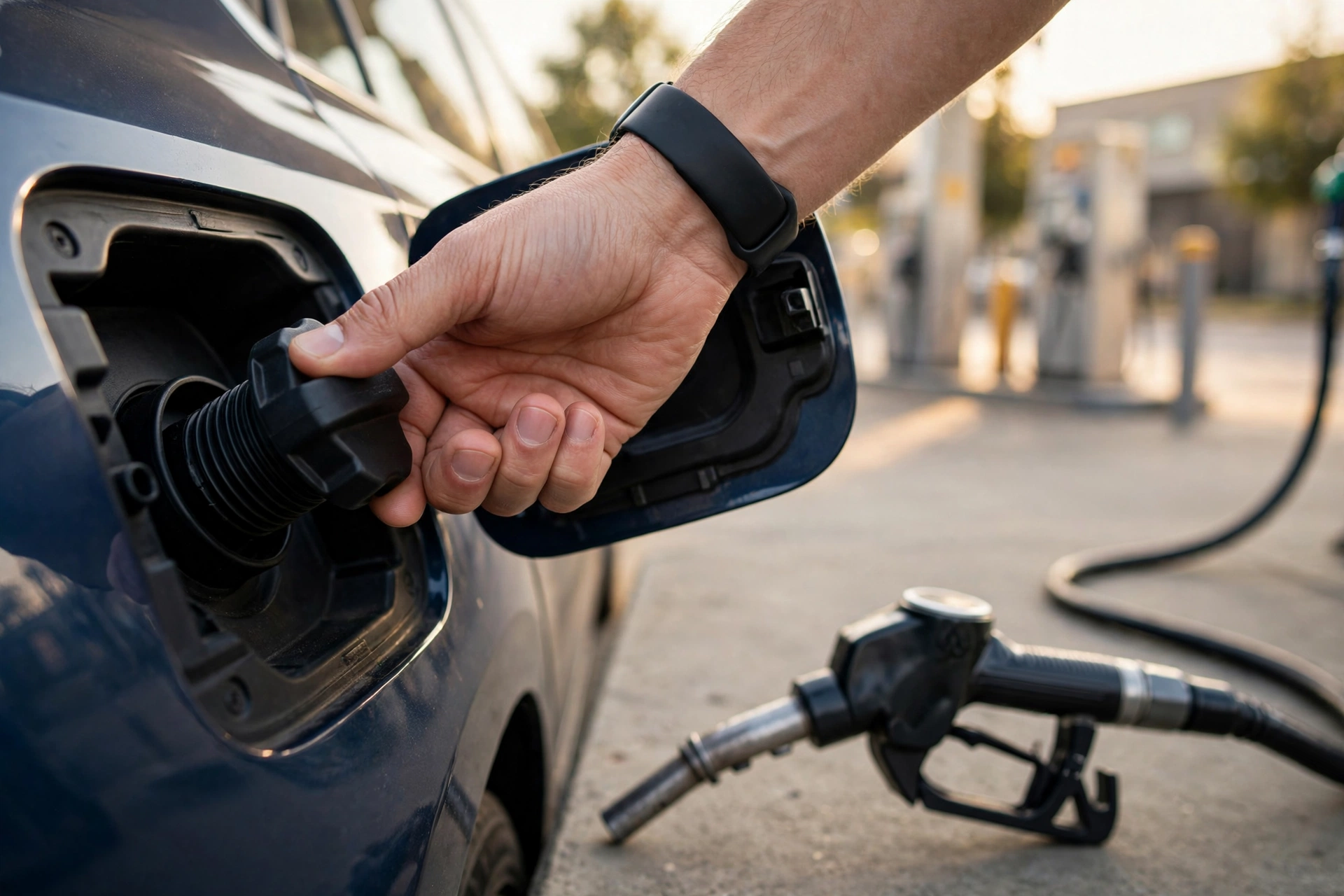
- Open the fuel flap and remove the cap. Look at it properly. Is the rubber ring (the O-ring seal) cracked, flattened, or missing? Is there dirt or grit on the sealing surface? Is the cap itself cracked?
- Wipe the seal clean. A quick wipe with a cloth removes the grit that can stop a good cap from sealing. If your car has a capless filler instead of a screw cap, wipe around the spring-loaded flap and push it closed a couple of times so it seats properly.
- Put the cap back on and tighten it until it clicks. Most caps click once or twice when they are fully tight. Do not force it past the clicks — that can damage the seal. If it spins freely without ever clicking, the cap is probably worn out.
- Close the fuel flap firmly and drive normally. That is the whole fix. Now comes the hard part: waiting.
If the cap was simply left loose after the fill-up, you have just fixed it. If the seal is cracked or the cap never clicks, you need a replacement cap — one of the least expensive parts on a car, and a job you can do yourself in seconds. Make sure the replacement matches your exact make, model, and year, because the wrong cap will not seal.
How Long Before the Light Goes Off?
Here is the part that catches almost everyone out: tightening the cap fixes the leak instantly, but the light does not go out instantly. Your car has to prove to itself that the leak is gone, and it can only do that by running its EVAP self-test again — and passing it.
The self-test does not run every time you start the car. It only runs when conditions are right: usually after a cold start (the car has sat for several hours), with the fuel level somewhere in the middle — not near empty and not completely full — and with some steady driving mixed in. The US Environmental Protection Agency (EPA) explains that the computer turns the light off by itself once it checks the system three times in a row without finding a problem, and that after a gas cap is tightened the light should go out within a few days.
In practice, most drivers see the light go out after several normal drives spread over a few days. For some cars it can take a week or more. Here is what to expect:
- Day 1: Light stays on. This is normal. The car has not run its test yet.
- Days 2–4: The light may go out after a few ordinary trips, especially ones that start with a cold engine.
- After about a week: If the light is still on, the cap was probably not the cause — or the cap itself needs replacing. Move on to reading the code.
- If the light goes out, then comes back: The leak is still there, just small enough to pass sometimes. A worn seal, a cracked hose, or a valve is the likely culprit.
One thing the light will not do is appear the instant you leave the pump. The EVAP test often runs hours later, or even the next day, so a light that shows up the morning after a fill-up can still be the gas cap.
Is It Safe to Drive With the Light On?
It depends on how the light behaves — and this is the one distinction every beginner must learn.
A steady amber light with a car that drives normally is not an emergency. The EPA says a steady light means the car needs service, not that you must stop driving. An EVAP leak by itself rarely changes how the car runs. You can drive home, drive to work, and drive to a mechanic within a few days. Do not ignore it for weeks, but do not panic either.
A flashing light is different. A flashing check engine light means a severe misfire — unburned fuel reaching the exhaust, which can overheat and damage the catalytic converter quickly. That does not come from a gas cap. If the light is flashing, slow down, avoid hard acceleration, and get the car checked right away. The same applies if the light comes with a red oil or temperature warning, heavy shaking, or a strong smell of fuel.
For more on the difference, see our guides on what to do when the check engine light is on but the car runs fine and flashing vs solid check engine lights.
If It Is Not the Gas Cap: What Else Could It Be?
If you tightened the cap, waited a week of normal driving, and the light is still on — or if it keeps coming back — the leak is somewhere else in the EVAP system. The symptoms that come with the light are your best clue:
| What you notice | Most likely cause | What to do |
|---|---|---|
| Light after a fill-up, car drives fine, no other symptoms | Worn cap seal, or capless filler flap not seating | Replace the cap (correct part for your car); clean the capless flap |
| Hard to start, or rough idle, right after refuelling | Purge valve stuck open | Book a mechanic — this is the classic purge-valve pattern |
| Pump keeps clicking off; tank is hard to fill | Vent valve or charcoal canister trouble | Book a mechanic; do not force fuel in |
| Strong smell of fuel around the car | Fuel leak or cracked hose | Do not drive far — get it checked the same day |
| Light returns after every fill-up | Persistent small EVAP leak (hose, valve, or seal) | Read the code, then book a smoke test |
A quick word on the purge valve, because it is the most common "not the cap" answer: the purge valve lets stored vapour flow from the charcoal canister into the engine to be burned. If it sticks open, vapour floods the engine right after a fill-up and the car cranks for a long time before it starts, or idles roughly for a few seconds. If your car is hard to start only after getting gas, tell your mechanic exactly that — it points them straight at the valve.
The charcoal canister is the part that stores the vapour. Overfilling the tank — squeezing in extra fuel after the pump clicks off — can push liquid petrol into the canister, which is only meant to hold vapour. That is why the "do not top off" rule exists. Stop at the first click.
The Codes, Translated for Beginners
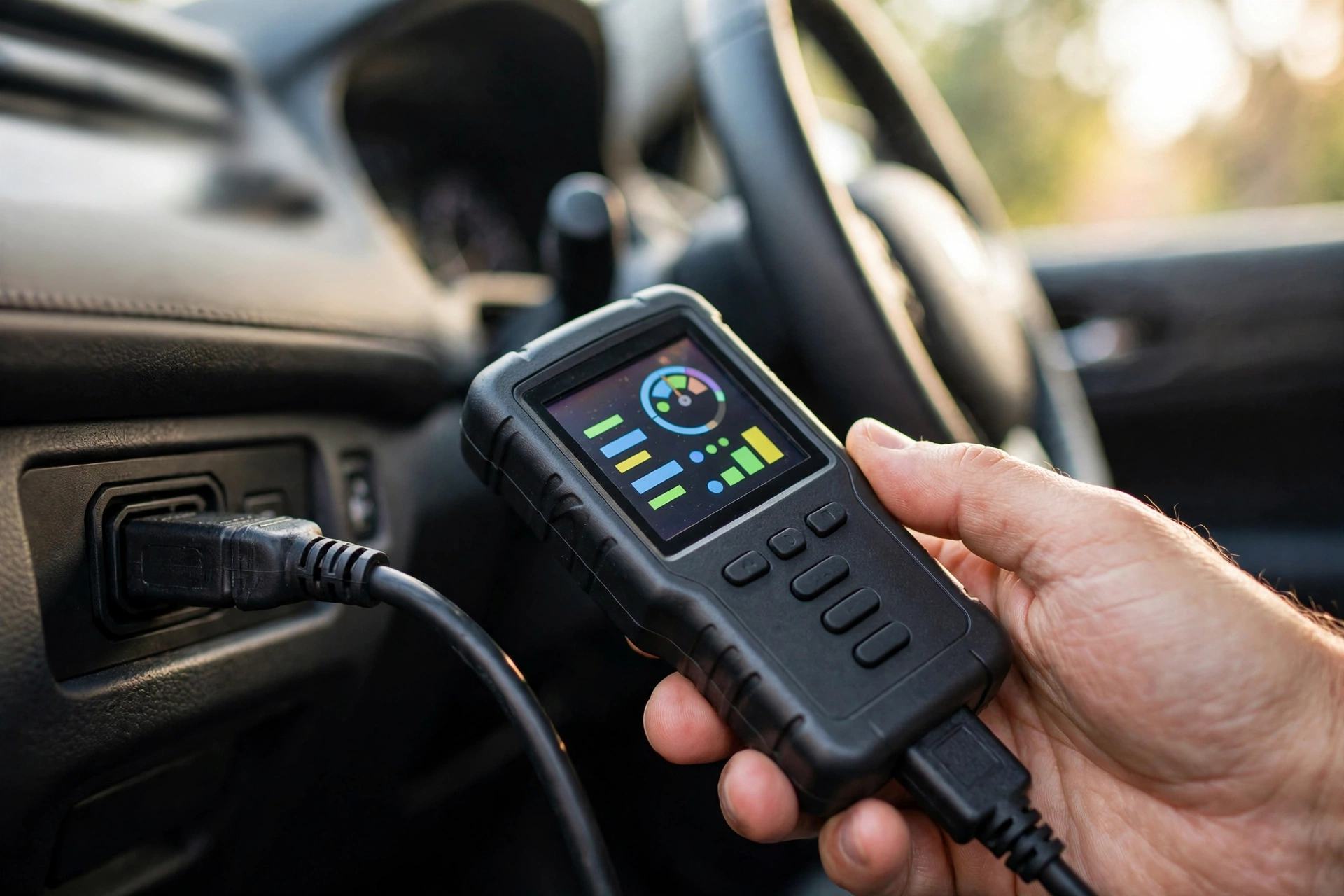
If you borrow a scan tool or use the free code-read service at an auto parts store, you will see a code starting with P04. The code tells you what kind of problem the computer saw, not which part has failed. Here are the ones that show up after a fill-up:
- P0455 — large leak detected. A big opening somewhere: cap off or loose, a disconnected hose, or a vent valve stuck open.
- P0456 — very small leak detected. A tiny seal problem: a worn cap gasket, a pinhole in a hose, or a valve that does not quite seal.
- P0442 — small leak detected. Similar to P0456, but a slightly bigger leak — cap seal, cracked hose, or a valve.
- P0457 — leak detected, fuel cap loose or off. Not every car uses this code, but when it appears it points straight at the cap.
- P0440 — EVAP system malfunction. A general EVAP fault that needs a proper test to pin down.
- P0441 — incorrect purge flow. The purge valve is stuck open or closed, or a line is blocked.
Do not replace parts based on the code alone. A P0456 does not mean "buy a new gas cap" — it means "there is a very small leak somewhere, and the cap is the first place to check." If you want to read codes yourself, our guide on how to use an OBD2 scanner for the first time walks through it step by step.
What to Tell Your Mechanic (and What NOT to Do)
If the light is still on after a week, a mechanic will usually start with a smoke test: harmless smoke is pumped into the EVAP system and the leak shows itself as smoke escaping. It is a quick, standard test. To make their job — and your bill — smaller, tell them these four things:
- The light came on right after a fill-up, and the date of that fill-up.
- You tightened (or replaced) the cap, and how many days you drove after that.
- Whether the car is hard to start or idles roughly after refuelling.
- The exact code, if you had it read (P0455, P0456, or whichever it was).
And three things not to do. First, do not disconnect the battery or clear the code just to make the light go away. Clearing the code also resets the car's readiness monitors, and if you have an emissions test coming up, the car can fail it simply because the monitors have not run yet. Second, do not keep replacing gas caps. One correctly matched cap is enough — if the light returns with a good cap, the cap was never the problem. Third, do not top off the tank after the pump clicks. It does not give you meaningful extra range, and it can damage the EVAP system you are trying to fix.
If you are still choosing a garage, our guide on how to find a trustworthy mechanic covers the red flags and the test-job trick. A hesitation or stalling problem that shows up alongside the light is a different issue — see why your car hesitates when accelerating — and is worth mentioning to the mechanic too.
Prevention: Make This a One-Time Problem
- Always tighten until it clicks. Make it a habit: cap on, turn until you hear the click, then close the flap. Rushing at the pump is how this starts.
- Stop at the first click. Never top off. The pump stops for a reason.
- Check the seal once a year. When you do your monthly checks, look at the cap's rubber ring. If it is cracked, flat, or hard, replace the cap before it causes a light.
- Keep the cap with the car. A cap left on the pump island is a surprisingly common cause — hang it on the fuel flap hook if your car has one.
- For capless cars, keep the flap clean. Wipe grit away from the filler opening now and then so the spring flap can seat fully.
Frequently Asked Questions
Can a loose gas cap really turn on the check engine light?
Yes. A loose, damaged, or missing cap breaks the seal on the fuel system, and the computer detects the vapour leak during its EVAP self-test. It is one of the most common check engine light triggers, and the easiest to fix.
How long does it take for the light to go off after tightening the gas cap?
Usually a few days of normal driving. The computer must run its EVAP self-test and pass it three times in a row before it switches the light off, and the test only runs under certain conditions — typically a cold start with the fuel level between near-empty and full. If the light is still on after about a week, the cap was not the cause.
Why did the light come on the day after I got gas, not right away?
The EVAP leak test does not run continuously. It runs only when conditions are right, often hours after refuelling or on the next cold start. A light that appears the morning after a fill-up can still be the gas cap.
Can I drive with the check engine light on after getting gas?
If the light is steady and the car drives normally, yes — drive normally and get it checked within a few days. If the light is flashing, the car shakes badly, or you smell fuel strongly, slow down and get it checked right away.
Should I clear the code with a scan tool?
There is no need to. Once the leak is fixed, the light clears itself after a few drive cycles. Clearing the code manually also resets the readiness monitors, which can cause a failed emissions test if one is due soon. Let the car clear it on its own.
The Bottom Line
A check engine light right after getting gas is frightening, but it is usually the simplest fault your car can report. Tighten the cap until it clicks, drive normally for a few days, and let the car run its own test. If the light clears, you are done — and you have learned the one habit (click the cap, stop at the first click) that stops it happening again. If it does not clear after about a week, or the car is hard to start after fuelling, read the code and let a mechanic run a smoke test. Either way, you now know exactly what the light is telling you — and what to do next.
Sources: AutozRepair — Loose Gas Cap and EVAP Codes and Johnson's Auto Repair — EVAP Code: Is It Just the Gas Cap?