You're driving along, everything feels perfectly normal — no strange noises, no shaking — when you glance at the dashboard and see it: a little orange engine-shaped light, glowing steadily. Your stomach drops. Is something about to break?
Here's the reassuring truth: if your car genuinely feels fine, a steady check engine light is rarely an emergency. It's your car's way of saying, "Something isn't quite right — look into it soon." This guide explains what the light monitors, why it appears on a healthy-feeling car, the exact steps to take (including a common 30-second fix), and how to tell "get it checked soon" from "stop driving now."
What the Check Engine Light Actually Is
The check engine light — officially the malfunction indicator lamp — is your car's self-diagnosis alert. Since 1996, every gasoline car sold in the US has carried an onboard diagnostics system (OBD-II) watching the engine, transmission, and emissions equipment. When a sensor reports a reading outside its normal range, the computer stores a diagnostic trouble code and switches on the light.
It's usually a small engine silhouette in orange, yellow, or amber — some cars show the words "Check Engine" instead. If you're unsure which light you're seeing, our guide to dashboard warning lights walks through the common ones.
Why Your Car Can Run Fine With the Light On
The light doesn't mean "your engine is broken." It means one sensor reading fell out of range — and many of the faults it detects have nothing to do with how the car drives, at least not yet. Common examples include:
- A loose, cracked, or missing gas cap (one of the most common causes of all)
- A worn oxygen sensor reporting slightly off exhaust readings
- A small leak in the evaporative emissions system
- Spark plugs that are starting to wear out
- A dirty mass airflow sensor
In all these cases the car can feel completely normal while quietly burning a little more fuel or producing slightly more emissions. That's why the light is so confusing — the problem is real, but it's small, early-stage, or invisible from the driver's seat.
Is it safe to keep driving? Usually, yes — if the light is steady and the car feels normal. You can typically drive carefully to work, home, or a repair shop. Take it easy: avoid hard acceleration and long highway trips until it's been checked. But if the light is flashing, that's a different story — pull over safely as soon as you can and call for help, because a flashing light means an active engine misfire that can destroy the catalytic converter in minutes.
Solid vs. Flashing: The Difference That Matters
A steady (solid) light
A steady light means a confirmed fault that isn't causing immediate damage. Treat it as a "schedule an appointment soon" signal — ideally within a week or two. If new symptoms appear (shaking, power loss, new smells), stop and reassess.
A flashing light
A flashing check engine light means the engine is misfiring badly enough to overheat and damage the catalytic converter — one of the most expensive parts under your car. Ease off the accelerator, reduce speed, and get off the road as soon as it's safely possible. Call roadside assistance or arrange a tow rather than driving on.
The 30-Second Fix: Check Your Gas Cap First
Before you do anything else, check the gas cap. A loose or damaged cap lets fuel vapor escape, and the evaporative emissions system flags it as a leak — triggering the check engine light. This alone accounts for a large share of cases.
Remove the cap, check the rubber seal for cracks or dirt, then screw it back on until it clicks several times. The light won't switch off instantly — most cars need several drive cycles over a day or two before the computer re-tests the system and clears it. Still on after a few days? Move to the next step. If the seal is cracked or the cap won't click tight, a replacement costs roughly $10–$25 at an auto parts store.
What to Do Next: Step by Step
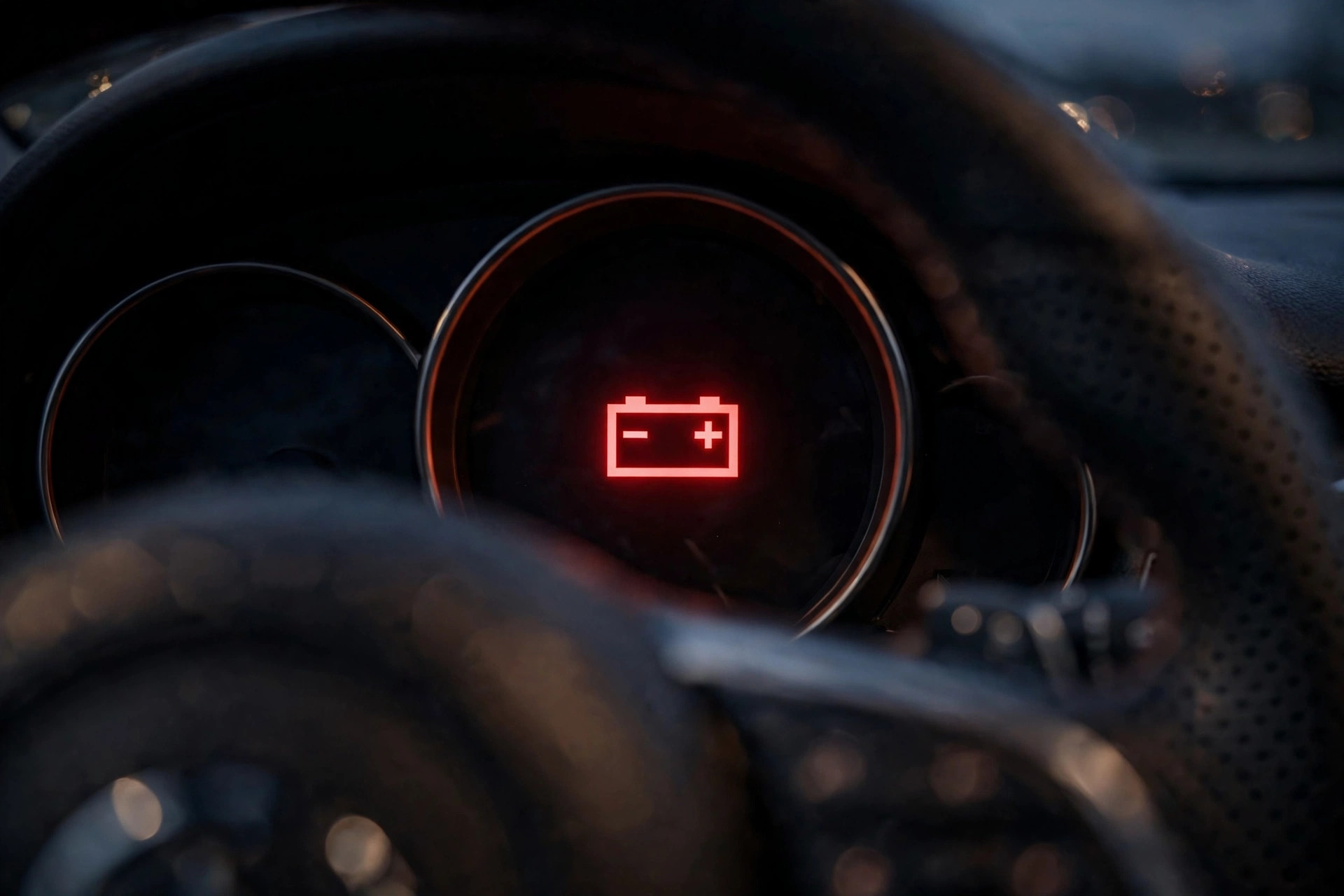
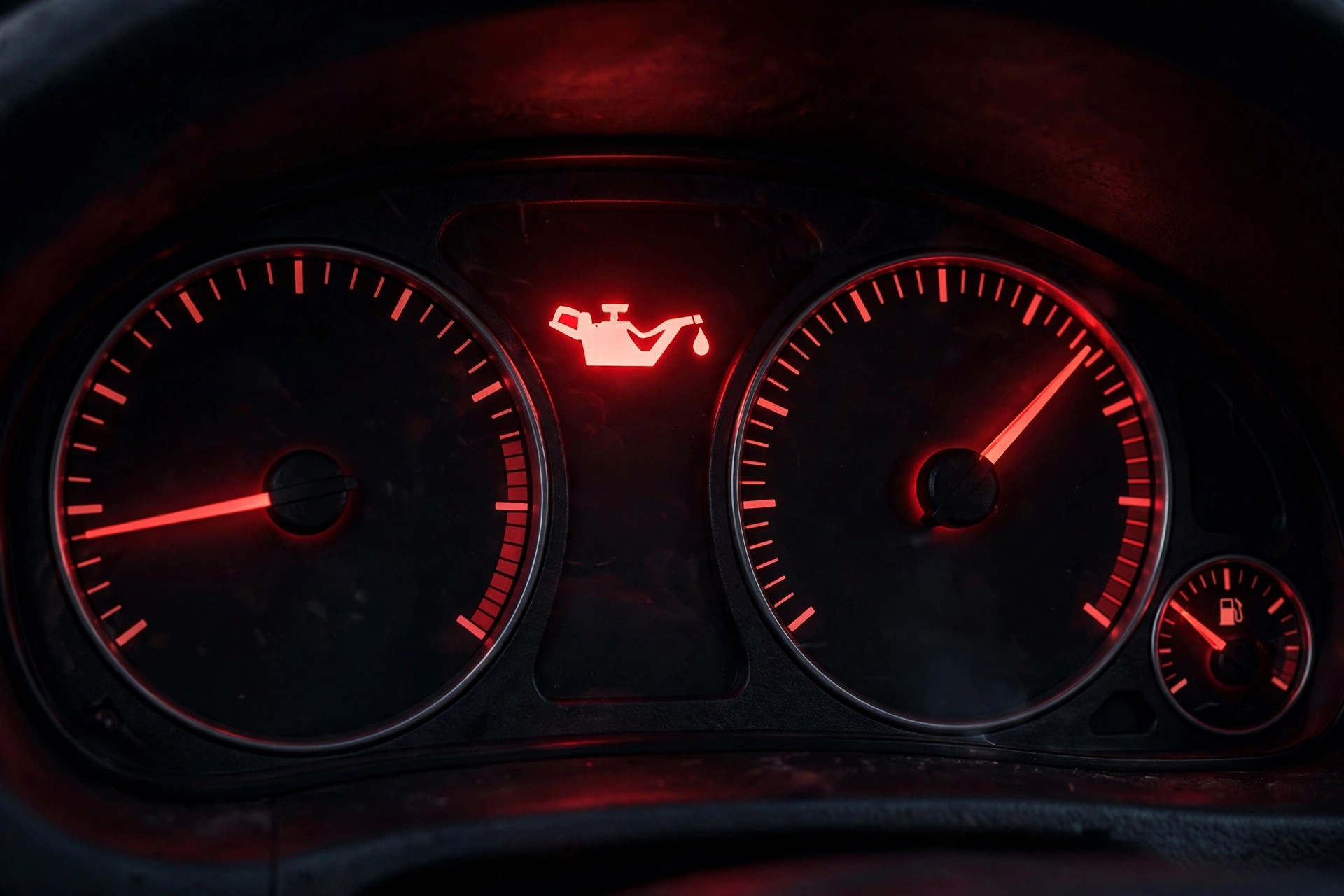
- Look for other clues. Scan for other warning lights — especially temperature, oil pressure, or battery. If any of those are on too, don't keep driving; check your owner's manual first — and if the wrench-shaped maintenance light is the one that's on, here's what it means. It's also worth checking your engine oil level — five minutes, and it rules out one common culprit.
- Check your gauges and senses. Is the temperature gauge sitting in its normal zone? Do you notice any new smells (fuel, burning), smoke, or shaking? If everything else is normal, you can proceed calmly.
- Get the trouble code read. The light alone doesn't say what's wrong — the stored code does. Most repair shops read codes as part of a diagnostic check, and in the US many auto parts stores do it free at the counter (call ahead — it varies by location). P0455 points at an evaporative emissions leak; P0301 at a cylinder 1 misfire. A full professional diagnostic typically costs $50–$150 at independent shops; AAA's auto repair resources can help you find a trustworthy one.
- Don't just clear the code. Disconnecting the battery or using a cheap scanner to erase the light without fixing anything only hides the problem — the light will come back, and you'll wipe out the diagnostic data a mechanic needs.
- Fix causes in order of likelihood. Start with the simplest confirmed cause, not the most expensive part. A good shop shows you the actual code and explains it before quoting. AAA's car advice articles list good questions to ask.
What It Typically Costs to Fix
Once you know the code, the repair is often simpler than expected. Typical independent-shop estimates (US — your car and local rates will vary):
| Problem | Typical repair | Estimated cost |
|---|---|---|
| Loose gas cap | Tighten or replace the cap | $0–$25 |
| Faulty oxygen (O2) sensor | Replace the sensor | $200–$500 |
| Worn spark plugs | Replace plugs (4-cylinder) | $150–$300 |
| Mass airflow sensor | Clean or replace | $250–$450 |
| EVAP system leak | Replace purge valve or canister | $150–$400 |
| Failing catalytic converter | Replace the converter | $1,000–$2,500 |
Notice the pattern: the most common causes are the cheapest. That's reason not to panic — but also not to ignore the light for months, since a neglected $200 sensor can eventually foul a $2,000 catalytic converter.
Common Mistakes to Avoid
- Ignoring it for months. Small, cheap problems grow into big, expensive ones.
- Calling a tow truck for a steady light on a fine-running car — save the tow for flashing lights and real symptoms.
- Assuming the worst. The cause is very often cheap and simple.
- Buying parts based on the code alone. Codes point at circuits, not always the failed part — get a proper diagnosis first. Popular Mechanics' car how-to guides explain what the common codes involve.
When the Check Engine Light Needs Urgent Attention
Call for help instead of driving if any of these are true: the light is flashing; the car shakes, stalls, or has lost power; you see smoke or smell burning or raw fuel; the temperature gauge is in the red; or the check engine light is on together with the oil pressure or temperature light. In those cases, pull over somewhere safe and switch the engine off.
The Bottom Line
A steady check engine light on a normal-feeling car is a prompt, not a panic. Check the gas cap, get the code read, fix it on a sensible timeline — and you'll spend far less than drivers who wait until the car starts shaking. For the rest of the dashboard, start with our dashboard warning lights hub.