
Engine oil is the lifeblood of your car. It lubricates hundreds of moving metal parts, carries heat away from the engine, and keeps sludge from building up inside. When the level drops too low, those parts start rubbing against each other with far less protection — and engine damage from low oil is one of the most expensive repairs a car can need.
The good news? Checking your oil takes about five minutes, costs nothing, and needs no mechanical skill at all. If you can open a hood and read a stick, you can do this. Here's exactly how.
This is one of the simplest habits that separates car owners who get 200,000 miles out of an engine from those who don't — right alongside checking tire pressure monthly. Let's walk through it.
What You'll Need
- A clean rag or a few paper towels
- Disposable gloves if you don't want oily hands (optional but nice)
- Your owner's manual — it shows your dipstick's location and the exact oil grade your engine needs
- If you plan to top up: the correct oil and a funnel
When and Where to Check
Park on flat, level ground — a slope tilts the oil in the pan and gives a false reading. For the most accurate check, most manufacturers recommend waiting a few minutes after switching the engine off (about 5–10 minutes) so the oil drains back down into the pan. Some manuals specify checking when the engine is cold; when in doubt, your owner's manual always wins.
Tip: Make it a monthly habit — check your oil on the first weekend of every month, and always before a long road trip. It takes five minutes and it's the cheapest engine insurance there is.
Step-by-Step: Checking Your Oil
- Park on level ground and wait. Switch the engine off and give the oil about 5–10 minutes to settle back into the oil pan.
- Open the hood. The hood release lever is usually under the dashboard on the driver's side — pull it, then find the secondary safety latch at the front of the hood, release it, and prop the hood open. If you've never done this before, your owner's manual has a diagram.
- Find the dipstick. It's a long metal rod with a bright yellow or orange loop handle, usually near the front or side of the engine. (A note for newer cars: some models have no dipstick at all and show the oil level electronically in the dashboard menu — check your owner's manual if you can't find one.)
- Pull the dipstick out and wipe it clean. Use your rag or paper towel to wipe the whole metal end clean. The first pull always shows splashed, unreliable oil — that's why you wipe and re-dip.
- Push it all the way back in. Slide it fully home until the handle seats. A half-inserted dipstick gives a false low reading.
- Pull it out again and read the level. Look at both sides of the tip and go by the lower mark. The oil level should sit between the MIN (or LOW) and MAX (or FULL) marks — on many dipsticks this is a crosshatched zone. The distance between the two marks is typically about one quart (roughly one liter).
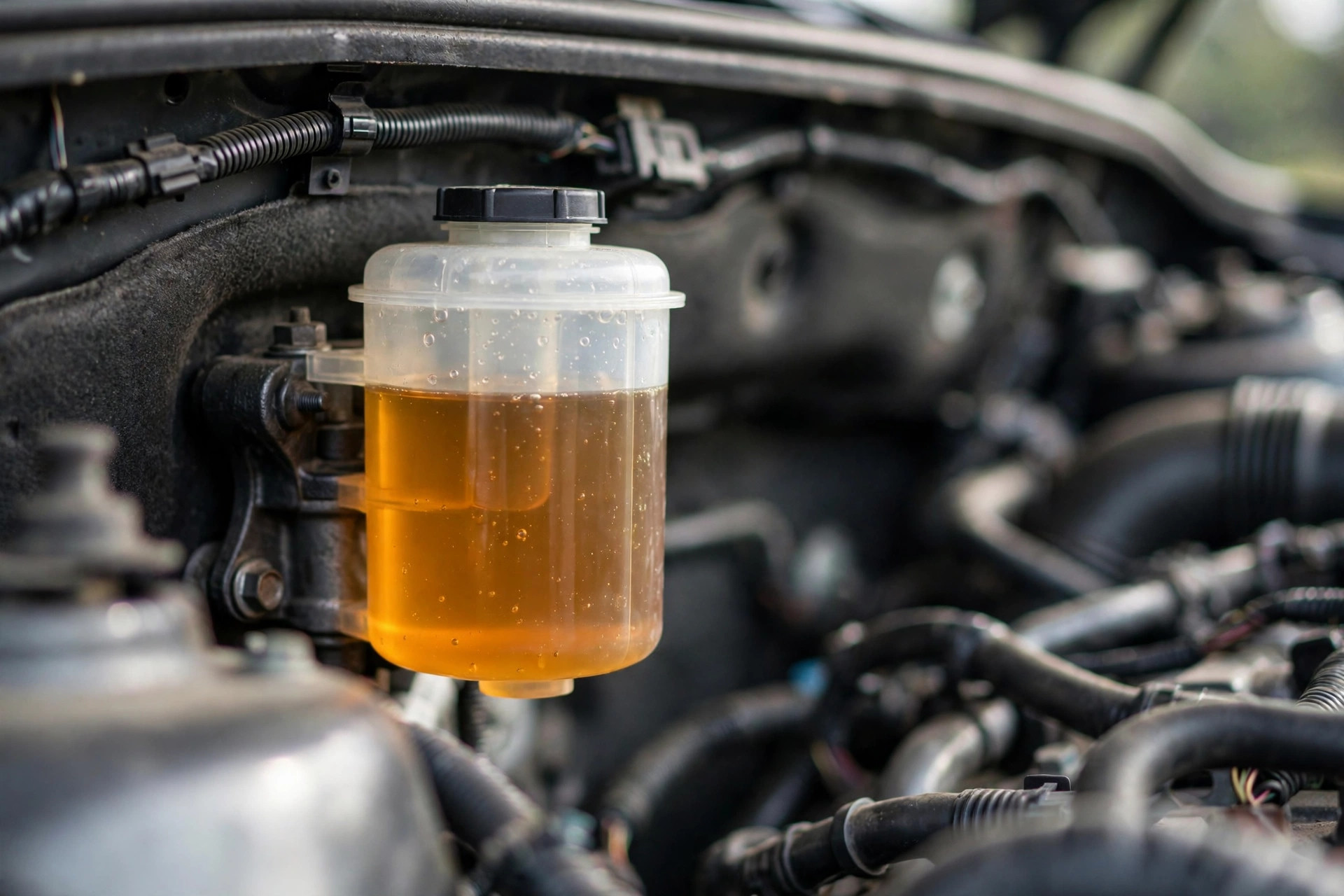
- Note what the oil looks like. Fresh oil is amber and slightly translucent; it darkens with use, which is completely normal. But if it looks milky or creamy, smells strongly of fuel, or feels gritty between your fingers, mention it to a mechanic at your next service — those can signal problems worth investigating.
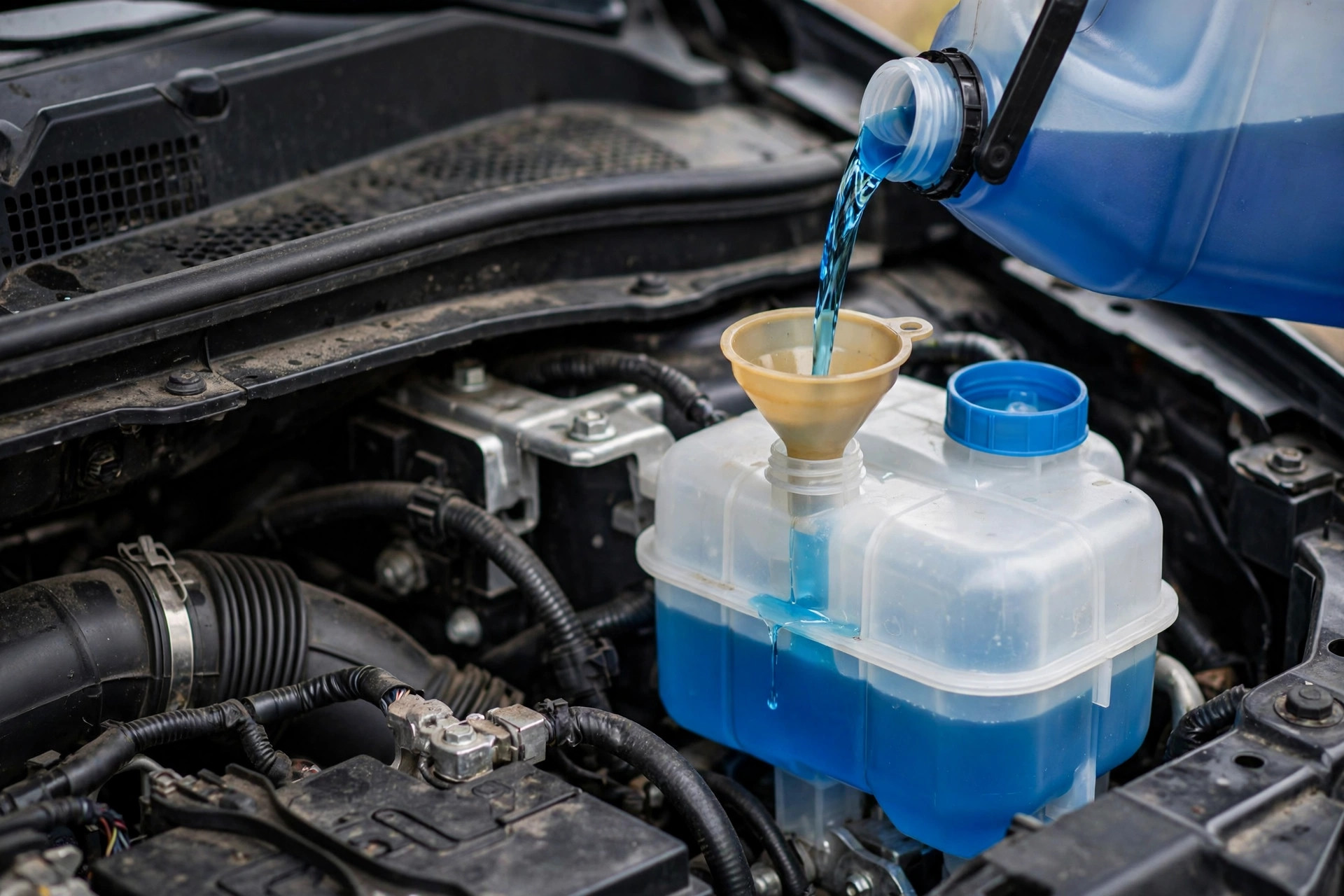
- Add oil only if it's low. If the level is at or below the MIN mark, add the exact grade specified in your owner's manual (for example, 5W-30). Unscrew the oil filler cap on top of the engine — it's marked with an oil-can symbol — place a funnel in the opening, and pour in a little at a time (about half a quart). Wait a minute, then re-dip and recheck. Repeat until the level sits comfortably between the marks. Never fill past MAX: overfilling can damage seals and cause the engine to run poorly.
- Close everything up. Push the dipstick fully back in, tighten the oil filler cap, remove your rag from the engine bay, and close the hood firmly — most hoods latch when dropped gently from about a foot up. Give it a press to confirm it's latched.
How Often Should You Check?
Once a month, plus before any long trip. Some engines — especially higher-mileage ones or turbocharged engines — naturally use a little oil between changes, and that's within normal limits. But if you find yourself adding more than about a quart between oil changes, mention it at your next service so a mechanic can look for the cause. A sudden drop in oil level with no obvious explanation deserves prompt attention — low oil is also one of the things that can trigger dashboard warnings, so it's worth knowing your way around our dashboard warning lights guide too.
What It Costs
Topping up between changes is cheap; a full oil change is routine maintenance. Typical US estimates:
| Item | What it is | Estimated cost |
|---|---|---|
| Quart of conventional oil | DIY top-up | $6–$12 |
| Quart of full synthetic oil | DIY top-up | $10–$18 |
| Full oil change (conventional) | Independent shop | $40–$70 |
| Full oil change (full synthetic) | Independent shop | $70–$110 |
Prices vary by region, oil grade, and how much oil your engine holds. Your owner's manual lists both the correct grade and the recommended change interval — follow it rather than the old "every 3,000 miles" rule, which is outdated for most modern cars and synthetic oils. AAA's car advice section has straightforward guidance on modern oil change intervals if your manual is unclear, and Firestone's maintenance blog covers oil-change basics in more depth.
Safety Notes
- Engine parts stay hot for a while after driving — touch only the dipstick handle and filler cap, not bare metal components.
- Keep loose clothing, hair, and jewelry away from belts and fans.
- Never open the radiator cap — that's a different system under pressure and can cause serious burns. You're only touching the dipstick and oil filler cap.
- Wash your hands after handling oil, and wipe up any drips so they don't end up on the driveway.
If this is your first time under the hood, Popular Mechanics' car how-to guides have clear photos of what a dipstick and filler cap look like on different engines.
The Bottom Line
Five minutes, once a month: pull, wipe, dip, read. That's the whole skill. It costs nothing, it catches problems early, and it's the single easiest thing you can do to protect the most expensive part of your car. Pair it with the rest of the basics in our engine oil and fluids hub, and you're already ahead of most first-time owners.