
Every time you press the brake pedal, a quiet piece of chemistry is working for you. Your foot doesn't stop the car directly — it squeezes a special fluid through thin metal lines, and that hydraulic pressure clamps the brake pads against the discs or drums. If that fluid is low, old, or contaminated, your stopping distance grows.
The good news: checking brake fluid is simpler than checking your engine oil. There's no dipstick to pull, and on most cars you can read the level without even opening the reservoir. Topping it up takes about ten minutes. Here's exactly how to do both — safely. If you're still learning your way around the dashboard, our dashboard warning lights guide explains what the brake system warning looks like and when it means "stop right now."
Why Brake Fluid Goes Low (It's Not Like Fuel)
Brake fluid doesn't get "used up" the way petrol or oil does — it lives in a sealed hydraulic system, so the level should barely move over the months. When it does drop, it almost always means one of two things:
- Worn brake pads. As pads wear thin, the brake calipers push their pistons further out to compensate, and more fluid sits down in the calipers. The reservoir level falls. This is the most common reason for a slowly dropping level.
- A leak. Brake lines, hoses, and seals can develop small leaks. This is a genuine safety problem — fluid on the ground under your car or a level that keeps dropping after top-ups means a mechanic visit, not another bottle of fluid.
Brake fluid is also hygroscopic — it slowly absorbs moisture from the air, which lowers its boiling point and can cause brake fade on long downhill drives. Most manufacturers recommend a full fluid change every 2 years or so (your owner's manual gives the exact interval). Topping up keeps the level right; flushing replaces the old fluid. They're different jobs — topping up is never a substitute for a flush.
What You'll Need
- A clean rag or paper towel, a small funnel (optional), a flashlight (your phone works), and disposable gloves (brake fluid irritates skin)
- A new, unopened bottle of the correct brake fluid — check the reservoir cap or your owner's manual for the specification, usually DOT 3 or DOT 4
Step-by-Step: Checking and Topping Up Brake Fluid
Step 1: Park on level ground and let things cool. Turn the engine off and wait at least 15 minutes. A slope tilts the reservoir and gives a false reading.
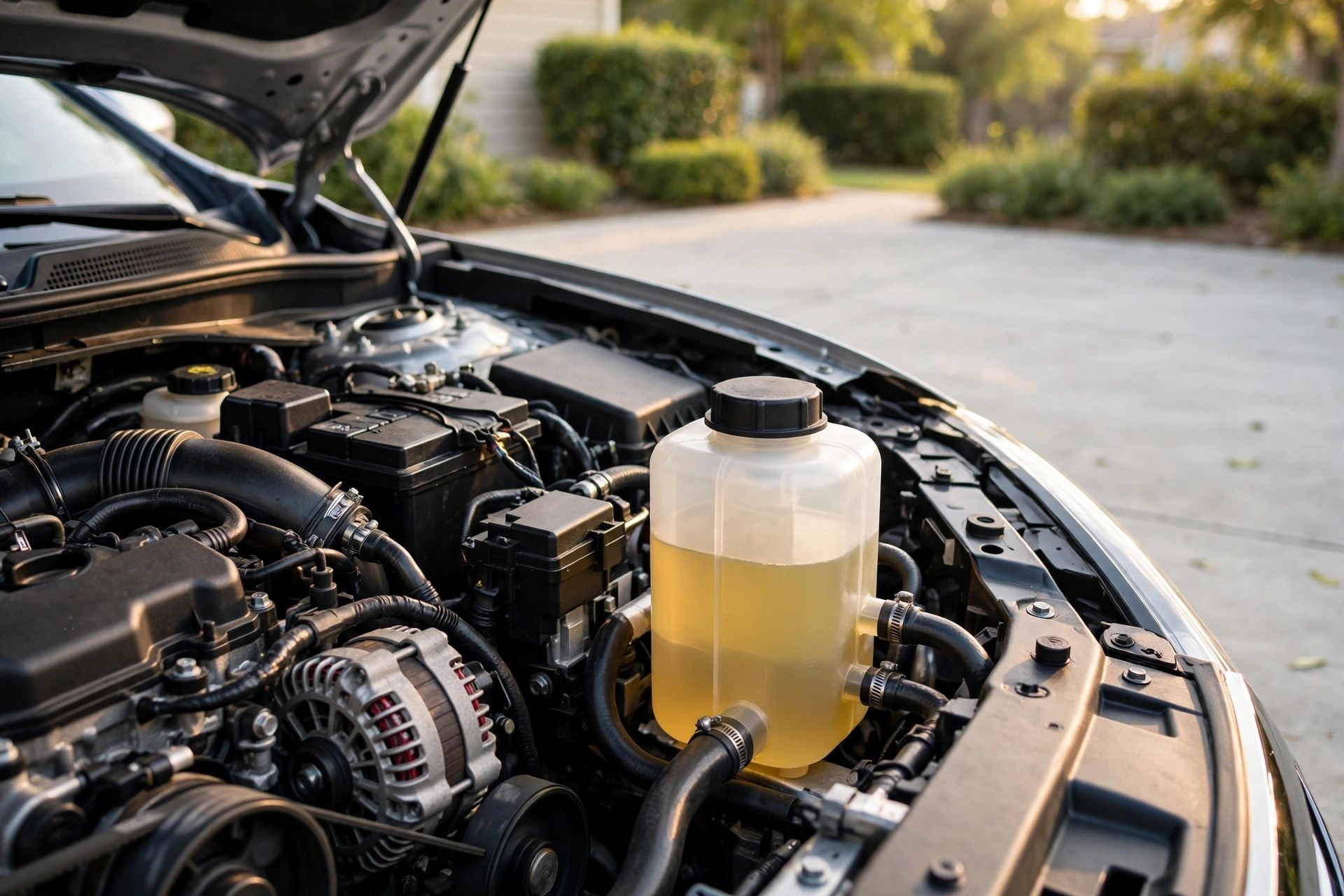
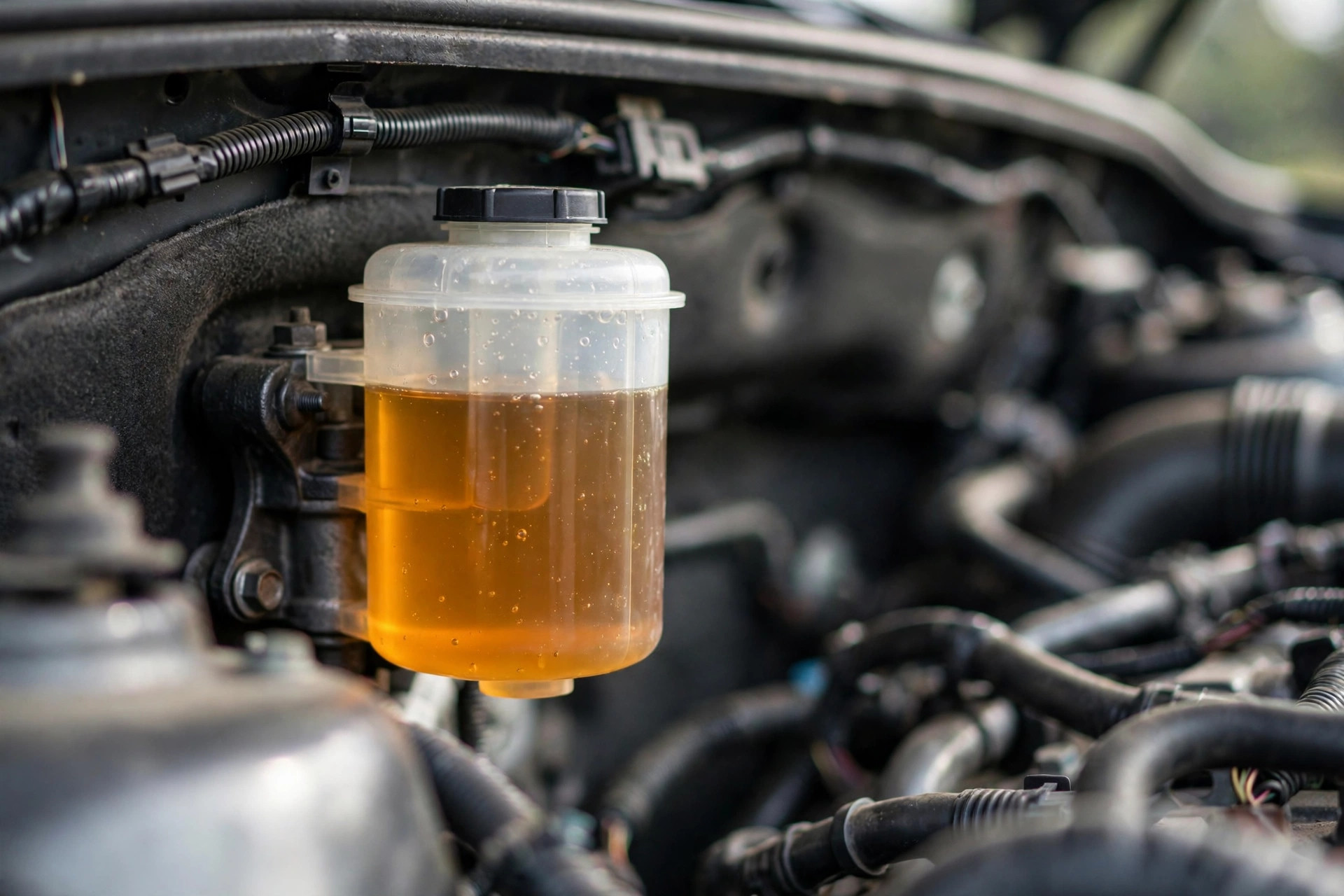
Step 2: Open the hood and find the reservoir. It's a small translucent plastic container, usually whitish or light amber, mounted against the firewall — the wall between the engine bay and the cabin — normally on the driver's side toward the back of the engine compartment. The cap is typically marked "BRAKE FLUID" and often states the required type (for example, "Use only DOT 3 or DOT 4"). Your owner's manual has a diagram if you're unsure.
Step 3: Read the level and color without opening it. Most reservoirs have MIN and MAX lines molded into the side. On a translucent reservoir you can see the fluid level straight through the plastic — shine your flashlight from the opposite side if the light is poor. The level should sit between the marks; if it does, you're done — close the hood. While you're looking, note the color: clear or light amber is healthy; a brownish tint means it's aging (plan a flush soon); dark brown or black means it's overdue — book a brake fluid change with a mechanic rather than just topping up.
Step 4: Wipe the cap before opening it. If the level is at or below MIN, clean around the reservoir cap with your rag before you touch it. Even a little grit falling into the system can cause problems downstream.
Step 5: Confirm the fluid type. Read the specification printed on the cap or in your owner's manual. Most modern cars use DOT 3 or DOT 4; some use DOT 5.1. Never mix different types unless your manufacturer explicitly says it's safe — the wrong fluid can damage seals. Always pour from a fresh, sealed bottle: an opened bottle sitting on a shelf has already been absorbing moisture for months. YourMechanic's mechanic-written guide to topping up brake fluid walks through the same specification check if you want a second reference.
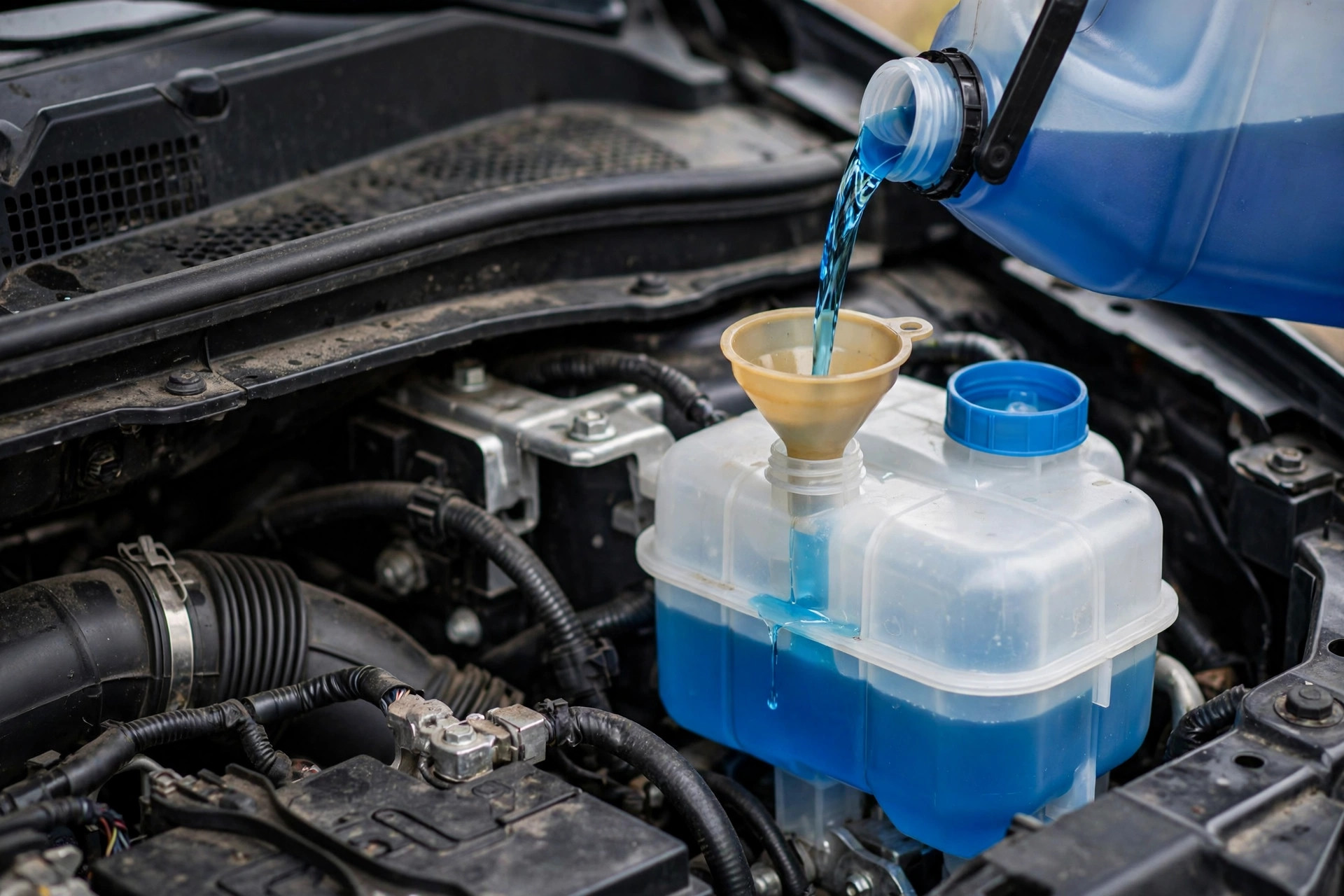
Step 6: Top up slowly — don't overfill. Remove the cap, place the funnel in the opening, and pour a little at a time until the level sits just below the MAX line. Leave a small air gap: fluid expands as it heats up during braking, and an overfilled reservoir can push fluid out past the cap. Wipe any drips immediately — brake fluid strips paint, so treat spills on bodywork as urgent.
Step 7: Close it up tight and test. Screw the cap back on firmly (a loose cap lets moisture in fast), close the hood, then press the brake pedal a few times with the engine running. It should feel firm and responsive. If the pedal still feels soft or sinks toward the floor, there's air in the lines or a leak — don't drive it; get it to a mechanic. As Merityre's brake fluid guide puts it, needing to top up regularly is itself a red flag that the system needs a professional inspection.
DOT 3 vs DOT 4: Which One Does Your Car Take?
The "DOT" number is a Department of Transportation specification for the fluid's boiling point and chemistry — higher numbers generally mean a higher boiling point. DOT 4 has a higher dry and wet boiling point than DOT 3, which is why many modern cars specify it.
The rule is simple: use exactly what your cap or manual says. DOT 5 (silicone-based) is a completely different chemistry and is not interchangeable with DOT 3/4 systems at all. When in doubt, buy the exact specification printed on the cap — the bottle is cheap, and the brake system is not the place to improvise.
When Topping Up Isn't Enough — See a Mechanic
Topping up is maintenance, not repair. Call a mechanic promptly if:
- The level drops again within weeks of topping up (likely a leak)
- You spot wet, oily patches under the car near the wheels or along the brake lines
- The brake warning light comes on — see our warning lights guide for what each brake-related light means
- The pedal feels soft or sinks toward the floor even after topping up
- The fluid is dark brown or black (it needs a full flush — a mechanic's job, including bleeding the lines)
- You're simply unsure. Brakes are the one system where "I'll keep an eye on it" is bad advice.
Safety Notes
- Wear gloves — brake fluid irritates skin and eyes. Rinse with soap and water on contact.
- Keep it off paint. It's corrosive to car paint and some plastics — wipe spills immediately and rinse with water.
- Never pour into the wrong reservoir. Coolant, washer fluid, and power steering reservoirs can look similar — double-check the cap label.
- Dispose of leftover fluid at a hazardous-waste or auto-parts recycling point — never down a drain.
- Pair it with your other monthly checks. If you're already checking your engine oil monthly, glance at the brake reservoir at the same time — ten extra seconds.
The Bottom Line
Checking brake fluid is a two-minute look through a translucent reservoir; topping it up is a ten-minute job with a fresh bottle of the right DOT fluid. The skill that really matters is knowing the limits: low fluid usually means worn pads or a leak, dark fluid means a flush is overdue, and a soft pedal after topping up means a mechanic's lift — not another drive.
Frequently Asked Questions
Q: How often should I check my brake fluid?
A: A quick visual check once a month is plenty, plus a look before any long road trip. Because the system is sealed, the level shouldn't move much — a monthly glance is mainly about catching leaks or pad wear early.
Q: Can I just top up brake fluid instead of getting a flush?
A: For a low level, yes. But topping up doesn't remove old, moisture-contaminated fluid. If your fluid is dark or it's been around two years since the last change (check your manual), book a full flush — the mechanic replaces all the old fluid and bleeds air from the lines.
Q: What happens if I use the wrong DOT fluid?
A: The wrong specification can damage rubber seals and degrade braking performance. Always use exactly what's printed on the reservoir cap or in your owner's manual, and never mix types unless the manufacturer says it's safe.
Q: My brake fluid keeps dropping every few weeks. What should I do?
A: Stop topping up and get the car inspected. A recurring drop means fluid is escaping somewhere — usually a leak in a line, hose, or caliper. This is a safety issue, not a maintenance chore.
Q: Is it safe to drive with the brake warning light on?
A: Treat it as "stop and investigate" — it often triggers on low fluid but can also signal worn pads or a hydraulic fault. Check the level as described above; if it's fine, or if the pedal feels wrong, don't keep driving — get the car to a mechanic.