

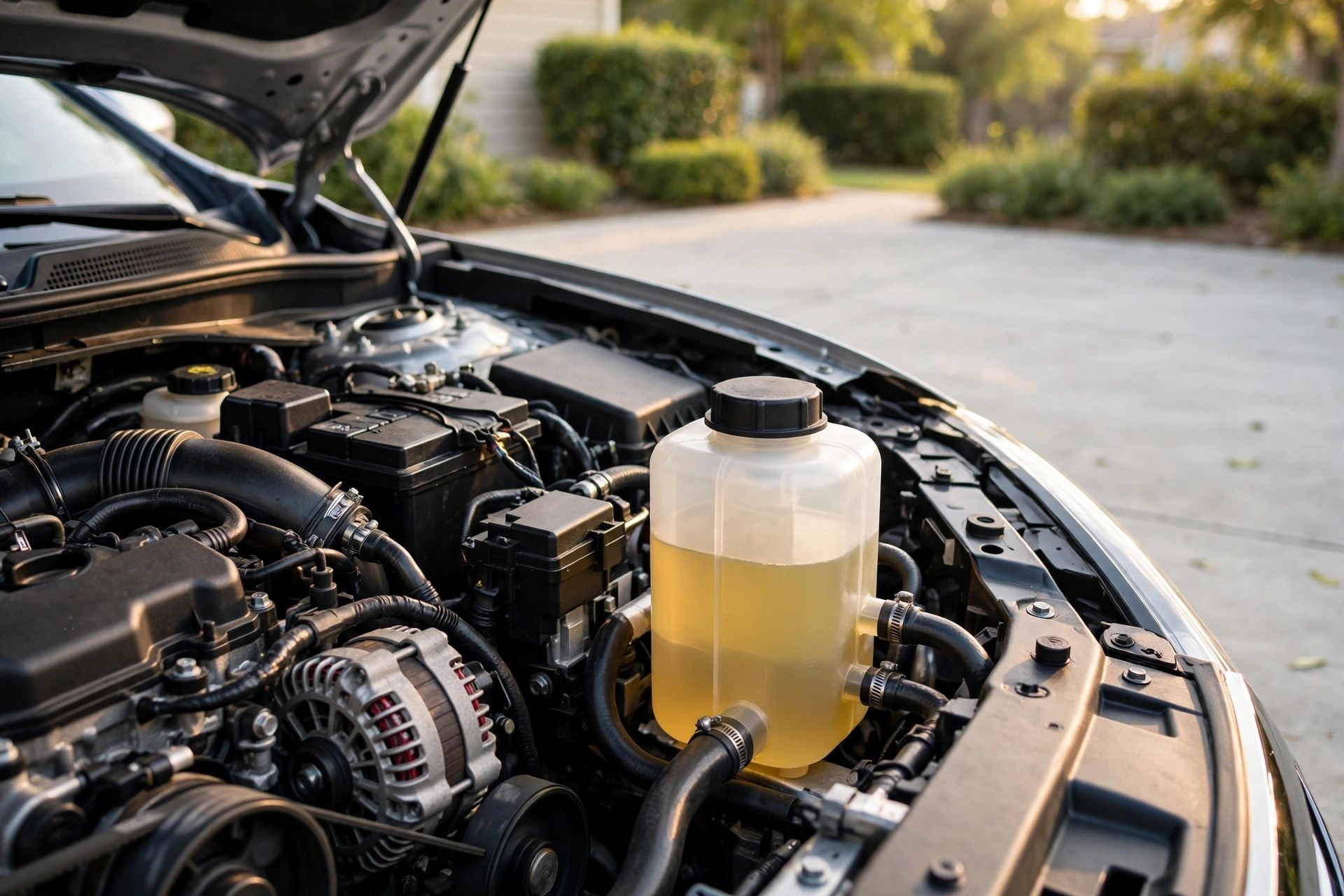
Ever wondered why turning your steering wheel feels effortless, even when the car is standing still? You have power steering to thank — and power steering fluid is the liquid that makes the whole system work. For most cars on the road, this small reservoir of fluid is the difference between one-finger parking and wrestling the wheel like it's a truck from the 1960s.
If you're a new car owner, power steering fluid is one of those "invisible" fluids that's easy to ignore — until something goes wrong. The good news: checking it takes about five minutes, needs no tools, and can save you from an expensive pump repair. Here's everything a beginner needs to know.
What Does Power Steering Fluid Actually Do?
Power steering fluid is a hydraulic fluid. In a traditional hydraulic power steering system, a pump driven by the engine pressurizes this fluid and sends it through hoses to the steering gear. That pressurized fluid does the heavy lifting, multiplying the force you apply to the steering wheel.
The fluid has three jobs:
- Transfer power: it carries hydraulic pressure from the pump to the steering mechanism, so turning takes little effort.
- Lubricate: it keeps the pump, valves, seals, and steering gear moving smoothly and protects them from wear.
- Protect seals: fresh fluid conditions rubber seals and hoses, helping prevent the leaks that cause most power steering failures.
One important note: many newer cars (roughly 2012 and later) use electric power steering (EPS) instead — an electric motor replaces the hydraulic system, so there is no fluid at all. If you can't find a reservoir under your hood, your car may be electric-assisted. Check your owner's manual to be sure.
How to Check Your Power Steering Fluid in 5 Minutes
You'll need nothing more than a clean rag or paper towel. Here's the step-by-step:
- Park on a level surface and turn the engine off. Make sure the engine has cooled down — hot fluid gives a misleading reading because fluid expands as it heats up.
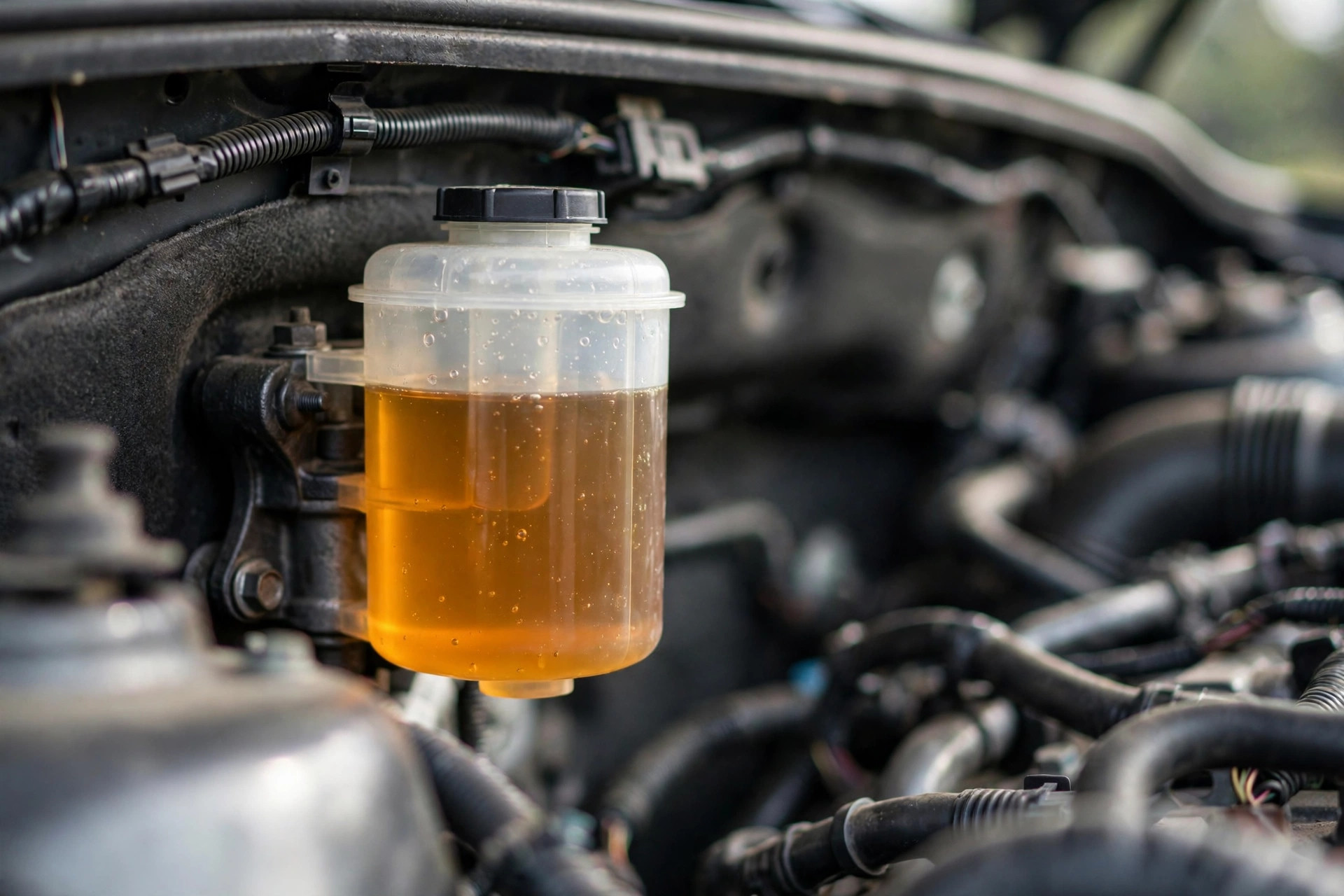
- Locate the reservoir. Open the hood and look for a small translucent plastic container, usually with a cap labeled "Power Steering" or a steering-wheel icon. It's often mounted near the belt-driven pump on one side of the engine bay. Your owner's manual shows the exact spot.
- Clean the cap area. Wipe around the cap with a clean rag so no dirt falls into the reservoir when you open it.
- Check the level. Some reservoirs show the level through the translucent plastic — just look for the fluid line against the MIN and MAX (or COLD and HOT) markings. Others have a dipstick built into the cap: pull it out, wipe it clean, reinsert it fully, then remove it again to read the level.
- Inspect the fluid's condition. Healthy power steering fluid is usually clear, light amber, pink, or red depending on the type. If it looks dark brown or black, feels gritty, or smells burnt, it's degraded and should be changed.
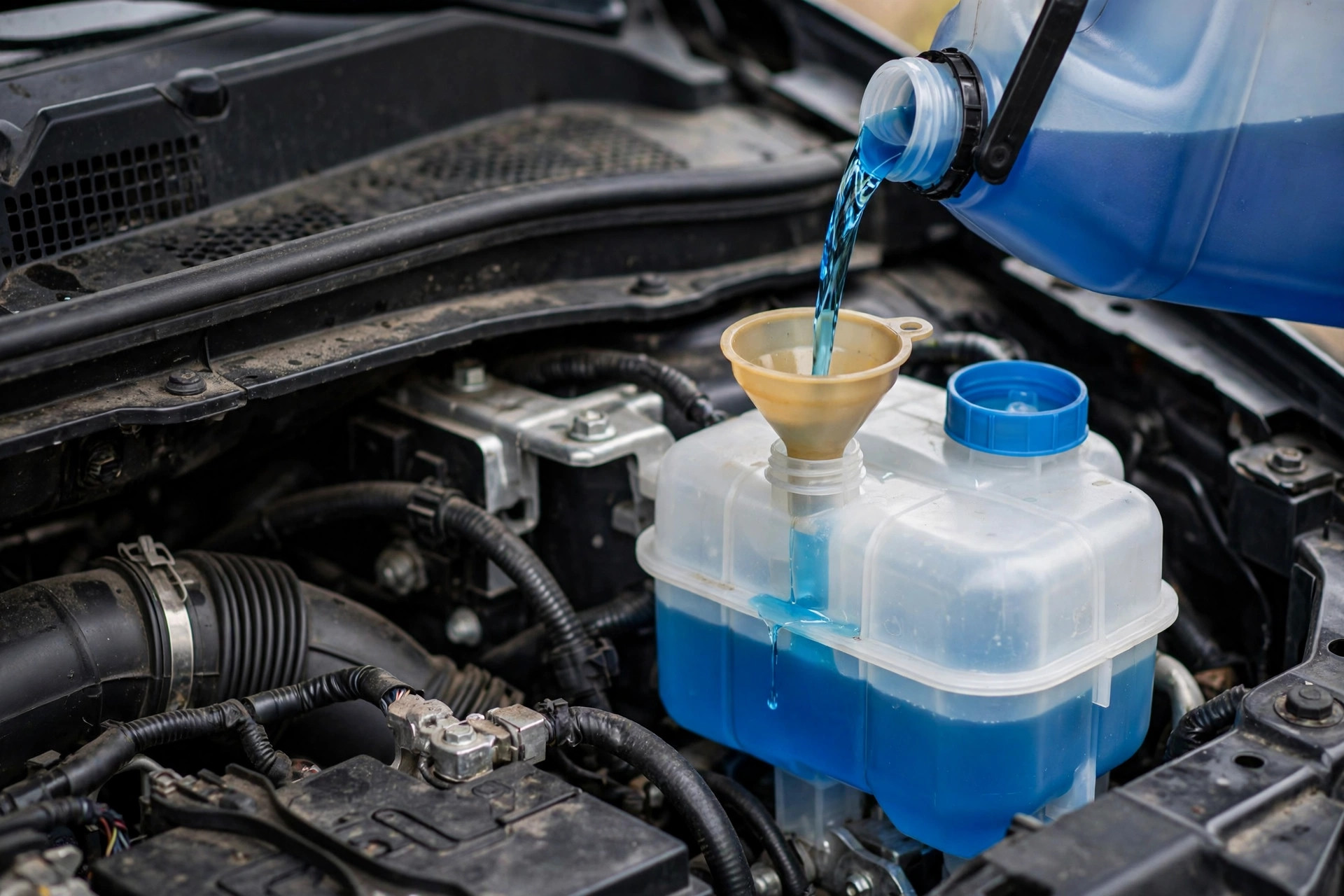
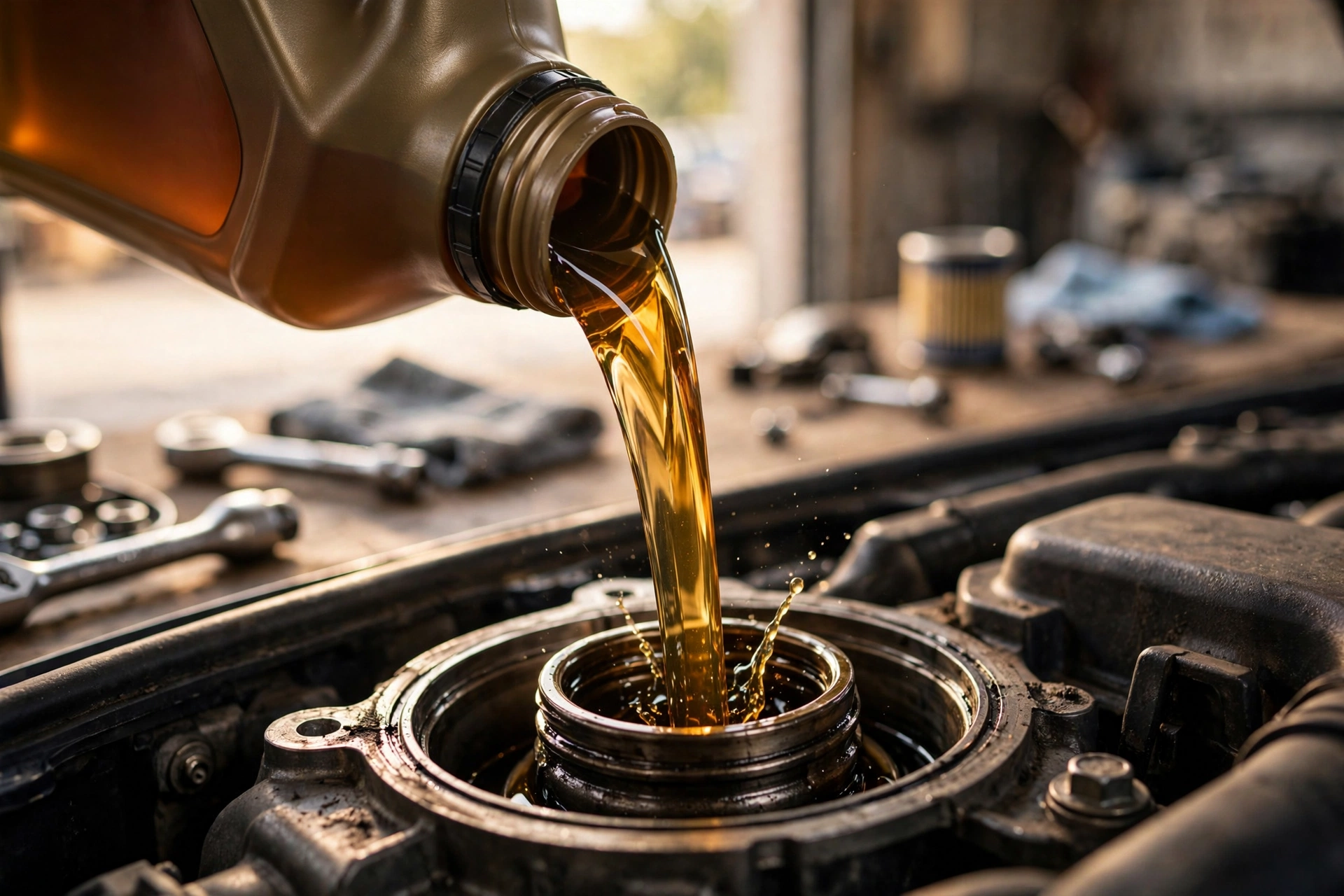
- Top up if it's low (only if needed). If the level is below MIN, add the exact fluid type specified in your owner's manual using a small funnel — slowly, up to the MAX line. Never overfill, and never mix fluid types unless the label says it's compatible.
- Secure the cap. Screw it back on firmly to keep moisture and dirt out.
A note on fluid types: different cars use different fluids — some need dedicated synthetic power steering fluid, others use automatic transmission fluid (Dexron/Mercon), and Honda/Acura models need their own specific fluid. Using the wrong type can damage seals. When in doubt, the owner's manual is always right.
How Often Should You Check It?
Checking once a month is plenty — many owners just add it to their engine oil level check routine. It's also smart to peek at it whenever you notice any steering symptom (see below).
As for changing the fluid, there is no universal rule. Many manufacturers suggest every 30,000 to 60,000 miles or roughly every two to five years, but intervals vary widely — some owner's manuals don't list one at all. The practical beginner rule: change it when the fluid turns dark or smells burnt, or when your mechanic recommends it during a service. For a deeper visual walkthrough, Bell Engineering's mechanic's guide to checking and changing power steering fluid and AutoRepairsZone's step-by-step guide are both solid references.
5 Warning Signs Your Power Steering Fluid Needs Attention
1. Steering feels heavy or stiff
The most common symptom. If the wheel is suddenly harder to turn — especially at low speeds or when parking — low or degraded fluid is a prime suspect.
2. Whining, groaning, or squealing when you turn
A whine that gets louder as you turn the wheel often means the pump is struggling, usually because fluid is low or contaminated. Don't ignore this one — running the pump starved of fluid can burn it out.
3. Fluid spots under the front of the car
Power steering fluid leaks show up as reddish, amber, or clear oily spots near the front wheels or under the engine bay. Leaks almost always come from worn hoses or seals, and they only get worse with time.
4. The level is below MIN
Obvious but important: if you check and the fluid is below the minimum mark, top it up with the correct fluid — and then keep an eye on it. If it drops again quickly, there's a leak that a mechanic should inspect.
5. Dark, gritty, or burnt-smelling fluid
Fresh fluid is translucent. Old, oxidized fluid turns dark and loses its protective properties. A full fluid change (a "flush") is the fix here, and it's a reasonable job for a shop if you're not confident doing it yourself.
What Happens If You Drive With Low Power Steering Fluid?
You can drive, but you shouldn't for long. Steering gets progressively harder, and — worse — the pump starts running dry, which generates heat and can destroy it. A bottle of fluid costs a few dollars; a new power steering pump costs hundreds. The math is easy.
If your steering suddenly feels heavy mid-drive, find a safe place to pull over, check the level, and top it up if you have the correct fluid. If the problem doesn't improve, or you suspect a major leak, call for roadside assistance rather than forcing it. Driving a car you can't steer properly is dangerous for you and everyone else on the road.
Quick Recap
- Power steering fluid gives your hydraulic steering its assist, lubricates the system, and protects seals.
- Check it monthly: engine off, level between MIN and MAX (or COLD/HOT), fluid clear and clean.
- Heavy steering, whining noises, leaks, or dark fluid = time to act.
- Always use the fluid type your owner's manual specifies — never guess.
- Many newer cars have electric power steering with no fluid at all.
Want to build a simple routine around this? Pair this check with your engine oil checks and the brake fluid check — three quick under-the-hood habits that keep a first car happy. For more on keeping your steering and fluids in shape, see our guide on how often you really need to change your engine oil.
Frequently Asked Questions
How do I know if my car has electric or hydraulic power steering?
Pop the hood and look for a power steering fluid reservoir. No reservoir usually means electric power steering (common in cars from around 2012 onward). Your owner's manual will confirm — search it for "power steering".
Can I use any power steering fluid?
No. Different vehicles require different fluids — some use ATF (Dexron/Mercon), some use synthetic power steering fluid, and some (like Hondas) need brand-specific fluid. The wrong fluid can swell or shrink seals and cause leaks. Always match your owner's manual.
How much power steering fluid does a car take?
Most passenger cars hold roughly 1 to 1.5 quarts (about 1–1.5 liters) total. But you're rarely filling an empty system — when topping up, add a little at a time and recheck, stopping at the MAX mark.
Is a power steering fluid flush necessary?
If the fluid is dark, smells burnt, or you're hearing noises, yes — a full change restores protection. If the fluid is still clear and the level is fine, it's not urgent. Follow your manufacturer's recommended interval if one is listed.
Conclusion
Power steering fluid is one of the easiest fluids to check and one of the most overlooked. Five minutes with a rag and a look at the reservoir tells you everything: is there enough, and is it still healthy? Catch it early, top it up with the right fluid, and your steering stays light and your pump stays alive — the kind of cheap prevention that first-time car ownership is all about.