Ask three people when to change your engine oil and you'll get four different answers. Your uncle swears by 3,000 miles, the quick-lube shop put a sticker on your windshield saying you're already overdue, and your owner's manual says something else entirely. If you're a new car owner, this is confusing — and getting it wrong either wastes your money or shortens your engine's life.
The honest answer: for most modern cars, the real interval is 5,000 to 10,000 miles, depending on the type of oil in your engine and how you drive. The old 3,000-mile rule is mostly a leftover from a different era. Let's unpack how to find the exact number for your car — and the signs that tell you it's time even before the mileage says so.
The 3,000-Mile Rule Is Outdated (For Most Cars)
The "change your oil every 3,000 miles" rule was born in the mid-20th century, when engines were built with looser tolerances and motor oil broke down much faster. Back then, 3,000 miles was genuinely good advice.
Today's engines are precision-machined, and modern oils — especially full synthetics — are chemically engineered to resist heat, oxidation, and sludge far longer. Manufacturer recommendations for cars built after roughly 2010 now typically span 5,000 to 10,000 miles. Sticking to 3,000 miles on a modern car running synthetic oil wastes money and oil without giving your engine any meaningful extra protection. AAA's own maintenance guidance now recommends every 5,000 to 7,500 miles for most engines — deferring to your owner's manual.
So why do some shops still push the 3,000-mile number? Simple: more frequent changes mean more visits. Trust your owner's manual, not the sticker on your windshield.
The Short Answer: What Interval Is Right for You?
Three things decide your interval: the type of oil, how you drive, and your manufacturer's specification.
Oil type matters most
- Conventional (mineral) oil: change every 3,000–5,000 miles
- Synthetic blend: change every 5,000–7,500 miles
- Full synthetic: change every 7,500–10,000 miles (some engines go longer)
Full synthetic oil costs more per change (roughly $60–$120 vs. $30–$50 for conventional), but because it lasts roughly twice as long, the cost per mile is often lower — and your engine gets better protection in extreme heat and cold.
Whichever type you buy, look for the API certification mark on the bottle. The API Engine Oil Licensing and Certification System independently tests oils to make sure they meet industry performance standards — it's your quick guarantee the bottle meets spec.
Important: Many newer cars require full synthetic. Check your manual; using the wrong oil type can affect both engine protection and your warranty.
Your driving habits: normal vs. severe
Here's the part most beginners miss. Many people think they drive "normally," but manufacturers classify a lot of everyday driving as severe service — which shortens the interval. You're likely a severe-service driver if you regularly:
- Take short trips (under 10 minutes / under 5 miles) where the engine never fully warms up
- Sit in heavy stop-and-go city traffic
- Drive in extreme heat or freezing cold
- Tow a trailer or carry heavy loads
- Drive on dusty, muddy, or gravel roads
If any of these describe your driving, follow the severe maintenance schedule in your manual — often 5,000 miles instead of 10,000, even with synthetic oil.
Your owner's manual has the final word
Every engine is different. A turbocharged engine, for example, stresses oil much harder than a small naturally aspirated one. The interval printed in your owner's manual (or in the manufacturer's app for your car) is the number calibrated for your specific engine — that number beats any general advice, including this article.
Don't Forget the Calendar, Not Just the Odometer
Even if you barely drive, oil still ages. It absorbs moisture from condensation, additives deplete, and acids build up from combustion byproducts. The rule of thumb: change your oil at least every 6 to 12 months, even if you haven't reached the mileage interval.
This is especially important if your car sits parked for weeks at a time or only makes short trips. A car driven 2,000 miles a year still needs an oil change roughly annually.
5 Signs You Waited Too Long
You don't need to guess. Your car and your dipstick will tell you:
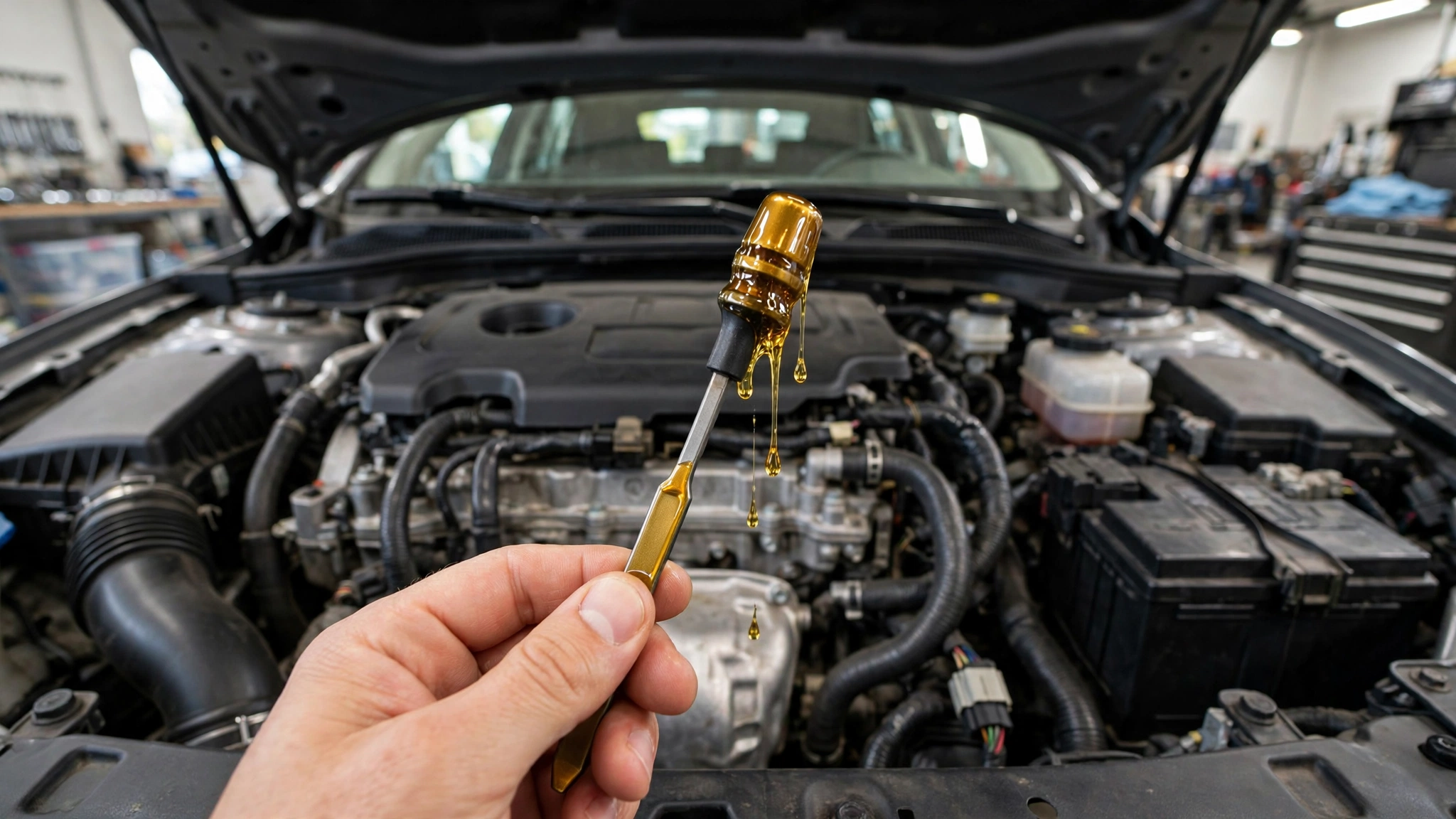
- Dark, gritty oil on the dipstick. Fresh oil looks amber and smooth. If yours is black and feels gritty between your fingers, change it soon. (Learn how in our guide to how to check your engine oil level.)
- The oil level keeps dropping. If you top up and it keeps falling, the engine may be burning or leaking oil — get it checked.
- The oil life monitoring system. Trust your car's oil life monitoring system — it estimates oil condition from real driving data. Schedule a service when it reaches 15% remaining.
- A burning oil smell or exhaust smoke. This can signal leaks or oil burning off hot parts — have it looked at promptly.
What Happens If You Keep Driving on Old Oil?
Skipping oil changes doesn't damage your engine overnight — it does it slowly and expensively. Degraded oil loses its lubricating film, friction and heat rise, and sludge can clog the tiny passages that carry oil to critical parts. Over time this accelerates wear on bearings, pistons, and the valve train. In the worst case, oil starvation can seize an engine entirely — a repair bill of several thousand dollars, or a new engine, over a service that costs a fraction of that.
Frequently Asked Questions
Can I switch from conventional oil to synthetic?
Yes — it's perfectly safe, and it can even help clean out existing deposits. No special flushing procedure is needed. Just make sure the synthetic meets the viscosity grade your manual specifies (e.g., 5W-30).
Do I need a new oil filter with every change?
Yes, without exception. The filter traps contaminants; pouring fresh oil through a dirty, clogged filter defeats the purpose. A filter is inexpensive and is always part of a proper oil change.
Is high-mileage oil worth it for older cars?
High-mileage formulas (for engines over ~75,000 miles) add extra detergents and seal conditioners. They won't extend your interval, but they can help older engines stay cleaner and reduce minor leaks. It's a reasonable upgrade if your car is aging.
What if the previous owner used a different interval?
Reset the clock with a fresh oil and filter change using the grade your manual recommends, then follow the manual's schedule going forward. You never quite know what the last owner did — a fresh start is cheap insurance.
Should I check the oil level between changes?
Absolutely — at least once a month. An oil change schedule means nothing if the engine is running low in between. It takes two minutes; our step-by-step guide to checking engine oil shows exactly how.
The Bottom Line
For most beginner drivers with a modern car: plan on an oil change every 5,000–10,000 miles or every 6–12 months, whichever comes first — with the exact number taken from your owner's manual, not from a sticker or a shop's sales pitch. Follow the severe-service schedule if your driving matches it, always change the filter, and check the level monthly between services.
Engine oil is the cheapest maintenance your car will ever get, and it's the one that protects the most expensive part. For a quick refresher on the dashboard lights that can warn you of oil trouble, keep our guide bookmarked — and if the oil pressure light ever comes on, stop now.