
Your car's engine runs at hundreds of degrees while you drive, and the only thing stopping it from cooking itself is a fluid you've probably never thought about: coolant (also called antifreeze). It circulates through the engine, absorbs the heat, and dumps it through the radiator.
So what happens when that fluid leaks out? Not much — at first. The system just runs a little lower, a little hotter. And then one day the temperature gauge spikes into the red, steam pours from under the hood, and you're facing an engine repair that could have been a simple hose.
Coolant leaks are one of those problems where catching them early saves you thousands. Here are the 7 signs you should never ignore.
1. Brightly Colored Puddles Under Your Car
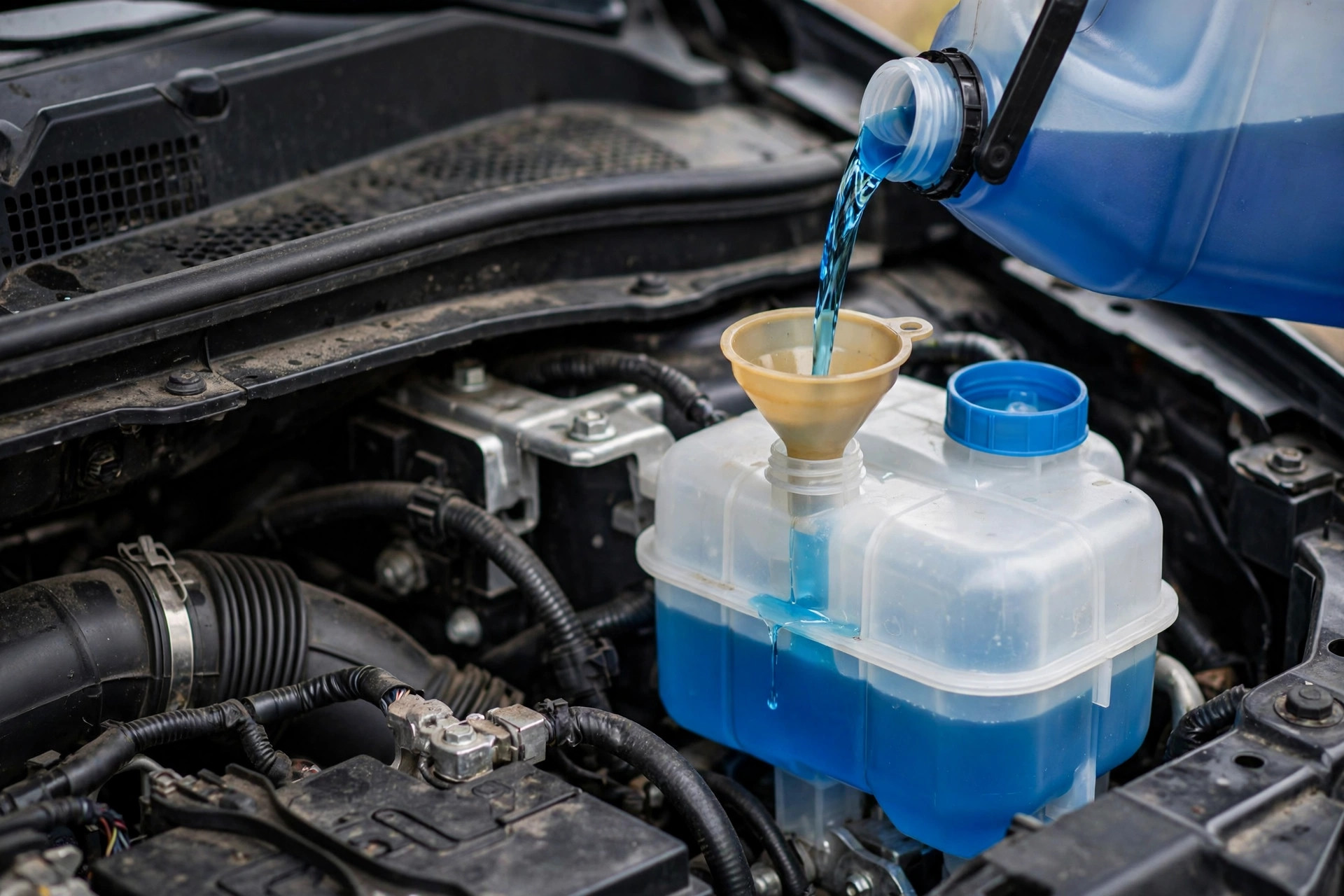
This is the most obvious sign. Coolant is deliberately dyed — usually bright green, pink, orange, or blue-green — precisely so you can tell it apart from other fluids. After parking, look at the ground where the front of the car was. A small puddle of sweet-colored fluid under the engine area is coolant until proven otherwise. (Clear water under the car in summer is usually just condensation from the air conditioning — that's normal.)
2. A Sweet Smell Around the Car
Coolant has a distinctly sweet, almost syrupy smell because of the glycol it contains. If you notice a sweet odor after driving, especially near the front of the car or coming through the vents when the heater runs, coolant is leaking somewhere and evaporating on hot engine parts. This is often the very first sign — it can appear before any visible puddle.
One important note: coolant is poisonous to people and pets despite the sweet smell. If you see a puddle in your driveway, clean it up promptly and keep animals away from it.
3. The Temperature Gauge Is Climbing
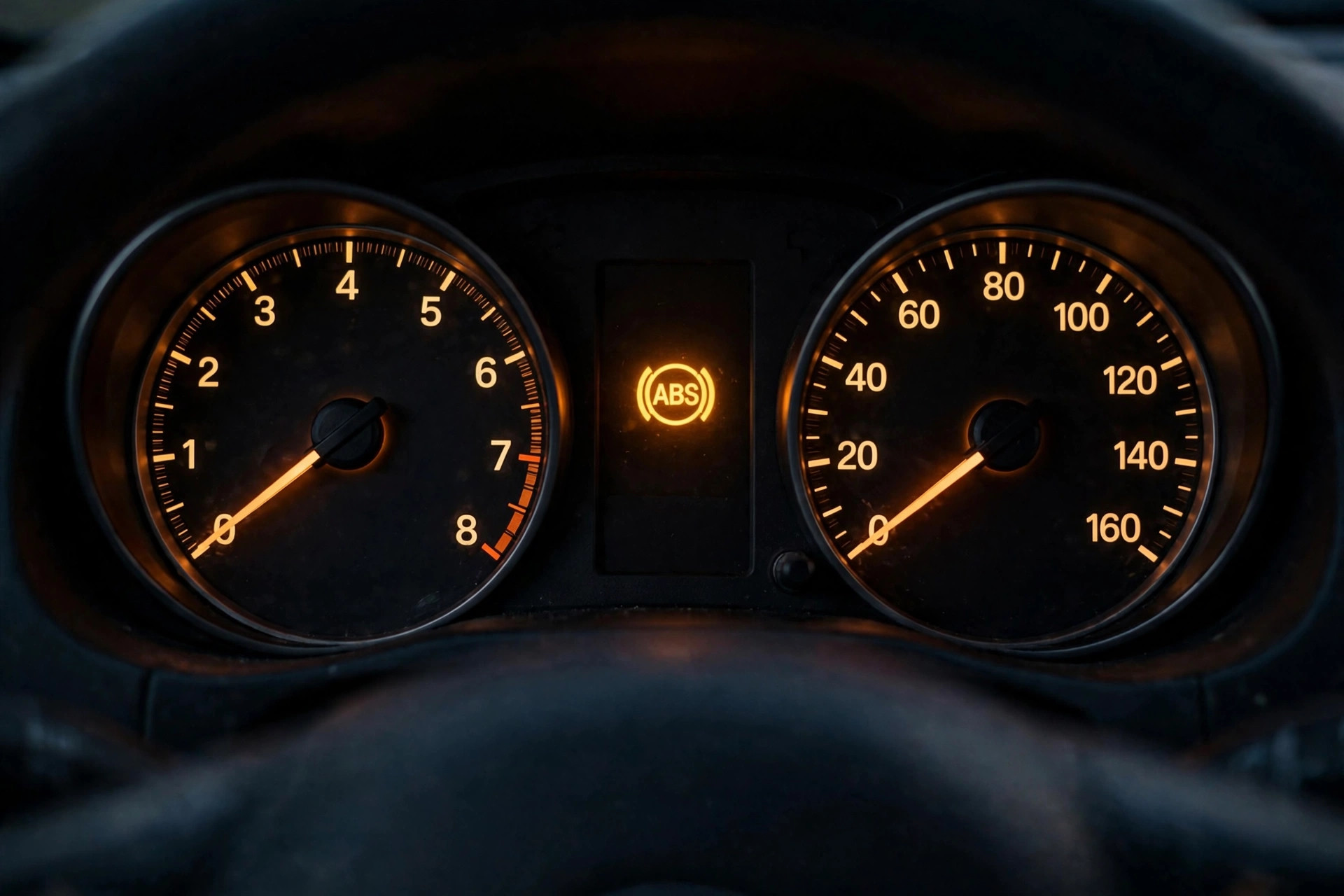
Your dashboard temperature gauge should sit around the middle — between C (cold) and H (hot) — once the engine is warmed up. If the needle is creeping toward the red zone, or your car has a coolant temperature warning light glowing on the dash, the engine is running too hot. Low coolant is one of the most common reasons. Our dashboard warning lights guide explains exactly what that thermometer-shaped warning light means.
Don't "wait and see" with a rising temperature gauge. A little hot becomes dangerously hot very quickly.
4. The Coolant Reservoir Is Low
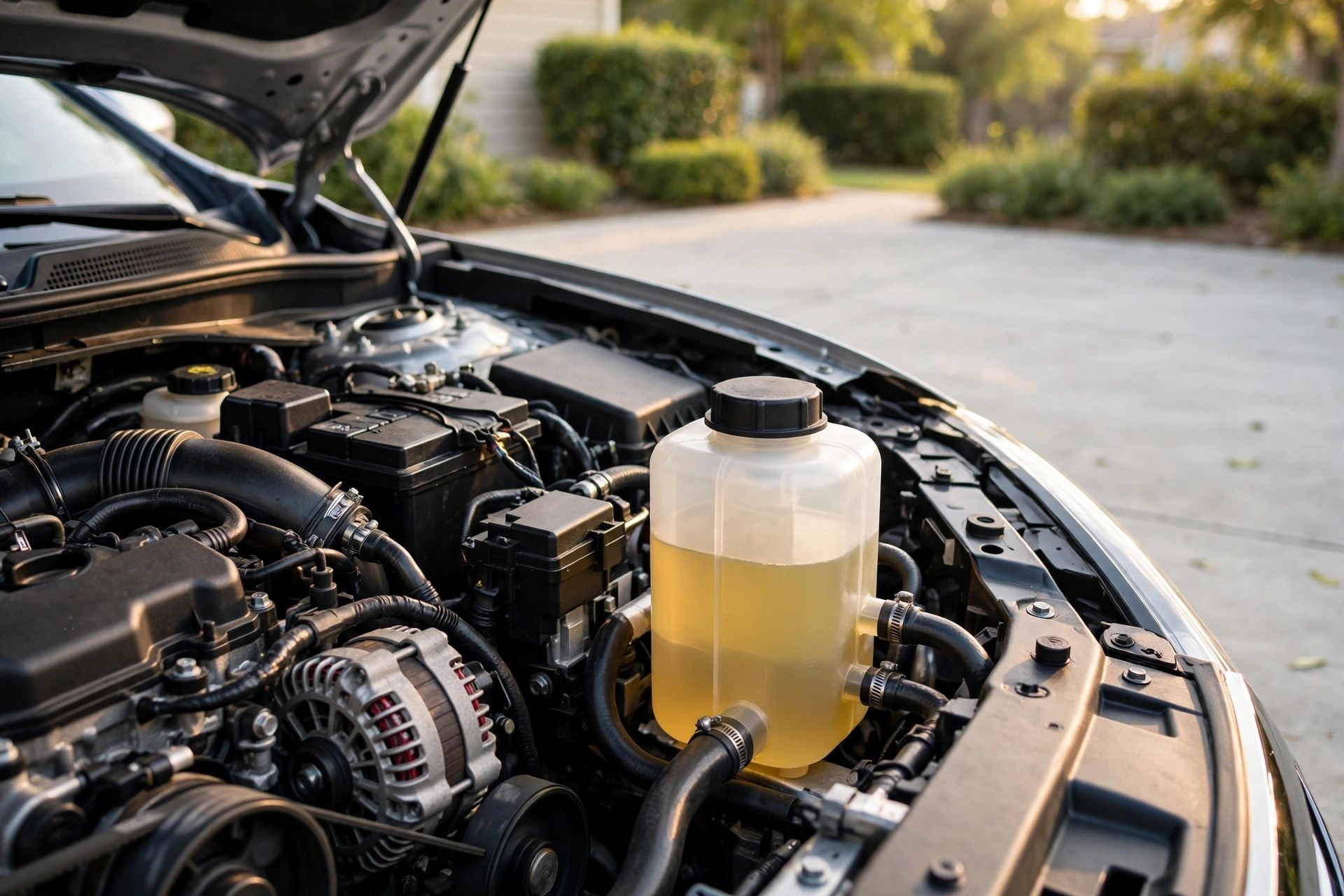
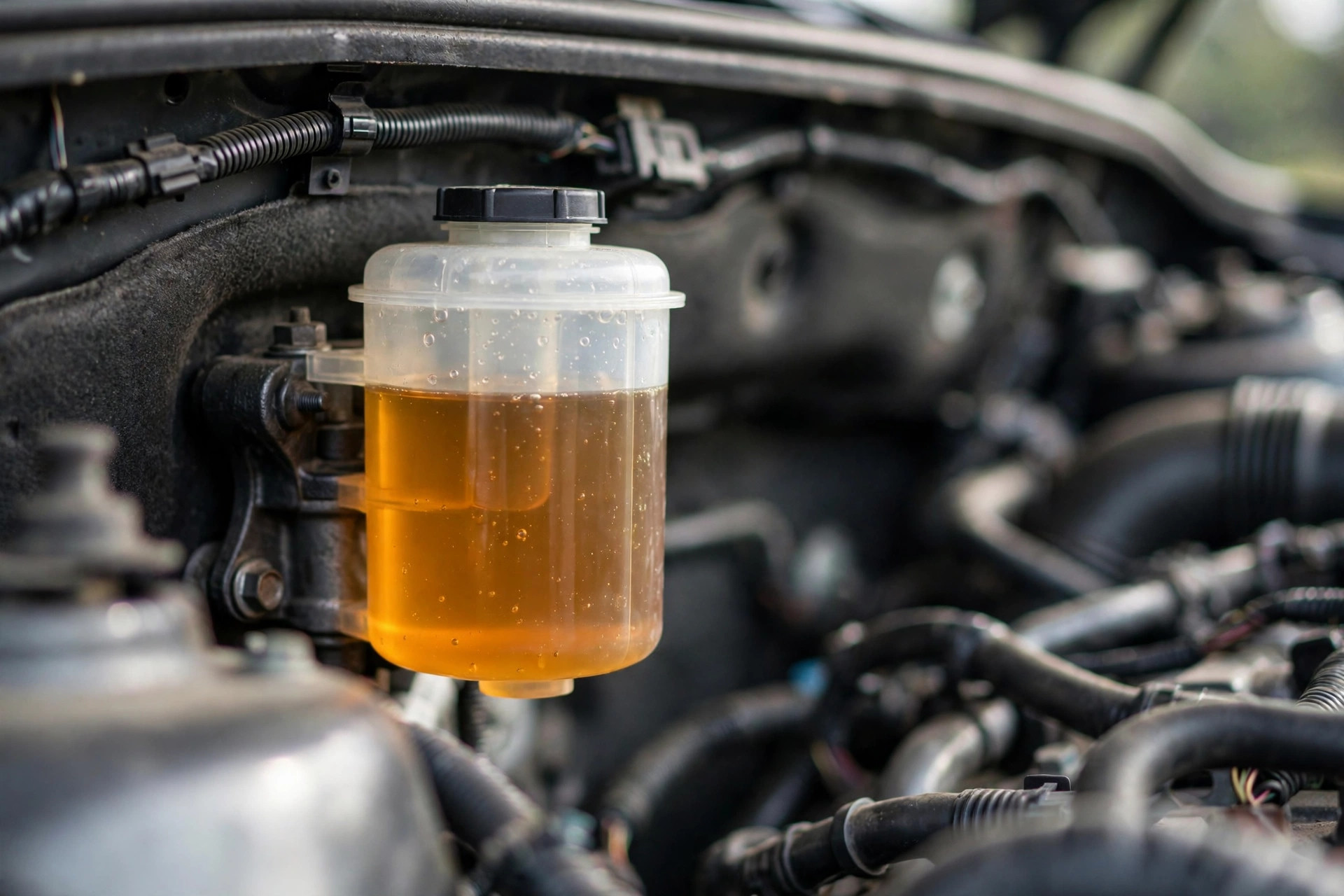
Your car has a translucent plastic coolant reservoir (overflow tank) under the hood with MIN and MAX marks on the side. With the engine completely cold, the level should sit between the marks. If it's at or below MIN — or you keep topping it up and it keeps dropping — coolant is going somewhere it shouldn't be.
Important: never open the radiator cap on a hot engine. The system is pressurized, and opening it can release scalding steam. Check the reservoir only, and only when the engine has been off for several hours.
5. Steam or White Smoke From Under the Hood
Steam rising from the hood — especially with that sweet smell — means coolant is hitting something hot and boiling off. This is your engine telling you it's in trouble right now. White smoke from the exhaust can also indicate coolant burning inside the engine (see sign #7), which is more serious.
If you see steam while driving: turn off the air conditioning, turn the heater to full hot and full fan (this pulls some heat off the engine), and pull over safely as soon as you can.
6. The Heater Blows Cold Air
Here's a surprising one. Your car's heater works by blowing air over hot coolant. If the coolant level is too low, there's nothing hot for the heater to use — so the heater blows cold even when the engine is warmed up. If your heat suddenly stops working in winter, low coolant should be one of the first things you suspect.
7. Milky or Frothy Oil on the Dipstick
The worst-case sign. If coolant leaks internally — for example through a failed head gasket — it mixes with your engine oil. Pull the dipstick and look: normal oil is amber and smooth. If it looks like a chocolate milkshake — milky, frothy, or the oil level seems higher than it should be — coolant is contaminating your oil. Check the underside of the oil filler cap too; white sludge there is another red flag. (Not sure how? Here's how to check your engine oil level properly.)
This is a "stop driving and call a mechanic" situation. Coolant destroys oil's ability to lubricate, and driving with contaminated oil can wreck the engine's bearings in short order.
Is it safe to keep driving? It depends on the sign. A slow seep with no overheating can be driven short distances to a shop — but check the reservoir level first and watch the temperature gauge the whole way. If the gauge is in the red, steam is coming from the hood, or the coolant warning light is on: stop driving immediately. An overheating engine can warp the cylinder head or seize completely within minutes, turning a $200 hose repair into a $2,000+ engine rebuild. When in doubt, pull over and call for a tow.
What Causes Coolant Leaks?
The most common sources are worn-out radiator hoses, a failing water pump, a cracked radiator, a bad radiator cap (it maintains system pressure), or — worst case — a failing head gasket. A mechanic will usually pressure-test the cooling system to find the leak, which takes the guesswork out of it.
Typical Repair Costs (Estimates)
| Repair | Typical Cost (USD) |
|---|---|
| Cooling system pressure test / diagnosis | $80–$150 at most independent shops |
| Radiator hose replacement | $150–$350 |
| Radiator cap replacement | $20–$50 |
| Water pump replacement | $400–$900 |
| Radiator replacement | $500–$1,000 |
| Head gasket repair | $1,500–$3,000+ |
These are estimates — the exact cost depends on your vehicle and your area. Notice how the cheap fixes are all the early-caught ones. That's the whole point of this article.
What To Do If You Suspect a Coolant Leak
- Check the reservoir (engine cold only). If it's low, top it up with the correct coolant type — check your owner's manual, because mixing coolant types can cause problems.
- Look for the source: colored puddles, wet hoses, white crusty residue around fittings.
- Watch the temperature gauge on every drive until it's fixed.
- Get it diagnosed soon. A pressure test is quick and relatively cheap, and it pinpoints the leak exactly.
- Don't ignore it. Coolant doesn't "fix itself," and low coolant causes overheating, which causes engine damage.
Safety note: never open a hot radiator cap — wait until the engine is fully cold, since pressurized steam can cause severe burns. Coolant is toxic to people and pets, so clean up spills and store spare coolant out of reach. If the temperature gauge is in the red or steam is rising, pull over safely and call for a tow rather than risking engine damage. If you're unsure, have a qualified mechanic handle it.
Coolant is just one of your car's vital fluids — and if your check engine light ever joins the party, we have a guide for that too. For more fluid basics, browse our engine oil and fluids guides.