Few things are more frustrating than a car that worked perfectly yesterday evening and is completely dead this morning. No lights, no clicking, nothing. You jump-start it, drive to work, everything seems fine — and then it's dead again the next morning.
Here's the truth: a battery that keeps dying overnight is telling you something. It is very rarely "just a bad battery," even though that's what most people assume. There are several common causes, and most of them are straightforward to track down once you know what to look for.
This guide walks you through the 7 most likely causes, roughly in order from simplest to most serious — and what to do about each one.
1. The Battery Is Simply Old
Car batteries don't last forever. Most last 3 to 5 years, and heat shortens that life even more than cold does. An old battery gradually loses its ability to hold a charge, which is exactly why it can start the car after a jump (or after a long drive) but be dead again after sitting all night.
How to check: Look for a date sticker on the battery case — it usually shows the month and year it was installed or manufactured. If it's more than 4 years old and dying overnight, age is your prime suspect. Most auto parts stores will test a battery for free and tell you whether it still holds a proper charge.
2. Something Is Draining It Overnight (Parasitic Drain)
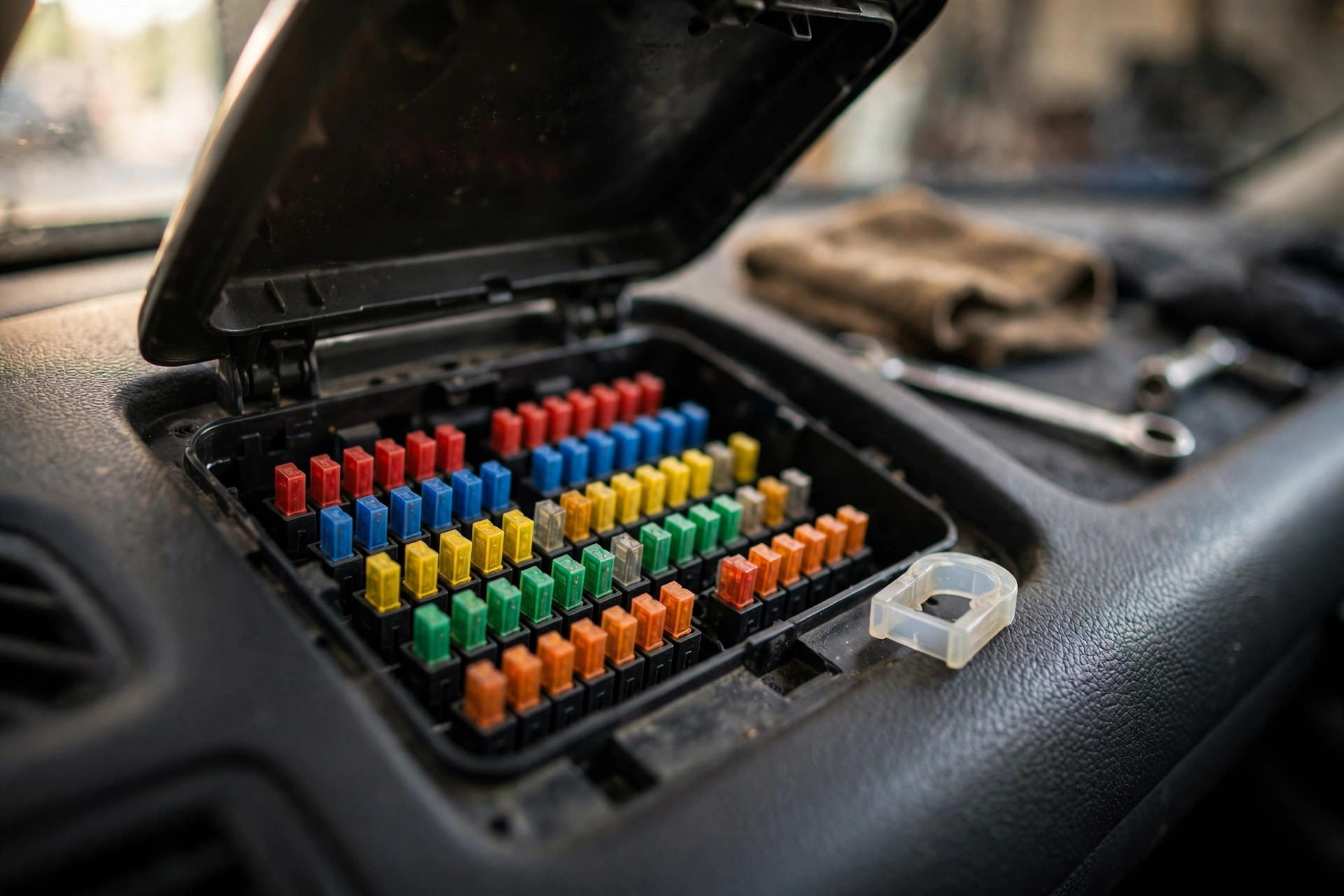
Even with everything "off," your car uses a tiny amount of power for things like the clock, alarm, and computer memory. That's normal. A parasitic drain is when something uses far more than that — a trunk or glove box light that stays on, a phone charger plugged in, an aftermarket alarm, dash cam, or stereo wired incorrectly.
How to check: Tonight, walk around the car after locking it and look for any glow — interior lights, the trunk light, an under-dash glow from an accessory. Unplug all aftermarket accessories and chargers, then see if the battery survives the night. If it does, you've found your culprit. If the drain is still happening with everything unplugged, a mechanic can measure the draw with a multimeter and trace it — diagnosis typically runs $50–$100.
3. A Light Was Left On
The simplest cause of all, and embarrassingly common. A dome light switched on manually, headlights left on, or hazard lights flashing after you pulled over — any of these can flatten a healthy battery in a few hours. Some cars also keep the headlights on for a delay period after you lock them, which adds confusion.
How to check: Make it a habit before walking away: glance back at the car. Are any lights on inside or out? If you have kids or passengers, the dome light being left on is a classic. This one is free to fix — it's just a habit.
4. Corroded or Loose Battery Terminals
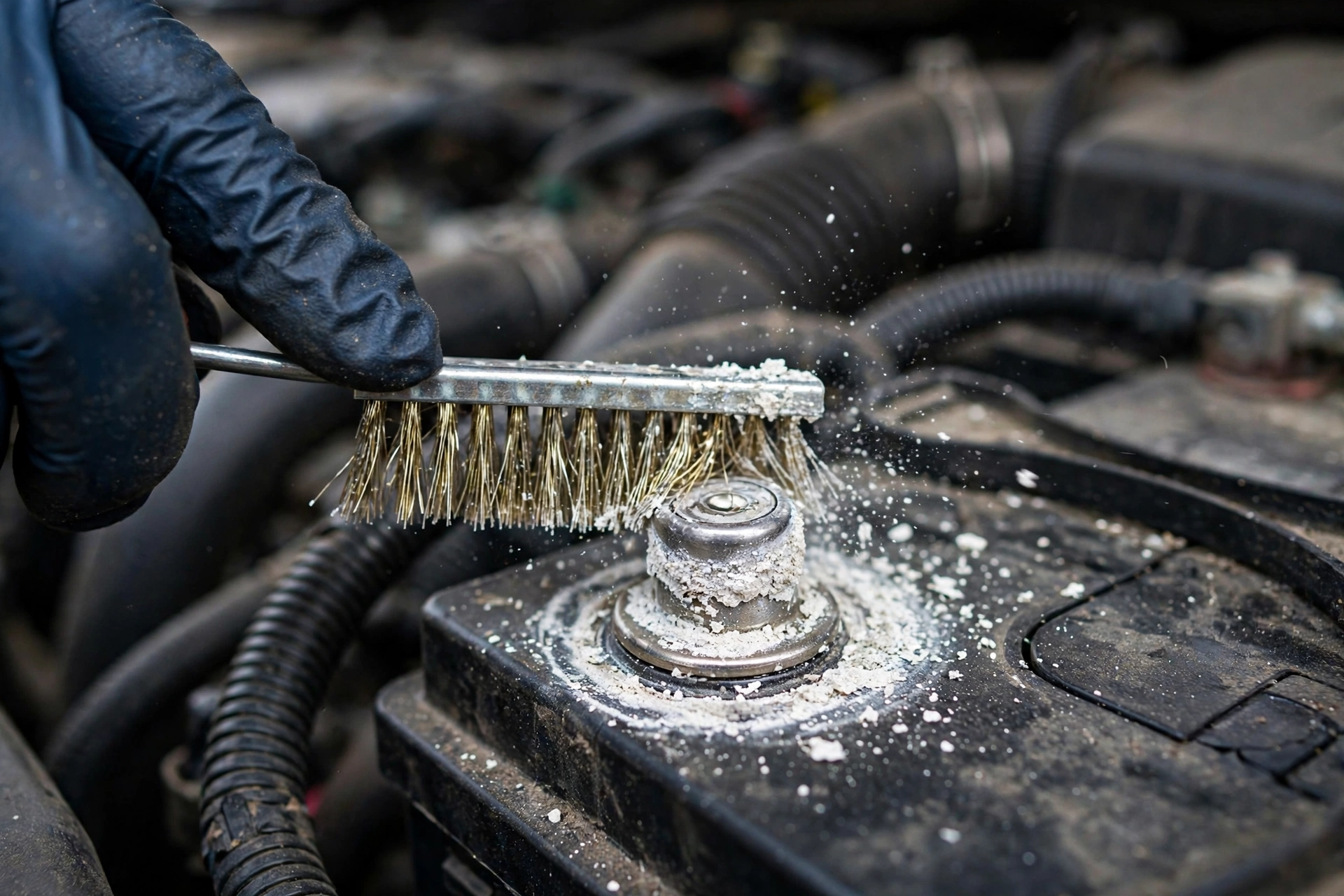
The battery itself can be perfectly healthy while a crusty white or green buildup on the terminals blocks the electrical connection. Loose clamps do the same thing. The result looks exactly like a dying battery: slow cranking, dim lights, and overnight failure — especially because a poor connection also means the battery doesn't charge properly while you drive.
How to check: Pop the hood and look at the terminals. If you see fuzzy white/green corrosion, that's your problem. With the car off, disconnect the negative cable first, then the positive, scrub the terminals and clamps with a wire brush (baking soda and water works too), rinse, dry, and reconnect — positive first, then negative. It takes ten minutes and costs nothing.
5. The Alternator Is Failing
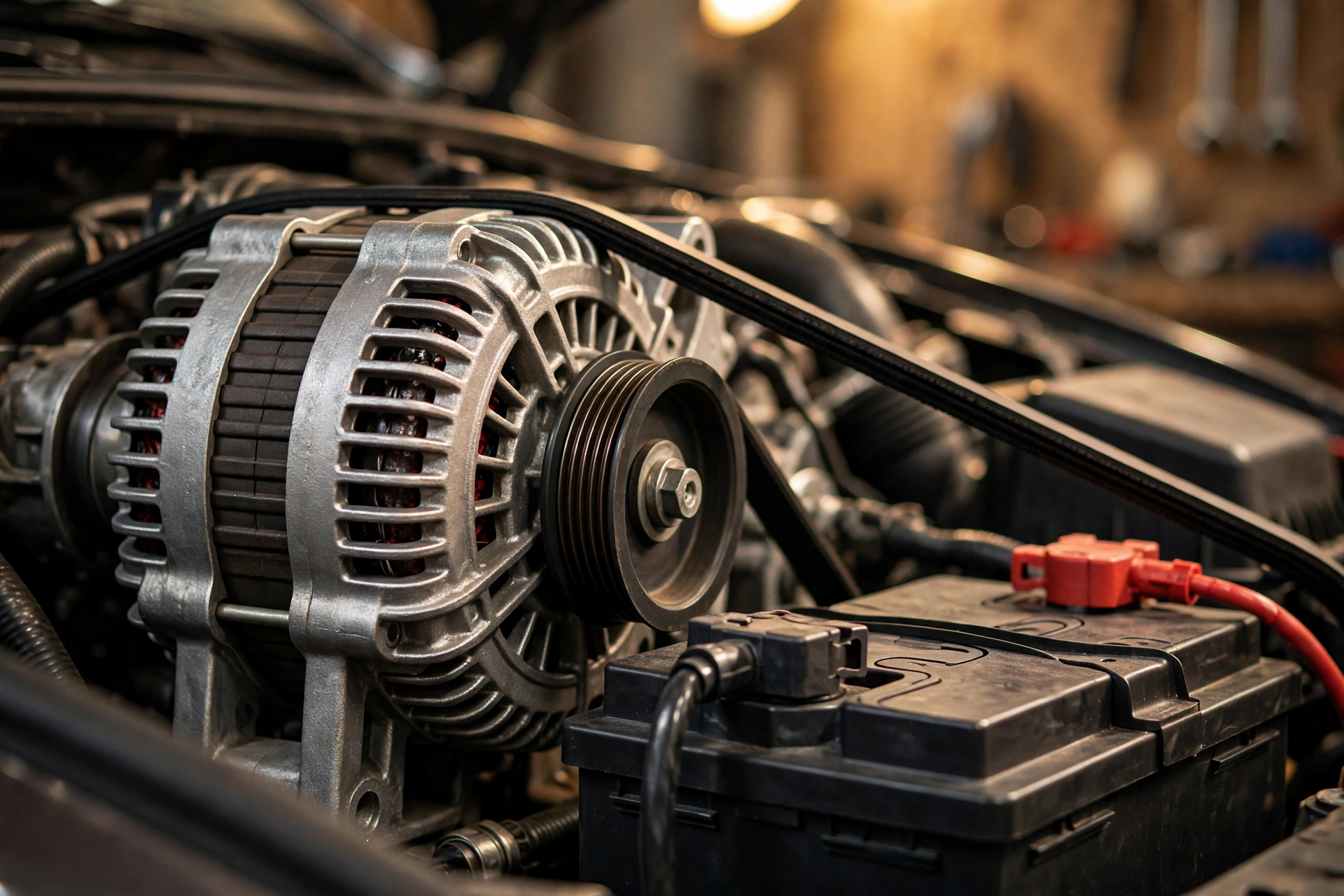
The alternator is what recharges your battery while you drive. If it's failing, the car runs on battery power alone and the battery simply gets emptier every day until it can't start the car — which is usually the next morning. This one is sneaky because the car drives fine for a while.
How to check: After jump-starting, watch the battery/charging warning light on your dashboard (it looks like a small battery). If it stays on while the engine runs, that's the alternator waving a red flag — see our dashboard warning lights guide for what that light means. Dimming headlights at idle and electrical accessories acting strangely are other clues. Alternator replacement typically costs $400–$800 at most independent shops.
6. Extreme Cold Weather
Battery chemistry slows down in the cold. A battery that was barely getting by in mild weather can give up entirely on the first freezing night — cold doesn't usually "cause" the failure, but it exposes a battery that was already weak. Repeated short trips in winter make this worse, because the battery never fully recharges (see cause #7).
How to check: If the problem started exactly when temperatures dropped, get the battery load-tested (free at most auto parts stores) before assuming it's a drain or alternator issue. Parking in a garage, even an unheated one, helps a surprising amount.
7. Your Driving Pattern Never Recharges the Battery
Starting the engine is the hardest thing your battery does — it takes a big burst of energy. The alternator then needs 20–30 minutes of driving to put that energy back. If your daily routine is five-minute trips to the store and back, the battery runs a slow deficit that eventually ends in a dead car.
How to check: Be honest about your driving pattern. If most of your trips are under 15 minutes, this is very likely contributing. The fix is simple: take the car for a proper 30-minute drive a couple of times a week, and turn off the heated seats and rear defroster for the first part of it.
How to Tell Which Cause Is Yours: A Quick Diagnostic Table
| Symptom | Most Likely Cause | Typical Fix Cost (USD) |
|---|---|---|
| Dies overnight, battery is 4+ years old | Aging battery (#1) | $150–$300 (new battery installed) |
| Dies overnight, everything seems fine | Parasitic drain (#2) | $50–$100 diagnosis, then varies |
| Slow crank, dim lights, crusty terminals | Corroded terminals (#4) | Free (clean it yourself) |
| Jump works, but battery light stays on | Failing alternator (#5) | $400–$800 |
| Only happens in freezing weather | Cold exposing weak battery (#6) | $150–$300 (new battery) |
| Only short trips; long drives fix it temporarily | Undercharging (#7) | Free (change driving pattern) |
All costs are estimates — prices vary by vehicle and region. Ask for a quote before authorizing any repair.
Don't keep jump-starting forever. Repeatedly jump-starting and driving a car with an underlying electrical problem can damage the alternator and other electronics — and leave you stranded somewhere far less convenient than your driveway. If a battery dies twice in one week, stop and get it diagnosed.
What To Do Right Now
If your car is dead this morning, here's your order of operations:
- Jump-start the car safely following the correct cable order.
- Drive it for 30 minutes to recharge, then check the battery's age sticker.
- Clean the terminals if there's any corrosion.
- Unplug all accessories and chargers tonight, and confirm every light is off before you walk away.
- If it's dead again tomorrow morning, get a free battery and charging-system test at an auto parts store — they'll tell you in minutes whether the problem is the battery, the alternator, or a drain.
Safety note: never disconnect a battery terminal while the engine is running to "test" the alternator — this old trick can damage modern electronics. Batteries contain acid and produce hydrogen gas, so keep sparks and flames away and wear eye protection when working around them. If you're unsure, have a qualified mechanic handle it.
For more on keeping your car's electrical system healthy, browse our battery and electrical guides — and if a check engine light came on along the way, we have a guide for that too.