Intro
Your car won't start, the dashboard lights are flickering, or a warning light just came on — and you're wondering: is it the battery, or the alternator? These two parts work as a team, and their failure symptoms look nearly identical. Guessing wrong is an expensive mistake: replace the battery when the alternator is the real problem and you'll be stranded again within days.
You don't need to be a mechanic to tell the difference. A few observations and two simple tests you can do at home will point to the right answer almost every time. This guide shows you what each part does, the symptoms that belong to each failure, and the tests that settle the question.
What Each Part Actually Does
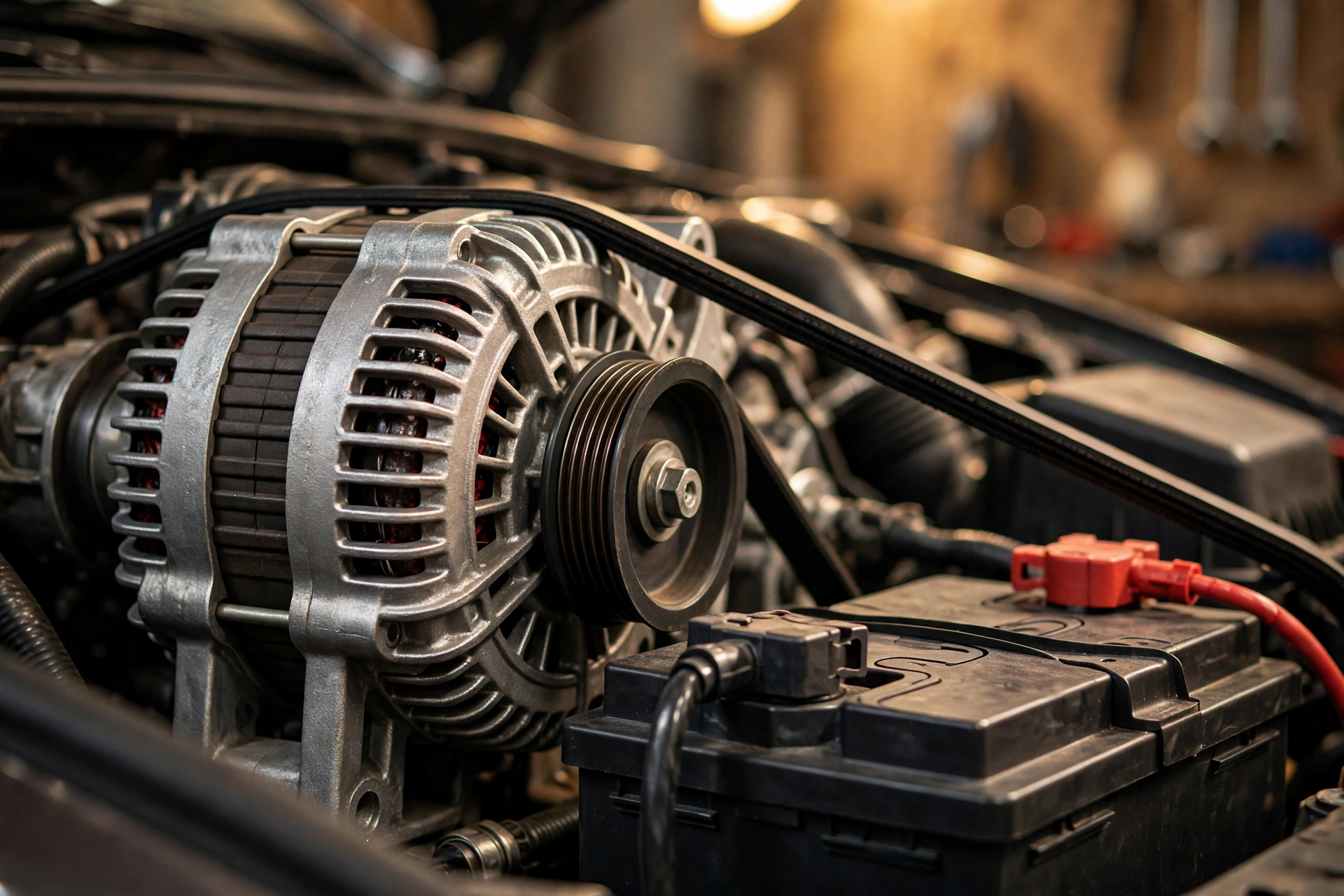
- The battery stores electrical energy and delivers one big burst of power to crank the engine and start the car. Once the engine is running, its main job is done.
- The alternator is driven by a belt connected to the engine. While you drive, it generates electricity for the headlights, radio, fans, and electronics — and recharges the battery.
Because they depend on each other, one failing part drags the other down. A dying alternator slowly drains a good battery, and a weak battery forces the alternator to overwork. That's why symptoms overlap — but the *pattern* is what gives the answer away.
Signs It Is the Battery
Battery problems almost always show up at startup, when the battery must deliver its big burst of energy:
- Slow, sluggish cranking — the engine turns over weakly, especially on a cold morning or after sitting overnight.
- Rapid clicking when you turn the key — a fast click-click-click with no engine turnover is a classic sign the battery lacks the charge to engage the starter.
- Dim interior lights before starting — a dim dome light or dashboard before you even crank points at a low battery.
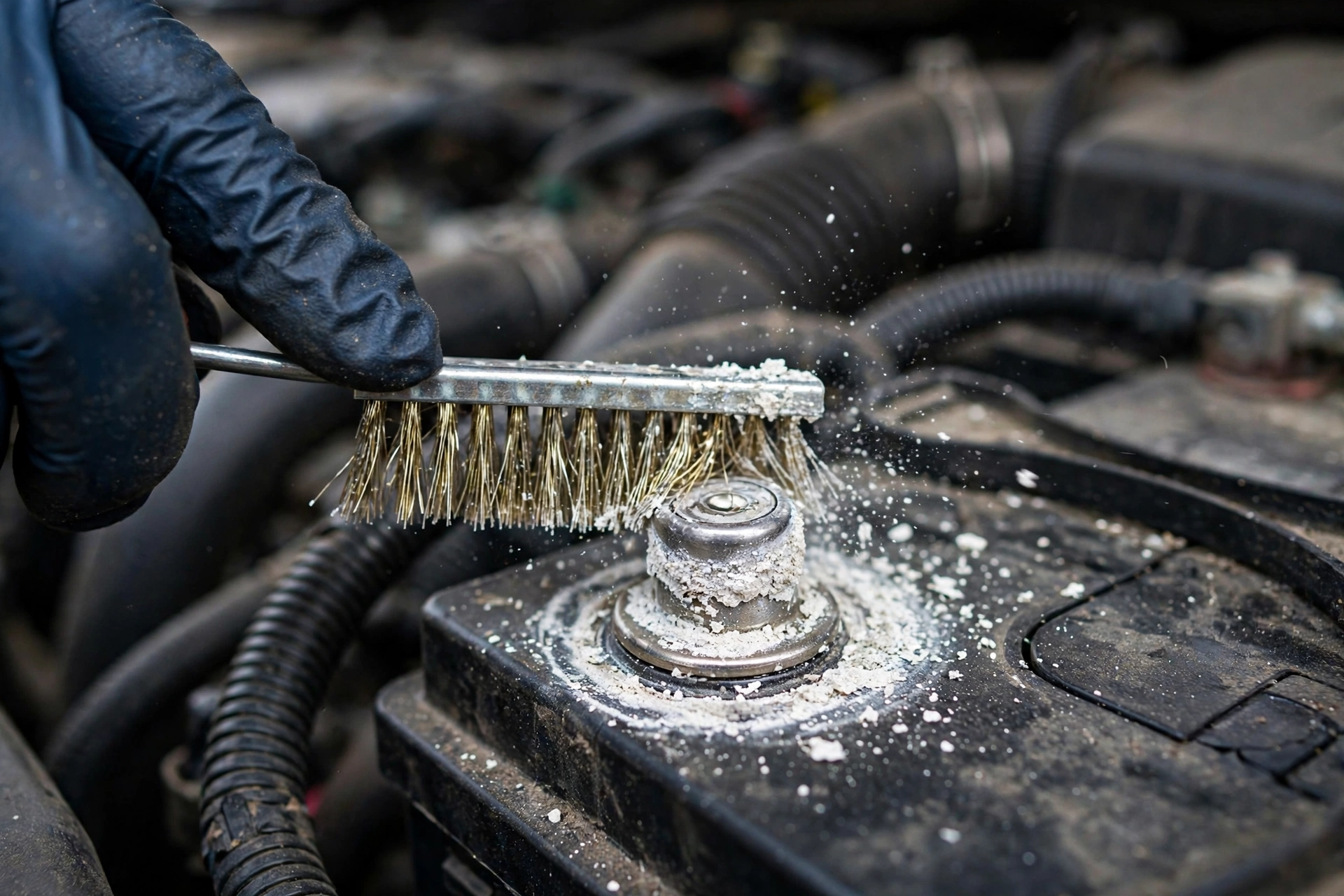
- Visible damage — a swollen case, white or greenish corrosion on the terminals, or a rotten-egg (sulfur) smell.
- Age — most car batteries last 3 to 5 years. If yours is older and acting up, the battery is the prime suspect. (See our guide: how long car batteries really last.)
- Car runs fine after a jump-start — if a jump gets you going and the car drives normally, the battery was too weak to start, but the charging system is fine.
One nuance: if a fairly new battery keeps dying overnight, the battery may not be the problem — something could be draining it while parked. That's parasitic drain.
Signs It Is the Alternator
Alternator problems usually appear while you're driving, when the alternator should be doing the work:
- Car starts but dies shortly after — especially right after a jump-start. If the engine runs a few minutes after the cables come off and then stalls, the alternator isn't generating power.
- Dim or flickering headlights while driving — headlights that dim at idle and brighten when you rev, or flicker at any speed, strongly suggest the alternator. A weak battery rarely causes flickering once the engine runs.
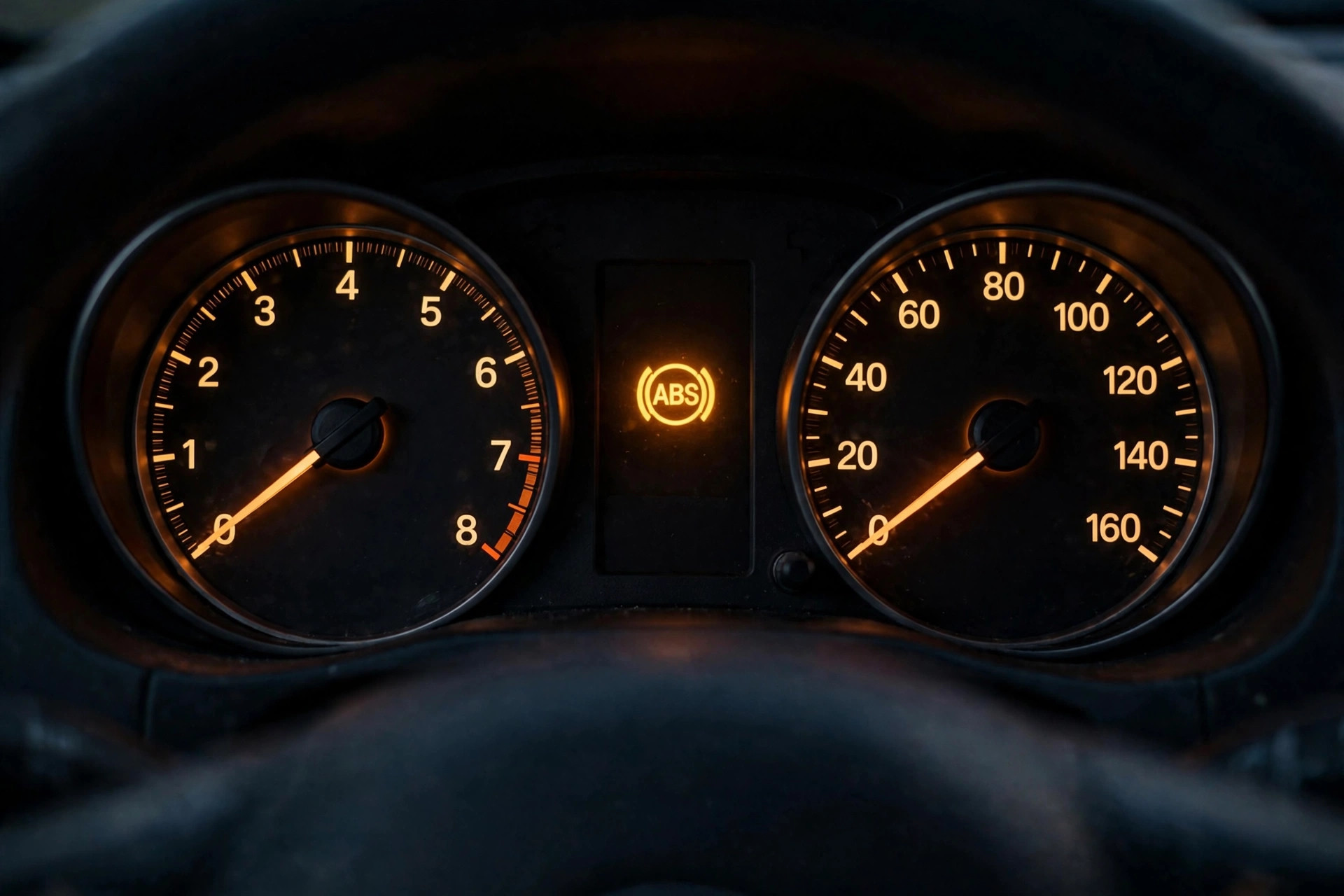
- Battery warning light stays on while driving — that battery-shaped icon is actually a *charging system* warning. If it lights up with the engine running, the alternator usually isn't charging. (More: battery warning light while driving.)
- Several electrical accessories misbehaving at once — radio cuts out, power windows move slowly, blower fan changes speed on its own. Unstable voltage from the alternator hits everything together.
- Strange noises from the engine bay — worn alternator bearings whine or grind; a slipping drive belt squeals. Batteries make no noise, so any new sound leans toward the alternator.
- A new battery that goes flat quickly — if a fresh battery dies within days, the alternator wasn't recharging it. This is the classic expensive mistake: replacing batteries without fixing the real fault.
Battery vs Alternator: Quick Comparison
| What you notice | More likely the battery | More likely the alternator |
|---|---|---|
| Engine cranks slowly or just clicks | Yes — almost always | Rarely |
| Car starts, then dies while driving | No | Yes |
| Headlights dim or flicker while driving | No | Yes |
| Battery warning light on while driving | Less likely | Yes |
| Car runs fine after a jump-start | Yes | No — dies again |
| Strange whining or grinding under the hood | No | Yes |
| Battery is 3+ years old | Strong indicator | Less relevant |
| Brand-new battery goes flat in days | No | Yes — not recharging |
Test 1: The Jump-Start Test (No Tools Needed)
The fastest, most reliable no-tool test. You need jumper cables and a second car (or a portable jump starter).
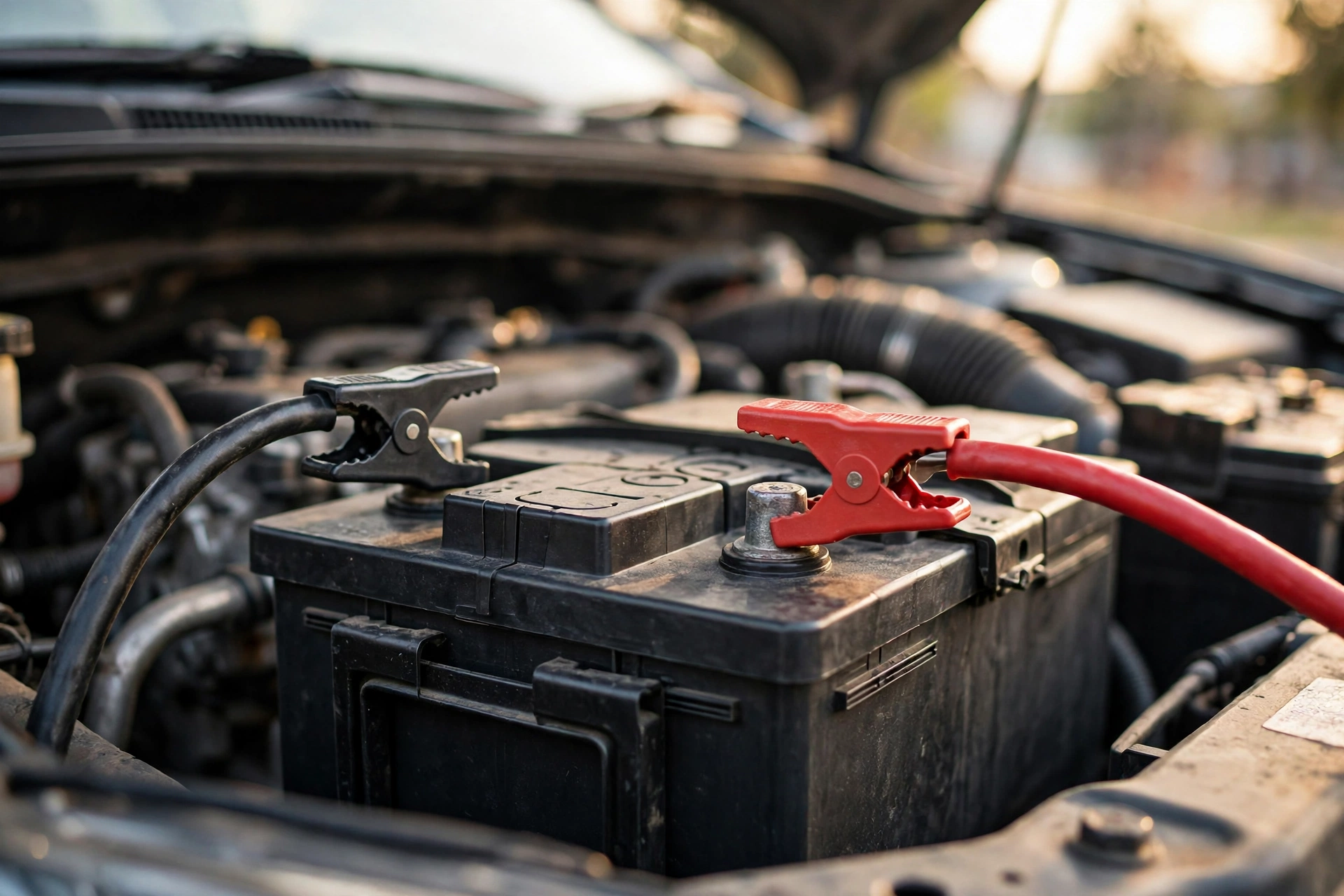
- Jump-start the car using the correct cable order — red to dead positive, red to donor positive, black to donor negative, black to unpainted metal on your engine. (Step-by-step: how to jump-start a car safely.)
- Remove the cables and let the car idle.
- Watch what happens:
- It keeps running normally → the battery was too weak to start the car, but the alternator is charging. You likely need a new battery.
- It dies within a few minutes → the alternator isn't producing power. The car ran on the battery's leftover charge. The alternator is your problem.
Skip the old "disconnect the battery cable while the engine runs" trick — on modern cars, that voltage spike can fry the engine computer. The jump-start-and-watch test gives the same answer safely.
Test 2: The Multimeter Voltage Test (Most Accurate)
A basic digital multimeter is cheap at any auto parts store, and this two-minute test settles the question definitively.
- Set the multimeter to DC volts (marked V or "20V").
- Engine OFF: red probe to the positive (+) terminal, black probe to the negative (−) terminal.
- Around 12.6V = healthy, fully charged battery.
- Below 12.4V = partially discharged; below 12.0V = significantly discharged or weak.
- Start the engine and repeat the measurement.
- 13.5–14.5V = the alternator is charging correctly. The battery was your problem.
- Below 13.5V = the alternator isn't charging enough.
- Above 14.5V = the alternator is overcharging, which can also damage the battery.
No multimeter? Many auto parts stores test your battery and charging system for free — a 10-minute job that saves you from buying the wrong part. (This matches the testing advice in O'Reilly's alternator symptoms guide.)
Don't Replace the Wrong Part
The trap: the car won't start, so you buy a new battery. It works for a few days — a fresh battery can power the car on its own briefly — then dies again. You've paid for a battery you didn't need while the real problem got worse. The reverse hurts more: an alternator replacement costs several times a battery.
Rule of thumb: battery is old (3+ years), corroded, or swollen → start with the battery. Battery is young but keeps dying, or while-driving symptoms appear → start with the alternator. When in doubt, get the free charging-system test before buying anything.
What to Do Next
- If it's the battery: replacement is a straightforward DIY job — disconnect negative first, then positive; reverse the order installing the new one. Match your car's group size and cold-cranking amps (owner's manual). Most auto parts stores recycle old batteries for free.
- If it's the alternator: this is a bigger job — some cars are DIY-friendly, others bury it deep. Unless you're comfortable with belt routing and torque specs, see a mechanic. Drive as little as possible: switch off the radio, AC, and heated seats, and don't turn the engine off until you reach the shop.
- Still unsure: get the free battery and charging-system test at an auto parts store, or ask a mechanic for a proper load test.
Frequently Asked Questions
Can a bad alternator kill a brand-new battery?
Yes — this is one of the most common and frustrating scenarios. If the alternator isn't recharging properly, even a brand-new battery drains as you drive and dies within days. Always verify the alternator before assuming a fresh battery fixes things.
Why does my car die right after a jump-start?
Because the alternator isn't doing its job. A jump borrows power from another battery, but once the cables come off, the car depends on its own alternator. If it has failed, the car drains the remaining battery charge and stalls — usually within minutes.
The battery warning light is on — does that mean the battery is dead?
Not necessarily. That icon is a charging system warning. It most commonly means the alternator isn't charging properly, though loose cables, a broken drive belt, or corroded terminals can also trigger it.
Can I drive with a failing alternator?
Only to get somewhere safe. You're on borrowed battery time. Reduce electrical load (AC, radio, heated seats off), keep the engine running since it may not restart, and head straight to a repair shop — a stall means losing power steering and the brake booster.
Do I need to replace the battery when I replace the alternator?
Not automatically, but have the battery tested at the same time. A failing alternator often damages the battery it starved or overcharged. If the battery is more than a couple of years old or tests weak, replacing both saves you a repeat breakdown.
Conclusion
Telling a bad battery from a failing alternator comes down to timing: battery trouble shows up at startup, alternator trouble shows up while driving. The jump-start test gives strong clues with no tools, and a two-minute multimeter check settles it. Take those ten minutes to diagnose before you buy — replacing the right part the first time is cheaper, faster, and far less stressful.