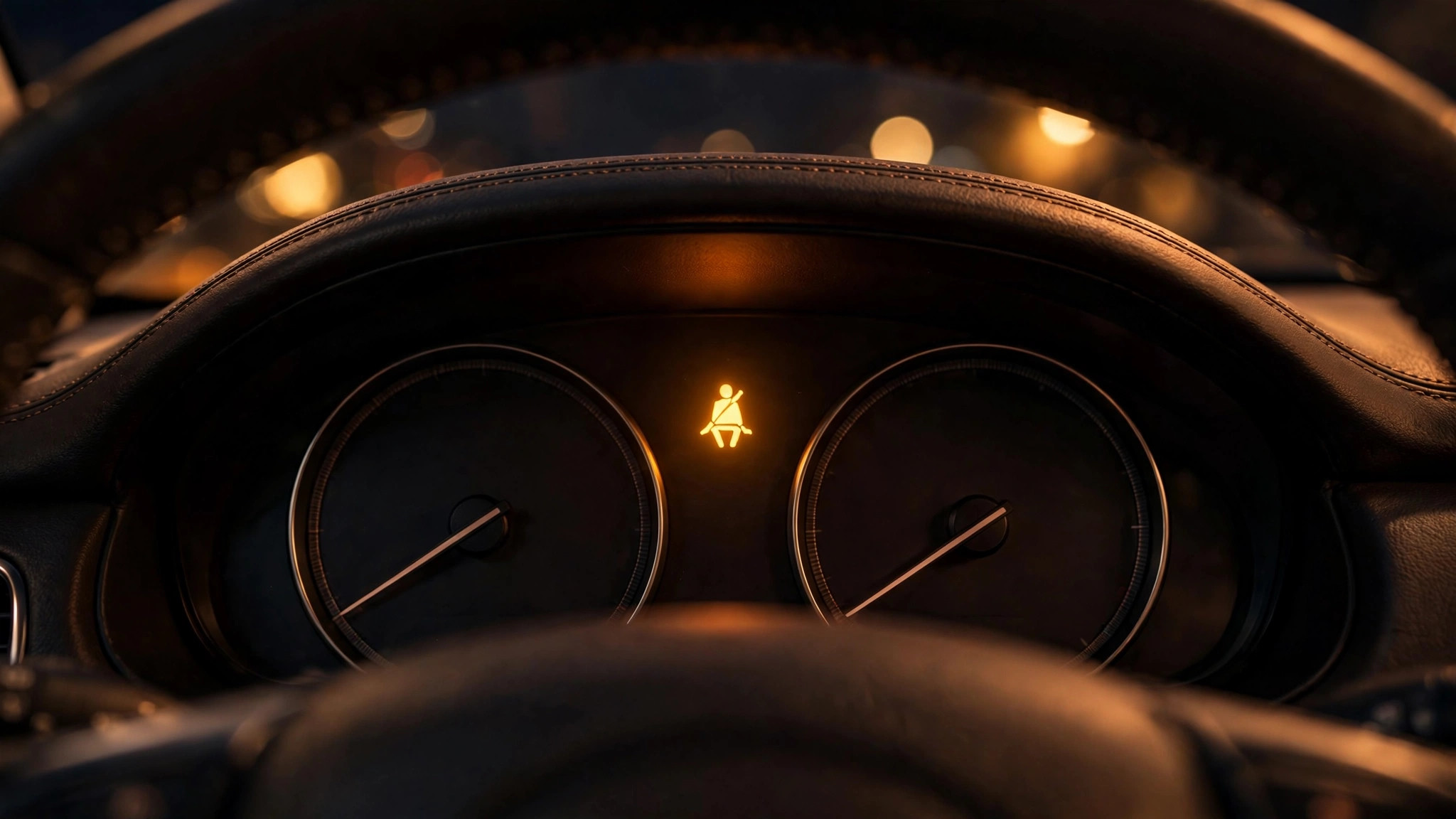
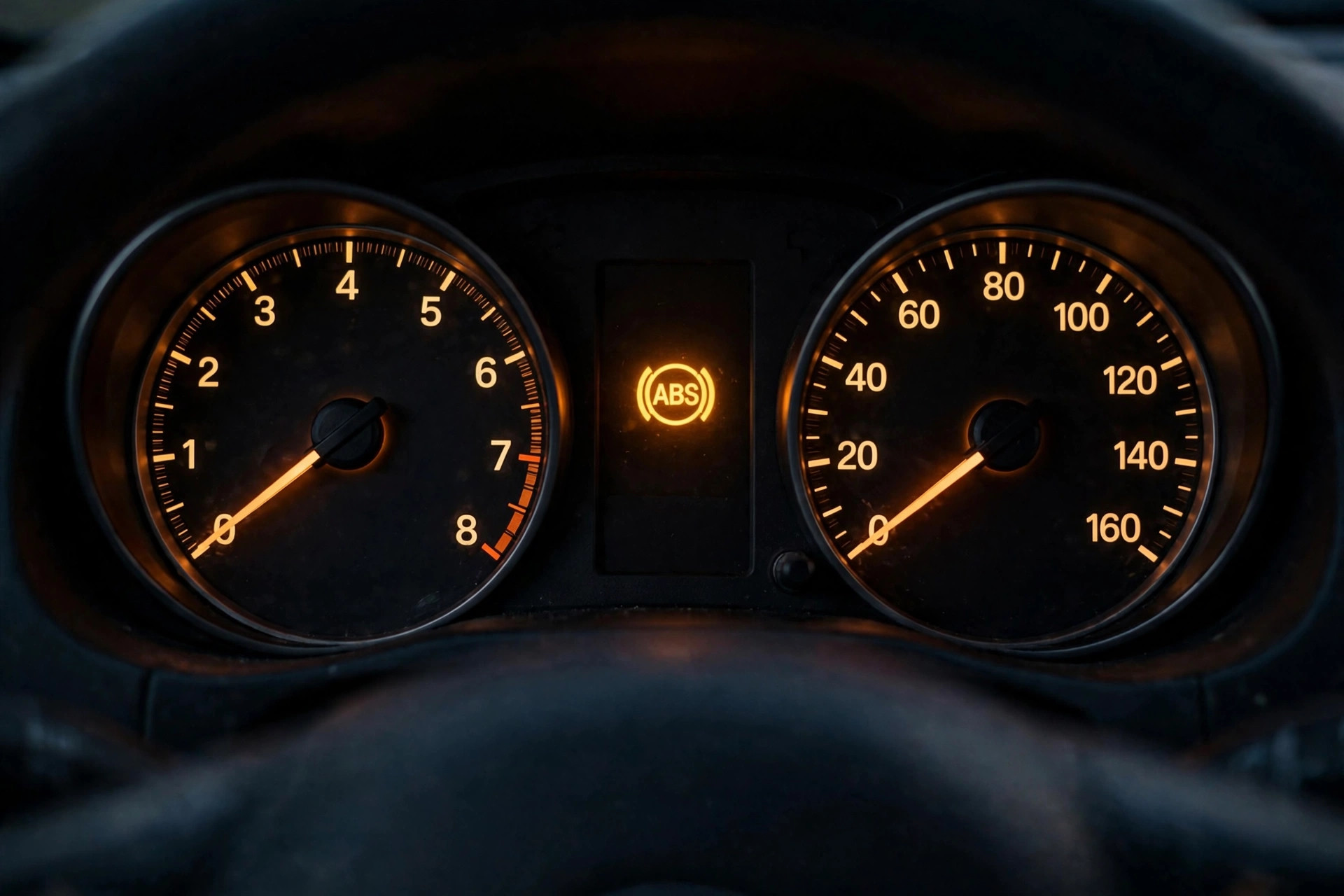
You're driving along and a yellow light pops up on your dashboard — it says ABS, or shows a car with two squiggly skid marks behind it. Nothing has happened, the car still drives normally, but the light refuses to go away. If this is your first car, it's natural to wonder: is something seriously wrong, and can I keep driving?
The short answer: your normal brakes still work, but an important safety system is offline, so you should get it checked soon. Here's the full explanation in plain English.
What ABS Actually Does
ABS stands for Anti-Lock Braking System. It's the system that stops your wheels from locking up when you brake hard — the kind of emergency stop you'd make if someone pulled out in front of you.
Without ABS, slamming the brakes can lock your wheels, and locked wheels skid. A skidding car can't steer — you just slide straight ahead. ABS prevents this by rapidly pulsing the brakes (many times per second) on any wheel that's about to lock, so the tires keep just enough grip for you to steer around the obstacle.
Here's the key thing to understand: ABS is a helper, not the brakes themselves. Your regular brakes keep working even when the ABS light is on. But in a hard stop — especially on wet roads — you'll lose that anti-lock help, which means longer stopping distances and a real risk of skidding.
ABS has been mandatory on all new passenger cars in the US since 2013 (via NHTSA rules covering ABS together with electronic stability control). So if your car is from the last decade-plus, it has ABS — and it expects the system to be healthy. For more on the different lights your dashboard can show, see our dashboard warning lights guide.
Why the ABS Light Comes On
The ABS light doesn't come on at random. The car's computer constantly watches the ABS system, and if it detects a fault, it switches the light on and disables ABS until the problem is fixed. These are the most common causes, from cheapest to most expensive:
1. Dirty or damaged wheel speed sensors (most common)
ABS needs to know how fast each wheel is turning, so every wheel has a small wheel speed sensor. These sit right next to the wheels, where they get covered in road dirt, mud, rust, and (in colder regions) road salt. If a sensor can't read its wheel properly, the computer can't trust the data and shuts ABS down.
The fix: a mechanic cleans the sensor, checks its alignment and wiring, and clears the fault code. This is usually the cheapest repair on this list.
2. Damaged sensor wiring
The wires that run from each wheel sensor back to the computer flex, rub, and corrode over time. A broken wire means the same thing as a broken sensor: no signal, no ABS.
The fix: inspecting and repairing or replacing the damaged wiring section.
3. Blown fuse
ABS needs electrical power to work. If its fuse blows, the system goes dark. This is the easiest thing to check — many cars' ABS fuse can be inspected in a couple of minutes.
The fix: replacing a blown fuse with one of the correct rating. But if the new fuse blows too, there's a deeper electrical problem that needs diagnosing.
4. Low battery voltage or charging-system problems
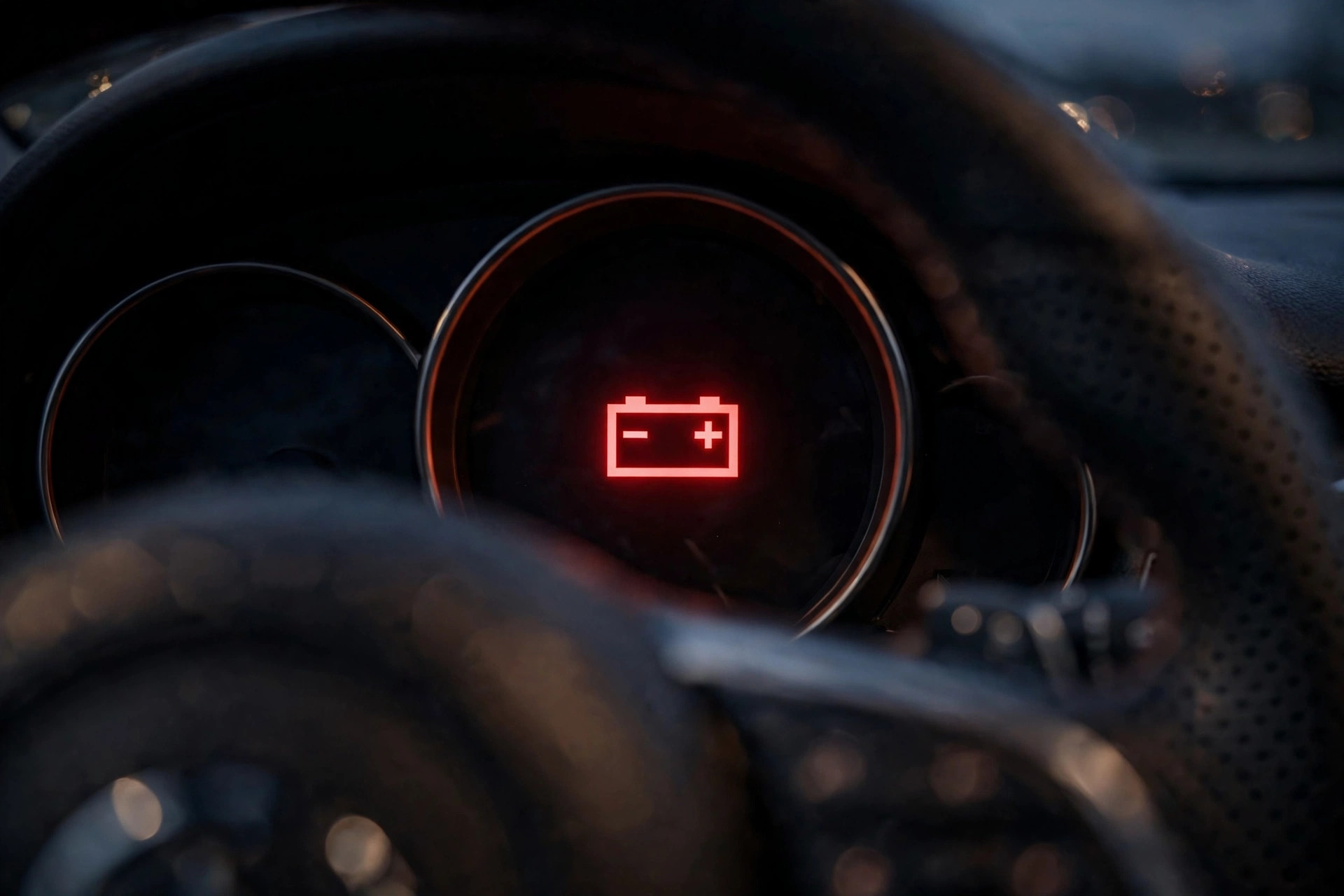
The ABS control unit is sensitive to voltage. If your battery is weak or the alternator isn't charging properly (often below roughly 10.5 volts), the computer may shut down "non-essential" systems — including ABS — to protect itself. If your ABS light comes on alongside a battery warning light, suspect the battery or charging system first. See our guide on why a car battery keeps dying overnight.
5. Failed ABS pump or control module
This is the rarest and most expensive cause. The hydraulic pump and electronic control module are the heart of the system. If the light persists after the cheap causes are ruled out, or you hear an unusual buzzing at every startup, the unit itself may be failing. This is firmly professional-mechanic territory.
Is It Safe to Drive with the ABS Light On?
Honestly: for a short trip to a mechanic, yes — carefully. Your normal brakes still work. But you should treat the car as if it's an older car without ABS:
- Slow down, especially on wet or gravel roads.
- Leave extra following distance — your stopping distances may be longer in a panic stop.
- Don't slam the brakes if you can avoid it. With ABS offline, hard braking can lock the wheels and send you into a skid.
- If the wheels lock in an emergency, ease off the brake pedal slightly, steer, then brake again firmly — the old "pump the brakes" technique that ABS replaced.
One important note: if the ABS light is on together with the red brake warning light (the one that says BRAKE or shows a circle with an exclamation mark), that's a different situation. Two warning lights at once can mean low brake fluid or a more serious brake problem — in that case, pull over safely and don't continue driving. A red brake warning light is not a "get to it soon" light; it's a "stop now" light.
What to Do Next: A Beginner's Checklist
- Don't panic. Your car isn't about to lose its brakes. The ABS light is yellow/amber for a reason — it's a "get this checked soon" warning, not an emergency stop.
- Check the obvious. Is your battery warning light also on? Is the brake fluid reservoir low? Is your tire pressure warning light on too? Sensors share wiring and voltage, so combined symptoms are a clue.
- Restart the car once. A one-off electrical glitch can trigger the light. If it goes out and stays out, keep an eye on it — if it returns, it's real.
- Book a diagnostic. Any decent garage can read the ABS fault codes with a scanner in minutes. The code usually points straight at the faulty sensor or component, so you avoid paying for guesswork.
- Ask what the code was. Even as a beginner, knowing the fault code (something like "C1234") helps you verify the quoted repair matches the actual problem — and helps if you ever get a second opinion.
How to Keep Your ABS Healthy
You can't prevent every failure, but you can reduce the odds:
- Keep up with tire maintenance. ABS depends on accurate wheel-speed readings, so matching tires in good condition matter. Uneven or mismatched tires confuse the system — check your tire pressure regularly (see how often to check tire pressure).
- Don't ignore small electrical issues. A dying battery or dim headlights can be an early warning that voltage is sagging — and ABS is one of the first systems affected.
- Have it inspected during routine service. Ask your mechanic to include the brake system in your regular checkups, especially once the car is over 8–10 years old.
- Brake gently when you feel pulsing. When ABS is working and activates in a hard stop, you'll feel the pedal vibrate or pulse under your foot — that's normal. Don't lift off the pedal; keep pressing firmly and steer.
FAQ
Why is my ABS light on but my brakes feel fine?
Because your normal brakes are a separate system from ABS. ABS is a backup helper that only activates in hard stops, so you won't notice it's gone during everyday driving. The light is telling you the helper is offline, not that the brakes have failed.
Can I reset the ABS light myself?
The light will only stay off if the underlying fault is fixed. Some faults clear with a scan tool after repair; others clear automatically after a few drive cycles once the sensor reads correctly again. Resetting the code without fixing the cause just brings the light back.
How much does ABS repair cost?
It depends entirely on the cause: cleaning a wheel speed sensor or replacing a fuse is cheap, while a failed ABS pump or control module can cost several hundred dollars or more. That's why a proper diagnostic scan is worth it — it identifies the exact part instead of guessing.
Will my car fail inspection with the ABS light on?
In many regions, yes. Safety inspections in several US states and vehicle MOT tests in the UK can fail a car with an illuminated ABS warning light. If an inspection is coming up, get it fixed well in advance.
Does ABS shorten my stopping distance?
Not exactly — its primary job is control, not stopping distance. NHTSA research found that ABS's main benefit is preserving steering ability and vehicle stability during hard braking, which reduces crashes on wet and slippery roads. The average driver in a panic stop brakes too hard and locks the wheels; ABS prevents that.
Conclusion
The ABS light is one of the friendliest dashboard warnings: your car still drives and stops normally, and the fix is often cheap — usually a dirty sensor or a wiring issue. But don't ignore it for weeks. Every day you drive without ABS is a day your safety margin in an emergency stop is smaller than it should be.
Slow down, give yourself extra space, and get the fault code read at your next opportunity. And if you want to keep your car — and yourself — out of trouble, browse our dashboard warning lights category so you know exactly what every light on your dash is telling you.