

You're driving along, everything feels fine — and then a little symbol lights up on your dashboard. Your heart skips a beat. Is the car about to break down? Can you keep driving? Do you need to pull over right now?
Every beginner driver faces this moment, and it's confusing because there are dozens of symbols, some red, some amber, some green — and your owner's manual explains them in language that seems designed to be unhelpful. Here's the good news: you don't need to memorize every symbol. You need to understand a simple system, and you need to know the nine lights that actually matter.
This guide explains what each major dashboard warning light means, what to do when it comes on, and which ones mean "stop now" versus "schedule a checkup soon." For even deeper dives, each of the big three has its own dedicated article: what to do when the check engine light is on but the car runs fine, what the wrench/maintenance light really means, and why your tire pressure light keeps coming on.
First: How Warning Lights Work (the 30-Second System)
Warning lights follow a simple color code, used by virtually every carmaker:
- Red = stop. A red light means something is wrong right now and continuing to drive can cause serious damage or is a safety risk. Pull over safely as soon as you can.
- Amber / yellow = caution. Something needs attention soon. You can usually keep driving, but get it checked within days, not weeks.
- Green / blue = information. These aren't warnings at all — they tell you something is on (headlights, cruise control, turn signals).
- Flashing = urgent. A flashing light is more serious than the same light glowing steadily. A flashing check engine light, for example, means stop driving.
One more thing: when you start the car, most warning lights glow briefly and then turn off. That's a bulb check — the car proving the lights work. Only worry about a light that stays on after the engine is running, or comes on while you're driving.
1. Check Engine Light
What it looks like: a small engine outline, usually amber.
What it means: your car's computer has detected something wrong with the engine, emissions, or fuel system. The frustrating part? It can mean almost anything — from a loose gas cap (genuinely one of the most common causes) to a failing sensor, a misfire, or a catalytic converter problem.
What to do:
- If it's steady (not flashing) and the car drives normally: you can keep driving, but get it diagnosed within a few days. A shop can read the diagnostic trouble code in minutes.
- If it's flashing: that's an active misfire that can damage the catalytic converter. Reduce speed, avoid hard acceleration, and get to a shop right away — or pull over and call for help.
- First easy check: make sure your gas cap is tight. A loose cap can trigger the light, and it may clear itself after a few drives once tightened.
Because this is the light beginners ask about most, we wrote a full article on it: check engine light on but the car runs fine — here's what to do.
2. Oil Pressure Warning Light
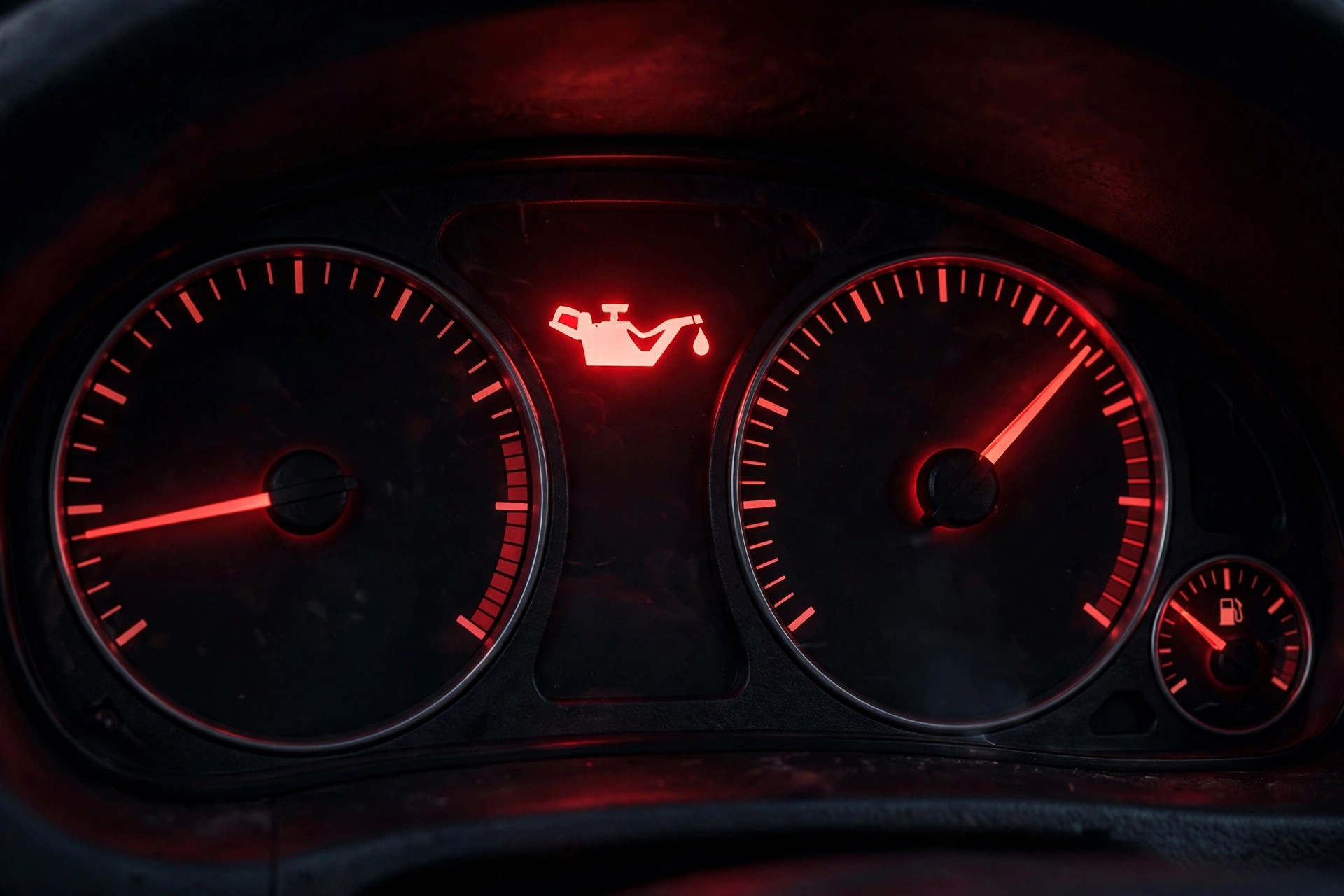
What it looks like: an old-fashioned oil can (some people say it looks like a genie lamp), usually red.
What it means: the engine's oil pressure is too low — either the oil level is very low, the oil pump is failing, or there's an internal problem. This is not the same as a "time for an oil change" reminder.
What to do: Stop the engine as soon as it's safely possible. An engine running without proper oil pressure can destroy itself in minutes — metal parts grind on metal with no lubrication. Pull over, turn the engine off, and check the oil level once the engine has cooled a bit (here's how to check your engine oil level). If the level is fine but the light stays on, don't restart the car — have it towed. This is one of the few lights where driving "just a little further" can total an engine.
3. Battery / Charging System Warning Light
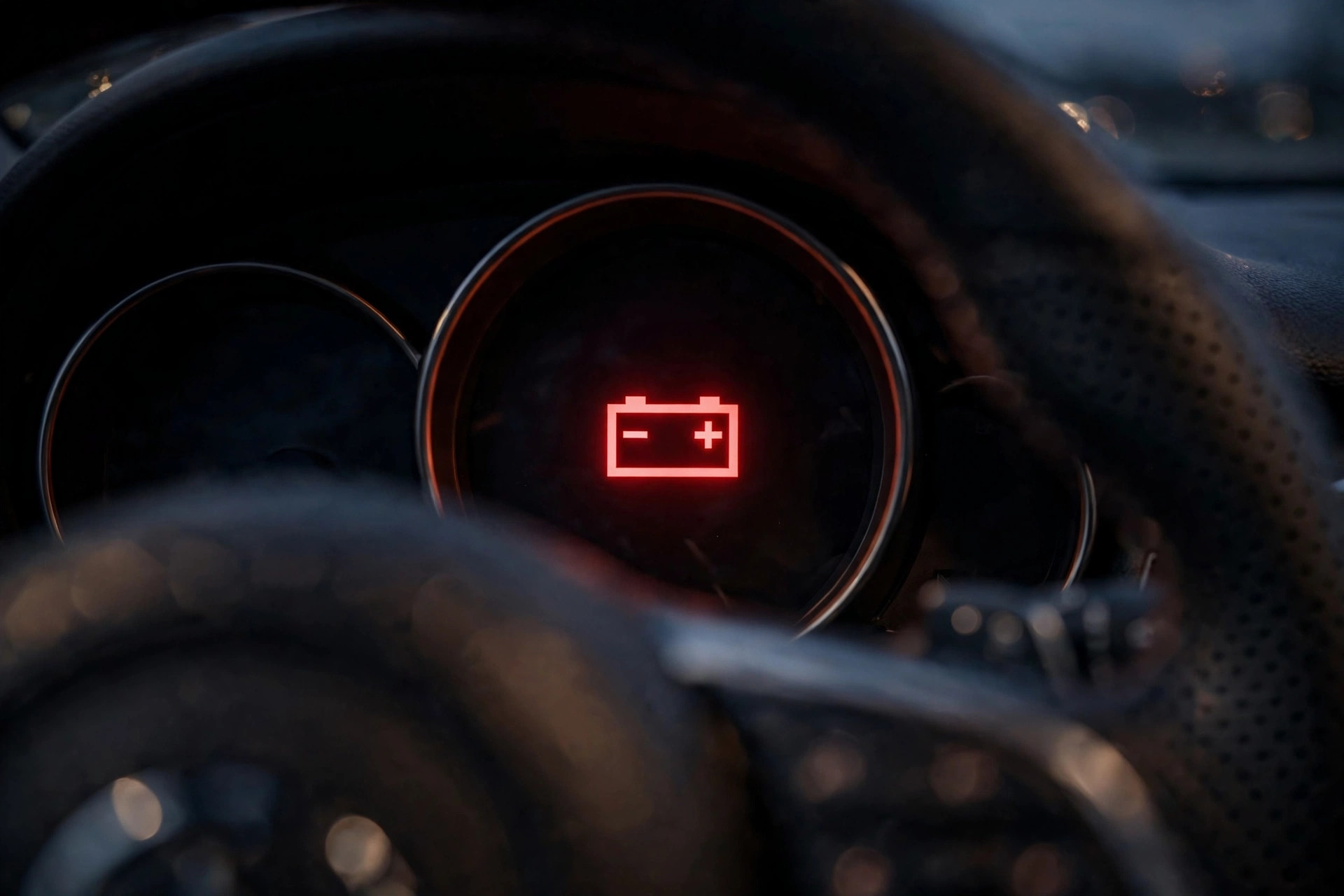
What it looks like: a small battery symbol, usually red.
What it means: despite the name, this light usually isn't about the battery itself — it means the charging system isn't working. Most often that's a failing alternator (the part that recharges the battery while you drive), a broken drive belt, or bad wiring. The car is now running on battery power alone, and the battery will drain as you drive.
What to do: You have limited time — typically 30 minutes to an hour of driving before the battery dies. Turn off everything electrical you don't need (air conditioning, heated seats, phone chargers, radio) and drive directly to a repair shop or auto parts store. Don't turn the engine off once you're moving, because it may not restart. If you've been dealing with repeated dead batteries, read our guide on why your car battery keeps dying overnight — a failing alternator is cause #5.
4. Coolant Temperature Warning Light
What it looks like: a thermometer sitting in wavy liquid, usually red. Some cars show a temperature gauge instead.
What it means: the engine is overheating. The most common cause is low coolant — often from a leak — but a failed thermostat, water pump, or cooling fan can do it too.
What to do: Pull over safely and turn the engine off. An overheating engine can warp the cylinder head or seize within minutes. While waiting for it to cool: turn the heater to full hot and full fan (this pulls heat off the engine), and never open the radiator cap on a hot engine — pressurized steam can cause severe burns. Once cool, check the coolant reservoir level (never the hot radiator). If you suspect a leak, see our guide to coolant leak symptoms: 7 signs you should never ignore before driving anywhere.
5. Brake System Warning Light
What it looks like: a circle with an exclamation mark inside, sometimes with the word "BRAKE," usually red.
What it means: one of three things — the parking brake is still engaged, the brake fluid level is low, or there's a problem in the brake hydraulic system.
What to do:
- First, check the parking brake. Make sure it's fully released — this is the most common and most harmless cause.
- If the light stays on, do not keep driving normally. Test the brakes gently at low speed in a safe area. If the pedal feels soft, spongy, or goes to the floor, stop immediately and call for a tow.
- Low brake fluid often means worn brake pads or a leak in the system. Either way, brakes are not a system to gamble with — get them inspected right away.
6. ABS Warning Light
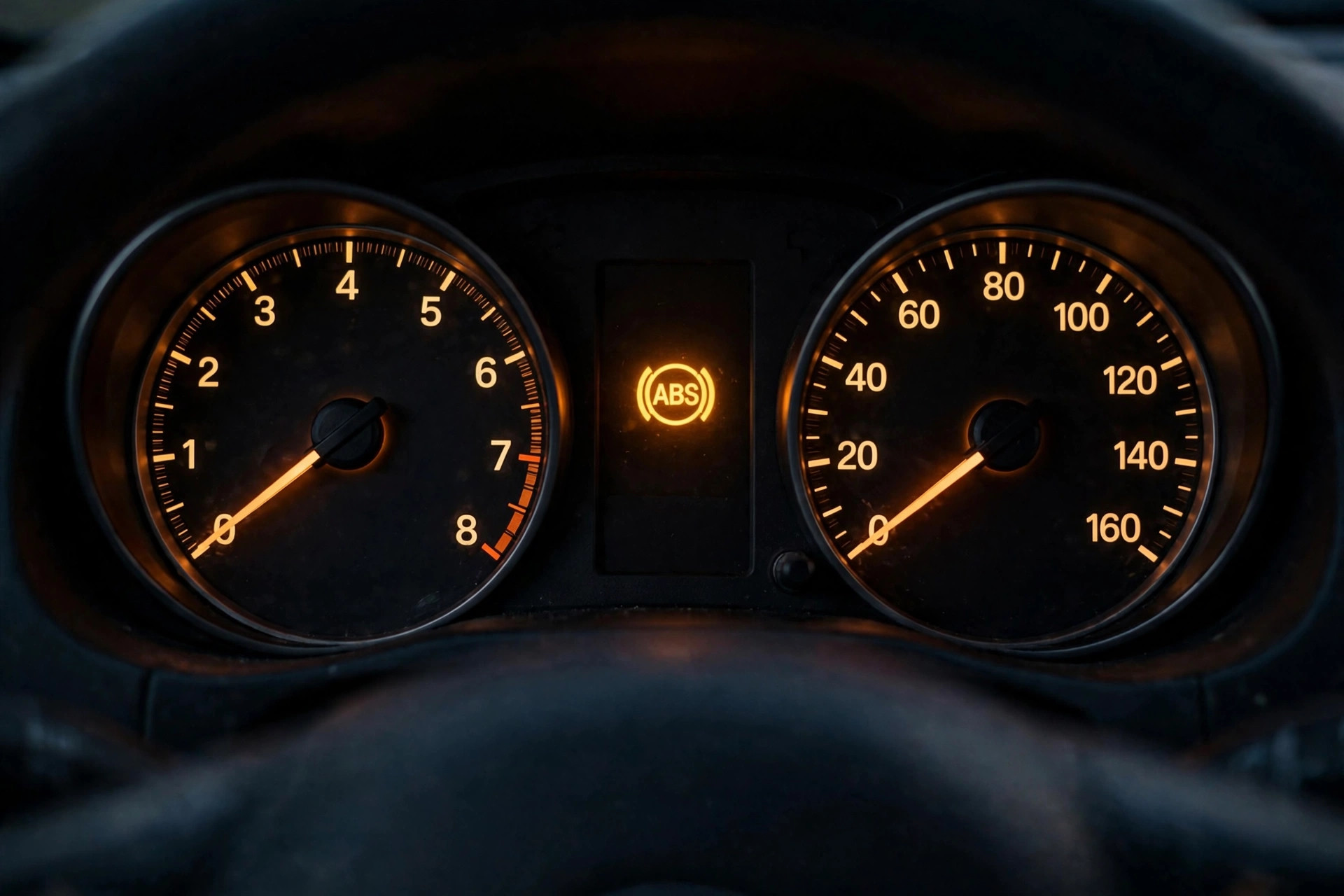
What it looks like: a circle with the letters "ABS" inside, usually amber.
What it means: there's a fault in the anti-lock braking system — the system that prevents your wheels from locking up during hard braking. Your regular brakes still work, but the anti-lock feature is disabled.
What to do: You can drive carefully to a shop, but be aware that in a panic stop — especially on wet or slippery roads — the wheels may lock and the car may skid. Get it diagnosed soon. If the ABS light and the red brake warning light are on together, that's more serious — the whole braking system may be compromised. Pull over and call for help.
7. Tire Pressure Monitoring (TPMS) Light
What it looks like: a cross-section of a tire with an exclamation mark in the middle, usually amber. (Some cars use a top-down view of a car with the tires highlighted.)
What it means: one or more tires is significantly underinflated — typically 25% or more below the recommended pressure. It can also come on temporarily on cold mornings, because tire pressure drops as temperature drops.
What to do: Check all four tires with a gauge as soon as you can and inflate them to the pressure listed on the driver's door jamb sticker (not the number on the tire sidewall — that's the maximum). Visually inspect for a nail or obvious damage. If the light comes on, you inflate, and it comes back again — you likely have a slow leak. Our dedicated guide why your tire pressure light keeps coming on walks through every cause and fix. And to make this a habit instead of a surprise, see how often you should check your tire pressure.
8. Airbag / SRS Warning Light
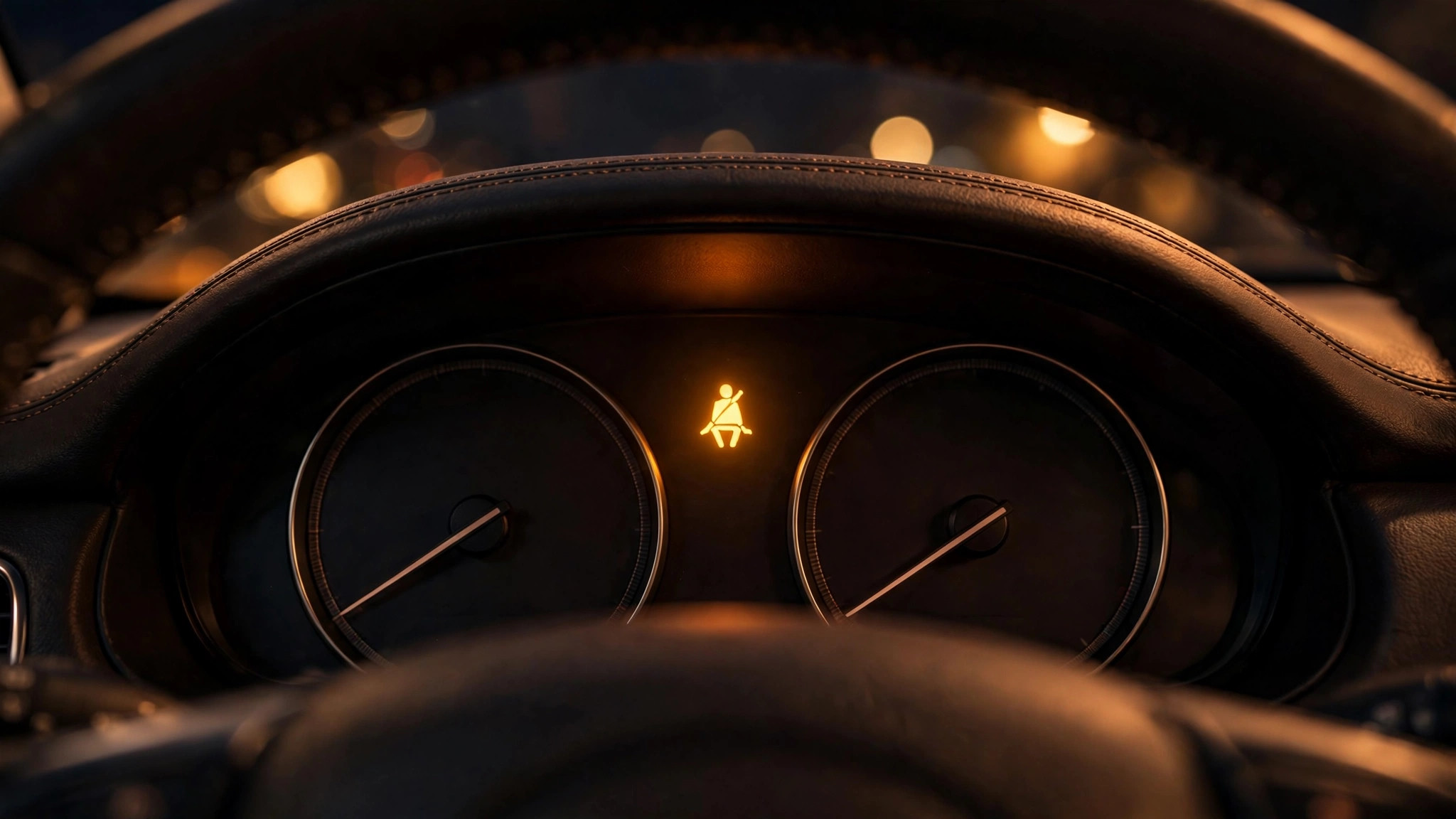
What it looks like: a seated figure with a circle (the airbag) in front, usually red or amber.
What it means: there's a fault in the supplemental restraint system — the airbags and seatbelt pretensioners. The car drives perfectly normally, but in a crash the airbags may not deploy.
What to do: This one doesn't require pulling over, but don't ignore it either — it's a silent safety issue. Get it diagnosed at a shop; the cause is often a faulty sensor or a wiring issue under a seat (moving seats back and forth can disturb connectors). Because airbags contain explosive charges, never try to repair or remove airbag components yourself.
9. Wrench / Maintenance Reminder Light
What it looks like: a wrench or spanner icon, sometimes with "MAINT" or a mileage countdown, usually amber.
What it means: this is not a warning — it's a service reminder. Your car is telling you it's due (or overdue) for scheduled maintenance like an oil change, filter replacement, or inspection, based on mileage or time.
What to do: Check your owner's manual for what's due, then schedule the service. The light is reset by the shop afterward. Many beginners mistake this for a breakdown warning and panic — it's just your car's calendar. Our full breakdown: what does the wrench light mean?
Quick Reference: Which Lights Mean "Stop Now"?
| Light | Color | Keep Driving? |
|---|---|---|
| Oil pressure | Red | No — stop as soon as safe |
| Coolant temperature | Red | No — pull over, turn engine off |
| Brake system | Red | No — unless it's just the parking brake |
| Battery / charging | Red | Short distance only — drive straight to a shop |
| Check engine (flashing) | Amber (flashing) | No — get help promptly |
| Check engine (steady) | Amber | Yes — diagnose within days |
| ABS | Amber | Yes, carefully — normal brakes still work |
| Tire pressure (TPMS) | Amber | Yes — check pressures soon |
| Airbag / SRS | Red/Amber | Yes — but get it fixed; airbags may not deploy |
| Wrench / maintenance | Amber | Yes — schedule service |
What To Do the Moment Any Light Comes On
Memorize this simple routine and you'll never freeze up again:
- Note the color. Red = potential stop-now situation. Amber = schedule a checkup.
- Note the behavior. Flashing is always more urgent than steady.
- Check how the car feels. Strange noises, smells, pulling, loss of power, or steam all raise the urgency.
- If it's red and the car feels wrong: pull over safely, turn the engine off, and call for help. A tow is always cheaper than an engine.
- If it's amber and the car feels fine: drive on, but book a diagnosis within days — not weeks.
Keep a cheap OBD-II scanner in your glove box. A basic Bluetooth OBD-II adapter costs $20–$40 and pairs with a free phone app. When the check engine light appears, you can read the trouble code yourself in two minutes — which tells you whether it's a loose gas cap or something that needs a shop. It won't fix anything, but it removes the mystery.
When a Warning Light Leads Somewhere Else
Warning lights are the start of a diagnosis, not the end. If you've read this far, you now know the system — and for the three lights beginners ask about most, we have complete step-by-step guides: the check engine light, the wrench/maintenance light, and the tire pressure light. If your issue turned out to be battery-related, start with how to jump-start your car safely and why batteries keep dying overnight. A coolant problem? Here's how to spot a coolant leak. And if it's a flat, here's how to change a flat tire yourself.
Safety note: dashboard lights are your car's early warning system — ignoring a red light to "see if it goes away" is how small problems become expensive ones. When in doubt, pull over safely and call for help rather than pushing through. If you're unsure about any warning light or repair, have a qualified mechanic handle it.
Want to keep learning? Browse all our dashboard warning light guides — and keep this article bookmarked for the next time a little symbol ruins your morning.