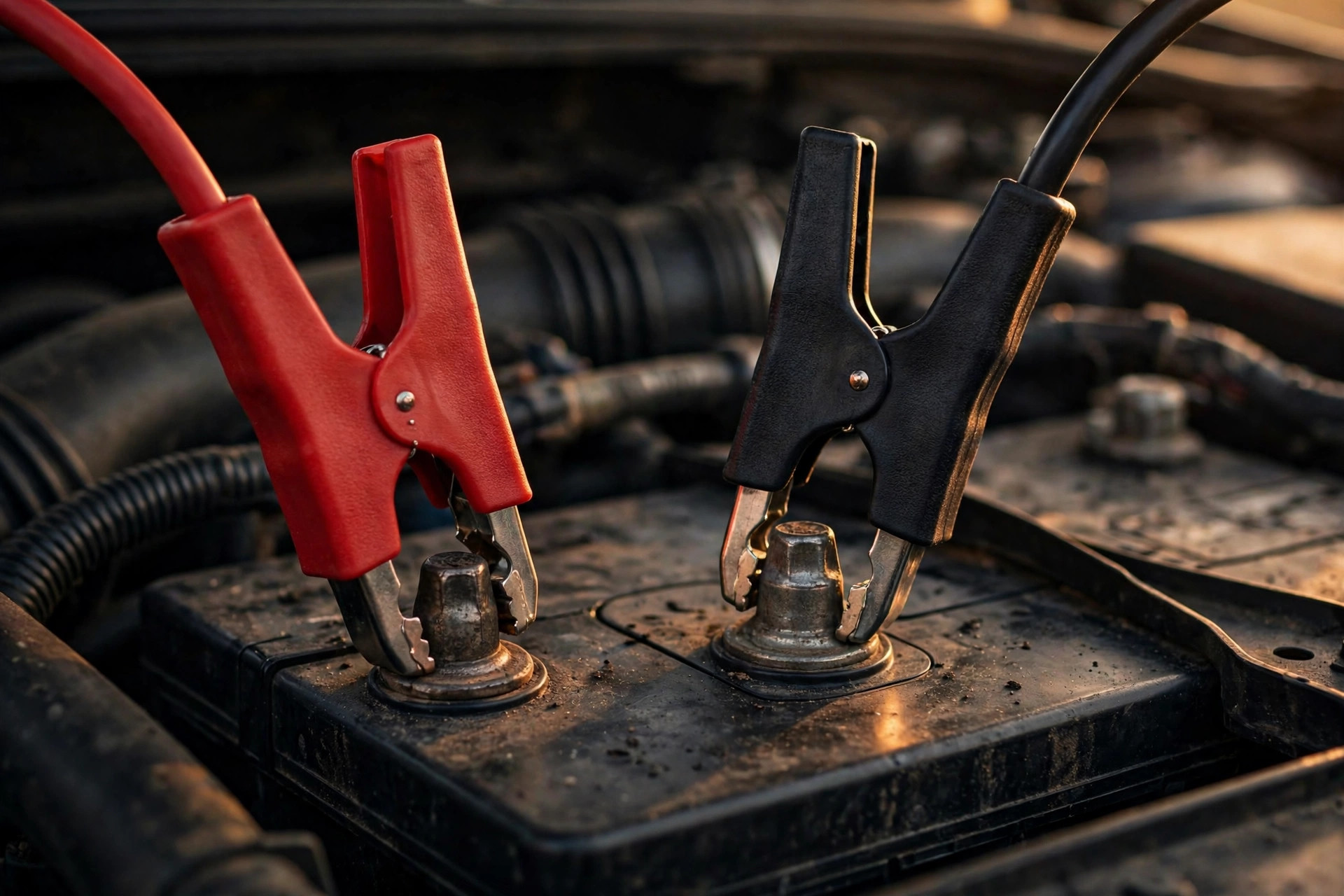
There are few feelings worse than turning the key in the morning and hearing nothing but a sad clicking sound. Your lights are dim, the radio is dead, and the car won't start. Before you panic or call for a tow, know this: a dead battery is one of the most common reasons a car won't start, and the fix is one of the simplest skills you can learn.
Jump-starting a car takes about five minutes, a set of jumper cables, and a second vehicle with a healthy battery (or a portable jump starter pack). That's it. But the order of the steps matters — connecting the cables in the wrong sequence is where beginners get into trouble, and where you can damage your car.
This guide walks you through the exact procedure, one numbered step at a time. Read it once now, keep a set of jumper cables in your trunk, and the day your battery dies you'll handle it calmly instead of feeling stranded.
What You'll Need
- Jumper cables — decent length (at least 12 feet / 4 meters) with thick wiring. Cheap, thin cables struggle on larger engines.
- A helper vehicle with a fully charged battery, parked close enough for the cables to reach — or a portable jump starter pack (keep it charged).
- Your owner's manual — battery location varies. Some cars hide the battery in the trunk or under a seat, and provide special jump-start terminals under the hood.
- Optional: gloves and safety glasses, since car batteries contain acid.
Before You Connect Anything: Safety Checks
Do these checks first — they take sixty seconds and prevent the situations where jump-starting goes wrong.
- Turn both cars completely off. Remove the key or keep the key fob well away from the vehicles. Set both parking brakes.
- Turn off everything electrical — headlights, hazard lights (only if you're in a safe spot), the radio, phone chargers, heated seats. You want the dead battery to get every bit of help it can.
- Inspect the dead battery. Look at it before touching it. If the case is cracked, swollen, bulging, or leaking fluid — or if you smell strong rotten eggs — do not jump-start it. A damaged battery can be dangerous. Call roadside assistance instead.
- Hybrid and electric vehicles are special. They have high-voltage systems and often completely different jump-start procedures. Always check your owner's manual first — do not improvise.
- Never jump a frozen battery. If the battery looks frozen or the case is bulging from ice, let it thaw in a warm place first, or call for help.
How to Jump-Start a Car: Step by Step
The rule is simple: red to dead first, red to helper, black to helper, black to metal ground. Then reverse the order when removing. Here it is in detail:
- Position the vehicles. Park the helper car close enough that the cables reach both batteries, but the two cars must not touch each other. Set both parking brakes.
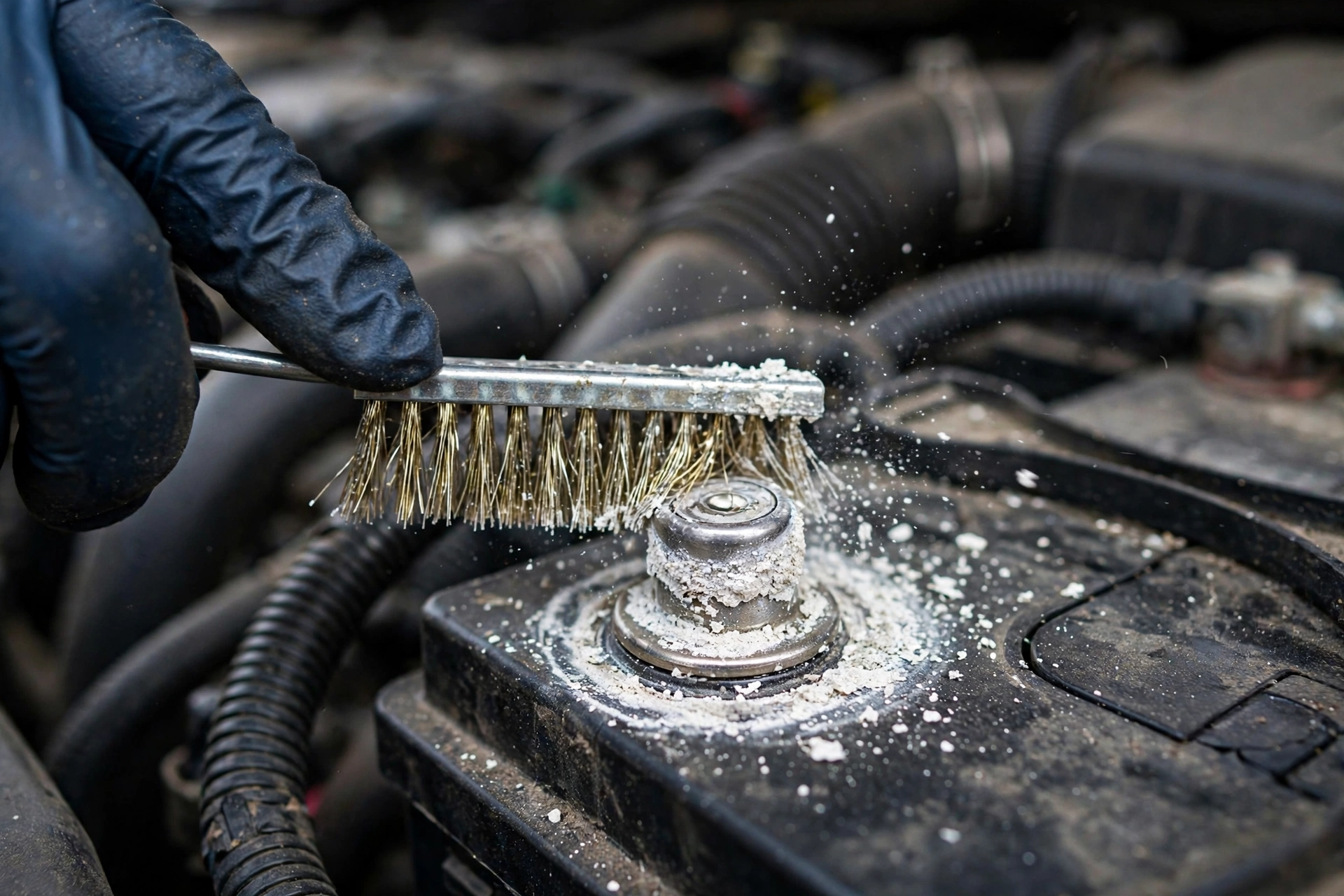
- Open both hoods and locate the batteries. The positive terminal is marked with a + (usually with a red cover or red cable). The negative is marked − (usually black). Wipe any white or green crusty corrosion off the terminals if you can — it interferes with the connection.
- Connect the RED clamp to the DEAD battery's positive (+) terminal. Make sure it grips firmly on clean metal.
- Connect the other RED clamp to the HELPER car's positive (+) terminal.
- Connect the BLACK clamp to the HELPER car's negative (−) terminal.
- Connect the other BLACK clamp to a solid, unpainted metal part of the dead car — a bolt on the engine block or a metal strut tower works well. This is your ground connection. Do NOT attach it to the dead battery's negative terminal. Attaching it to bare metal keeps any spark away from the battery, which can release flammable hydrogen gas.
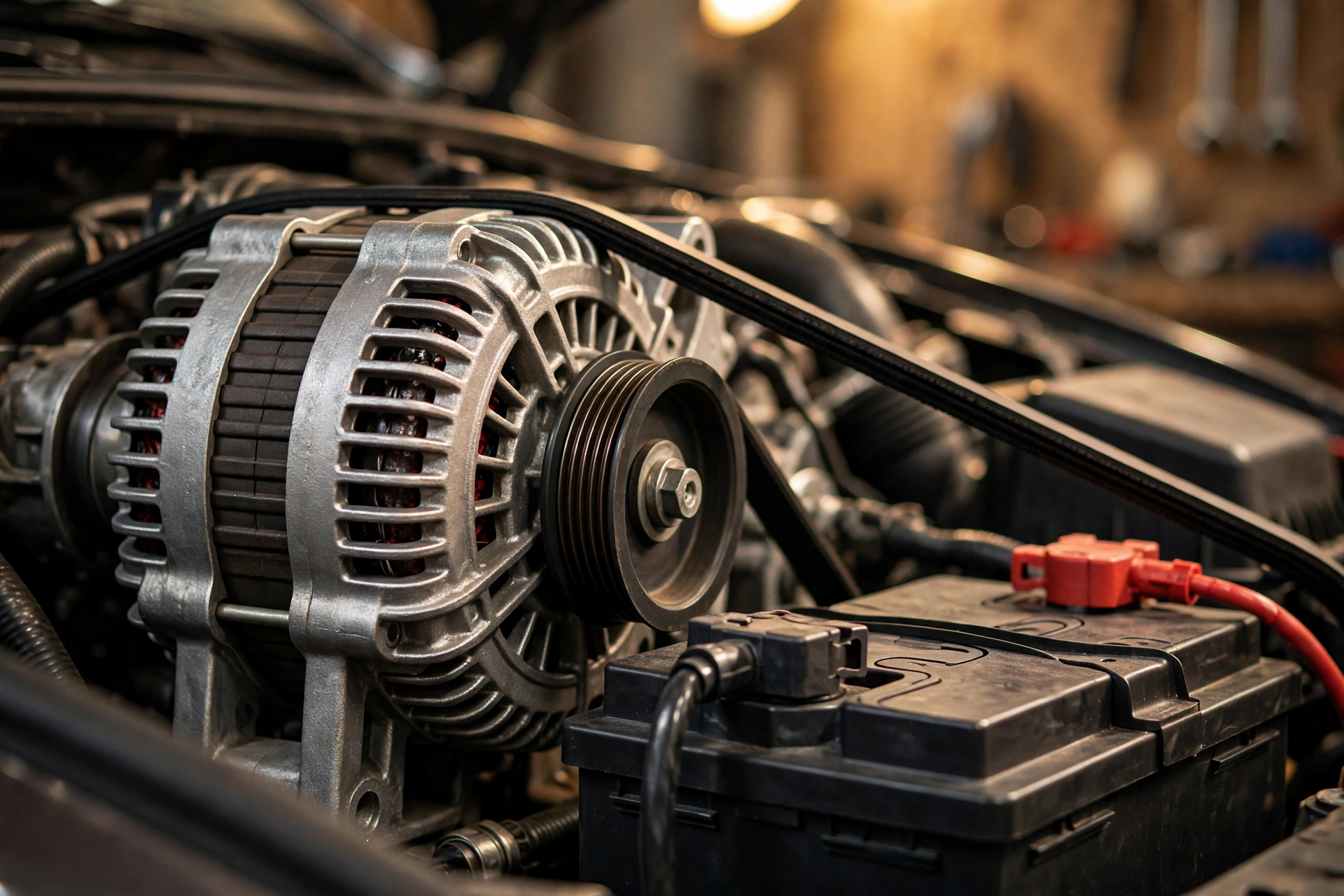
- Start the helper car and let it idle for a couple of minutes. This lets its alternator send charge toward the dead battery.
- Try starting the dead car. If it turns over slowly or doesn't catch, wait a minute or two and try once more. If it still won't start after a few tries, stop cranking and call roadside assistance — the problem is likely something other than the battery.
- Once the dead car is running, disconnect in the exact reverse order: black clamp from the metal ground point first, then black from the helper car's battery, then red from the helper car, then red from the previously dead car. Do not let the clamps touch each other while you're removing them.
- Keep the revived car running. Close the hoods, put the cables away, and drive the car for 20–30 minutes to let the alternator recharge the battery. Keep high-draw items like the air conditioning and rear defroster off during this drive so the weak battery gets the best possible chance to recover.
Pro tip: A jump start gets you moving, but it doesn't equal a fully charged battery. Many auto parts stores will test your battery and charging system for free while you wait — do this soon after a jump, because a battery that dies once often dies again.
Common Mistakes Beginners Make
- Connecting the cables in the wrong order — wrong connections can cause sparks or damage the electronics in either car. Follow the red-dead, red-helper, black-helper, black-ground sequence every time.
- Grounding to the dead battery's negative terminal — always use bare metal on the engine instead, for the reason above.
- Letting the clamps touch each other — a live clamp touching another can short-circuit. Keep them separated.
- Giving up too early, or trying too many times. If the car doesn't start after a few good attempts, continuing to crank can overheat the starter. Stop and get help.
- Shutting the car off right after the jump. The battery needs a solid 20–30 minutes of running to recover. Driving straight to the store and switching off can leave you stranded again.
What If the Battery Dies Again the Next Day?
A jump start treats the symptom, not the cause. If the same thing happens again within days — or your car is dead every single morning — something else is going on. It could be an aging battery that no longer holds a charge, an interior light draining it overnight, or a failing alternator. If that sounds like your situation, read our guide on why your car battery keeps dying overnight to walk through the 7 most likely causes.
Typical Costs (Estimates)
| Item / Service | Typical Cost (USD) |
|---|---|
| A good set of jumper cables | $20–$60 (one-time purchase) |
| Portable jump starter pack | $60–$120 |
| Battery test at an auto parts store | Usually free |
| New car battery, installed | $150–$300 at most independent shops |
| Professional jump start / roadside service call | $50–$100 (or free with roadside assistance membership) |
What If a Warning Light Comes On Afterward?
Sometimes a jump start reveals the underlying problem rather than fixing it. If the battery/charging warning light stays on after your car is running, that points to the charging system (often the alternator) rather than the battery itself — our dashboard warning lights guide explains what that red battery-shaped light means and what to do about it. And if the check engine light is on but the car runs fine, that's a separate issue worth reading up on before your next drive.
Safety note: car batteries contain sulfuric acid and produce hydrogen gas, so treat them with respect — never smoke or use open flames nearby, wear eye protection if you have it, and always follow the cable order exactly. If the battery looks damaged, swollen, cracked, or frozen, don't try to jump it. If you're unsure at any point, have a qualified mechanic handle it.
Want to understand more of what's going on under your hood? Browse our battery and electrical guides for the rest of the series.