

Your radio suddenly died but everything else in the car works fine. Or the 12V socket that powers your phone charger stopped working out of nowhere. Before you imagine an expensive electrical repair, check one small thing: a fuse.
A car fuse is a tiny, cheap safety device — and when it "blows," it is actually doing its job. The good news for first-time car owners is that checking and replacing a blown fuse is one of the simplest DIY jobs you can do. No mechanic needed, no special training — just a few minutes and a fuse that usually costs less than a dollar.
In this guide, you'll learn what fuses do, the types you'll find in your car, how to read the color code, where the fuse boxes hide, three ways to check if a fuse is blown, and the safe step-by-step way to replace one.
What Does a Car Fuse Actually Do?
Every electrical circuit in your car — headlights, radio, power windows, wipers, horn — runs through a fuse. A fuse is deliberately the weakest link in the circuit: a thin metal strip inside a plastic housing that melts and breaks the connection when too much current flows through it.
That single sacrifice protects the expensive wiring and components behind it from overheating, melting, or catching fire. Think of it this way: if a short circuit or power surge hits your radio's wiring, you'd much rather lose a 50-cent fuse than a $300 head unit. So while blown fuses are annoying, they're proof the protection system worked.
The Fuse Types You'll Find in Your Car
- Standard blade fuses (ATO/ATC) — the classic type: two metal blades in a colored plastic body. Common in older cars and trucks.
- Mini blade fuses — a smaller version of the standard blade fuse, and the most common type in modern cars.
- Micro fuses (Micro2, Micro3, LP-mini) — the tiniest ones, used in newer vehicles packed with electronics.
- Maxi blade fuses — oversized blade fuses for high-current circuits like the starter, alternator, and main feeds.
- Cartridge/glass tube fuses — cylindrical fuses found mostly in classic cars (pre-1980s); British classics often use ceramic "Lucas" fuses.
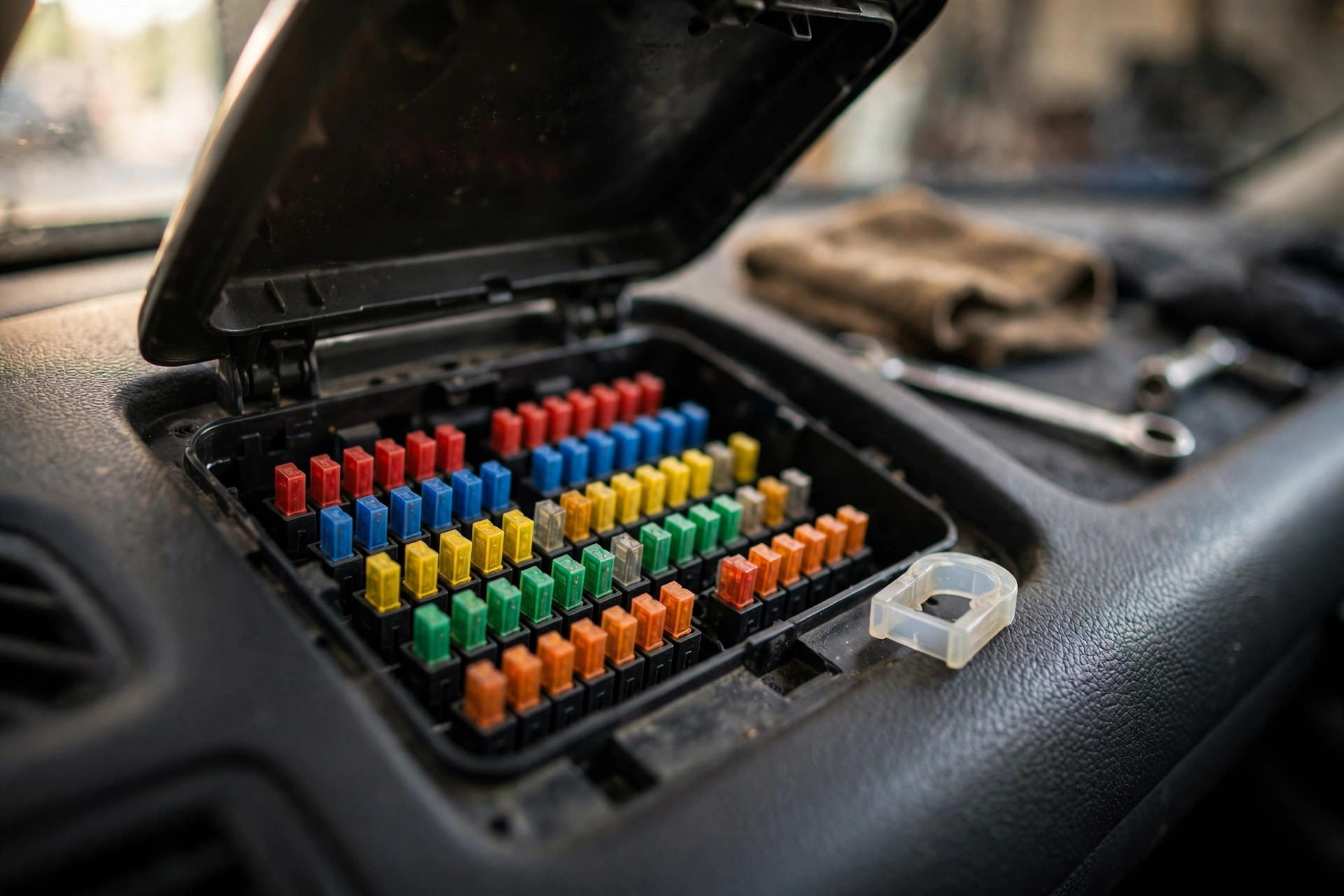
One thing that makes life easier: all blade fuses — mini, standard, or maxi — use the same universal color code. A blue 15-amp fuse means the same thing no matter the size.
Fuse Color Code Cheat Sheet
The color of a blade fuse tells you its amperage rating at a glance:
- Tan — 5A: interior lights, sensors
- Brown — 7.5A: small accessories
- Red — 10A: radio, indicators
- Blue — 15A: 12V socket, wipers
- Yellow — 20A: power windows, heated seats
- Clear/White — 25A: sunroof, cooling fans
- Green — 30A: headlights, blower motor
- Orange — 40A: main feeds, HVAC
When you buy a replacement, match both the color and the number printed on top of the fuse.
Signs Your Car Fuse Is Blown
- One specific thing stops working while everything else is fine — radio dead, 12V socket dead, one window dead. This is the classic blown-fuse symptom.
- Dashboard warning lights appear with no clear cause.
- Intermittent loss of power to lights, wipers, or the infotainment system.
- A burnt smell or visible scorching near the fuse box — treat this as a serious warning sign of an electrical fault and get professional help.
Where Is Your Fuse Box?
Most cars have at least two fuse boxes:
- Inside the cabin — usually under the dashboard on the driver's side, sometimes behind a small panel near the steering column or inside the glovebox area.
- In the engine bay — typically a black plastic box near the battery.
Your owner's manual pinpoints the exact locations. Just as important is the diagram printed on the inside of the fuse box cover: it maps every fuse to its circuit, labeled things like RADIO, CIG LTR, PWR WNDW, HORN, and HEADLAMP. That's how you find the right fuse for the part that stopped working.
How to Check If a Fuse Is Blown (3 Methods)
Method 1: The visual check (easiest)
Turn the ignition fully OFF. Pull the suspect fuse out with the fuse puller — a small plastic tool usually clipped inside the fuse box lid — or with needle-nose pliers, pulling straight and gently so you don't crack the plastic. Hold the fuse up to the light: a good fuse shows an unbroken metal strip inside the transparent housing; a blown one shows a broken or melted strip, sometimes with cloudy or scorched plastic.
Method 2: Multimeter (the pro method)
Set a multimeter to the continuity setting (the beep icon). Touch one probe to each metal blade on top of the fuse. Beep = good. Silence = blown. Some blade fuses have tiny test points on top so you can test them without pulling them out. For the most reliable reading, test the fuse outside its socket — testing it while seated can give false readings through parallel circuits.
Method 3: 12V test light
Clip the test light's alligator clip to a bare metal ground, turn the ignition to ON (don't start the engine), and probe both sides of the fuse's top contacts. Light on both sides = good. One side or neither = blown. Note: the circuit must be powered for this test, so this method only works on circuits that are live with the ignition on.
How to Replace a Blown Fuse — Step by Step
- Get the right replacement first. Buy the exact same fuse: same amperage rating, same type, and same physical size. Check the number printed on top of the old fuse (10, 15, 20...) and match its color. Auto parts stores sell inexpensive multi-packs — keep an assortment in your glovebox.
- Turn the ignition fully off and take the key out. For extra safety, you can disconnect the negative battery cable so no current flows at all. Stay clear of the cooling fan and drive belts in the engine bay in case they activate unexpectedly.
- Find the right fuse using the diagram on the fuse box cover, and pull it out with the fuse puller or needle-nose pliers.
- Push the new fuse firmly into the same slot until it sits flush. Push blade fuses in by hand — don't force them with tools or you may crack the housing.
- Reconnect the battery (if you disconnected it), switch the ignition on, and test the circuit. Note: you may need to reset your radio presets and clock afterward.
The #1 Fuse Rule: Never Use a Higher-Rated Fuse
This is the one rule that truly matters. A 15A fuse must be replaced with a 15A fuse — never a 20A or 30A "so it doesn't blow again."
The rating is matched to the wiring behind the fuse. A higher-rated fuse lets too much current through, and the wire melts before the fuse blows — that means melted wiring or, worst case, a fire. A lower-rated fuse will just blow early (annoying, not dangerous) — but still, use the correct one. When in doubt, the number printed on the old fuse is the answer.
When a Blown Fuse Means Something Bigger
A blown fuse is sometimes just a symptom of a deeper electrical problem:
- The new fuse blows immediately or within minutes: don't keep feeding it fuses. Something on that circuit — a short, damaged wiring, or a failing component — is causing the overload. Get it diagnosed by a mechanic or auto electrician.
- Burnt smell, melted plastic, or smoke near the fuse box: stop and get professional help — this is beyond a DIY fix.
- Multiple fuses blowing at once: points to a larger electrical fault that needs a proper diagnosis.
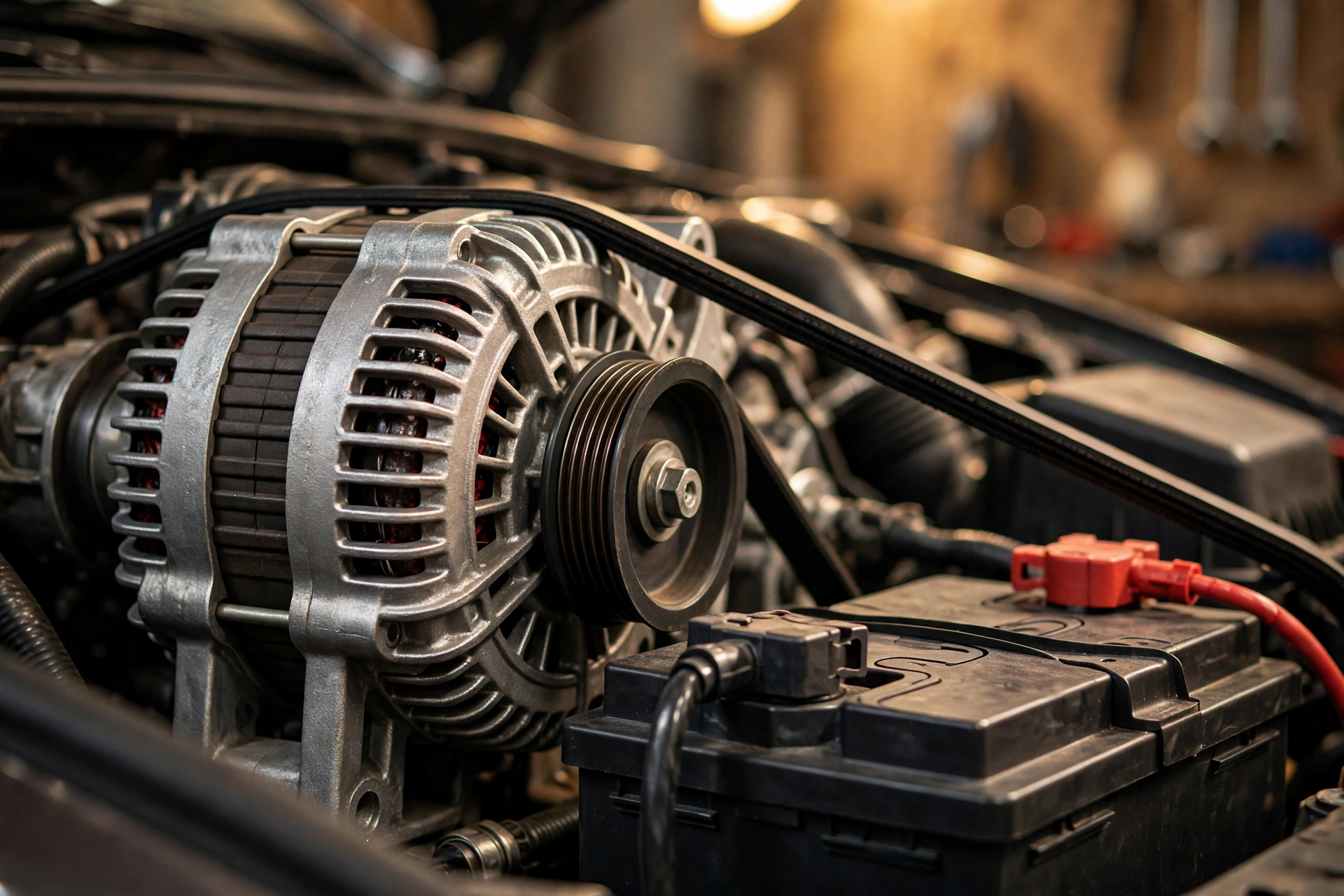
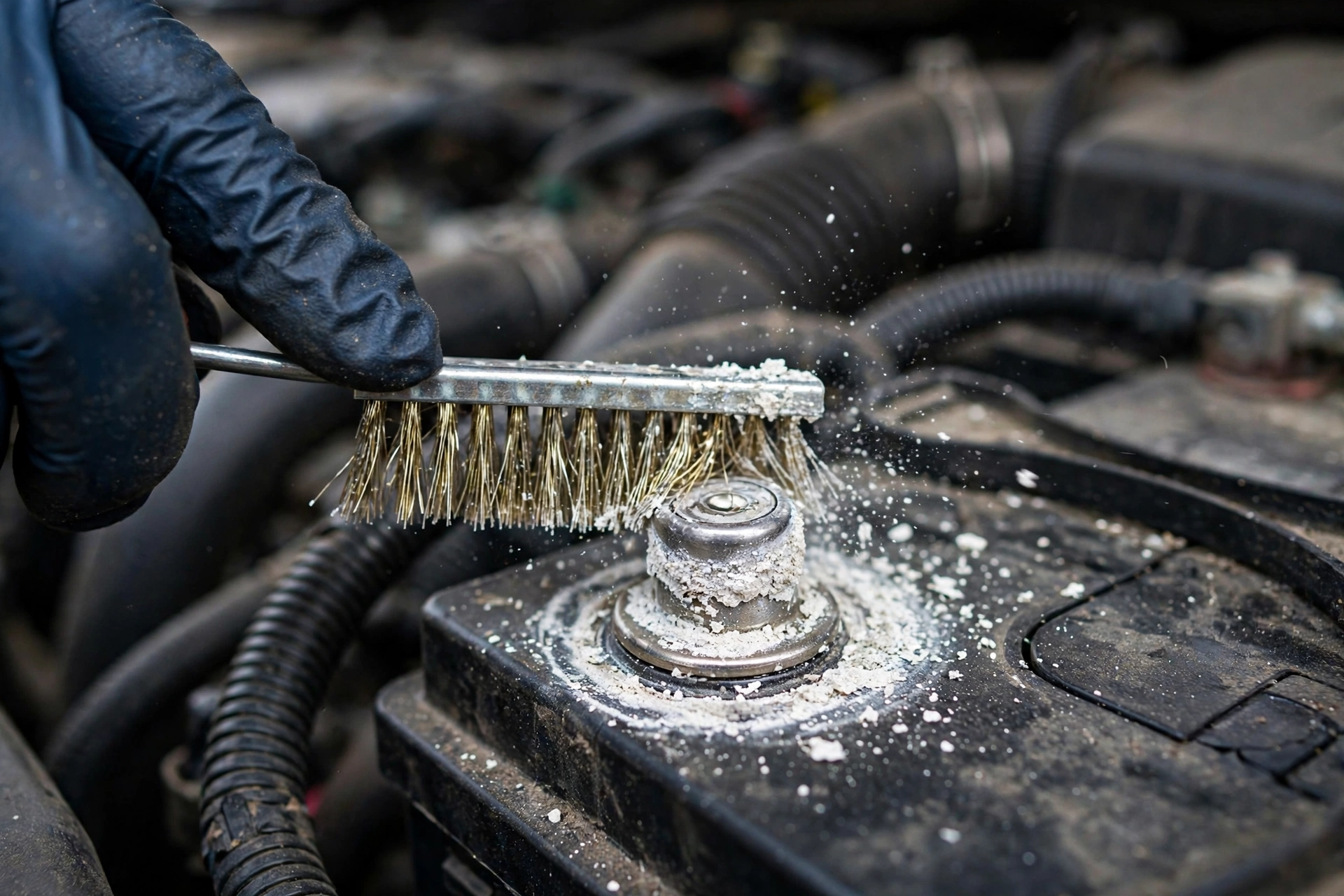
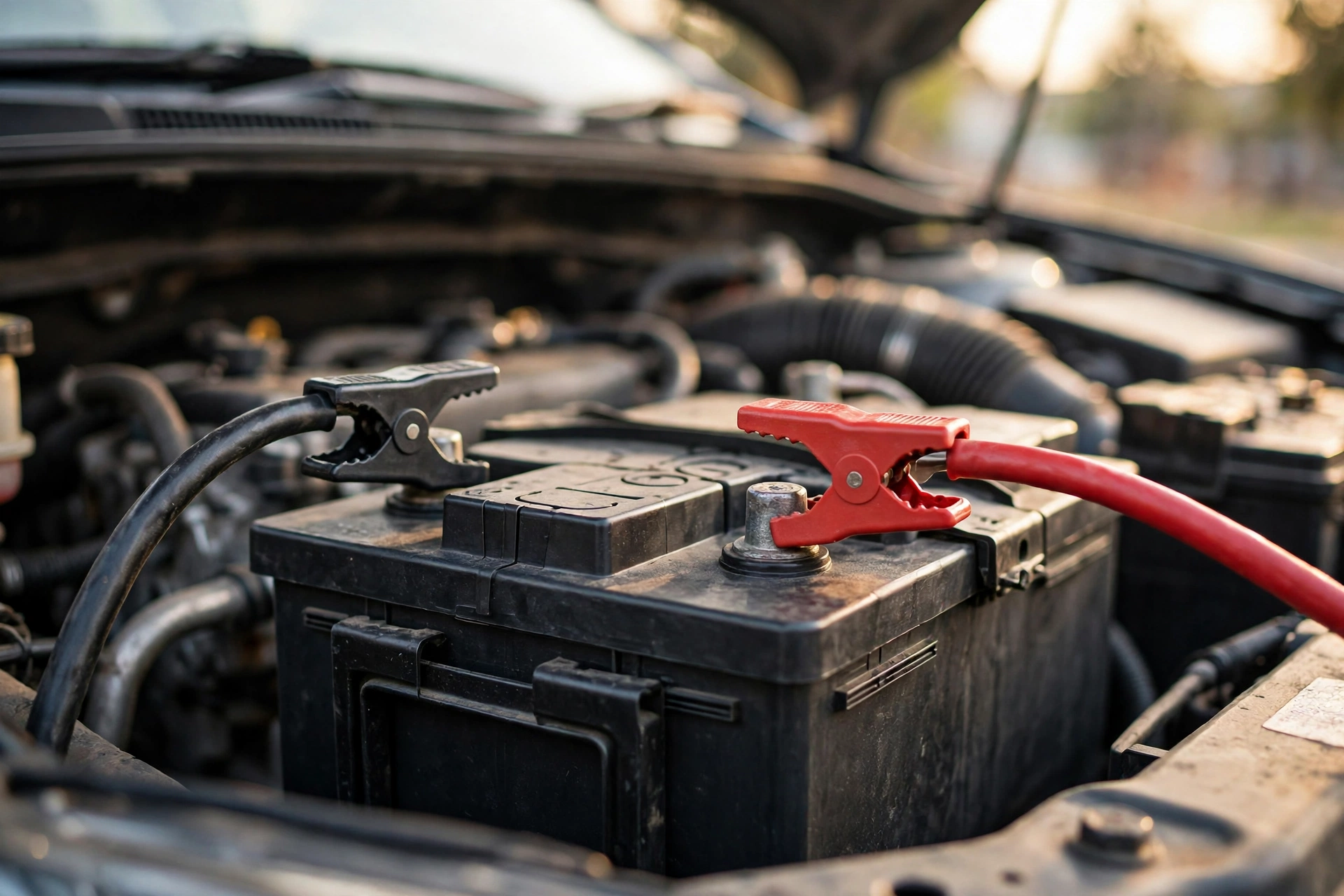
Also remember that not every electrical failure is a fuse. If your car won't start at all, the problem may be the battery or the alternator rather than a fuse — and corroded connections can mimic electrical faults too (here's how to clean your battery terminals). Knowing how long car batteries last helps you rule the battery out quickly.
For a full step-by-step with fuse-type illustrations, see AutoZone's guide to replacing a car fuse.
FAQ
Can I replace a car fuse myself?
Yes — replacing a fuse is one of the easiest DIY car jobs. Turn the ignition off, pull the blown fuse with a fuse puller or pliers, and push an identical replacement into the same slot. The whole job takes a few minutes.
How do I know which fuse controls my radio (or window, or socket)?
Check the diagram on the inside of the fuse box cover — it maps every fuse to its circuit (RADIO, CIG LTR, PWR WNDW, and so on). Your owner's manual has the same information.
Can I drive with a blown fuse?
It depends on what the fuse protects. A blown radio fuse is just inconvenient; a blown brake-light or headlight fuse is a safety issue — and in many places it's illegal to drive with them out. Replace it before you drive.
Why do my fuses keep blowing?
Repeated blowing means an underlying problem: a short circuit, damaged wiring, or a failing component on that circuit. Don't install a higher-rated fuse to "fix" it — get the circuit diagnosed by a mechanic.
How much does a replacement fuse cost?
Standard blade fuses are very cheap — usually just a few dollars for a multi-pack. Larger high-current and maxi fuses cost more, but still far less than the components they protect.
Conclusion
Car fuses are your electrical system's unsung heroes — tiny, cheap parts that sacrifice themselves to protect everything expensive. Now you know what they do, how to read their color code, where to find your fuse boxes, and how to check and replace a blown one in minutes.
Next time one accessory dies while everything else works, don't panic and don't pay a mechanic for a two-minute job. Check the fuse first. And while you're at the auto parts store, pick up a small assortment of common fuses for your car — future you will be glad they're sitting in the glovebox when you need one.