
There is a special kind of panic that comes with turning the key and hearing nothing but a tired click. No engine roar, no dashboard glow — just silence. Nine times out of ten, the culprit is a dead car battery — but batteries almost never die without warning. Know what to look and listen for, and you can replace yours on your schedule, not in a dark parking lot at 11 PM. Here is how long car batteries actually last, the seven warning signs yours is fading, what quietly kills batteries early, and how to make yours live a long life.
The short answer: 3 to 5 years
Most conventional lead-acid car batteries last 3 to 5 years under normal driving conditions. That is the consensus of battery manufacturers, mechanics, and retailers like AutoZone, who recommend testing your battery every six months once it passes the two-year mark.
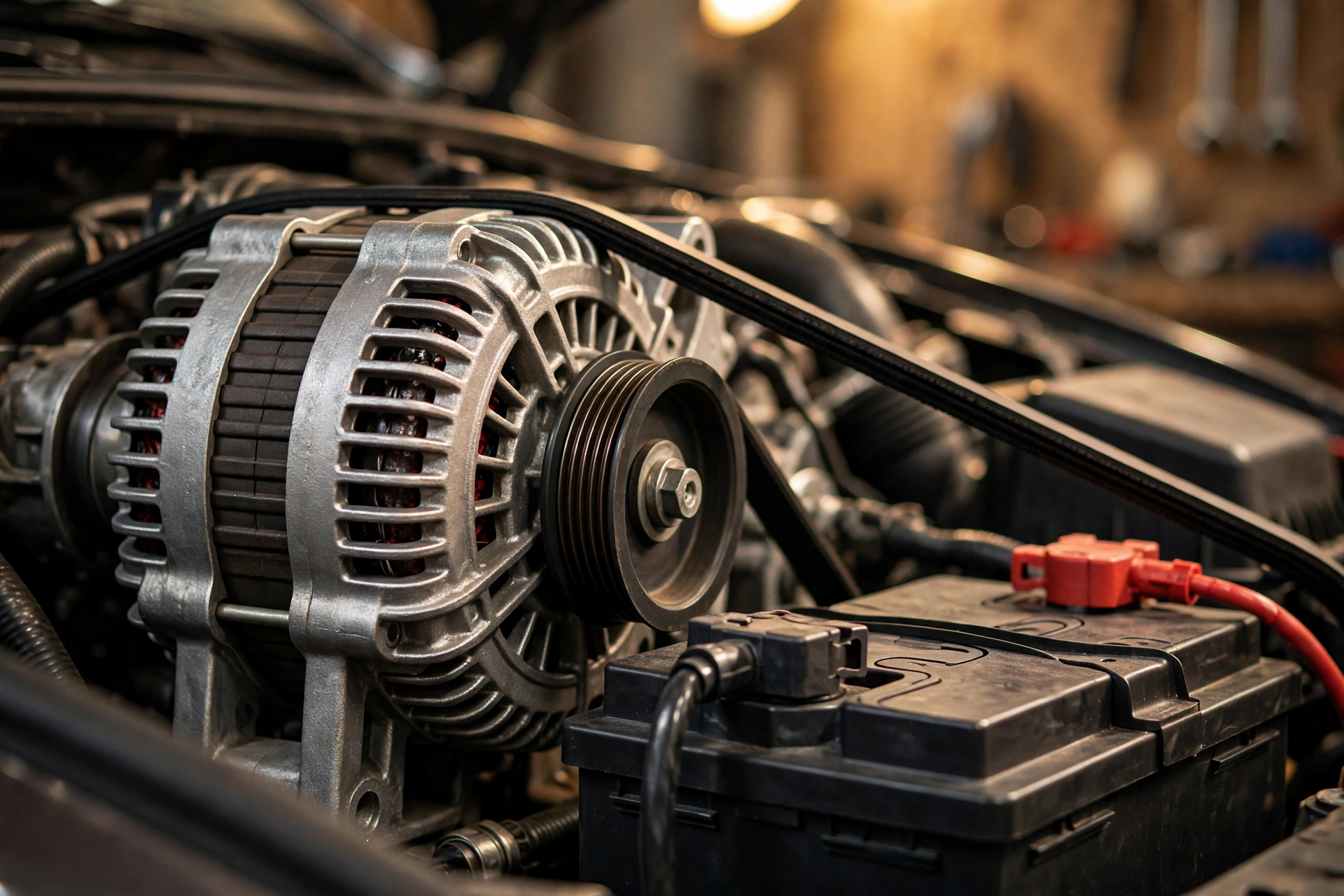
Some batteries fail sooner; some last six years or more. The biggest factors are climate, driving habits, and maintenance. Heat is the silent killer — it accelerates chemical wear inside the battery — while frequent short trips also shorten life, because the alternator never gets enough time to fully recharge the battery after each start.
Battery type changes the math: AGM batteries (common in start-stop cars) typically last 4 to 7 years, while lithium-ion batteries in hybrids and EVs last much longer. For a standard gasoline car, plan on 3 to 5 years and test annually from year three onward.
What affects car battery lifespan?
These are the biggest life-shorteners to know about:
- Extreme heat: speeds up fluid evaporation and internal corrosion. Counterintuitively, heat kills more batteries than cold — cold just exposes the weakness heat already created.
- Short trips: starting the engine is the hardest job your battery does. Trips of 5–10 minutes do not let the alternator replace the energy each start consumes, so the battery slowly runs down.
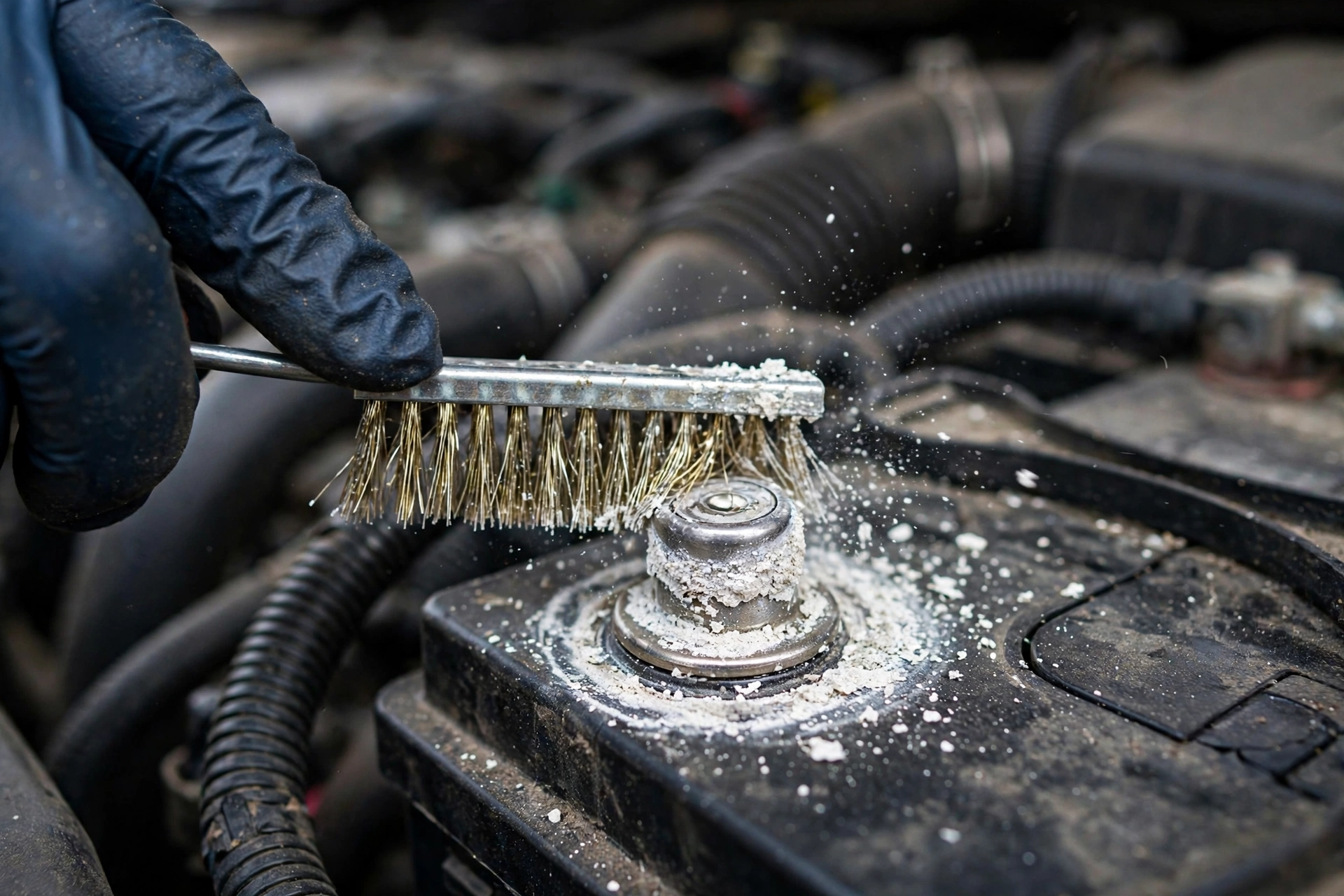
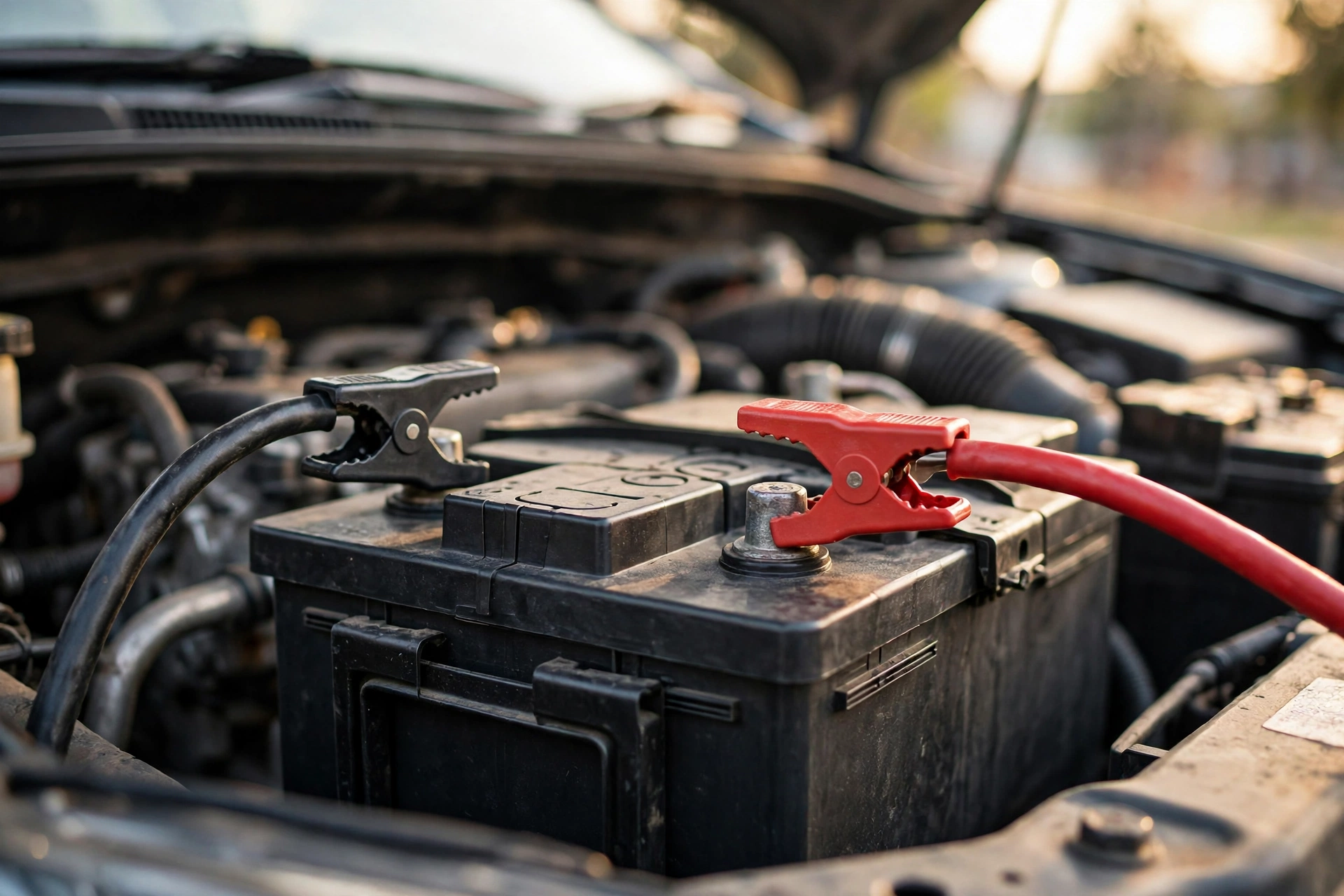
- Corroded terminals: the white or green crusty buildup on terminals blocks the electrical connection, forcing the battery to work harder.
If your car keeps going flat overnight even though the battery seems fine, you may have a parasitic drain rather than a dying battery — see Car Battery Keeps Dying Overnight.
7 warning signs your car battery is dying
Your battery usually whispers before it screams. Watch for these signs, especially if your battery is over three years old:
1. Slow, labored engine cranking
The classic sign. When you turn the key or push the start button, the engine turns over sluggishly — like it is struggling to wake up. A healthy battery cranks quickly and confidently. Tired-sounding starts mean the battery is losing its ability to deliver full power.
2. Dim or flickering lights and electrical quirks
Headlights that dim at idle, a flickering dashboard, slow power windows, or a radio and clock that lose their settings all point to a battery that cannot hold voltage. If the infotainment screen acts strangely, check the battery before assuming the electronics are broken.
3. The battery warning light stays on
The battery-shaped light on your dashboard is not decoration. If it stays on while you drive, the charging system is not keeping the battery charged. See Battery Warning Light While Driving: Causes and Safe Response for exactly what to do.
4. Corroded, cracked, or swollen battery case
Pop the hood and look. Heavy white or blue-green corrosion on the terminals, a cracked case, or a bloated battery are all red flags. A swollen case usually means overcharging or extreme heat exposure — replace it promptly, because a damaged case can leak acid.
5. A rotten egg smell under the hood
A sulfurous, rotten-egg odor near the battery suggests it is leaking hydrogen sulfide gas, usually from overcharging or internal failure. Treat this as both a battery issue and a safety issue — get it checked soon.
6. You have needed a jump start more than once
One jump start after leaving your lights on is a mistake. Two or more in a few months is a pattern — and the pattern says your battery no longer holds a charge. If this is you, read How to Jump Start a Car Safely, then get the battery tested instead of waiting for the next failure.
7. The battery is simply old
Even with zero symptoms, a battery older than 4–5 years is living on borrowed time. Check the date sticker on top — most have a month/year label. Past its prime? Replacing it proactively is cheaper than a tow.
How to test your car battery at home
You do not always need a mechanic. A cheap digital multimeter (under $20 at any auto parts store) does the job:
- Set the multimeter to DC voltage (20V range).
- With the engine off, touch the red probe to the positive (+) terminal and the black probe to the negative (−) terminal.
- 12.6 volts or higher means fully charged. Around 12.4V is roughly 75%. Below 12.0V at rest means the battery is weak or discharged.
- Start the engine and check again. Voltage should rise to 13.7–14.7V, showing the alternator is charging properly. Below 13.5V suggests a charging-system problem instead.
Most auto parts stores also test batteries for free. Ask for a load test (CCA test), which measures performance under stress rather than just at rest.
5 habits that make your car battery last longer
- Drive it regularly — and far enough. Aim for at least one 20–30 minute drive per week so the alternator can fully recharge the battery. For cars that sit for weeks, a battery maintainer (trickle charger) is worth it.
- Switch accessories off before starting and stopping. Turn off headlights, the blower, heated seats, and the stereo before shutting down, so the next start is not fighting extra load.
- Keep the terminals clean. Scrub corrosion with a wire brush and baking soda mixed with water (disconnect the negative terminal first, reconnect it last). A clean connection means the battery works less hard.
- Make sure the battery is clamped down. Check that the hold-down bracket is snug — a battery bouncing on rough roads wears out its internals faster.
- Test annually after year three. A quick free test each year catches a weakening battery while you still have time to plan the replacement.
Recharge or replace? How to decide
A drained battery is not always a dead battery. If it went flat once because you left the lights on, a full recharge (a long drive or a battery charger) may bring it back. But plan a replacement when the battery is over 4–5 years old, has needed repeated jump starts, has a swollen or leaking case, or fails a load test after a full charge.
When buying, match the group size and cold cranking amps (CCA) in your owner's manual or on the old battery's label, and pick one with a fresh date sticker — never buy a battery that has sat on the shelf over six months.
Frequently asked questions
How long do car batteries last on average?
Most standard car batteries last 3 to 5 years; AGM batteries often reach 4 to 7 years. Heat, short trips, and heavy electrical use shorten lifespan, while regular longer drives and clean terminals extend it.
Can a car battery die just from sitting unused?
Yes. Your car's alarm, clock, and computers draw a small current even when parked. A car left unused for several weeks can drain the battery enough that it will not start. Driving at least 20–30 minutes weekly prevents this.
Does cold weather kill car batteries?
Cold temporarily reduces a battery's power — at very low temperatures it may deliver only half its normal cranking power. But heat causes more permanent damage over time; cold usually just exposes a battery already weakened by heat.
Is it safe to drive with a dying battery?
Short trips to get it tested are fine, but do not drive far — the car can stall and refuse to restart. If the battery warning light is on, reduce electrical load, avoid turning the engine off, and head to a shop for a test.
Conclusion
Your car battery is one of the few parts that gives you plenty of warning before it quits. Slow cranking, dim lights, corrosion, repeated jump starts, and plain old age are all invitations to act — not emergencies yet. Test your battery once a year after its third birthday, keep the terminals clean, and give it regular longer drives, and you will likely get the full 3 to 5 years or more out of it.
And when the day comes, replace it on your terms: in daylight, at a shop of your choice — not on the shoulder of a highway. Your future self will thank you.
Sources: AutoZone — How Long Should a Car Battery Last; HPL Motors — Car Battery Guide: How Long Do They Last and When to Replace?