Most new drivers check their four road tires now and then, but the spare tire? It usually sits forgotten in the trunk well or bolted under the car for years. Then comes the day you get a flat on a dark roadside — you pull out the spare and discover it's soft, cracked, or simply too old to be safe.
A spare tire is your emergency lifeline, and storing it correctly takes barely any effort. Whether it's the full-size or compact spare that lives in your car, or an extra set of tires you keep in the garage, this beginner's guide will show you exactly how to store spare tires so they're ready when it matters most.
Why Stored Spare Tires Go Bad (Even Without Driving)
Tires age even when they never touch the road. Rubber is an organic compound that slowly degrades because of four enemies:
- Ultraviolet light — Sunlight breaks down rubber compounds, causing tiny cracks (dry rot) on the sidewalls.
- Heat — High temperatures speed up chemical aging. A tire baking in a hot shed ages far faster than one in a cool garage.
- Ozone — This reactive gas is produced by electric motors, furnaces, and air compressors, and it attacks the rubber's molecular chains.
- Stagnation — Tire rubber contains protective waxes and antioxidants that rise to the surface when the tire flexes while driving. A tire that just sits never "works out," so those protectants disappear from the surface over time.
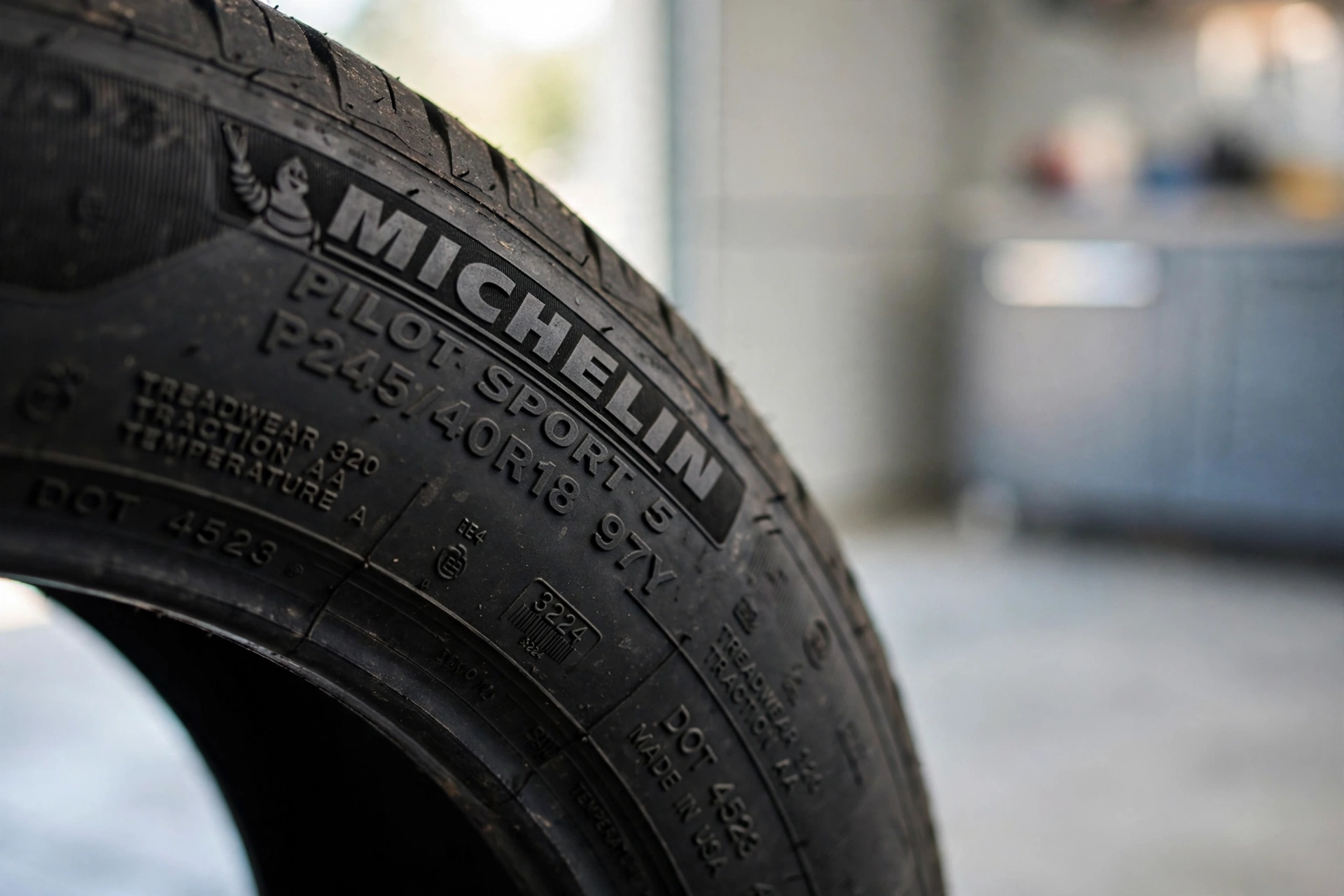
Because of this, most tire manufacturers consider a tire's safe service life to be about six years from its manufacture date, regardless of how little it has been used. You can find your spare's age on its sidewall: look for the DOT code ending in a four-digit number — the first two digits are the week, the last two are the year (for example, 2319 means the 23rd week of 2019). Our guide on how to read tire sidewall markings walks you through finding it.
The Best Place to Store a Spare Tire
If your spare lives in your car — in the trunk well or on a carrier under the chassis — it is doing its job, and that is where it should stay. Just check it every few months (more on that below). For an extra set of tires or a second spare in your home, the ideal storage spot is:
- Cool — Aim for a stable temperature below 25°C (77°F); a cool basement or inside garage is ideal. Avoid attics, tin-roofed sheds, and spots near boilers or furnaces.
- Dark — No direct sunlight. UV is rubber's worst enemy.
- Dry — Low humidity keeps rims rust-free and prevents moisture damage.
- Off the ground — Store tires on a pallet, shelf, or tire rack, never directly on bare concrete, which holds moisture and can stain or degrade the rubber.
- Away from chemicals — Keep tires away from petrol, oils, solvents, and grease, all of which degrade rubber. Also keep them clear of ozone sources like electric motors and air compressors.
A clean, dry corner of your garage or basement works perfectly for most beginners.
How to Store a Mounted Spare (Tire on a Rim)
If your spare is already mounted on a wheel, follow these steps:
- Clean it first. Wash the tire and wheel with mild soap and water to remove brake dust, dirt, and road grime, which can slowly corrode the rim and degrade the rubber. Dry it completely — trapped moisture invites rust.
- Skip the tire shine. Do not apply tire dressings before storage. Tire compounds are formulated to resist weather cracking on their own, and some dressings interfere with the rubber's natural protection.
- Inflate it slightly. If it's going into long-term storage, inflate the tire to the pressure printed on the sidewall (the maximum) or a bit above your normal driving pressure — an unused tire slowly loses air. A well-known guideline for tires sitting off the vehicle is to keep them fully inflated so they hold their shape. Important: deflate back to your car's recommended pressure (found on the driver's door jamb sticker) before you actually drive on it.
- Stack it flat. Mounted tires should be stored lying flat on their side, stacked no more than one full set (four) high, on a clean surface. Alternatively, you can hang each wheel on a proper wall hook through the rim's center hole.
- Rotate the stack. Every six months or so, rotate the stack order so the same tire doesn't sit at the bottom bearing all the weight.
How to Store Unmounted Tires (Tire Only, No Rim)
Loose tires without rims have different rules:
- Store them upright (on their tread), standing side by side like books on a shelf. This is the position that least distorts their shape.
- Rotate them a quarter turn every few months so they don't develop flat spots from standing in one position.
- Never hang unmounted tires on hooks — the hook stretches the bead area and can permanently deform the tire.
- Clean and dry them before storage, just like mounted spares.
Use a Tire Storage Bag (Best Cheap Upgrade)
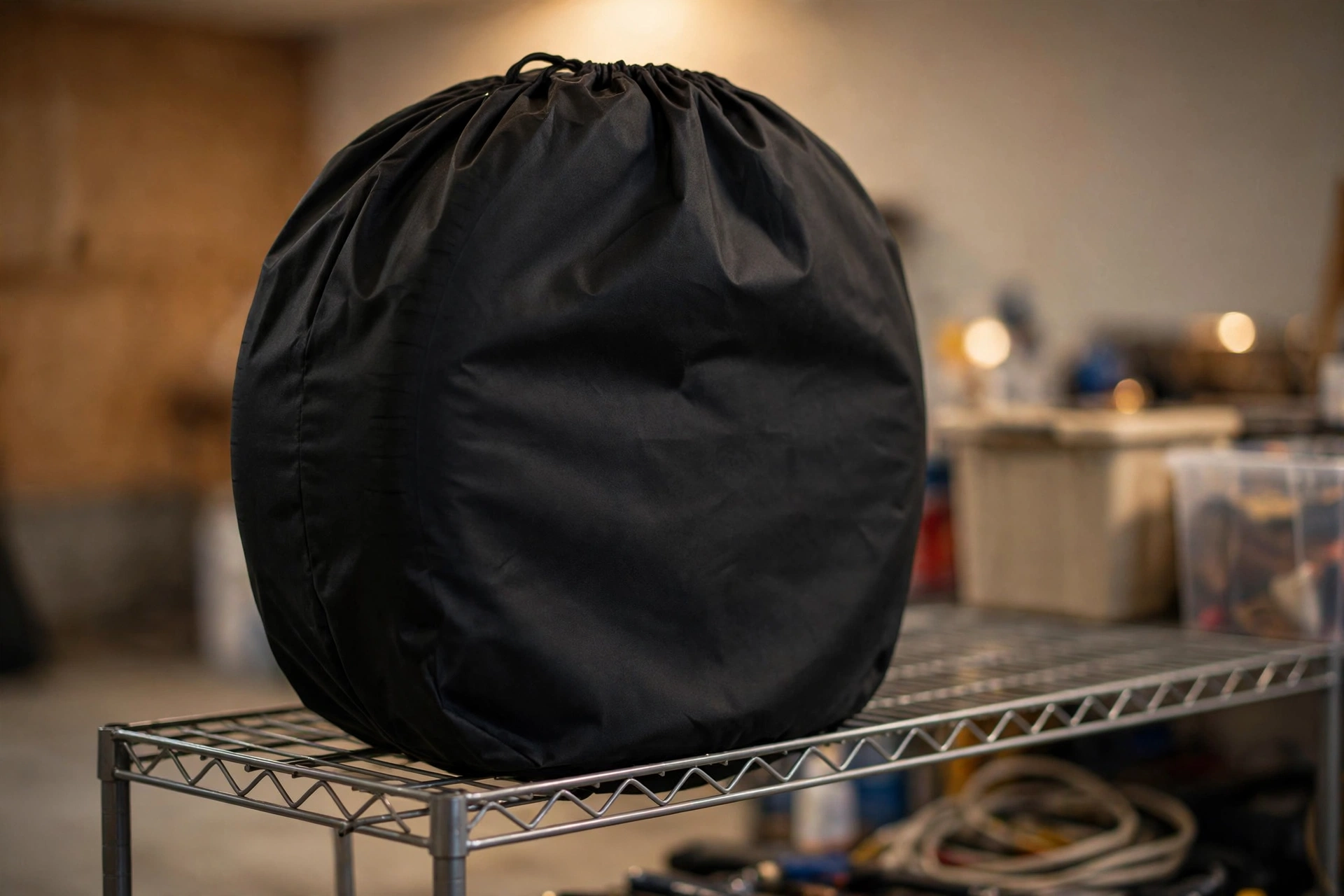
The single easiest thing you can do is slip each tire into a large, opaque, airtight plastic bag — lawn and garden bags work well, and dedicated tire totes cost very little. Before sealing, squeeze out as much air as possible (some people use a vacuum cleaner) and tape the bag shut. This creates a mini-atmosphere that slows oil evaporation from the rubber, blocks light and ozone, and keeps dust and moisture out. For a full how-to from a car manufacturer, check out Skoda's tire storage guide.
Checking Your Spare Before You Need It
Storage is only half the job. Twice a year — tie it to daylight-saving time changes so you remember — give your spare a quick inspection:
- Pressure: Check it with a gauge and top it up to the recommended pressure. A spare loses roughly 1–2 psi per month just sitting there, so a spare you haven't touched in a year is probably flat. See our tire pressure guide for the right technique.
- Cracks: Look for fine cracks or "checking" on the sidewalls — a sign of age or UV damage.
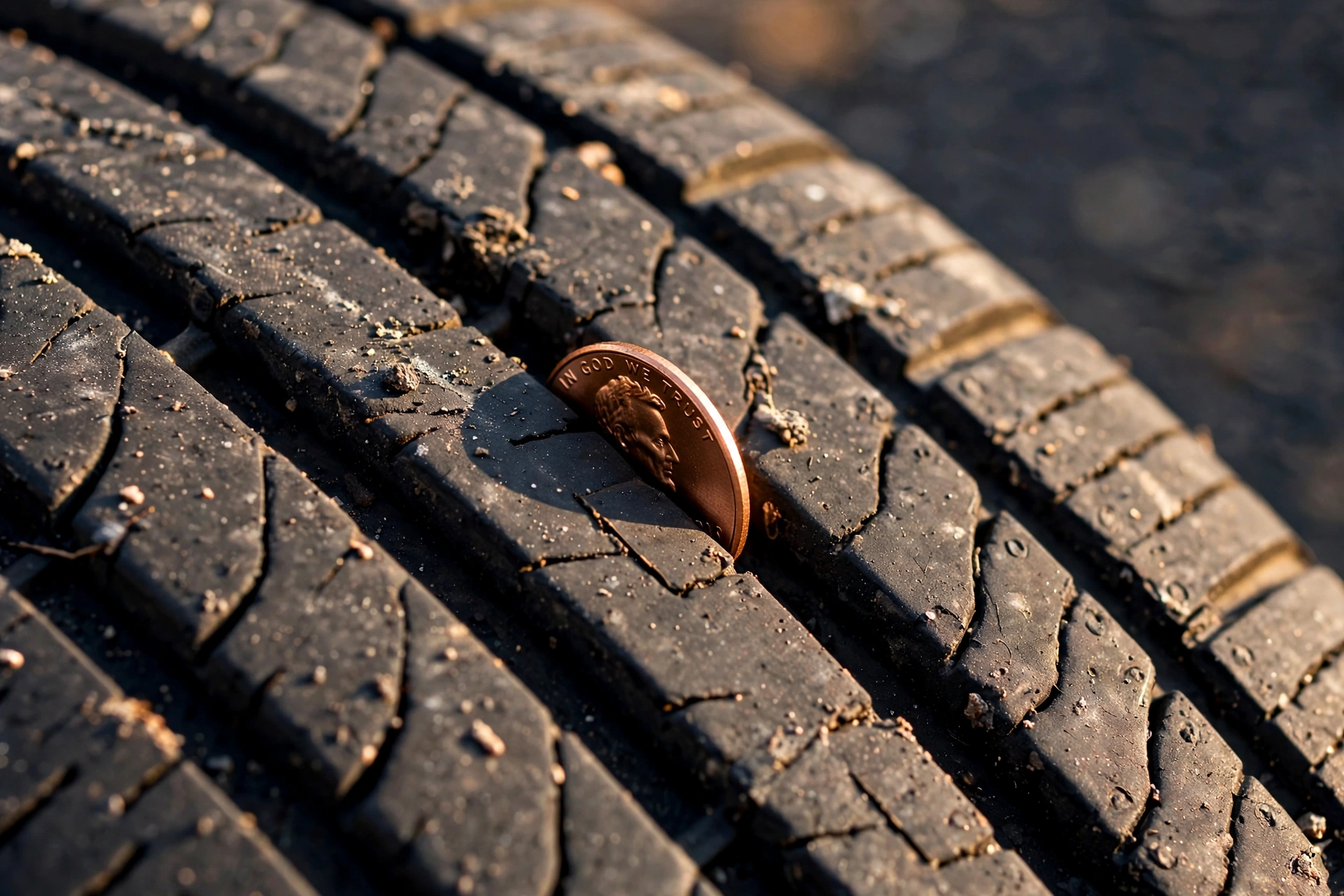
- Tread: Even unused spares should have plenty of tread, but inspect anyway with the simple coin test.
- Age: If your spare is older than six years, have a tire shop inspect it before trusting it on a long trip. After ten years, most manufacturers say don't use it at all.
- Tools: Make sure the jack, lug wrench, and locking wheel-nut key are actually in the car with the spare. A perfect spare without tools won't help you.
Frequently Asked Questions
How long can a spare tire sit unused?
Most manufacturers recommend replacing tires — including unused spares — after about six years from the manufacture date, because rubber degrades with age even in perfect storage. Check the DOT date code on the sidewall to know your spare's birthday.
Should I store spare tires upright or flat?
Unmounted tires (no rim) should be stored upright on their tread. Mounted tires (on a rim) should be stored lying flat, stacked, or hung on a proper wall holder. Never hang an unmounted tire on a hook.
Is it OK to store tires in a shed or attic?
It's risky. Attics and tin sheds get very hot, and heat is one of the biggest aging accelerators for rubber. A cool basement or garage is far better. If a shed is your only option, use airtight opaque bags and keep tires off the concrete floor.
Do I need special tire storage bags?
No — large opaque garbage bags work fine. The point is to keep out light, air, and moisture. Dedicated tire totes are nicer and reusable, but not required for good results.
My spare lives under my car in a cradle — is that fine?
That's how most vehicles are designed to carry the spare, so yes. Just lower it twice a year to check pressure, look for cracks, and make sure the winch or bolt mechanism still works — those can rust and seize, which is a nasty surprise on the roadside.
Conclusion
Your spare tire is cheap insurance that only works if it's healthy when you need it. Store it cool, dark, dry, and bagged; mounted spares lie flat, unmounted spares stand upright; and check its pressure and age twice a year. Do that, and the day you get a flat, your spare will be ready to get you home safely — instead of being a second problem on the shoulder of the road.
If you've never actually practiced swapping on your spare, read our step-by-step guide to changing a flat tire before you need it for real.