

Your tires are the only part of your car that touches the road. Just four patches of rubber, each about the size of your palm, keep your entire car connected to the pavement. The grooves carved into those tires — the tread — are what channel water away in the rain, grip the road in turns, and help you stop in time. When the tread wears down, every one of those jobs gets harder.
The good news is that checking your tire tread depth takes about two minutes, costs nothing, and needs nothing more than pocket change. In this guide, you'll learn the famous penny and quarter coin tests, how to read your tires' built-in wear indicators, and the exact point where a tire goes from "getting old" to "genuinely unsafe."
Why Tread Depth Matters More Than You Think
Tread isn't decoration. As a tire rolls over a wet road, the grooves pump water out from under the contact patch so the rubber can actually touch the pavement. When tread gets shallow, that pumping action fails, and the tire can ride up on a film of water — a phenomenon called hydroplaning. Even a few seconds of hydroplaning at highway speed means no steering and no braking.
Worn tread also means longer stopping distances. On wet pavement, the difference between a tire with healthy tread and one worn near the legal limit can be 20 to 30 extra feet in an emergency stop — roughly the length of two car lengths. That's the difference between stopping in time and a collision.
Most new car tires start with about 10/32 of an inch of tread depth. In the US, tread depth is measured in 32nds of an inch, and in most states the legal minimum is 2/32 of an inch. But wet-weather grip drops off well before a tire reaches that floor — the legal minimum is not a safe target, and smart drivers replace tires sooner.
The Penny Test: Checking the Legal Limit
The penny test is the classic quick check, and it's been endorsed by safety organizations like NHTSA as a reasonable approximation of the legal 2/32-inch minimum. Here's how to do it:
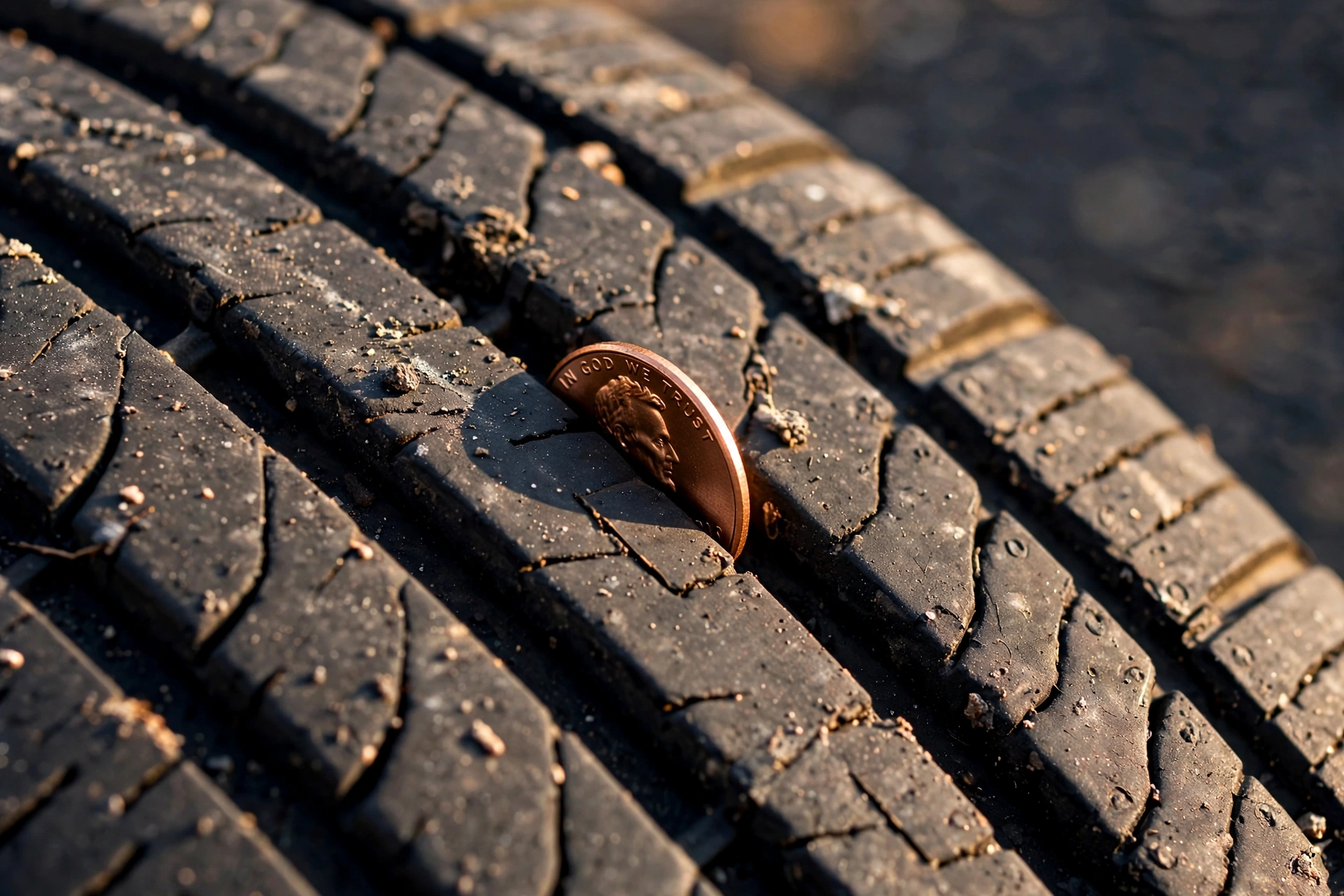
- Grab a US penny and hold it so Abraham Lincoln's head is upside down, facing you.
- Insert the penny into one of the main tread grooves — the deep channels that run around the tire, not the thin sipes (the tiny slits). Push it in as far as it will go.
- Look at Lincoln's head. If you can see the top of his head above the tread, your tire is at or below 2/32 of an inch. It's legally worn out and needs replacing.
If the tread covers part of Lincoln's head, you're above the legal minimum — but that's not the whole story.
Important: don't check just one spot. Test several places around each tire — the center, the inside edge, and the outside edge — on all four tires. Tread rarely wears perfectly evenly, and a spot that fails while others pass can reveal a bigger problem (more on that below).
The Quarter Test: The Smarter Safety Benchmark
Safety experts recommend a stricter standard than the law does, and that's where the quarter comes in. Repeat the same procedure with a US quarter, George Washington's head upside down and facing you. If you can see the top of Washington's head, your tread is at or below 4/32 of an inch.
At 4/32 of an inch, a tire still looks reasonably fine to the untrained eye — but its wet-weather performance is already significantly reduced. In rain or snow, these tires are noticeably less capable. This is the practical replacement threshold many tire professionals use: 4/32 is the point where you should start shopping for new tires, even though the tire isn't legally worn out yet.
A simple rule to remember: the penny tells you when it's too late; the quarter tells you when to act.
Read Your Tires' Built-In Wear Bars
Modern tires come with tread wear indicators molded right into the rubber — small raised bars running across the bottom of the main grooves. They sit at exactly the 2/32-inch legal limit. Look between the tread ribs for these little bridges of rubber. When the tread surface wears down to become flush with those bars, replacement is overdue.
These wear bars complement the coin tests nicely: the bars are a built-in visual alarm, and the coins give you tactile feedback you can feel with your fingers. Check both.
What Uneven Wear Is Trying to Tell You
Tread depth is only half the story — the pattern of wear matters just as much. When you check your tires, look for these clues:
- Wear concentrated on one edge (inside or outside): This usually points to a wheel alignment problem. The car is essentially dragging the tire sideways.
- Wear concentrated in the center: Often a sign of overinflation — the tire is bulging in the middle and only the center touches the road.
- Wear concentrated on both edges but not the center: Usually underinflation — the tire sags and the shoulders do all the work.
- Patchy or cupped wear (scalloped dips around the tread): Often indicates worn suspension components or a tire that's out of balance.
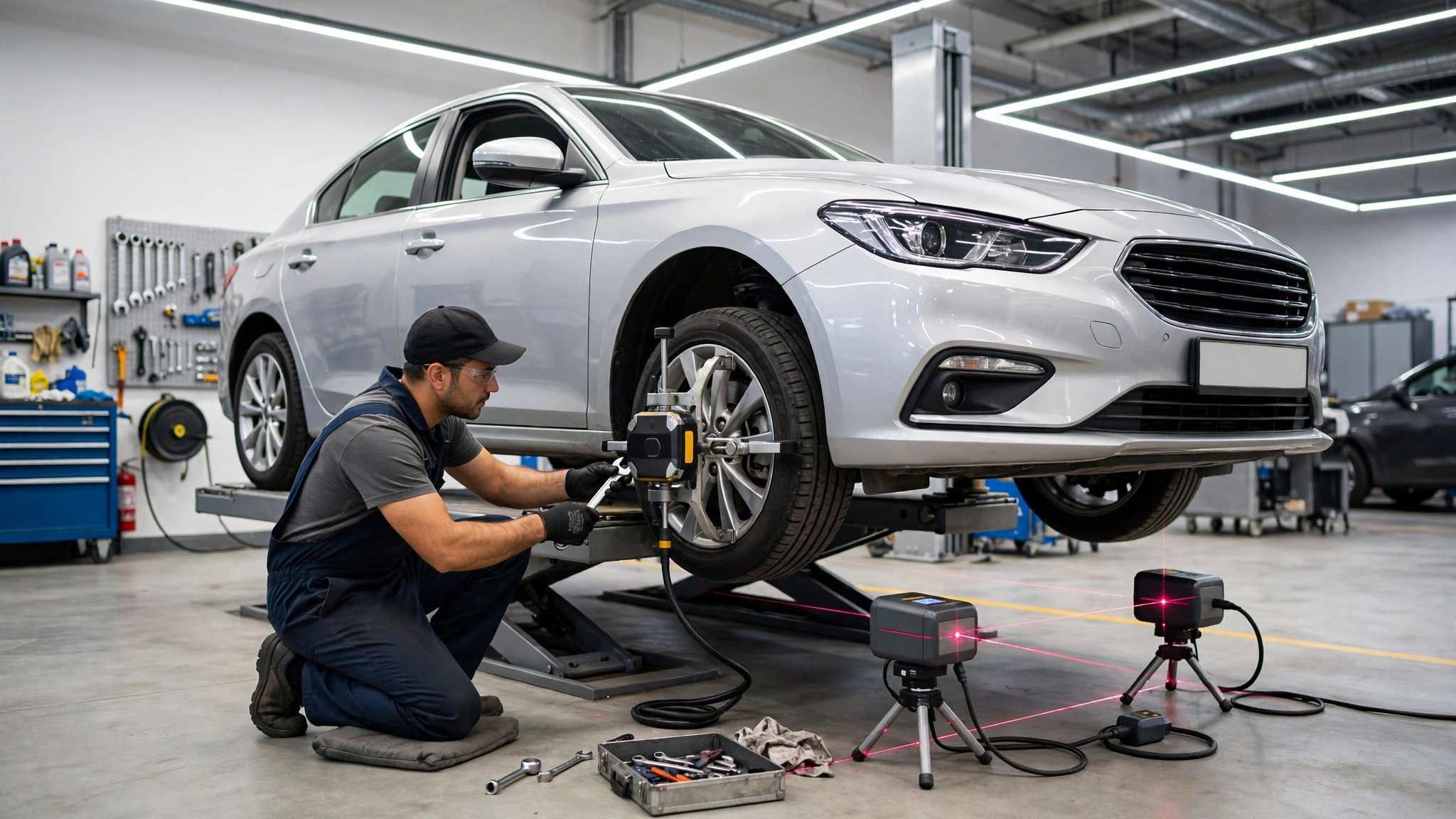
Uneven wear is a signal, not just a cosmetic issue. If you spot it, don't just plan a tire replacement — get the underlying cause checked, or your new tires will wear out the same way. If you're unsure about any of these patterns, have a mechanic take a look. Alignments and rotations are routine, inexpensive services that can dramatically extend tire life.
For more on keeping your tires healthy, see our guide on how often to check your tire pressure — correct inflation is the single biggest factor in even tread wear.
When to Replace Your Tires: The Complete Checklist
Replace your tires if any of these are true:
- The tread is at or below 2/32 of an inch anywhere (the penny test or wear bars confirm it) — this is the legal and safety floor.
- The tread is at or below 4/32 of an inch and you regularly drive in rain or wet conditions — don't wait for the legal limit.
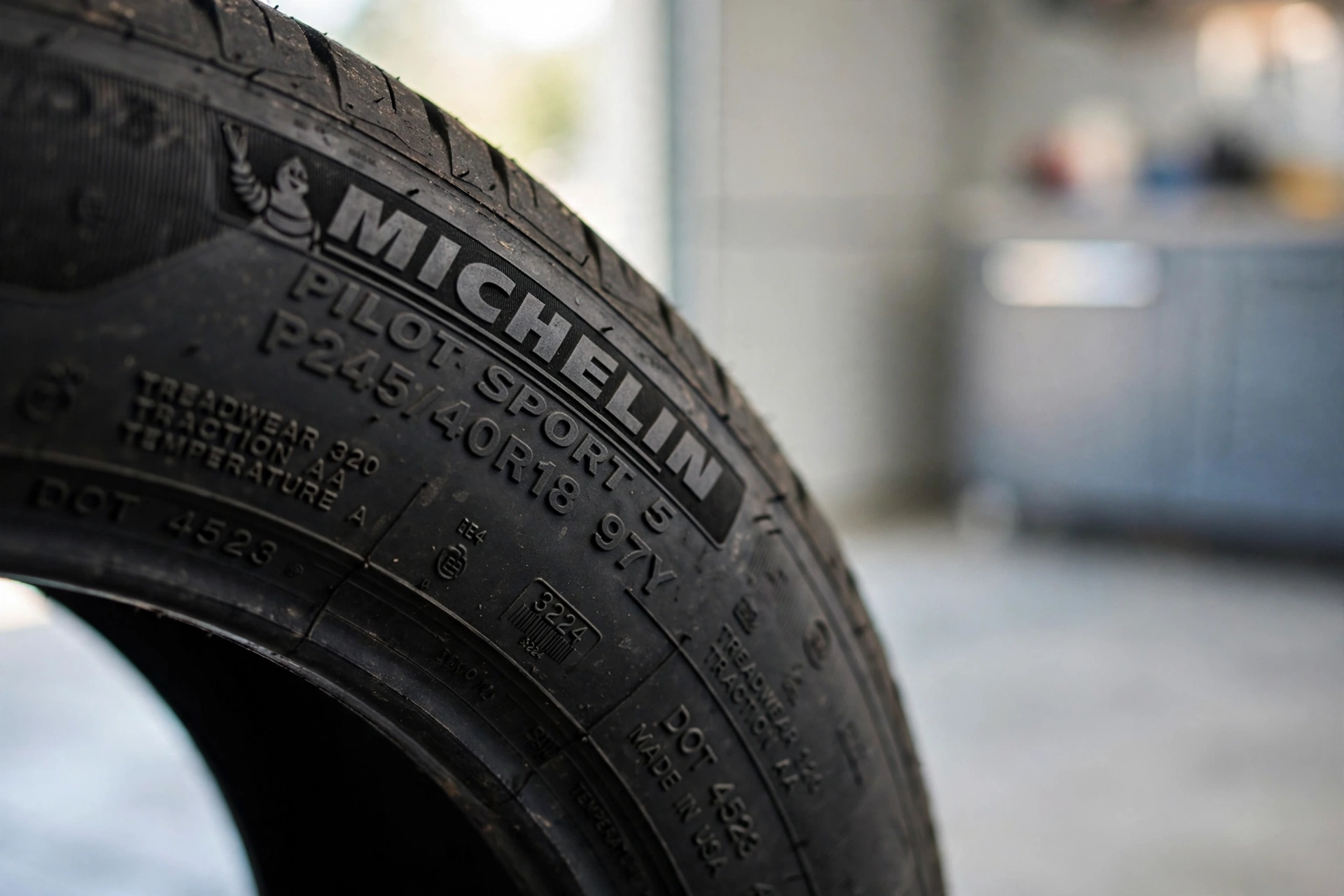
- The tires are more than six years old, even if the tread looks fine. Rubber degrades with age; check the manufacture date molded on the sidewall. (Our tire sidewall guide shows you where to find it.)
- There's visible damage: cracks in the sidewall, bulges, or a nail or cut you can't ignore.
- You feel vibrations or the car pulls to one side — get it checked promptly, as the tire or alignment may be compromised.
When you do buy new tires, a tire shop will mount, balance, and align them for you. You don't need to be an expert — just be the informed owner who knew it was time. And if a flat ever catches you off guard, our step-by-step guide on how to change a flat tire has you covered.
Frequently Asked Questions
How often should I check my tire tread depth?
Once a month is a good habit — pair it with your monthly tire pressure check. Also check before any long road trip. The whole process takes about two minutes for all four tires.
Is the penny test accurate?
It's a useful approximation, not a precision measurement. NHTSA and major tire manufacturers endorse it as a quick field check for the 2/32-inch limit. For a beginner deciding "replace or not," the penny test is more than adequate.
Can I drive on tires that fail the penny test?
Legally and practically, no — not safely. Below 2/32 of an inch, the tire is worn past the minimum most states require, and its ability to grip wet roads is severely compromised. Schedule a replacement as soon as possible and avoid highway speeds and heavy rain in the meantime.
Do all four tires need to be replaced at once?
Ideally, yes — matched tires give the most predictable handling. If only one or two are worn, replace at least in axle pairs (both front or both rear) with the same size and type. Ask your tire shop; they'll confirm what your car needs.
What if only one tire is worn but the rest are fine?
Uneven wear across tires usually means an alignment, rotation, or inflation issue. Replace the worn tire (in pairs, as above) and have the underlying cause diagnosed so the new tires don't wear out prematurely. For a deeper look at measurement methods, see this AutoZone guide on checking tire tread depth and this comparison of tread-check methods.
Conclusion
Checking tire tread depth is one of the simplest, most valuable maintenance habits a new car owner can build. Two coins, two minutes, once a month — that's all it takes to know whether your tires can still do their job. Remember the key numbers: 2/32 of an inch is the legal floor (the penny test), and 4/32 is the smart replacement point (the quarter test), especially if you drive in the rain.
Make tread checks part of your routine alongside tire pressure checks, and you'll never be caught off guard by bald tires. Your car — and everyone who shares the road with you — will be safer for it.