It's raining, you're driving home at night, and a truck ahead of you throws up a sheet of dirty spray. You reach for the washer stalk, the wipers sweep — and nothing comes out. A dry, muddy smear spreads across your windshield, and you realize your washer fluid is empty.
This is one of the most common "why didn't anyone tell me?" moments for first-time car owners. The good news: refilling windshield washer fluid is genuinely the easiest maintenance job on a car. It takes about two minutes, costs next to nothing, and needs no tools. Here's everything you need to know.
What windshield washer fluid actually does
Washer fluid is the blue (sometimes green or orange) liquid your car sprays onto the windshield when you pull the washer stalk. It does three jobs at once: it loosens road grime, bugs and salt so the wiper blades can wipe them away, it contains detergents that plain water lacks, and in winter formulas it has antifreeze agents so it won't freeze in the reservoir or on your windshield.
Most reservoirs hold 3 to 5 litres (roughly a gallon), and a full tank can last anywhere from a few weeks of heavy use to several months if you rarely need it. That's why running dry always seems to happen at the worst moment — it's easy to forget about.
How to tell it's time to refill
Many cars have a low washer fluid warning — usually a dashboard symbol showing a windshield with a spray of water. But plenty of cars, especially older or budget models, have no warning at all. The only sign you'll get is the spray weakening or stopping altogether.
A simple habit fixes this: check the washer fluid every time you check your engine oil. The two checks take five minutes combined, and you can find the oil check steps in our guide to checking your engine oil level. If your car does have a washer fluid warning light and it's on, that's covered in our dashboard warning lights explained guide.
What you'll need
- A jug of windshield washer fluid (pre-mixed, from any auto parts store or supermarket) — check whether you need summer or winter formula (see below)
- A small funnel (optional, but it stops spills)
- A rag to wipe up any drips
That's it. No tools, no mechanical knowledge, no getting your hands dirty.
Refilling your washer fluid: step by step
- Park on level ground and switch the engine off. You don't need the engine running for this job — in fact, the engine bay is safer and easier to work around when it's cool and off.
- Open the hood. Pull the hood-release lever (usually under the dashboard on the driver's side), then release the safety latch at the front and prop the hood open.
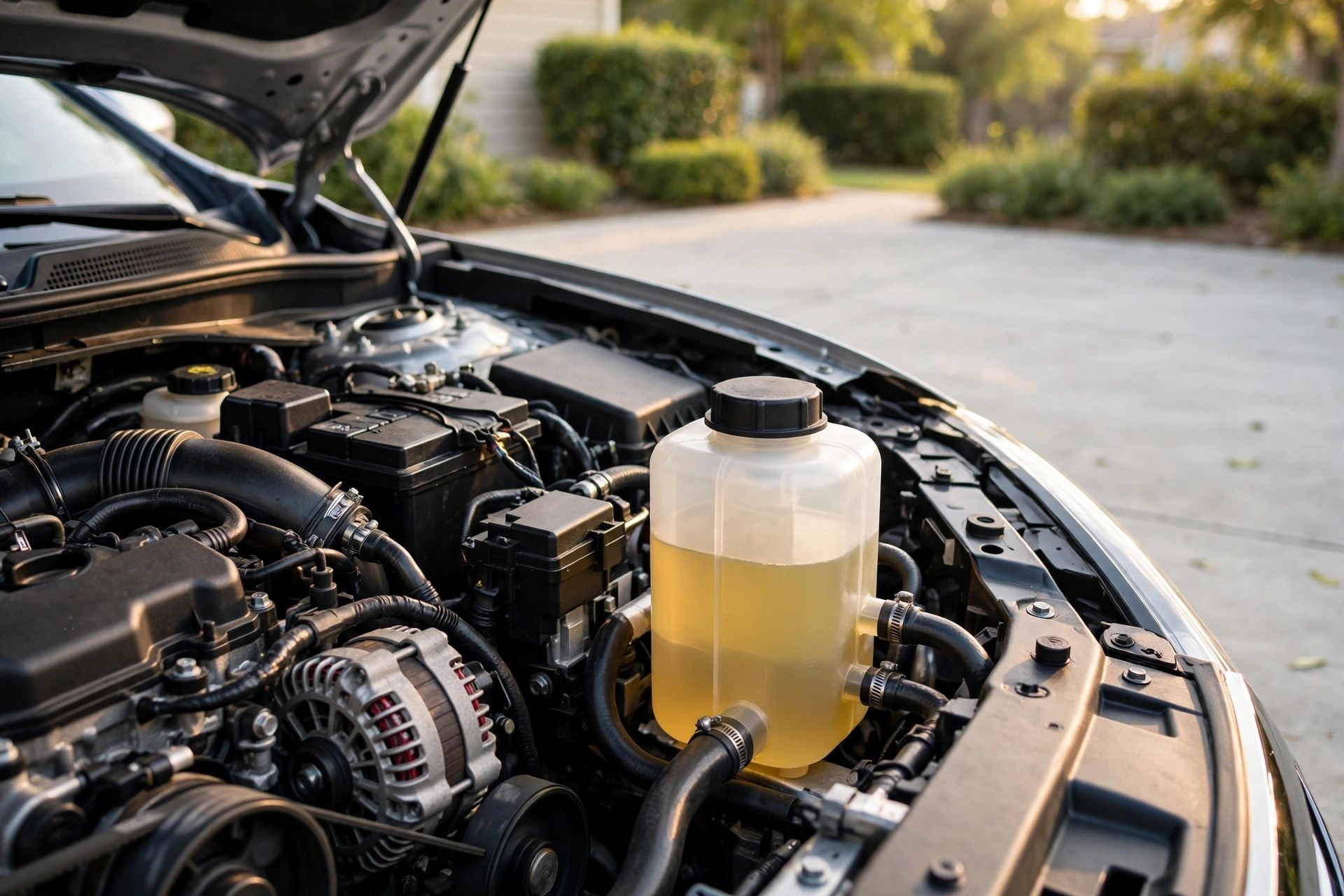
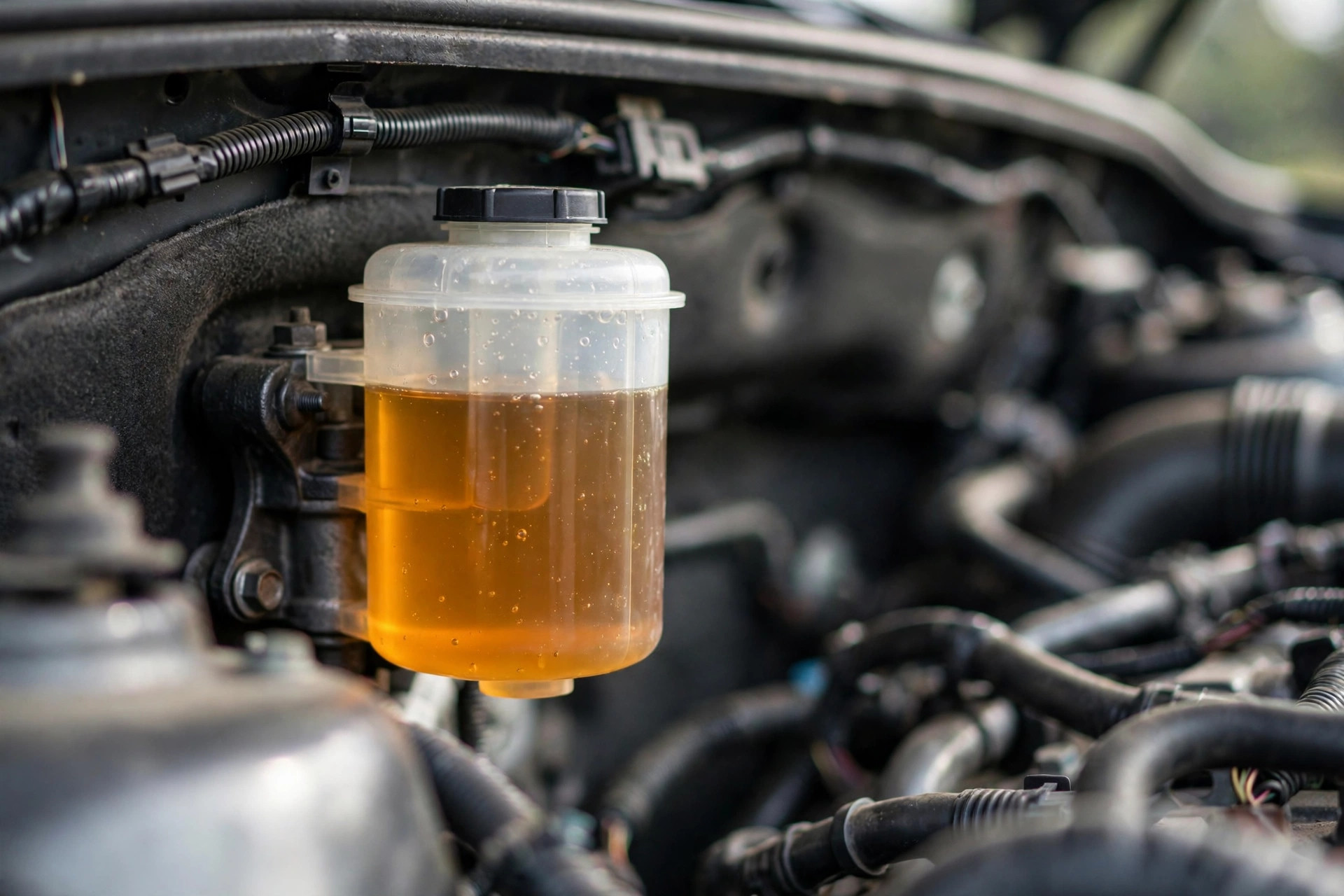
- Find the washer reservoir. Look for a translucent white or pale plastic container, usually toward the back of the engine bay near the windshield. Its cap — often blue, black or yellow — carries a windshield-with-spray symbol. If you're not sure, check your owner's manual rather than guessing. The reservoir is easy to confuse with the coolant overflow tank, and pouring washer fluid into the wrong tank would be a costly mistake.
- Wipe around the cap. Give the cap and the area around it a quick wipe with a rag so dirt doesn't fall into the tank when you open it.
- Open the cap and check the level. In a translucent tank you can usually see the fluid level from the outside. If it's empty or very low, it's refill time.
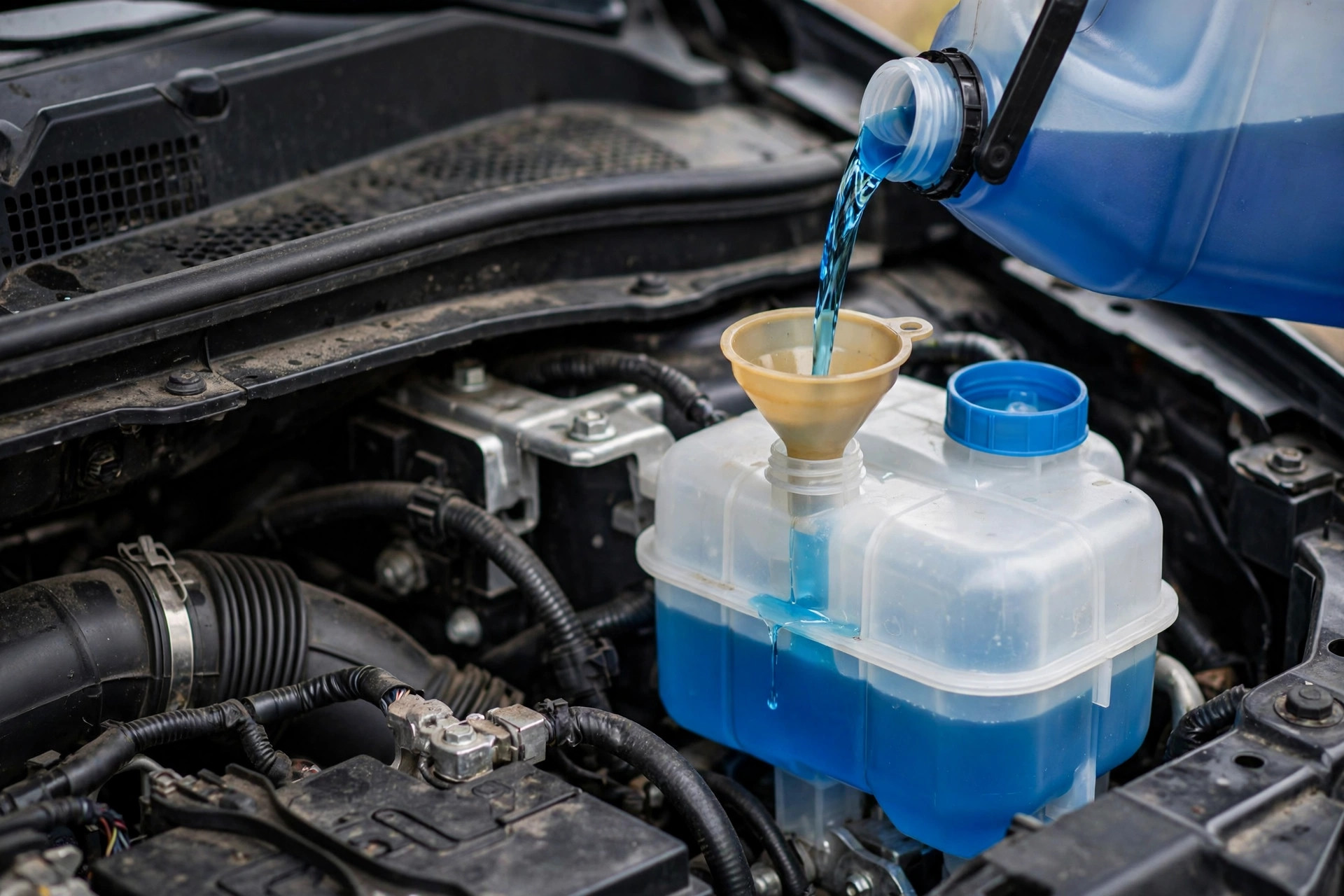
- Pour in the new fluid. Set the funnel in the opening and pour slowly. Fill to the "full" line if your reservoir has one. If it doesn't, fill it to about three-quarters full — the fluid can expand slightly as the engine bay warms up, so don't overfill right to the brim.
- Close the cap firmly. Make sure it clicks or seats properly so dust and debris stay out.
- Close the hood and test. Latch the hood, start the car, and pull the washer stalk. The spray should hit the windshield in a clean, even fan and the wipers should clear it without streaking.
Total time: two minutes. Total cost: a couple of dollars for the jug.
Choosing the right washer fluid: summer vs winter
Not all washer fluid is the same, and the difference matters:
- Summer fluid focuses on cleaning power — cutting through bugs, pollen and oily road film. It's usually rated only down to about freezing point.
- Winter (de-icer) fluid contains antifreeze agents and is rated down to around -20°F to -40°F (-29°C to -40°C). It helps melt light ice and stops the fluid freezing in the reservoir and lines.
- All-season fluid is a compromise, typically rated around -20°F (-29°C), and works for most drivers in moderate climates.
Always read the label for the temperature rating. Using summer fluid in freezing weather is one of the most common beginner mistakes — the fluid freezes in the pump and lines, and you can end up with cracked hoses and a repair bill far bigger than the cost of a winter jug. If you're unsure which type suits your climate, NAPA's guide to choosing and refilling windshield washer fluid walks through the seasonal options in detail.
Can you just use tap water instead?
In an emergency — say you're on a long drive, you're out of fluid, and freezing temperatures aren't a risk — distilled water can get you home. Tap water is a worse substitute, and plain water should never be a long-term solution. Here's why:
- No cleaning power. Water can't dissolve oily road film, bug splatter or winter salt the way washer fluid does. It smears as much as it cleans.
- It freezes. Water freezes at 0°C (32°F). Frozen water in the reservoir, pump and lines can crack them — a repair that costs far more than a jug of fluid.
- Mineral buildup. Tap water leaves mineral deposits that slowly clog the tiny washer nozzles, reducing the spray to a sad dribble.
- Bacteria. A warm, stagnant water reservoir can grow algae and slime that clogs the pump and lines.
So: water in an emergency only, refill with proper fluid as soon as you can. Never use dish soap, glass cleaner or household chemicals in the reservoir — they foam, leave residue, or can damage seals and paint.
3 beginner mistakes to avoid
- Pouring into the wrong reservoir. The washer reservoir is usually white/translucent with a windshield symbol on the cap. The coolant tank and brake fluid reservoir look similar at a glance. When in doubt, consult the owner's manual.
- Overfilling. Leave a little headroom at the top so the fluid doesn't spill when the engine bay heats up.
- Ignoring weak spray. If the reservoir is full but the spray is weak or uneven, the nozzles are probably clogged. You can often clear them with a thin pin — gently, so you don't scratch them. If that doesn't help, or the low-fluid warning stays on with a full tank (a faulty sensor), have a mechanic take a look.
What if the washer still doesn't spray?
You refilled the tank, pulled the stalk, and... nothing. Don't panic — work through this quick checklist:
- Listen for the pump. You should hear a faint buzzing when you activate the washer. No sound usually means a blown fuse or a dead pump — a mechanic's job.
- Check the nozzles. They sit at the base of the windshield (or on the hood) and clog with wax, dirt and mineral deposits. A gentle poke with a pin often fixes it.
- Check for leaks. Look under the car for a puddle of blue fluid, or a damp trail down from the reservoir — a cracked tank or loose hose needs attention.
- Consider the season. If it just turned cold and the washer suddenly died, the fluid may have frozen. Winter-rated fluid prevents this.
Frequently asked questions
How often should I check my windshield washer fluid?
Check it at least once every three months, and always before a long drive or a change of season. It only takes a few seconds to glance at the translucent reservoir when the hood is open.
Can I mix different brands of washer fluid?
Yes — you can mix brands safely as long as they're the same type (don't mix summer and winter formulas if you want the freeze protection to stay reliable). Just pour the new one in on top.
Why does my low washer fluid warning light stay on after refilling?
The level sensor in the reservoir can be faulty or gummed up, especially on older cars. If the warning persists with a full tank, have a mechanic check the sensor — the washer itself is almost certainly working fine.
Is washer fluid dangerous?
Yes, to children and pets — washer fluid contains methanol or other solvents and is toxic if swallowed. Keep jugs sealed and stored out of reach, and wipe up any spills. It can also damage paint if left to sit on it, so wipe drips off the bodywork.
The bottom line
Refilling windshield washer fluid is the single easiest job you can do on your car — two minutes, one jug, zero tools. Make it part of your routine: every few months, when you check your engine oil and tire pressure, glance at the washer reservoir too. A clear windshield is a safety feature, not a luxury — and now you know how to keep it that way for pennies.