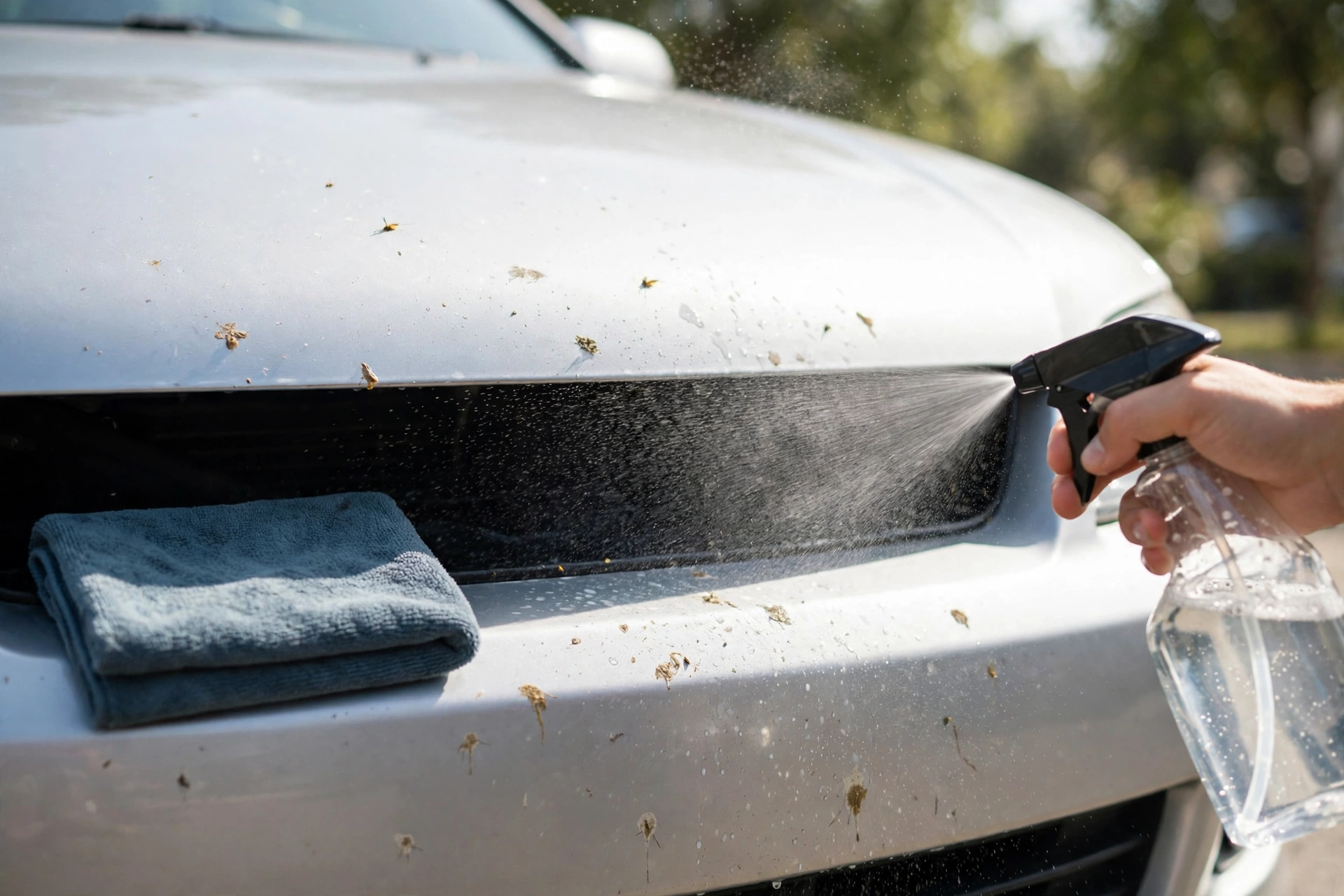
After a long highway drive, the front of your car tells the story: dried bugs on the bumper, tar specks on the doors, tree sap on the hood. The instinct is to grab a sponge and scrub. Don't. Dried bug splatter is acidic, tar is sticky petroleum, and scrubbing either one dry drags grit across your clear coat.
A good remover does the hard work chemically: it softens and dissolves the mess so it wipes off with almost no pressure. Here are the five that make the most sense for a beginner in 2026.
Affiliate disclosure: As an Amazon Associate, FirstCarCare earns from qualifying purchases made through the links in this article, at no extra cost to you. That never changes which products we recommend — every pick below earned its place on performance, safety, and value for a beginner.
Our top 3 at a glance
- Best Overall — Chemical Guys Bug & Tar Remover (CWS104): a concentrated wash soap that folds bug removal into your normal wash.
- Best for Hardened Tar — Stoner Tarminator 91154: dissolves baked-on tar and sap in about 30–60 seconds.
- Best Foaming Formula — Meguiar's Heavy Duty Bug & Tar Remover (G180515): a clinging foam that stays put on vertical panels.
Why dried bugs and tar damage your paint
Bug splatter is not just dirt. Insect remains are acidic, and in warm sun they bake onto the clear coat and start etching it. Tar is petroleum-based, so water and ordinary shampoo barely touch it; it bonds to the paint and collects grit.
That is why timing matters more than elbow grease. A remover softens the deposit first, so a gentle wipe with a clean microfiber cloth lifts it away. Our guide to removing bird droppings and tree sap covers the same rule: dissolve first, wipe second, never scrub dry.
How to choose a bug and tar remover
Three kinds of product exist, and the right one depends on what is on your car:
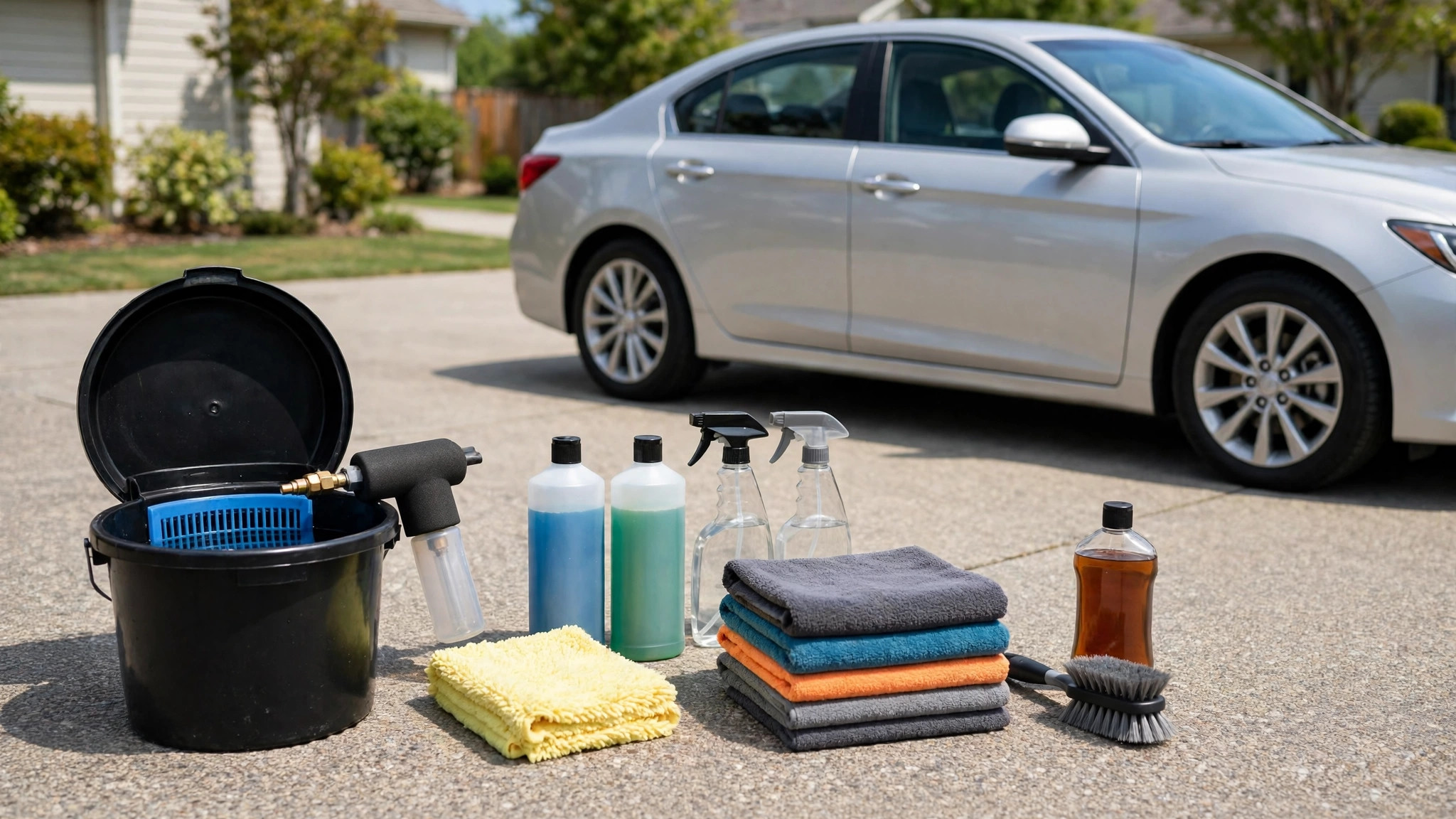
- Wash soaps with bug-removing power (like the Chemical Guys CWS104) are for the whole car. Add it to a wash bucket or foam cannon and the pre-wash loosens bugs and tar before your normal wash.
- Spot sprays and foams (Meguiar's, Turtle Wax) are for targeted cleanups between washes. Spray on the bumper and mirrors, wait a minute or two, wipe. Foams cling to vertical surfaces, so they work better on bumpers.
- Solvent removers (Stoner Tarminator, CARPRO TarX) are for the stubborn stuff: baked-on tar, asphalt overspray, old sap, and sticky adhesive residue. They work fastest, but they are stronger chemistry — use them outdoors, wear gloves, and keep them off headlights and clear plastics.
Two more things to check. First, dwell time: a product that needs 30 seconds beats one that needs 5 minutes. Second, what it strips: most removers also remove wax and sealant, so re-protect the panel afterwards.
The 5 best bug and tar removers for beginners
#1 — Best Overall
Chemical Guys Bug & Tar Remover (CWS104), 16 oz
Why it made the list: the most-reviewed pick in a 2026 ten-product roundup.
- Concentrated pre-wash soap — bucket, foam cannon, or spray bottle
- Safe on paint, glass, chrome, and plastic when used as directed
- Tackles bugs, tar, tree sap, and bird droppings in one step
Pros: best value per use — one bottle covers many washes.
Cons: a pre-wash, not a quick spot spray; needs mixing; carries a Prop 65 warning for trace solvents.
Best for: drivers who already wash their own car and want bug removal built into the routine.
#2 — Best for Hardened Tar
Stoner Car Care Tarminator 91154, 10 oz
Why it made the list: the benchmark for baked-on tar — it dissolves residue in 30–60 seconds.
- MicroActive technology breaks down tar, sap, and asphalt on contact
- Fastest dwell time here: 30–60 seconds, no scrubbing
- Safe on clear coat, chrome, and wheels
Pros: the fastest-working pick — the one for tar baked on for days or weeks.
Cons: smallest bottle of the five; stronger solvent chemistry — use outdoors and wear gloves; not for headlights or clear plastics.
Best for: baked-on tar, asphalt overspray, and tree sap gentler sprays cannot move.
#3 — Best Foaming Formula
Meguiar's Heavy Duty Bug & Tar Remover (G180515), 15 oz
Why it made the list: the mildest aerosol chemistry here — its safety sheet carries no health-tier hazard codes.
- Xtreme Cling foam stays on vertical bumpers instead of running off
- Pro-strength, clear-coat-safe formula in a 15 oz aerosol
- Works as a pre-wash or a spot treatment
Pros: the foam means longer contact time and less scrubbing; the gentlest option for frequent use.
Cons: independent testing found it weakest on baked-on bugs — expect a second pass; the 15 oz can runs out fast.
Best for: fresh bug splatter and light tar.
#4 — Best Budget Pick
Turtle Wax T-520A Bug & Tar Remover, 16 oz
Why it made the list: scored 7.8 out of 10 in a hands-on test of nine bug removers.
- 16 oz trigger spray with a gel formula that clings to the panel
- Removes bug splatter, tar, tree sap, and bird droppings
- Safe on glass, paint, and plastic
Pros: the cheapest pick here; excellent on fresh bugs.
Cons: needs a longer dwell, or a second application, on baked-on deposits; contains petroleum distillates — use outdoors.
Best for: budget buyers and occasional users.
#5 — Best Pro-Strength Tar & Adhesive Remover
CARPRO TarX Tar & Adhesive Remover, 500 ml
Why it made the list: the only pick here that also dissolves sticky adhesive residue.
- Professional-strength solvent for tar, sap, adhesive residue, and bugs
- 500 ml bottle with a sprayer
- A pro favourite for decontamination before waxing or coating
Pros: handles jobs the gentler picks cannot — adhesive residue and years-old tar.
Cons: the strongest chemistry here — spot-test first and follow the label exactly; keep off unpainted plastic unless the label allows it.
Best for: older cars with years of buildup and adhesive residue.
Quick comparison
| Product | Best for | Format | Size | Dwell time |
|---|---|---|---|---|
| Chemical Guys CWS104 | Whole-car wash routine | Concentrated soap | 16 oz | 1–2 min (pre-wash) |
| Stoner Tarminator | Baked-on tar & sap | Solvent aerosol | 10 oz | 30–60 sec |
| Meguiar's G180515 | Fresh bugs, frequent use | Cling foam aerosol | 15 oz | ~2 min |
| Turtle Wax T-520A | Budget / occasional use | Trigger spray gel | 16 oz | ~2 min |
| CARPRO TarX | Tar + adhesive residue | Solvent spray | 500 ml | Per label |
How to use a bug and tar remover without scratching your paint
Technique matters more than the product. Follow these five steps:
- Work in the shade on a cool panel. Hot paint makes solvents dry too fast and can leave marks.
- Rinse loose dirt off first. A quick rinse removes sand and grit that would get dragged across the paint.
- Spray generously and wait. Cover the splatter and wait the time on the bottle — 30 seconds for the Tarminator, about 2 minutes for the foams and sprays. If it starts drying, mist more on.
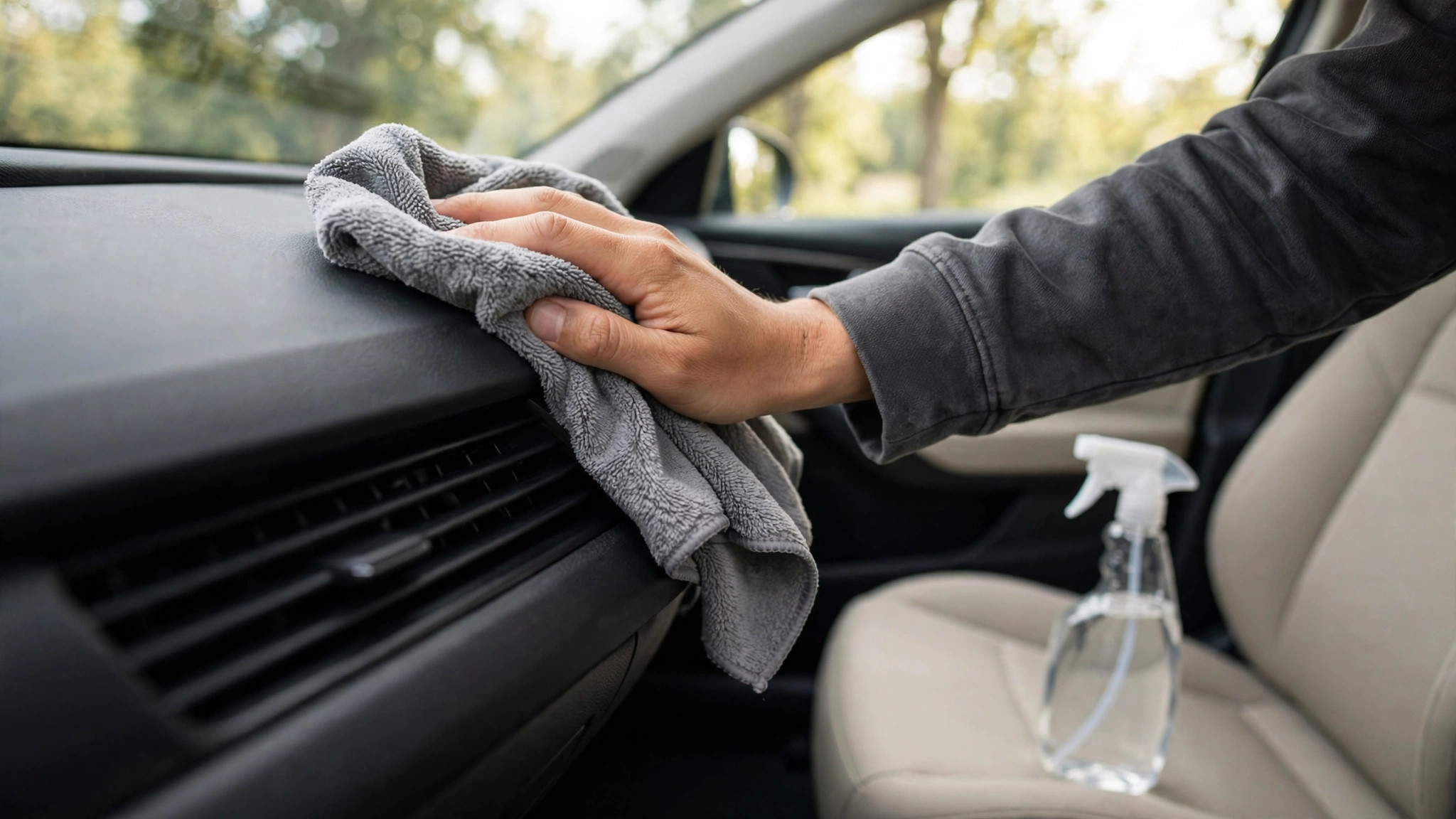
- Wipe gently with a clean, damp microfiber cloth. Light, straight strokes, a fresh section of cloth for each pass. Never use a paper towel or a dry rag — both scratch. See our guide to car cleaning mistakes that scratch your paint.
- Wash and re-protect. Rinse, wash the panel with a proper car shampoo — see how to wash your car properly and our best car wash soaps — and check whether water still beads. If not, reapply a spray wax.
Verdict: which one should you buy?
If you only buy one, buy the Chemical Guys CWS104 — it folds bug removal into a wash you were already doing, and the concentrate makes it the cheapest per use. If your car has tar baked on for weeks, add the Stoner Tarminator — the fastest tool for the job nothing else can move. If you mostly deal with fresh bugs after weekend drives, the Meguiar's foam is the easiest way to keep the front end clean. Remember: dissolve first, wipe second, never scrub dried bugs with a dry cloth.
For independent test results, see the 2026 rankings at CarCareTruth and the hands-on test at CarWashWiz.
Frequently asked questions
Will a bug and tar remover damage my car's paint?
No, if you use it as the label directs on cured factory clear coat. Spray, wait, and wipe gently with a clean microfiber cloth. Never use one on fresh paint, a matte wrap, or a hot panel — spot-test first.
Can I just use dish soap instead?
No. Dish soap strips wax and does not dissolve bug proteins or tar. A dedicated remover softens the mess so it wipes off; car wash soap then cleans the panel.
How long should I let a bug and tar remover sit?
Most need 30 seconds to 2 minutes — the Tarminator 30–60 seconds on tar, the Meguiar's foam around 2 minutes. Never let it dry on the panel.
Do I need to wash the car after using a bug remover?
Yes, always. Rinse or wash the treated area to remove residue, and reapply wax or sealant if water no longer beads.
Can I use a bug and tar remover on headlights or plastic trim?
It depends on the product. Most picks here are label-safe on paint, glass, chrome, and plastic, but the Tarminator label says not to use it on headlights or clear plastics.