
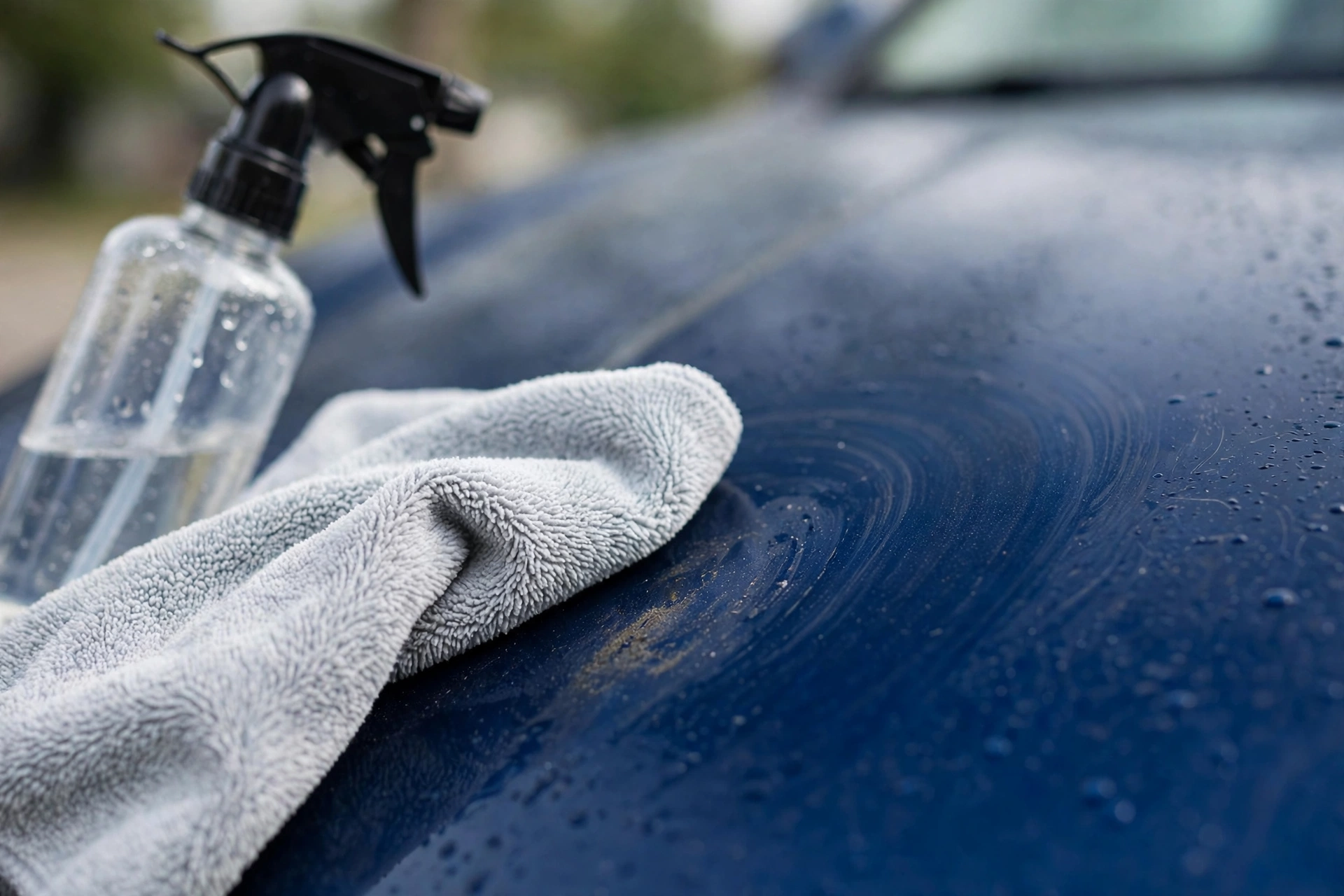
You walk out to your car and spot it: a fresh bird dropping on the hood, or a sticky drip of tree sap on the roof. It looks harmless, but both of these can damage your car's paint surprisingly fast. Bird droppings are acidic and can start etching into your clear coat within hours, especially in sunlight. Tree sap hardens into a stubborn bond that tempts people into scratching at it — which causes the very paint damage they were trying to avoid.
The good news: if you act quickly and use the right technique, both come off safely with basic supplies. This guide walks you through exactly how, step by step, with nothing but beginner-friendly tools.
Why Bird Droppings and Tree Sap Damage Paint
Your car's paint isn't a single layer. The color coat is covered by a transparent clear coat that gives the shine and protection. Two common contaminants attack that layer:
- Bird droppings are naturally acidic. Depending on the bird's diet, some droppings have a pH low enough to chemically etch the clear coat. Heat makes it worse — a dropping baking in the sun on a hot day can leave a permanent dull mark in a matter of hours.
- Tree sap is a sticky resin that doesn't dissolve in water. As it hardens, it bonds tightly to the clear coat. The damage usually comes not from the sap itself, but from people scrubbing it off with fingernails, rough sponges, or strong solvents.
The rule for both is the same: remove it quickly, soften it first, and never scrub it dry.
What You'll Need
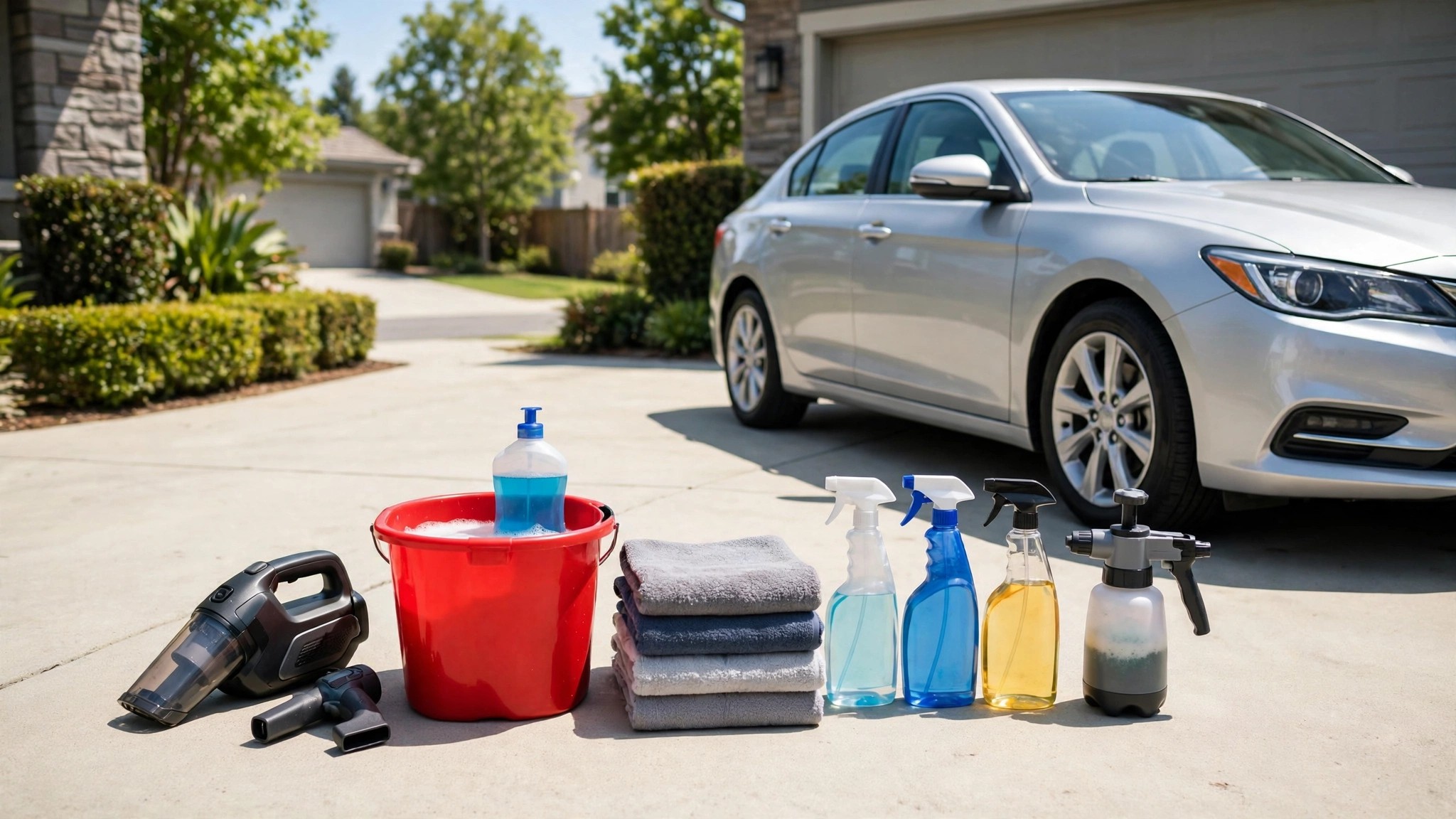
Gather these before you start — everything here is cheap and available at any auto parts store:
- 2–3 clean microfiber towels (not paper towels, not old bath towels)
- A spray bottle of water, or a detailing spray / quick detailer
- A bucket of warm water with a little car shampoo (not dish soap)
- Isopropyl rubbing alcohol (for stubborn sap)
- A dedicated tar-and-sap remover (optional but handy if you park under trees often)
- Car wax or spray sealant (to protect the spot after cleaning)
Keep a travel-size detailing spray and one microfiber towel in your car. If you spot a fresh dropping while you're out, you can handle it on the spot in under two minutes — that's when removal is easiest.
How to Remove Bird Droppings Safely
Dried bird droppings contain grit, so the key is softening them completely before anything touches the paint in a wiping motion.
- Soften the deposit. Spray the area generously with water or detailing spray until it's thoroughly wet. If the dropping is fully dried, lay a damp microfiber towel over it for 2–3 minutes to soak it loose. Since droppings usually land on horizontal surfaces like the hood or roof, the wet towel stays in place on its own.
- Lift, don't scrub. Once it's soft, use a clean, damp microfiber towel to gently lift the residue away. Dab or use a light, straight-line motion — never rub aggressively in circles, and never wipe a dried dropping, because the gritty bits act like sandpaper.
- Rinse the area. Wash the spot with your bucket of car shampoo and water to remove any acidic residue left behind. Skipping this step can leave an invisible film that keeps etching the clear coat.
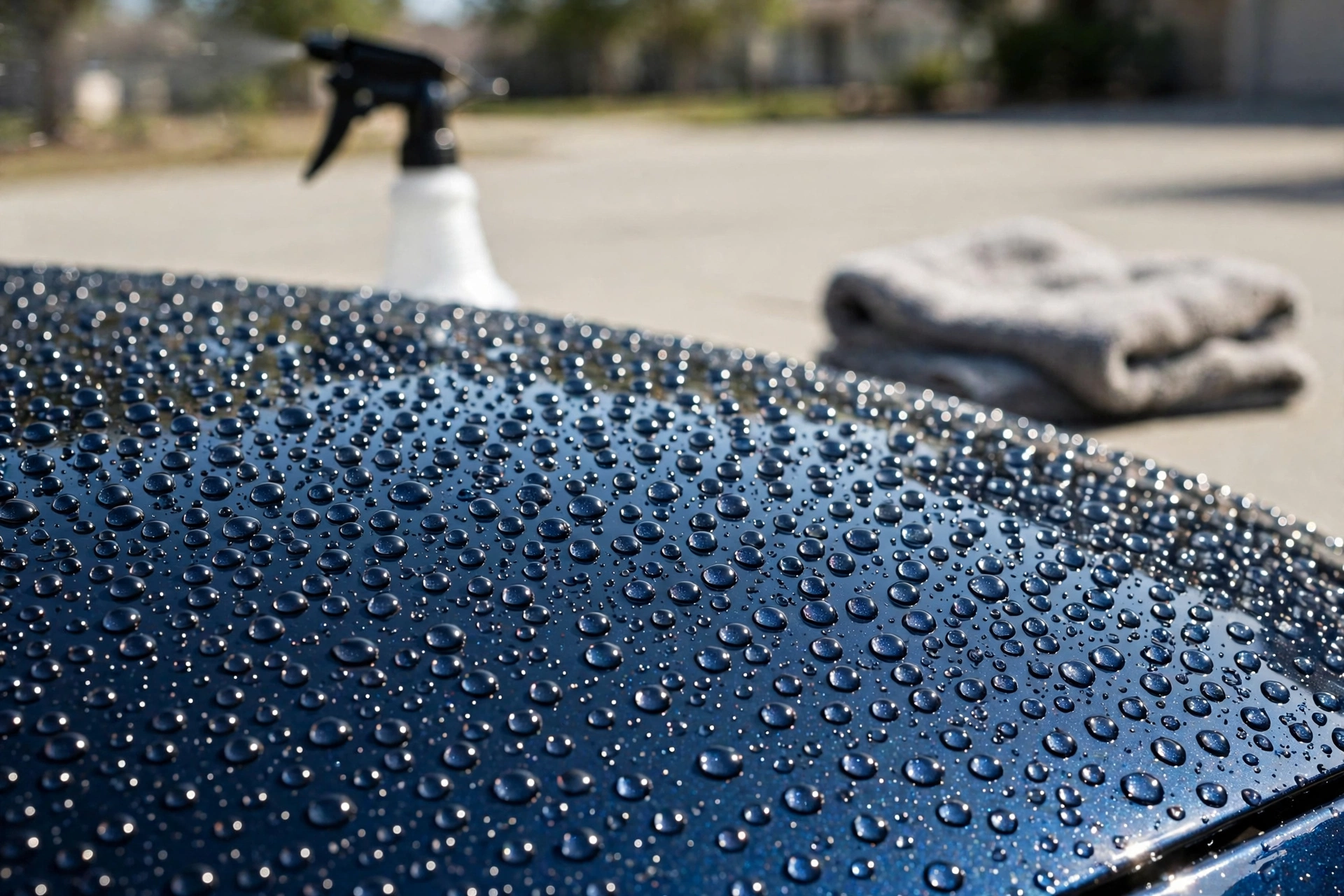
- Dry and protect. Dry with a fresh microfiber towel, then apply a coat of wax or spray sealant to the area. This restores the protection the acidic dropping may have worn away.
Check for etching: look at the spot in sunlight. If you see a faint dull halo or dimple after cleaning, the acid likely marked the clear coat. A light hand polish may reduce it — or see a detailer if it's deep. For prevention habits, our guide to car cleaning mistakes that scratch paint covers the wiping habits that cause most paint damage.
How to Remove Tree Sap Safely
Fresh sap is much easier to deal with than hardened sap, so check the stiffness before you decide on the approach.
Fresh, soft sap
- Spray the sap generously with warm soapy water (car shampoo) and let it soak for a couple of minutes.
- Gently wipe with a clean microfiber towel. Fresh sap often lifts off with just soap and water.
- If a sticky film remains, wash the area again and finish with wax.
Hardened sap
- Dab with isopropyl alcohol. Apply a small amount of rubbing alcohol to a microfiber towel — not directly onto the paint — and hold it against the sap for about 30 seconds. The alcohol softens the resin so it wipes away.
- Try a dedicated sap remover. If alcohol doesn't fully do it, use a commercial tar-and-sap remover. Spray it on, let it sit for a minute, then gently wipe. These are formulated to dissolve resin without harming clear coat or wax.
- For truly rock-hard sap, a plastic razor blade held at a low angle can lift it off — plastic is much safer than your fingernail, which digs straight into the clear coat. Work slowly and keep the area lubricated with detailing spray. AAA's guide confirms the same safe sequence: gentle rubbing with soap and water first, then a dedicated tar-and-sap remover, and professional help once sap has fully hardened.
- Wash and wax. After the sap is gone, wash the area with car shampoo to remove all solvent residue, then apply wax or sealant. Solvents strip away existing wax, so this step isn't optional.
A full proper car wash after contaminant removal is the safest way to make sure no residue or grit is left behind.
What NOT to Do
Most paint damage from droppings and sap happens during removal. Avoid these common mistakes:
- Never scratch with your fingernail. This is the number-one way people gouge their clear coat trying to remove sap — AutoGuru's car care experts specifically warn against digging at sap with your nails, recommending professional detailing instead for rock-hard deposits.
- Never wipe dried droppings. Dried residue contains grit — wiping grinds it into the paint. Soak first, always.
- Never use paper towels or rough sponges. Paper towels are abrasive on paint. Microfiber only.
- Never use gasoline, acetone, turpentine, or undiluted strong solvents. These can strip the clear coat instantly. Diluted rubbing alcohol or a purpose-made sap remover is the safe ceiling.
- Never use dish soap as your cleaner. It strips wax and dries out trim. Use proper car shampoo.
- Don't blast dried sap with a pressure washer at close range. It won't remove bonded sap, and it can force water into seals or chip paint.
How to Prevent It
- Park smart. Avoid parking under fruit trees, berry bushes, or areas where birds roost. A quick look up before you leave your car can save you a cleaning job.
- Use a car cover if you regularly park outdoors under trees — it's the cheapest long-term protection.
- Keep paint protected. A good coat of wax or a spray sealant doesn't stop droppings, but it makes them far easier to wipe off and gives the clear coat an extra buffer. Add a monthly "check the paint" habit to your monthly car maintenance routine.
- Keep a quick-clean kit in the trunk: a small detailing spray bottle and two microfiber towels. Ten seconds of attention now beats an etched clear coat later.
FAQ
How long can a bird dropping sit on paint before it damages it?
It depends on heat and the dropping's acidity, but etching can begin within a few hours in direct sunlight on a hot day. The safest habit is removing it the same day you notice it.
Can tree sap permanently damage my car's paint?
The sap itself rarely damages paint permanently if removed properly. Permanent damage almost always comes from the removal attempt — scrubbing, fingernails, or harsh solvents. If sap has been on the car for months and hardened completely, a professional detailer is the safest route.
Is rubbing alcohol safe on car paint?
Rubbing alcohol applied to a cloth and used briefly on sap is generally safe for clear coat, and it's a widely recommended step. Don't pour it directly on the paint, don't let it sit for long, and always wash and re-wax the area afterward.
Will a car wash remove bird droppings and tree sap?
A car wash handles fresh, soft contamination well. But dried droppings need a soak first (otherwise wiping grinds grit into the paint), and hardened sap usually needs alcohol or a dedicated remover before a wash will finish the job.
What's the difference between bird droppings and tree sap removal?
Droppings are removed with soaking and gentle lifting, because the danger is grit and acidity. Sap needs a solvent-based approach (rubbing alcohol or sap remover), because the danger is the resin's bond to the paint. For both, finish by washing and re-applying wax or sealant.
Conclusion
Bird droppings and tree sap look like small problems, but given time and sunlight, either one can leave a permanent mark on your paint. The fix is simple and cheap: catch them early, soak before you touch, wipe gently with microfiber, and protect the spot with wax when you're done. Keep a small spray bottle and towel in your trunk, and a two-minute cleanup becomes a habit that keeps your paint looking new for years.