
Your car quietly wears out every day — even when it's parked in the driveway. Tires lose air, fluids drop a little, battery terminals collect corrosion, and wiper blades stiffen in the sun. None of these is a problem today, but ignore them for six months and they join forces into a failed battery, an overheated engine, or a bald tire on a rainy highway.
The fix is not a garage visit every month. It's a simple 10-minute routine you do yourself, once a month, with almost no tools. This monthly car maintenance checklist tells you exactly what to check, what "good" looks like, and which warning signs mean you should skip the routine and book a mechanic instead. Bookmark it, or print it and keep it in your glove box.
Why a Monthly Routine Beats a Yearly Panic
Most car problems don't appear suddenly — they announce themselves in small ways weeks before they get expensive. Low tire pressure turns into uneven wear, then a blowout. A coolant level that keeps dropping turns into overheating, then a warped cylinder head. A battery that cranks slowly on cold mornings turns into a car that won't start at all.
Checking a short list of items every month catches these early warnings while they're still cheap and easy to fix. Roadside assistance groups like AAA structure their maintenance advice the same way — a handful of quick monthly checks, with bigger services at longer intervals (see AAA's time-stamped car maintenance checklist). Follow this routine and you'll also learn your car: after a few months, you'll notice when something looks or sounds different, which is exactly the skill every first-time owner wants.
The Complete Monthly Car Maintenance Checklist
Here's the whole routine at a glance. Print this table and tick each row off:
- 1. Tires: check pressure in all four tires plus the spare; look at tread wear — PASS: pressure matches the driver's door-jamb sticker, tread depth above 2/32 inch, no cuts, bulges, or uneven wear.
- 2. Engine oil: check level and color on the dipstick — PASS: oil sits between the MIN and MAX marks, honey-brown to dark brown, no grit or milky color.
- 3. Fluids: coolant, brake fluid, windshield washer fluid, power steering fluid — PASS: every reservoir sits between its MIN and MAX lines; top up washer fluid any time.
- 4. All exterior lights: headlights, brake lights, indicators, reverse lights, hazard lights — PASS: everything lights up, no cracked lenses or dim bulbs.
- 5. Wipers and horn: run the wipers with washer fluid; press the horn — PASS: wipers clear the glass in one pass without streaks or skipping; horn sounds strong.
- 6. Battery: look at terminals and cables — PASS: terminals clean and tight, cables snug, no white/blue powdery corrosion, no cracks or bulges on the case.
- 7. Listen and feel: take a 5-minute drive and pay attention — PASS: no new squeals, grinding, or rattles; brakes feel firm; steering doesn't pull to one side.
How to Do Each Check (Beginner Walkthrough)
1. Tire pressure and tread
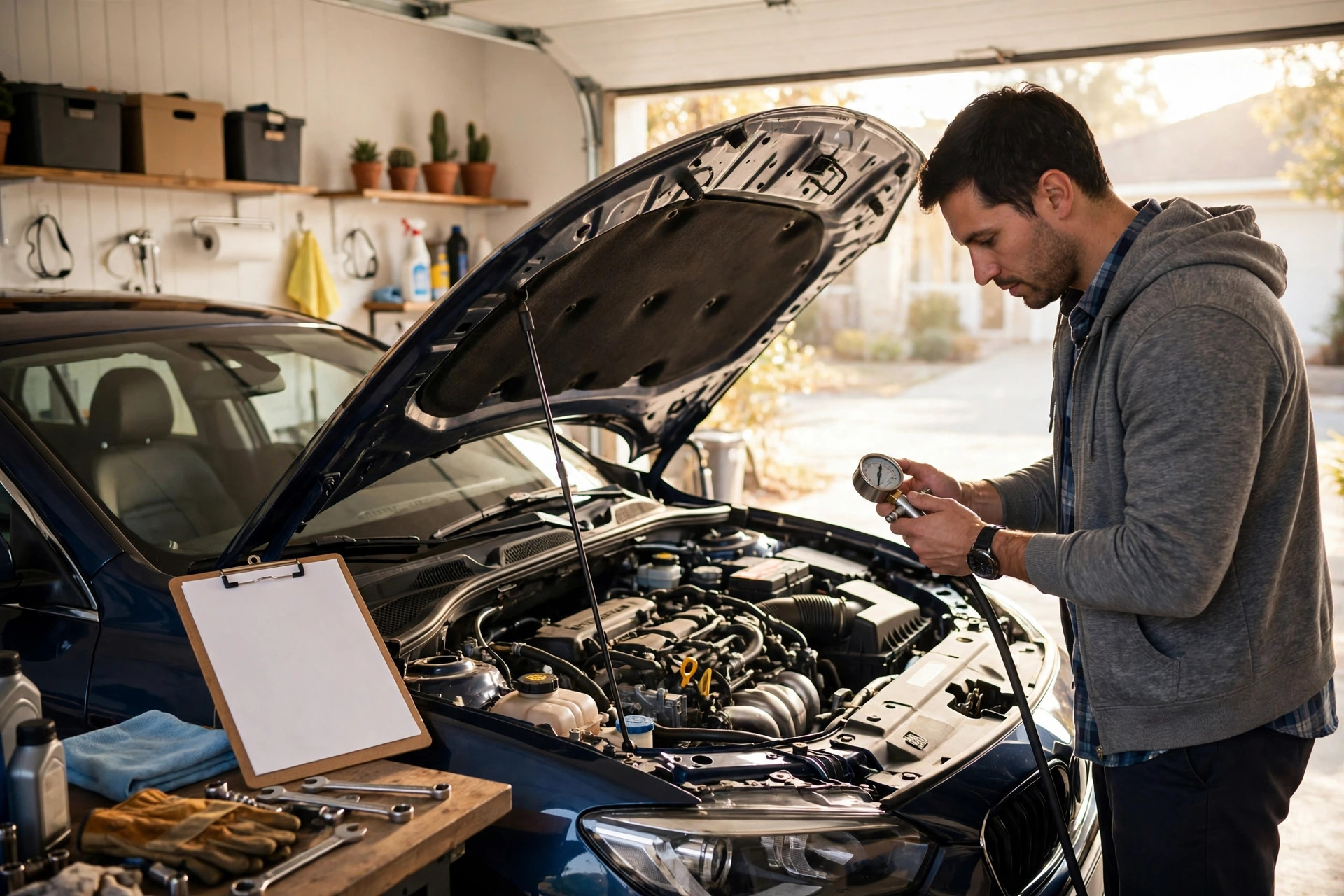
Do this when the tires are cold — before driving, or at least three hours after your last drive. Unscrew the valve cap on each tire, press a tire pressure gauge firmly onto the valve, and read the number. Compare it with the recommended pressure on the sticker inside your driver's door jamb — not the number printed on the tire sidewall, which is the tire's maximum, not your car's recommendation.
Then look at the tread. Slide a coin into the grooves: if you have a quarter, insert it upside down — if you can see the top of George Washington's head, the tread is too worn. For a fuller method, read our tire tread depth coin test guide. Also check the spare tire's pressure — a flat spare is a nasty surprise on the one day you need it.
For pressure basics, see how often you should check tire pressure.
2. Engine oil level and condition
Park on level ground and wait a few minutes after switching the engine off so the oil drains back down. Pull the dipstick out, wipe it clean with a rag or paper towel, push it all the way back in, then pull it out again and read the level. It should sit between the MIN and MAX marks.
Now look at the oil itself on the dipstick. Healthy oil is honey-brown to dark brown and flows smoothly. Two red flags: a milky, coffee-with-cream color (can mean coolant is leaking into the oil — get it checked soon) or a strong burnt smell with gritty particles. A full step-by-step is in our engine oil level guide.
3. The other fluids: coolant, brake, washer, power steering
With the engine off and fully cool, open the hood and find the translucent reservoirs. Each has MIN and MAX marks on the side — the level should sit between them.
- Coolant: check only when the engine is cold. Never open the radiator cap on a hot engine — pressurized steam can cause serious burns. If the reservoir is below MIN, top up with the coolant type your owner's manual specifies.
- Brake fluid: sits in a small reservoir on the driver's side of the engine bay. Low brake fluid can signal worn pads or a leak — top it up to the mark, but if it drops again next month, see a mechanic.
- Windshield washer fluid: the most topped-up fluid in any car. Fill it to the fill line with proper washer fluid (not plain water — it freezes in winter and grows gunk in summer).
- Power steering fluid: if your car has hydraulic steering (many newer cars use electric steering instead and have no reservoir), check the level and look for a healthy reddish color.
4. All exterior lights
This takes two minutes with a friend's help, or you can use reflections in a shop window. Walk around the car and check: low-beam headlights, high beams, brake lights (have someone press the pedal), turn indicators front and rear, reverse lights, and hazard lights. Replace any dim or dead bulb promptly — being visible is half of driving safety.
5. Wipers and horn
Spray washer fluid and run the wipers. They should clear the windshield in one or two passes without streaks, smears, or chattering. Blades typically last 6–12 months; if yours are skipping, replace them — it takes five minutes and no tools on most cars. Press the horn too: it should sound strong, not weak or crackly.
6. Battery terminals and cables
Look at the two terminals on top of the battery. Healthy connections are clean, tight, and metal-colored. White, blue, or greenish powdery buildup is corrosion — it blocks current and is a common cause of no-start mornings. If you spot it, disconnect the negative cable first (then positive), clean the terminals with a wire brush or an old toothbrush and baking-soda water, then reconnect positive first, then negative. Our battery terminal cleaning guide walks through the safe way to do it. If the battery case is cracked, swollen, or leaking, don't drive — batteries this old or damaged should be replaced by a professional.
7. The listen-and-feel test
Finish with a short drive. Turn the radio off and pay attention for two or three minutes: any new squealing when braking, grinding when turning, or a thumping that matches your speed? Notice whether the car pulls to one side on a straight road, whether the brake pedal feels firm (spongy brakes need attention — see why your brake pedal feels spongy), and whether the steering wheel vibrates at speed. New noises are your car's way of asking for help before a warning light does.
The 10-Minute Monthly Routine, In Order
Do the checks in this order so you're not walking back and forth:
- Cold tires first: before your first drive of the day, check all four pressures plus the spare, and glance at the tread. (~3 minutes)
- Under the hood: oil dipstick, then each fluid reservoir (coolant only if the engine is cold), then battery terminals. (~4 minutes)
- Lights, wipers, horn: walk-around light check, wiper test, horn press. (~2 minutes)
- Listen-and-feel drive: a short loop with the radio off. (~1–2 minutes of focused attention)
Set a repeating reminder on your phone for the first Saturday of every month. Pair it with something you already do — like refuelling or washing the car — and the habit sticks within two months.
Warning Signs That Can't Wait Until Next Month
The monthly checklist is for maintenance, not emergencies. If you spot any of these at any time, act now rather than waiting for your next check day:
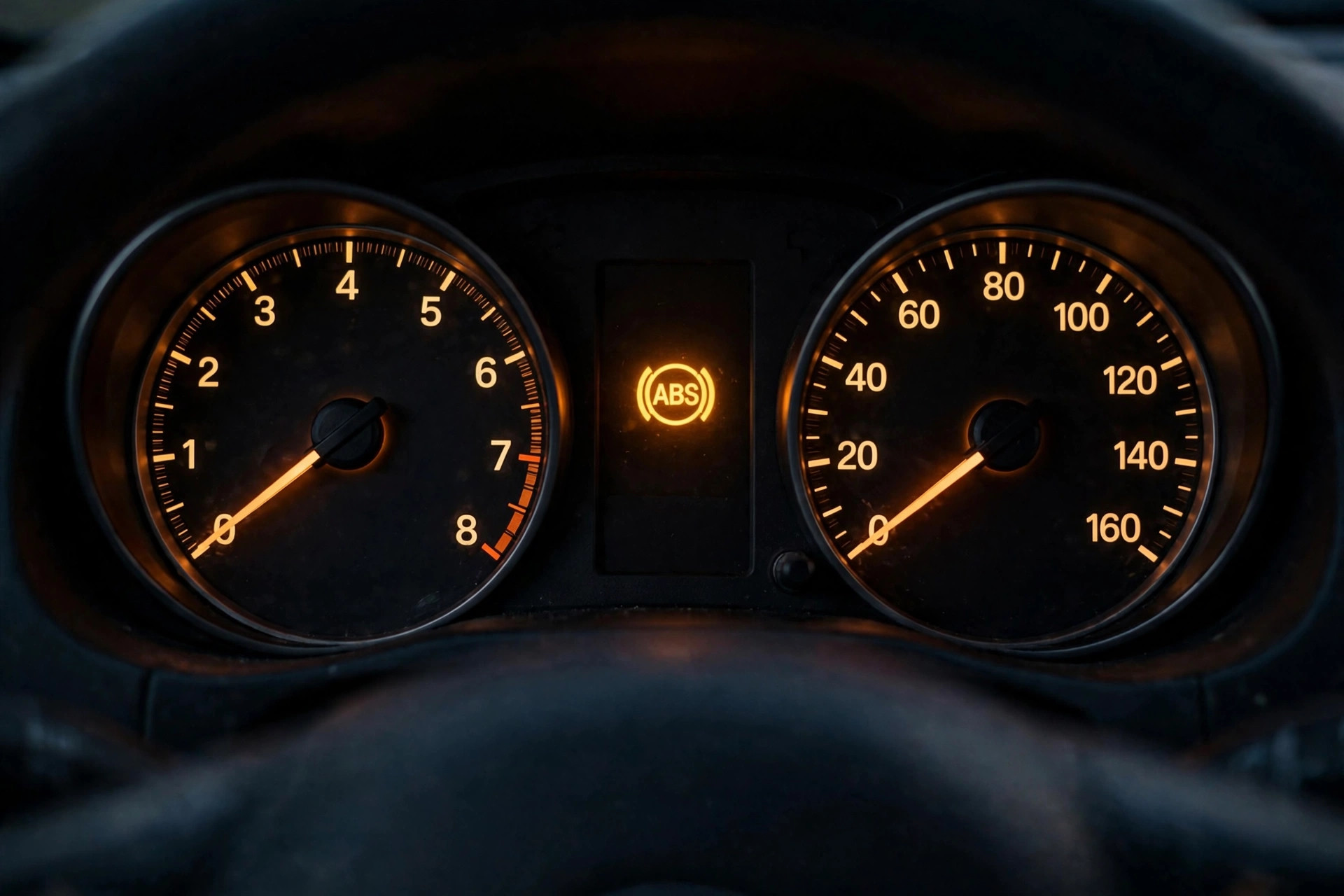
- Red oil pressure or temperature warning light while driving — pull over safely and switch the engine off. Low oil pressure can destroy an engine in minutes.
- A puddle under the car — don't drive on a fluid leak until you know what it is. Coolant leaks can overheat the engine; brake fluid leaks are a safety emergency.
- Grinding or metal-on-metal sounds when braking — your pads may be worn through, and you're damaging the rotors with every stop.
- A tire that keeps losing pressure — a slow leak can become a blowout at highway speed.
- Steering pulling hard, or the brake pedal sinking to the floor — these are "park the car and call for help" symptoms.
When in doubt, keep an emergency kit in the car and don't hesitate to call roadside assistance. Being cautious costs you a phone call; being brave costs you a repair bill.
FAQ
Do I really need to check my car every month, or is a yearly service enough?
A yearly service handles the big jobs — oil changes, filters, brake inspections — but a year is a long time for tires, fluids, and batteries. Monthly checks catch the small drifts (a slow leak, dropping pressure, corrosion) that a mechanic only sees once a year. Think of it as brushing your teeth daily plus visiting the dentist yearly.
How long does the monthly car maintenance checklist take?
About 10 minutes once you've done it two or three times. The first run takes a bit longer while you locate the dipstick, the reservoirs, and the battery in your own engine bay — keep your owner's manual open the first time.
What tools do I need for a monthly car check?
Very little: a tire pressure gauge (a few dollars at any auto parts store), a clean rag or paper towel for the dipstick, and your owner's manual to identify reservoirs and correct fluid types. A phone flashlight helps for peering into dark corners of the engine bay.
Should I check everything even if the car is barely driven?
Yes — arguably more so. Cars that sit still suffer battery drain, tire flat-spotting, fluid aging, and brake corrosion. If you drive very little, do the monthly checks on schedule anyway, and take the car for a 15–20 minute drive at least every couple of weeks to keep everything moving.
What if I find something wrong and I'm not confident fixing it?
That's completely fine — the point of the checklist is finding the problem early, not fixing everything yourself. Checking is always free; knowing exactly what's wrong (and being able to describe it) also protects you from being upsold at the shop.
Conclusion
A monthly car maintenance checklist is the cheapest insurance a first-time car owner can buy: 10 minutes, once a month, and no special tools. Tires, fluids, lights, wipers, battery, and a quick listen — that short list catches nearly every common problem while it's still a small one. Print the checklist above, set a reminder for the first Saturday of each month, and your car will repay you with fewer surprises, lower repair bills, and a longer life on the road.