What car insurance actually is
Car insurance is a contract between you and an insurance company: you pay a premium (monthly or every six months), and the company agrees to cover certain financial losses if something goes wrong. The word "coverage" simply means the kinds of losses the company agrees to pay for.
Insurance exists for one big reason: accidents are expensive. A serious crash can cause tens or hundreds of thousands of dollars in medical bills, car repairs, and legal costs. Almost no first-time owner can absorb that out of pocket, so insurance spreads the risk — many drivers each pay a little, and the pool covers the unlucky few.
In most U.S. states (and many other countries), you are legally required to carry at least a basic level of car insurance before you can drive on public roads. Driving without it can mean fines, a suspended license, and personal liability for any damage you cause. Always check your own state's or country's minimum requirements — they differ everywhere.
The 5 coverage types every beginner should know
Every car insurance policy is built from a handful of building blocks. Here is what each one does, in plain English:
1. Liability insurance (bodily injury + property damage)
This is the foundation of every policy — and the part the law usually requires. If you cause an accident, liability coverage pays for the other person's medical bills and the damage to their car or property (a fence, a mailbox, another vehicle). It does not pay for your car or your own injuries. Think of it as "the coverage that protects everyone else from my mistakes."
2. Collision coverage
This pays to repair or replace your own car after a crash — whether you hit another vehicle, a tree, a guardrail, or a pothole badly enough to cause damage. It applies even when the accident is your fault. If you still owe money on your car (a loan or lease), your lender will almost always require you to carry this.
3. Comprehensive coverage
This covers damage to your car from everything that isn't a crash: theft, vandalism, hail, flooding, fire, falling branches, and hitting an animal such as a deer. A common beginner mistake is assuming collision covers theft — it doesn't. If your car is stolen from a parking lot, that's a comprehensive claim.
4. Uninsured / underinsured motorist coverage
This protects you when the other driver is at fault but has no insurance (or not enough). It also typically covers hit-and-run crashes. Given how many drivers carry only the bare legal minimum, this is one of the most valuable protections a first-time owner can add.
5. Medical payments or personal injury protection (PIP)
This pays medical bills for you and your passengers after an accident, regardless of who was at fault. Some states require one of these; elsewhere they're optional but worth considering, especially if your health insurance has high deductibles.
Deductibles and limits: the two numbers that decide everything
Every policy has two kinds of numbers on it. Understanding them is the key to buying smart insurance.
Your deductible is the amount you pay out of pocket on a claim before the insurance company pays the rest. It applies to collision and comprehensive claims (liability has no deductible). For example, with a $500 collision deductible and a $4,000 repair bill, you pay $500 and the insurer pays $3,500. Common choices are $250, $500, and $1,000.
The trade-off: a higher deductible means a lower premium, and a lower deductible means a higher premium. Raising your deductible from $500 to $1,000 can meaningfully cut what you pay each month — but only choose a deductible you could actually afford to pay tomorrow if your car got damaged.
Your limits are the maximum the insurer will pay. Liability limits are written as three numbers, like 25/50/25: $25,000 of bodily injury coverage per person, $50,000 per accident, and $25,000 of property damage per accident. Once a limit is hit, the remaining cost comes out of your pocket. That's why minimum-limit policies can be risky: one serious crash can burn through $25,000 in medical bills in days.
What "full coverage" really means
"Full coverage" is a phrase you'll hear a lot, but it's not an official insurance product. It generally means liability + collision + comprehensive bundled together. It still won't cover everything — wear and tear, mechanical breakdowns, and personal belongings stolen from the car are typically excluded.
If you financed or leased your car, your lender will likely require "full coverage" — and possibly cap how high your deductibles can go. One more thing financed buyers should know: new cars lose value fast. If your car is totaled and you owe more than it's worth, you still owe the lender the difference. Gap insurance covers that shortfall, and it's worth asking about if you bought new with a small down payment.
How much insurance do you actually need?
Start by finding your state or country's legal minimum — that's the floor, not the recommendation. Then consider:
- Many beginners upgrade to something like 100/300/100 liability instead of the bare minimum. The price difference is often smaller than people expect, and it protects your savings if you cause a serious accident.
- If you have a loan or lease, collision + comprehensive are usually mandatory, not optional.
- If your car is older and fully paid off, dropping collision and comprehensive is sometimes a smart money move — but only if you could truly afford to replace the car tomorrow. Compare the annual cost of those coverages against the car's current value (not what you paid for it).
- Add uninsured motorist coverage almost always. It's cheap relative to what it protects.
- Match coverage to your life: long commute, young passengers, or assets to protect all argue for higher limits.
When in doubt, a good rule of thumb: buy enough insurance to protect what you can't afford to lose — your savings, your car, your future earnings.
7 ways first-time owners can lower their premium
Insurance companies charge new drivers more because they have no driving history — the insurer is guessing your risk. Here's how to shrink that bill honestly:
- Shop at least three quotes for identical coverage. Every company prices risk differently, so the same 25-year-old with the same car can get wildly different quotes. Compare apples to apples — same limits, same deductibles.
- Raise your deductible. If you can comfortably keep $1,000 in an emergency fund, moving from a $500 to a $1,000 deductible cuts the collision/comprehensive portion of your premium noticeably.
- Ask about every discount. Many drivers miss savings they already qualify for: good-student discounts, defensive-driving course discounts, bundling with renters insurance, low-mileage discounts, paying in full instead of monthly, and paperless billing.
- Take a defensive driving course. Many insurers offer a real discount for an approved course, and it's genuinely useful training for a new driver.
- Consider a telematics (usage-based) program. Many insurers offer app-based programs that monitor your driving and reward safe habits with lower rates. Drive smoothly, brake gently, and your premium can drop — just know that risky driving could push it the other way.
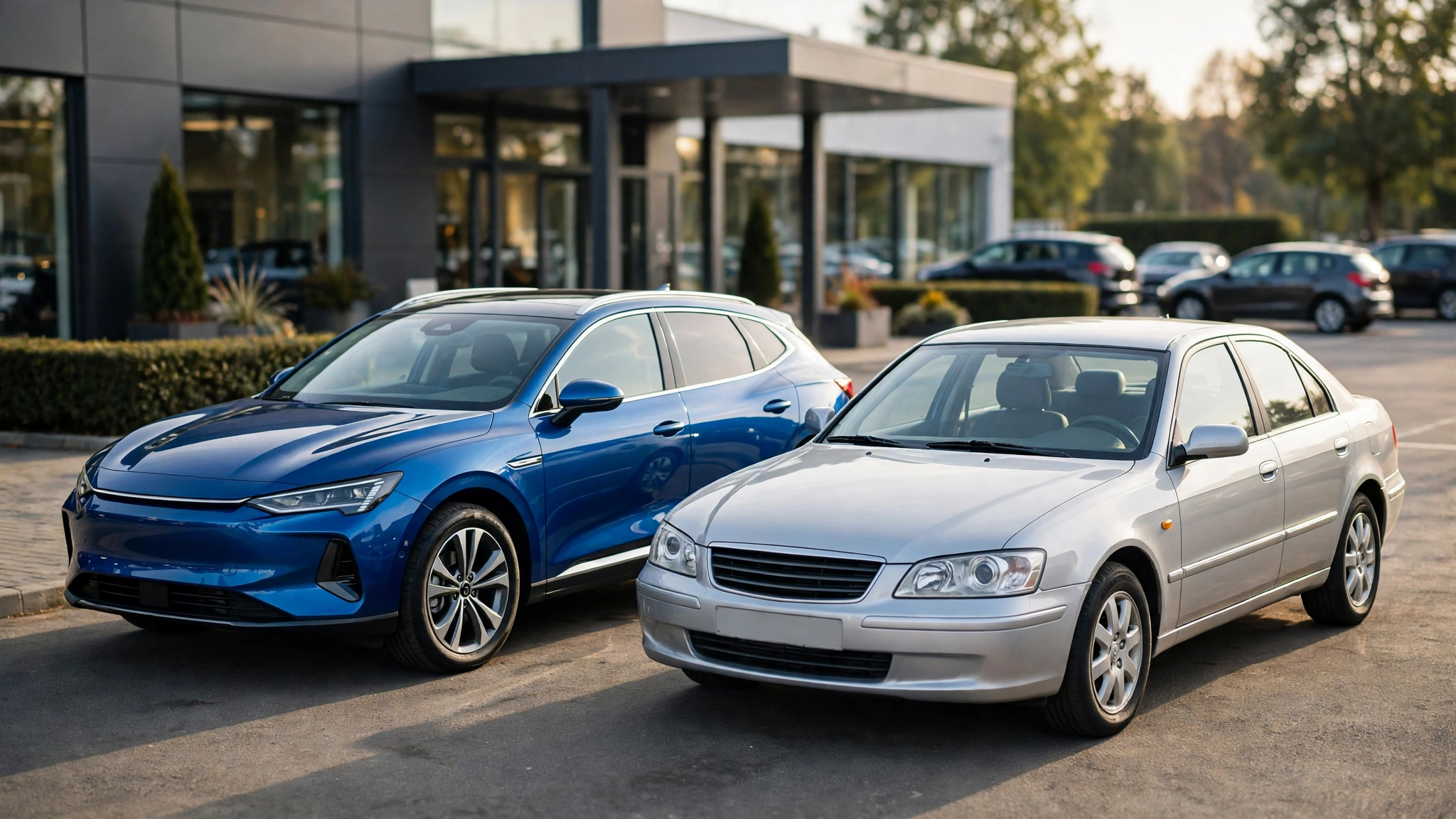
- Choose a car that's cheap to insure. Insurance pricing looks at repair costs, theft rates, and safety records — not just the price tag. A practical sedan with strong safety ratings and widely available parts usually costs far less to insure than a sports car or luxury model. Check insurance costs before you buy, as our new vs used first car guide explains.
- Review your policy every year. Rates change, your car depreciates, and life changes (a new address, a marriage, a garage) can all unlock savings. Set a yearly reminder to re-shop.
What to do after an accident
Your policy requires you to report accidents, and knowing the steps in advance makes a stressful moment far calmer:
- Safety first. Move to a safe spot if possible, turn on hazard lights, and call emergency services if anyone is hurt.
- Document everything. Photos of all vehicles, the scene, license plates, and the other driver's insurance card. Note the time, location, and weather.
- Exchange information but don't admit fault or agree to anything on the spot — let the insurers and evidence sort it out.
- Call your insurer promptly to start the claim. Most companies let you start a claim from their app in minutes.
Keeping an emergency kit in your car — warning triangles, a flashlight, a phone charger — makes the post-accident part much easier.
Frequently asked questions
Do I need insurance before I drive my new car home?
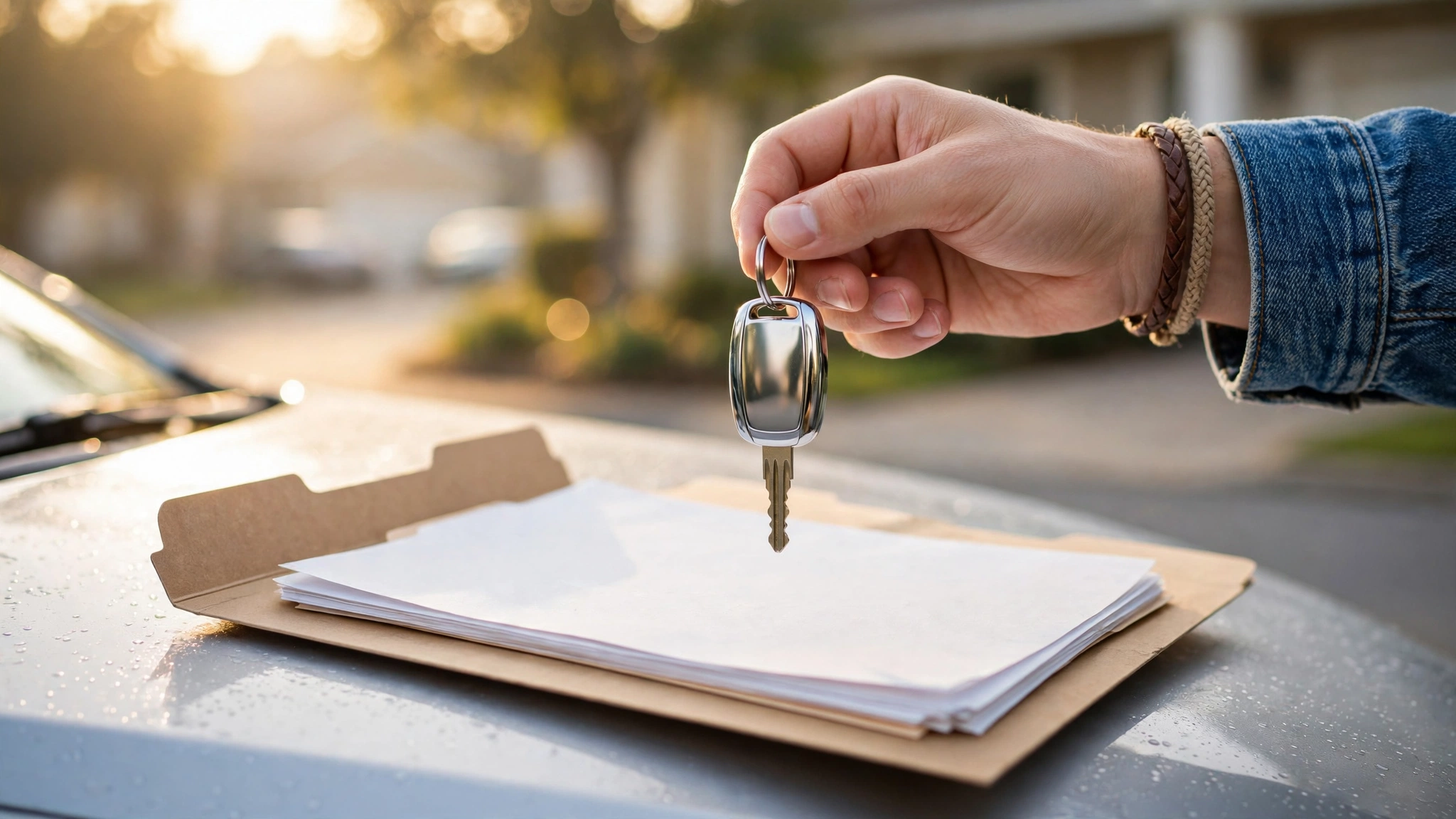
Yes — you must be insured from the moment you take ownership. Before pickup, work through our first car checklist: arrange insurance a day or two early so your policy is active when you collect the keys.
Is the cheapest policy good enough?
The cheapest quote usually means state-minimum liability with no collision or comprehensive. That's fine legally, but one at-fault accident can leave you owing far more than you saved. Aim for the best value — adequate protection at a fair price — not the lowest number on the page.
Will my rates drop over time?
Usually, yes. As you build a clean driving record — no tickets, no at-fault accidents — most insurers lower your rates at each renewal. The biggest drops typically come after your first few claim-free years.
Does filing a small claim hurt me?
It can. Filing a claim for minor damage may raise your premium at renewal, and the payout after your deductible might be small. A common rule of thumb: if the repair costs barely more than your deductible, paying out of pocket is often cheaper in the long run.
Do I need insurance if I'm still learning on someone else's car?
You typically need to be listed on the car owner's policy as a driver before you drive it regularly. Talk to the car owner's insurer first — driving an unlisted vehicle can mean zero coverage for you in a crash.
Conclusion
Car insurance feels intimidating because the industry loves jargon, but the whole system boils down to three questions: what does my policy cover, what do I pay first (deductible), and what's the most the insurer will pay (limits)? Answer those for any quote and you're already ahead of most first-time buyers.
Start with at least the legal minimum, strongly consider raising liability limits to something like 100/300/100, add collision and comprehensive if your car is financed (or valuable enough that you couldn't replace it), and always carry uninsured motorist coverage. Then shop multiple quotes, claim every discount you've earned, and review the policy once a year.
Insurance is one of the most important purchases of your first year as a car owner — arguably more important than any accessory. Get it right, and you can drive with confidence knowing one bad day on the road won't wreck your finances.
For more background on how coverage works, see the Insurance Information Institute's auto insurance basics guide and the National Association of Insurance Commissioners' auto insurance overview.