

You've signed the papers, you have the keys, and your first car is sitting right there waiting. It's tempting to jump in and drive straight home — but spending 20 unhurried minutes checking a few things right now can save you from expensive surprises later. Whether your car is brand-new or new-to-you, this beginner-friendly checklist walks you through exactly what to look at, in order.
Part 1: The paperwork (2 minutes)
1. Confirm you have both sets of keys
Ask the seller or dealer to hand you both keys (or the key fob plus the spare) and test each one: lock the doors, unlock them, and start the engine. A replacement key for a modern car can be surprisingly expensive, so sort this out before you leave the lot.
2. Check the documents packet
Before you drive off, make sure you have: the bill of sale or invoice, the registration/transfer papers, the insurance policy (most places legally require insurance from the moment you drive on public roads), the owner's manual, and the warranty/service book if the car is new or still under warranty. Flip through the manual later — it's the fastest way to learn your own car.
Part 2: The walk-around (5 minutes)
3. Walk the body slowly, panel by panel
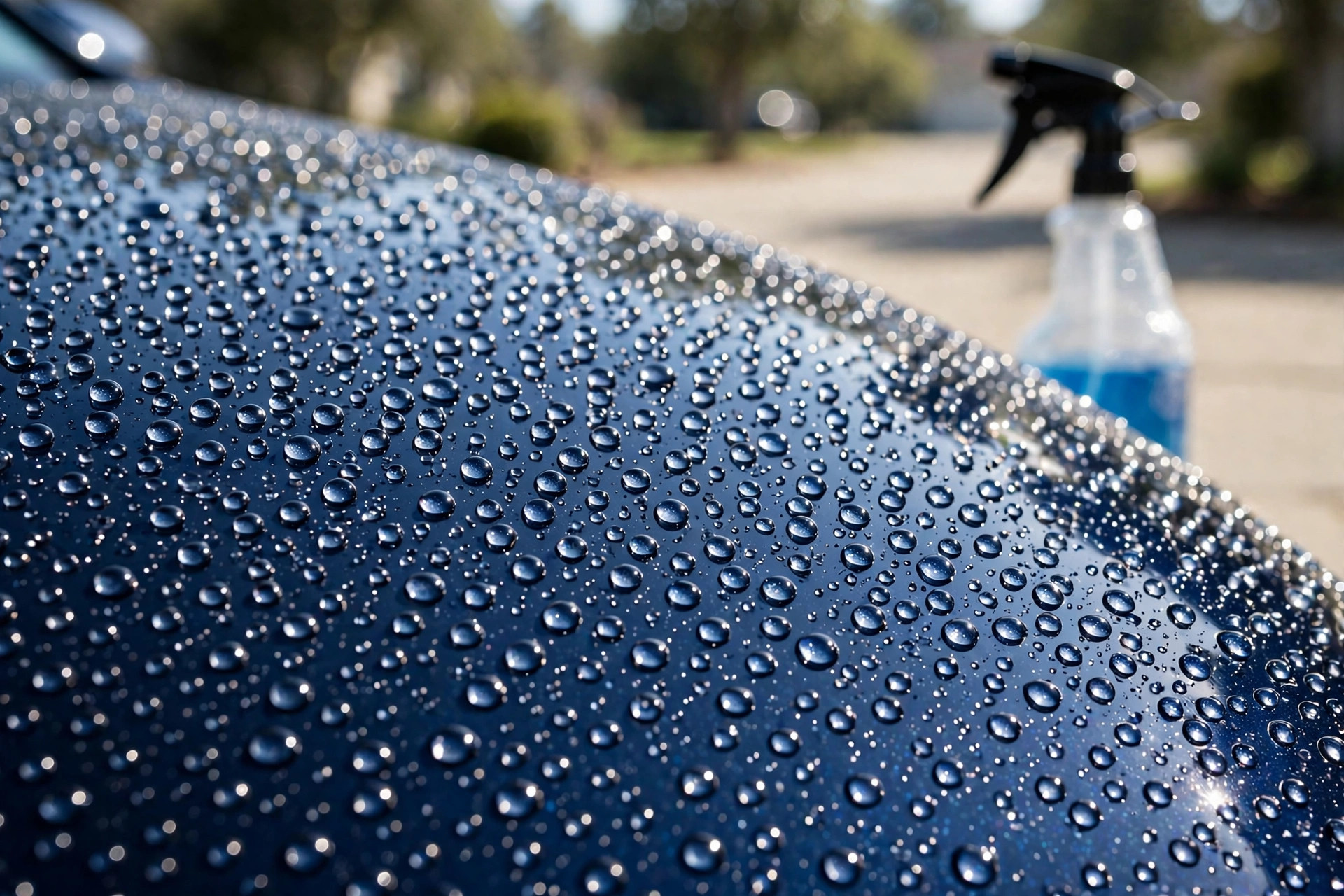
Circle the car in daylight and look along each side from a low angle. You're checking for scratches, dents, paint runs, and uneven gaps between panels — on a used car, inconsistent panel gaps or slightly different shades of paint on one panel can signal a past repair. On a new car, you're mostly looking for transport or dealership scratches. Run your fingertip over door handles and bumpers where people are most likely to have bumped the car.
4. Check the glass and mirrors
Look at the windshield and windows for chips and cracks, and check that both side mirrors and the rear-view mirror adjust smoothly and stay put. A small chip can spread into a long crack with one hot afternoon — better to flag it now.
5. Inspect the tires — all four plus the spare
Crouch down and look at each tire's sidewall for bulges, cuts, or deep cracks. Check that the tread looks even and deep enough — if you're unsure, this is exactly the skill our beginner's guide to reading tire sidewall markings and our coin test for tread depth teach. Then pop the trunk and confirm the spare tire (or the tire repair kit) is actually there, along with the jack and wrench. Finding out you have no spare during a flat tire is the worst kind of surprise — and if you ever do get a flat, our step-by-step flat tire guide will get you rolling again.
Part 3: Under the hood (3 minutes)
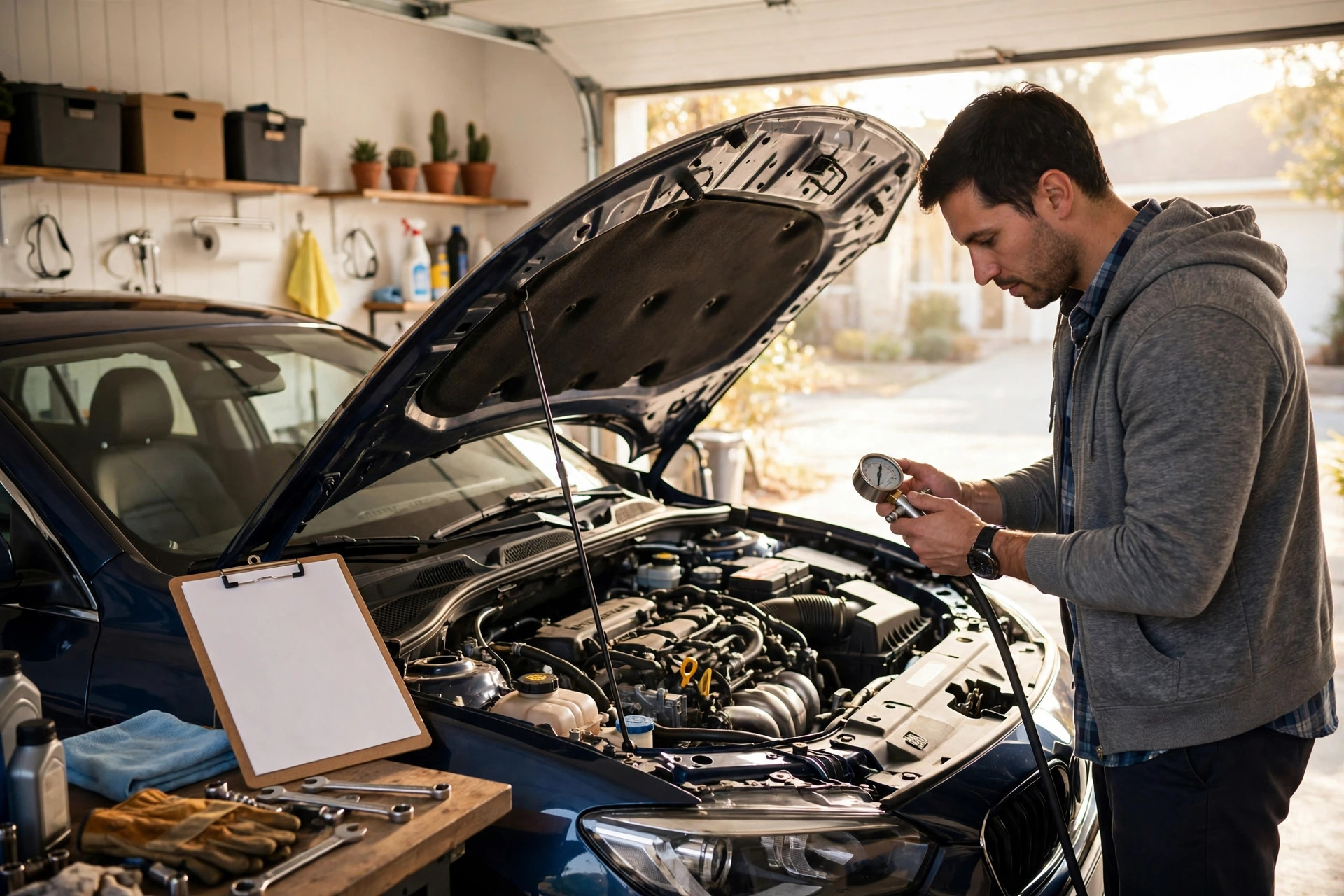
6. Pull the dipstick
With the engine off, pull the engine oil dipstick, wipe it, dip it again, and check the level sits between the two marks. The oil should look smooth and golden-to-dark-brown, not milky or gritty. Our guide to checking your engine oil level shows this in detail. If the oil looks like a chocolate milkshake, that can mean coolant is mixing with oil — stop and ask questions before accepting the car.
7. Glance at the other fluids
Look at the coolant reservoir (never open it when the engine is hot), the brake fluid reservoir, and the windshield washer bottle. Levels should sit at or above their "MIN" marks. These are things dealers normally top up before delivery, so low levels suggest the car wasn't prepared properly.
8. Look under the car for drips
After the car has idled for a few minutes, glance underneath. A small puddle of clear water under the passenger side after the AC runs is normal condensation. But dark oil, green/orange coolant, or red fluid spots are red flags — point them out immediately.
Part 4: Electronics and lights (5 minutes)
9. Test every light with a helper
Have someone stand outside while you cycle through headlights (low and high beam), taillights, brake lights, turn signals, hazard lights, fog lights, and reverse lights. A burned-out bulb is cheap to fix — but you want the dealer to fix it, not you.
10. Watch the dashboard warning lights
Turn the key to the "on" position without starting the engine: all the warning lights should glow for a moment, then go out once the engine starts. If the check engine light, airbag light, oil pressure light, or battery light stays on, that's an active fault — and on a new car, your oil pressure light in particular should never stay on. Don't drive off until it's resolved.
11. Test the essentials inside
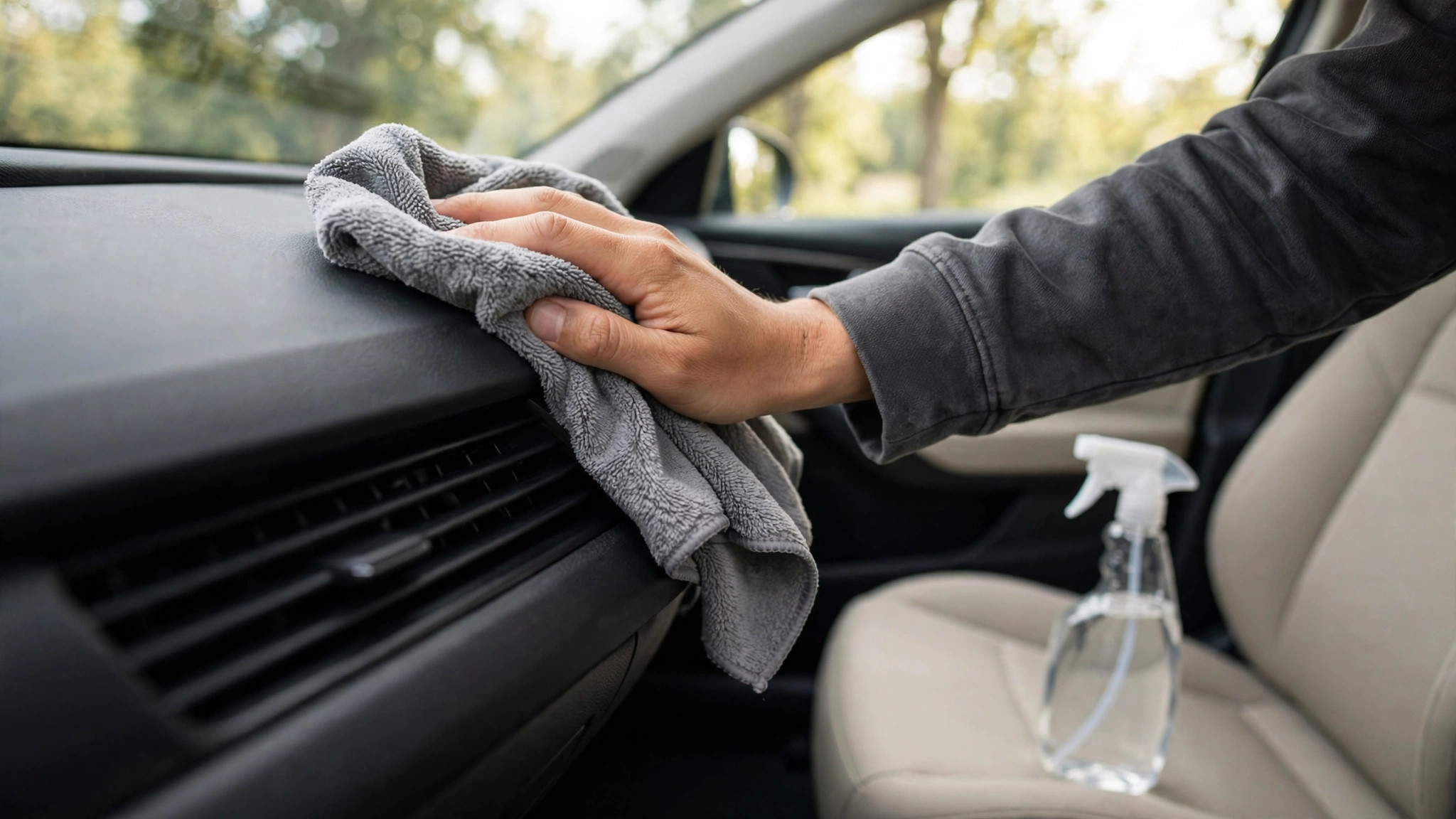
Try the air conditioning and heater (both hot and cold), every power window, the door locks, the horn, the wipers and washer jets, and the infotainment screen and speakers. Check that all seatbelts pull out smoothly, click in firmly, and retract on their own.
Part 5: The drive (5 minutes)
12. Listen on start-up
The engine should start promptly and settle into a smooth, even idle. Knocking, grinding, squealing, or heavy vibration at idle are all worth investigating before you leave.
13. Test the brakes and steering right away
In the lot or on a quiet street, confirm the brake pedal feels firm — a spongy or sinking pedal is a warning sign — and the car stops in a straight line. Turn the steering wheel lock to lock; it should move smoothly without groaning, and the car should track straight when you briefly loosen your grip.
14. Take a short varied route
Drive for a few minutes mixing slow turns, a straight stretch, and one braking stop from moderate speed. Listen for clunks over bumps, whining from the wheels, or pulling to one side — each points at suspension, bearing, or alignment issues worth flagging now. This is also a good moment to follow the same habits as a proper used-car test drive checklist: vary the speeds and road types rather than just circling the block.
15. Set up for the journey home
Before the main drive: adjust your mirrors and seat properly, pair your phone (or note how), check the fuel gauge and the nearest gas station, and stash the seller's/dealer's phone number in your contacts. Toss the owner's manual somewhere you'll actually read it. And if you haven't already, throw an emergency kit in the trunk — our beginner's list covers exactly what a first-time driver needs.
Conclusion
None of these 15 checks requires any mechanical skill — just your eyes, your ears, and the willingness to take twenty minutes instead of rushing off. Dealers and private sellers expect buyers to inspect the car; a good one will happily walk around it with you. Catch the small stuff now, document anything you find with a photo and a note on the paperwork, and your first drive home will be the relaxed, exciting experience it should be.
FAQs
Should I get an independent inspection before buying a used car?
For a used car from a private seller, yes — a pre-purchase inspection by an independent mechanic (usually an hour of labor) is the best money you'll spend. It catches hidden issues like frame damage, failing suspension, or electrical problems that a visual check can miss. For a new car from a franchised dealer, the dealership's pre-delivery inspection usually covers it, but your own 15-point check still protects you.
What is a pre-delivery inspection (PDI)?
It's the final check a dealer performs before handing you a new car: verifying fluid levels, tightening wheel nuts, checking lights and safety systems, and doing a short test drive to confirm everything works. You can read more about what a pre-delivery inspection includes — your own checklist is the buyer's mirror image of that process: trust but verify.
The check engine light stayed on after starting. Can I still drive home?
Don't. A solid check engine light means the car's computer has logged an active fault. On a new car at delivery, refuse to take the car until it's diagnosed; on a used car, treat it as a deal-breaker until you know exactly what the code is and what the repair costs. Driving home first and "dealing with it later" puts you in the weakest negotiating position.
I found a small scratch on a brand-new car. Is that a big deal?
Cosmetically, no — but financially, maybe. Point it out and have it noted on the delivery paperwork with a photo. Once you drive off, any damage becomes "yours," and paint repairs are billed to you. Getting it documented now costs you nothing.
What should be in the car when I pick it up?
At minimum: both keys, the owner's manual, the spare tire or repair kit with jack and wrench, the documents listed in check #2, and any accessories the sale included (floor mats, cargo covers, charging cables). Run through this list at the lot, not at home.