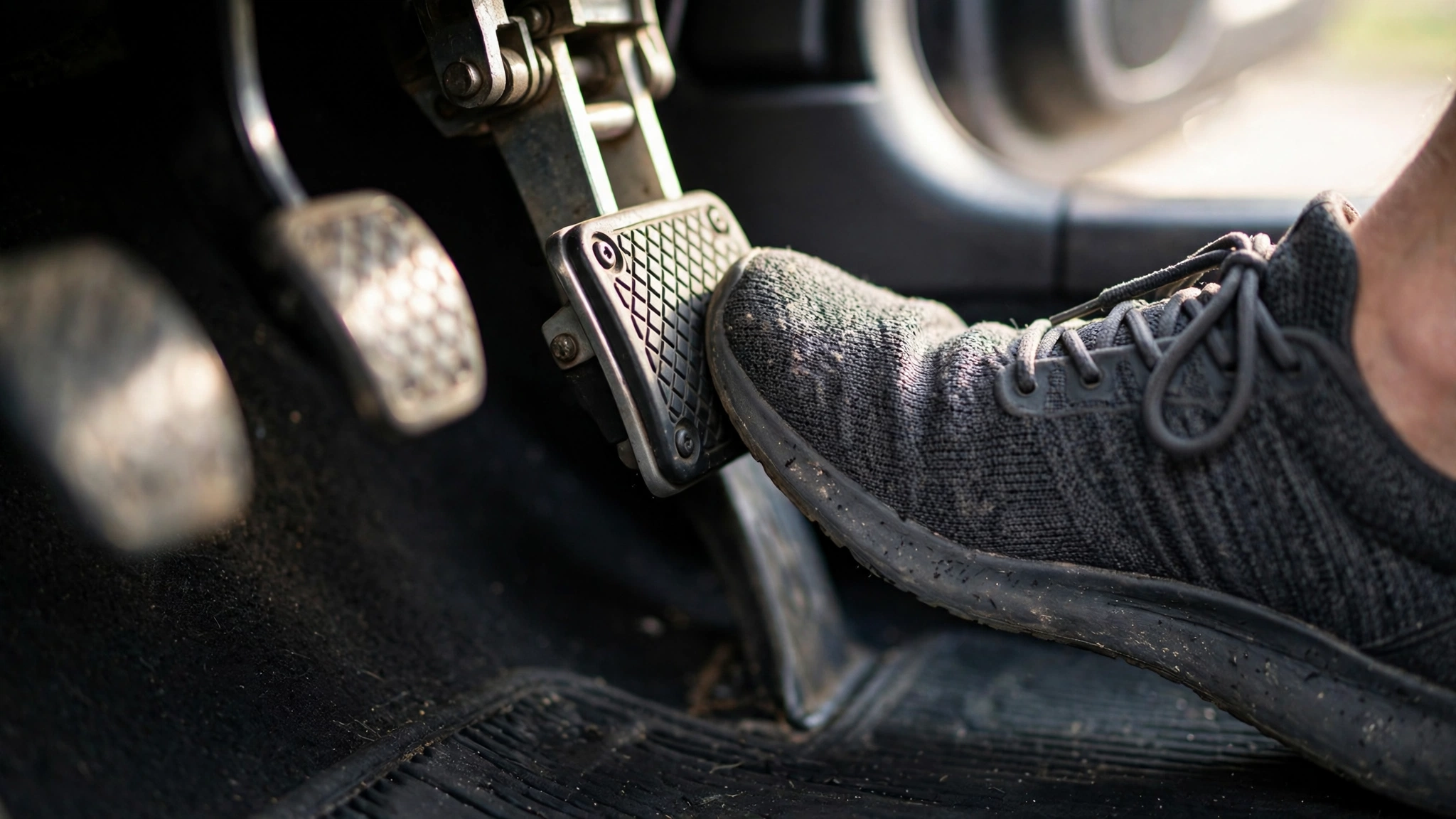
Press your brake pedal and it should feel firm and predictable, like stepping on a solid block of rubber. If instead it feels soft, mushy, or "spongy" — sinking farther than it used to before the car actually slows down — something in your brake system has changed, and your stopping distance may be longer than you think.
The good news: a spongy pedal is one of the most diagnosable brake problems there is. How the pedal behaves tells you a lot about what's wrong. Before we get into the six causes, do the simple test below — it takes ten seconds and will point you straight at the likely culprit.
The 10-Second Pedal Test: Let Your Foot Do the Diagnosing
Park on a flat surface with the engine running (parking brake off). Then try these two checks:
1. The pump test. Press and release the brake pedal three or four times in a row. If the pedal starts out spongy and gets noticeably firmer with each pump, trapped air or moisture in the brake fluid is the most likely cause. Each pump compresses the bubbles a little more, which is why the pedal briefly improves.
2. The hold test. Press the pedal firmly and hold steady pressure for ten seconds. If it slowly sinks toward the floor while you hold it, the master cylinder — the part that turns pedal pressure into hydraulic pressure — is likely leaking internally.
Keep whatever result you got in mind as you read the causes below.
Cause 1: Air Trapped in the Brake Lines (Most Common)
Your brakes work hydraulically: pressing the pedal pushes brake fluid through sealed lines, and that fluid shoves the brake pads against the rotors. Brake fluid is incompressible — but air is not. If even a small amount of air gets trapped in the lines, part of your pedal stroke is wasted just squeezing those bubbles before any real braking force reaches the wheels. That's the classic spongy feeling.
Air usually gets in one of two ways: the fluid level ran low enough that the system sucked in air, or someone did brake work (pad replacement, caliper service) without bleeding the system properly afterward. This is why the timing matters — if your pedal went spongy right after a brake job, mention that to your mechanic first thing.
The fix: the brake system needs to be bled — fresh fluid is pushed through each line and the trapped air is forced out through a small bleeder valve at each wheel. Bleeding is often bundled into a brake fluid change, so these two fixes frequently happen together. Service chains list trapped air among the most common causes of a spongy brake pedal, which is why it's usually the first thing a mechanic checks.
Cause 2: Old Brake Fluid Full of Moisture
Brake fluid is hygroscopic, which means it slowly absorbs moisture from the air even inside a sealed system. Over time, water builds up in the fluid and lowers its boiling point. Under the heat of hard or repeated braking, moisture-laden fluid can start to behave inconsistently — the pedal goes soft, and in severe cases you get brake fade (more on that in Cause 6).
This is the most common and the cheapest cause to fix. Most manufacturers recommend a complete brake fluid change roughly every two years, regardless of mileage — and many first-time owners never have it done. If you don't know when your fluid was last changed, it probably needs changing.
The fix: a full brake fluid flush and replacement with the correct DOT-rated fluid for your car (check your owner's manual or the reservoir cap — never mix types). A beginner can do this at home with a helper, but if you're new to car maintenance, a shop is the safer choice.
Cause 3: Low Brake Fluid — Which Usually Means a Leak
Your brake system is sealed, so it should not "use up" fluid the way it uses fuel. If the reservoir level has dropped below the MIN mark, fluid is escaping somewhere — a cracked rubber brake hose, a corroded steel line, a worn caliper seal, or a leaking wheel cylinder.
This is the one cause you can partially check yourself right now. Pop the hood and find the brake fluid reservoir (a small translucent container on the driver's side of the engine bay). The level should sit between MIN and MAX. If it's low, you can top it up as a temporary measure — but topping up treats the symptom, not the disease. A car that keeps needing fluid added deserves a proper leak inspection, because leaks only get worse and can lead to total brake failure.
Our guide on how to check and top up brake fluid safely walks you through the reservoir check step by step.
The fix: a mechanic finds and replaces the leaking hose, line, or seal, then refills and bleeds the system. Driving with an active fluid leak is dangerous — the fluid loss can result in total brake failure.
Cause 4: A Failing Master Cylinder
Remember the hold test? If your pedal sinks slowly under steady pressure with no visible fluid loss, the master cylinder is the prime suspect. Inside it, pistons and rubber cup seals pressurize the fluid when you press the pedal. When those seals wear out, high-pressure fluid slips backward past the piston into the low-pressure side of the cylinder — an internal leak. Pressure can't build, so the pedal gradually sinks, but no fluid drips onto the ground.
The fix: replacing the master cylinder. This is strictly a professional repair — it involves the core of your hydraulic system and the new part must be carefully bled before installation.
Cause 5: Worn Brake Pads Making the Pedal Travel Farther
As brake pads wear thinner, the caliper pistons have to extend farther out to push them against the rotor. That extra movement displaces more fluid and makes the pedal travel lower and feel softer before the brakes bite. This one often creeps up gradually, so you may not notice it until the pedal feels very different from when the car was new.
If the softness came on slowly over months, check your pads. Our guide on how to tell when your brake pads need replacing lists the seven warning signs to look for, from the wear-indicator squeal to visible pad thickness.
The fix: replace the worn pads (and usually resurface or replace the rotors at the same time).
Cause 6: Brake Fade After Long, Hard Braking
If your pedal only feels soft after a long downhill descent or repeated hard stops, that's brake fade: the braking system got so hot that old, moisture-contaminated fluid started to boil, forming vapor bubbles that compress just like trapped air. Newer, fresh fluid resists this far better, which is why Cause 2 matters so much.
What to do: pull over safely and let the brakes cool down — the pedal feel will come back as temperatures drop. For the future, use engine braking on long descents (shift to a lower gear instead of riding the brake pedal) and keep your fluid fresh.
What to Do Right Now: The Safe Beginner Checklist
- Don't ignore it. A spongy pedal means longer stopping distances. It won't fix itself.
- If the pedal sinks to the floor, drops suddenly, or the brake warning light is on — stop driving. Call a tow truck. These signs point to a leak or master cylinder failure. See our guide on the ABS warning light for what that dashboard light means.
- If it's spongy but the car still stops, keep the drive short, slow, and local — just to a repair shop. Keep extra following distance.
- Check the reservoir level (see our brake fluid guide linked above). Low fluid = likely leak = higher urgency.
- Note the timing. When did it start? After brake work? Only downhill? Only on cold mornings? This information saves your mechanic diagnostic time — and saves you money.
What a Mechanic Will Do (So Nothing Surprises You)
A typical inspection goes in this order: check the reservoir level and fluid condition, look under the car for leaks along the lines and hoses, test whether the pedal sinks (master cylinder check), measure pad thickness, and bleed or flush the fluid. Most spongy-pedal cases resolve with a fluid flush, a bleed, or a leak repair — which is exactly why catching it early pays off.
Frequently Asked Questions
Is it safe to drive with a spongy brake pedal?
It depends on severity, but the honest answer is: minimize driving until it's fixed. A slightly soft pedal with normal stopping power might get you to a shop a short distance away. A pedal that sinks to the floor, or a brake warning light, means the car is not safe to drive at all — call a tow truck.
Can low brake fluid alone cause a spongy pedal?
Yes — low fluid lets air into the system, and air is what creates the spongy feel. But low fluid in a sealed system almost always signals a leak, so the low level itself is a warning worth investigating rather than just topping up.
Will topping up the brake fluid fix a spongy pedal?
Usually not completely. Topping up restores the fluid level but doesn't remove the air already trapped in the lines — the system still needs to be bled. And if a leak is the reason the fluid was low, the level will drop again.
My pedal only feels spongy after driving downhill. Why?
That's brake fade — heat from sustained braking boils moisture-contaminated fluid and creates vapor bubbles. It should firm back up as the brakes cool. Still, get the fluid checked and changed, because the fade means your fluid is degraded, and use engine braking on long descents.
Can I bleed my brakes myself as a beginner?
It's possible with a helper and the right tools, but bleeding done wrong can leave air in the system — exactly the problem you started with. If this is your first brake job, have a professional do it and watch the process. You'll learn it properly for next time.
The Bottom Line
A spongy brake pedal is your car's way of asking for attention before a small problem becomes a dangerous one. Start with the pump test and the hold test to narrow down the cause, check your fluid level, and get the car inspected promptly. For first-time owners, the single highest-value habit is simple: have the brake fluid changed roughly every two years. It's one of the cheapest services on a car, and it prevents the most common cause of spongy brakes entirely.