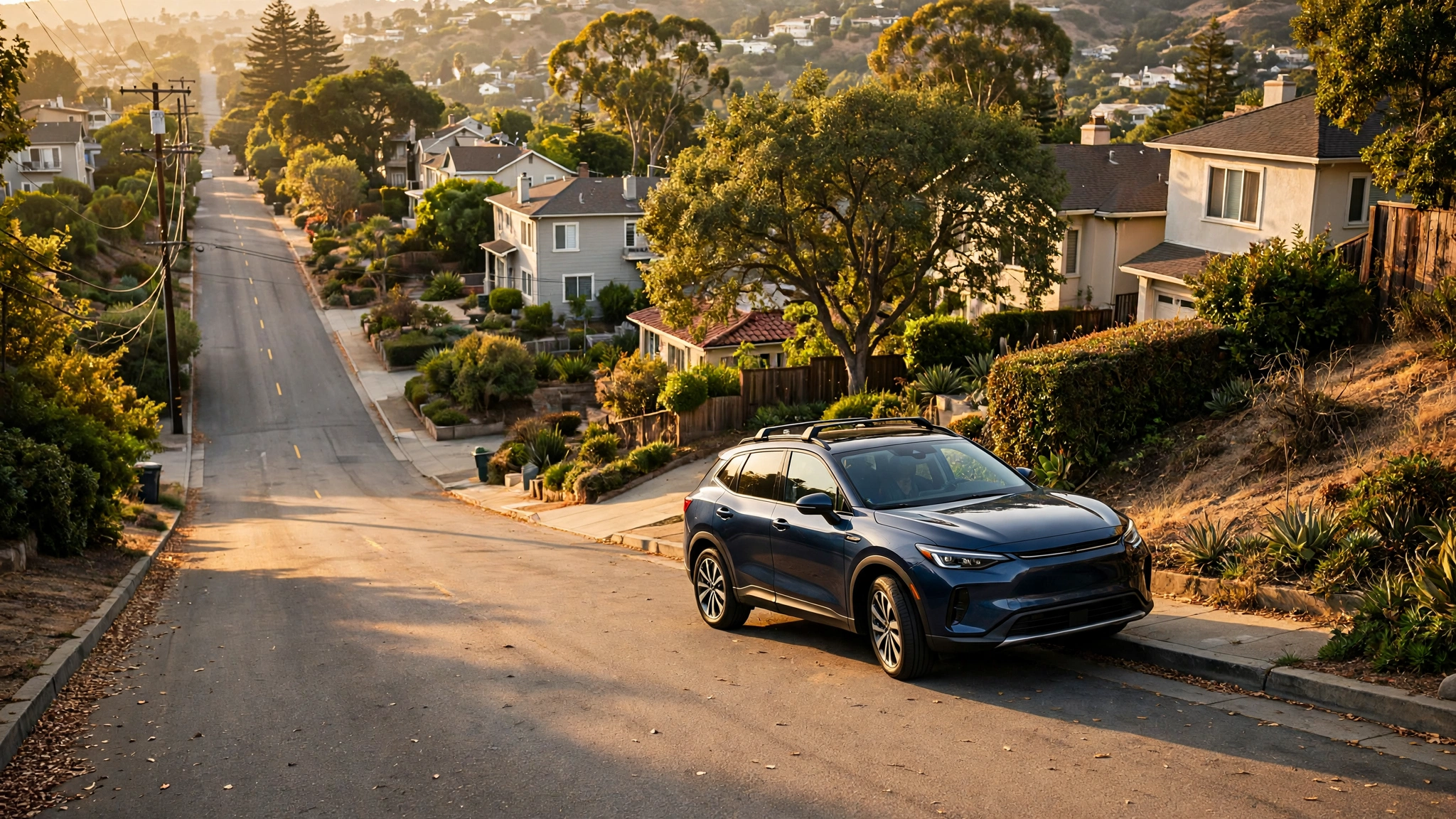
Parking on flat ground is forgiving. Parking on a hill is not: gravity pulls at your car the whole time it sits there, so one missed step — a loose handbrake, wheels left straight, or the wrong gear — can turn into a slow rollaway. The good news is that safe hill parking is a simple routine that takes about ten extra seconds once you learn it.
This guide covers the whole routine: wheel direction, the handbrake-first order, the right gear, and pulling away safely.
Why Hill Parking Needs Extra Steps
On flat ground, your parking brake alone usually holds the car. On a slope, gravity works against you, the car's weight rests on one small transmission part (in an automatic, the parking pawl), and a worn handbrake may not grip firmly. So hill parking uses layers of protection:
- The parking brake (handbrake) holds the wheels.
- The gear — Park in an automatic, or first/reverse in a manual — locks the drivetrain as a backup.
- The turned wheels make sure that even if both of the above fail, the car rolls into the curb or off the road, not into traffic.
If any one layer fails, the other two still protect you. That redundancy is the whole point.
The One Rule for Wheel Direction
Wheel direction confuses new drivers because it changes with the slope and the curb. Here is the complete rule, and it only has one exception:
- Facing downhill, with or without a curb: turn your front wheels toward the curb or road edge.
- Facing uphill with a curb: turn your front wheels away from the curb.
- Facing uphill without a curb: turn your front wheels toward the road edge (to the right, if you park on the right-hand side of the road).
In short: turn your wheels toward the road edge in every case except uphill with a curb, where you turn them away from it — so a rolling car moves away from traffic or is stopped by the curb. Memory trick: "up, up, and away" — facing uphill with a curb, turn the wheels away from the curb, so the tyre catches the curb if the car rolls back.
Note on left and right: this guide describes wheels relative to the curb, which is correct everywhere. If you park on the right-hand side of the road (US and most of Europe), uphill with a curb means wheels left; every other case means wheels right.
Parking Facing Uphill With a Curb
- Pull up close and parallel to the curb and stop completely with your foot on the brake.
- Turn your front wheels away from the curb.
- Let the car roll back very slowly — just a few centimetres — until the back of the front tyre gently touches the curb. Ease off the foot brake slightly while still in gear; do not let it roll freely.
- Apply the parking brake firmly, before you select Park or a gear (see the order below).
- Automatic: shift into Park. Manual: shift into first gear.
- Switch off the engine, check the car is not moving, and only then release the foot brake.
Letting the tyre rest against the curb is not decoration — it is the backup brake. If the handbrake ever failed, the curb would catch the tyre and stop the roll.
Parking Facing Downhill
- Pull up parallel to the curb and stop completely with your foot on the brake.
- Turn your front wheels toward the curb.
- Let the car creep forward a few centimetres until the front tyre gently touches the curb, if there is one.
- Apply the parking brake firmly.
- Automatic: shift into Park. Manual: shift into reverse gear.
- Switch off the engine and check the car is still before releasing the foot brake.
Downhill is the case most beginners get wrong on driving tests, because it feels natural to leave the wheels straight. Straight wheels are the one position you should never leave on a hill: if the car rolls, it rolls straight into traffic.
Parking on a Hill With No Curb
Country roads, driveways, and some residential streets have no curb to catch a rolling car. The rule here is simpler: in both directions, turn your front wheels toward the road edge or shoulder. If the car rolls, it rolls off the road and onto the shoulder, away from traffic, instead of down the middle of the road.
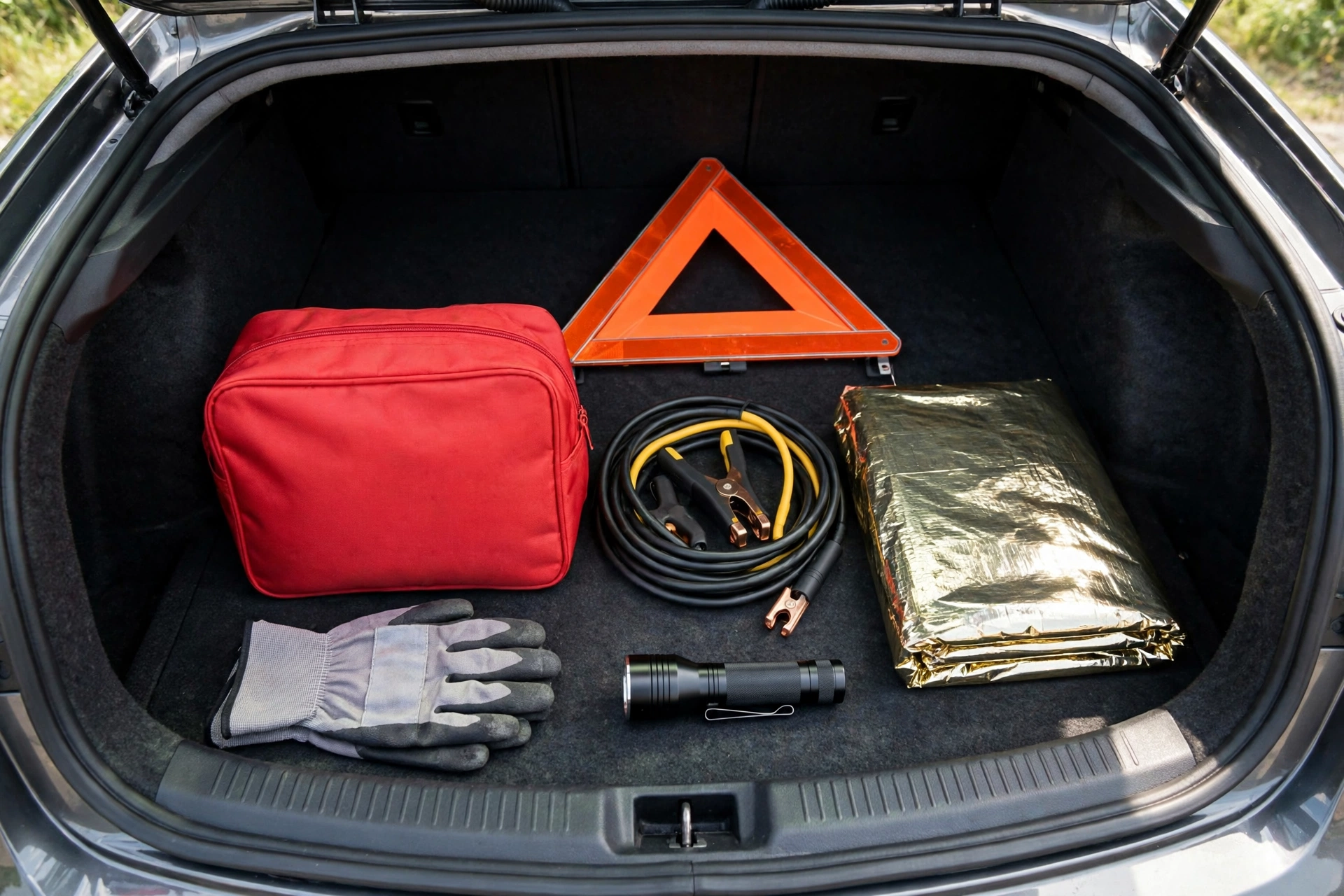
Without a curb, the handbrake and gear matter even more. On a steep curb-free slope, consider wheel chocks — blocks placed against the downhill side of a tyre — especially if the handbrake feels weak. See our emergency kit guide for what else belongs in the boot.
The Handbrake-First Order (Automatics Especially)
The order matters, and this is the step most drivers skip. On a slope, always do it in this order: foot brake held and car fully stopped; wheels turned correctly; parking brake applied firmly; then shift into Park (automatic) or the correct gear (manual); switch off, then release the foot brake.
Why? In an automatic, Park locks the transmission with a small metal pin called the parking pawl. If you select Park first, the car's whole weight rolls onto that pin — the clunk you sometimes feel when shifting out of Park on a hill. Handbrake first means the brakes take the weight and the pawl is just a backup. The same order applies to an electronic parking brake: press it while your foot is still on the brake, then shift into Park.
Manual Cars: Which Gear, and Why
Leave the car in a gear that resists the direction it would roll: first gear when facing uphill, reverse gear when facing downhill. First and reverse have the highest gear ratios, so the engine offers the most resistance. Apply the handbrake first, then select the gear — the gear is the backup, not the main brake. Never leave a manual in neutral on a hill, even "just for a minute."
Pulling Away Safely From a Hill
- Foot on the brake, start the engine.
- Automatic: shift out of Park into Drive (or Reverse, if backing out) while holding the foot brake. Manual: press the clutch, select first gear (or reverse), and find the biting point.
- Check mirrors and blind spot, signal, and straighten the wheels.
- Release the parking brake last, as you start to move — not before. Releasing it early lets the car roll before you are ready.
- Pull away smoothly; do not let the car roll back into the car behind you.
Hill-start assist, if fitted, only holds the brakes for a couple of seconds — helpful, but no substitute for the routine. Practise hill starts on a quiet slope first. In wet conditions, see our guide to driving safely in heavy rain.
Common Mistakes Beginners Make
- Leaving the wheels straight. This removes your last safety net entirely.
- Selecting Park before the handbrake. This loads the parking pawl and can make the car hard to shift later.
- Trusting the handbrake alone on a steep hill. Cables stretch and pads wear; always add the gear and the wheel position.
- Forgetting the gear in a manual. Neutral on a hill is never a parking gear.
- Parking too far from the curb. If the tyre cannot reach the curb, the curb cannot stop the car.
- Not testing the handbrake. If the lever pulls up unusually high, or the car creeps with the brake on, get it checked — a weak handbrake is a repair, not an inconvenience. A spongy brake pedal is another warning sign worth investigating promptly.
Quick Hill-Parking Checklist
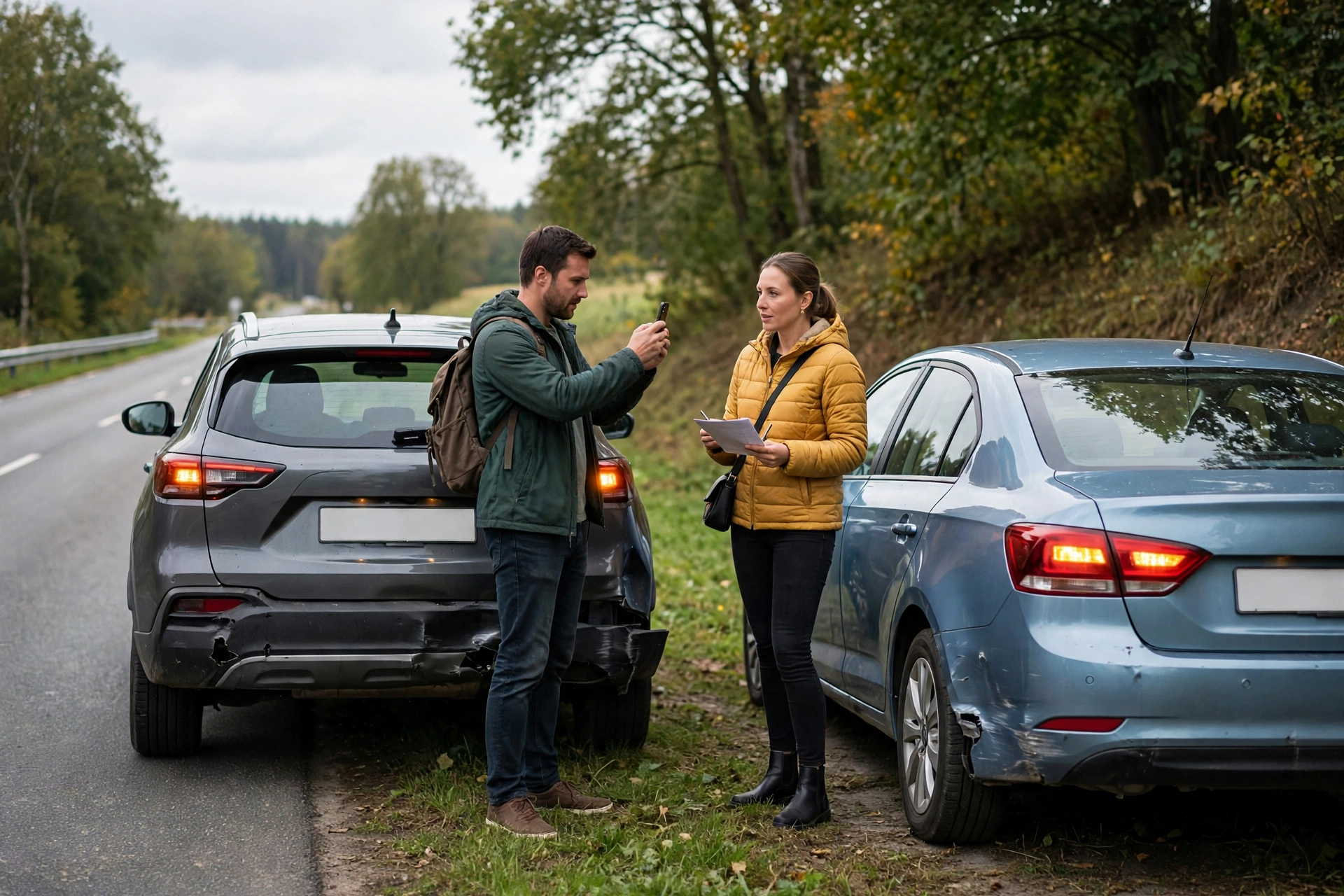
Before you open the door, check: close and parallel to the curb? Wheels turned the right way? Parking brake firm, before Park or gear? Automatic in Park / manual in first (uphill) or reverse (downhill)? Car completely still when you lift off the foot brake? If anything feels wrong — the car creeps, the brake feels loose, the slope looks too steep — choose a flatter spot. No space is worth a rollaway. If the worst happens, see what to do after a minor car accident.
Frequently Asked Questions
Do I really need to turn my wheels on a gentle hill?
Yes. It costs nothing, takes two seconds, and gentle hills still roll cars — especially if the handbrake is worn. Make it a habit on every slope, not just steep ones.
Which gear should I leave a manual car in on a hill?
First gear when facing uphill, reverse gear when facing downhill. The gear resists the direction the car would roll, acting as a backup to the handbrake. Never leave a manual in neutral on a hill.
Should I use the handbrake even in an automatic?
Always, and especially on hills. Park alone relies on a small pin in the transmission. Using the handbrake first protects that pin and holds the car more securely.
What if there is no curb at all?
Turn your front wheels toward the road edge or shoulder in both directions, so a rolling car leaves the road instead of entering traffic. On steep curb-free slopes, wheel chocks add useful extra security.
Is it safe to park on a very steep hill?
It can be, if you follow the full routine and the handbrake is in good condition. But if the slope is very steep, the handbrake feels weak, or you cannot get close to the curb, find a flatter spot. Caution is the right call.
Conclusion
Safe hill parking is a five-step habit: wheels the right way, handbrake before Park or gear, first or reverse in a manual, tyre against the curb where there is one, and a still-car check before you walk away. Learn it once, use it every time.
For more beginner routines that prevent expensive surprises, see our monthly car maintenance checklist. Sources for the wheel-direction rules in this article include Square One's hill-parking guide and Drivers Prep's hill-parking explainer.