A flat tire on a dark road. A battery that dies in a parking garage with no signal. These moments never come with a warning — and for a first-time driver, they feel terrifying. But most roadside problems don't need a mechanic on the spot. They need a handful of simple items sitting in your trunk, ready to go.
That's what a car emergency kit is: not a survivalist's backpack, just a small, well-chosen collection of tools and supplies that turns a potential crisis into a minor inconvenience. Here's exactly what to pack, why each item matters, and how a beginner actually uses them.
Why Every First-Time Driver Needs an Emergency Kit
The most common breakdowns are completely ordinary: dead batteries (AAA responds to millions of battery-related calls every year), flat tires, and minor bumps in traffic. They happen to new drivers and experienced ones alike.
Even with roadside assistance and a charged phone, help isn't instant. Tow trucks can take an hour or more — longer in bad weather, rural areas, or late at night — and your phone can lose signal or die. An emergency kit fills that gap: it keeps you safe, visible, and comfortable during the wait, and often lets you fix the problem yourself in minutes. A basic kit costs less than a tank of fuel, takes one afternoon to assemble, and then sits quietly in your trunk for years.
The Essential Emergency Kit Checklist
These are the items that matter most, grouped by what they do. For every item, a basic reliable version is enough for a beginner.
1. Stay visible and stay safe
Being seen matters more than anything else. On an unlit road at night, hazard lights alone may not give other drivers enough warning.
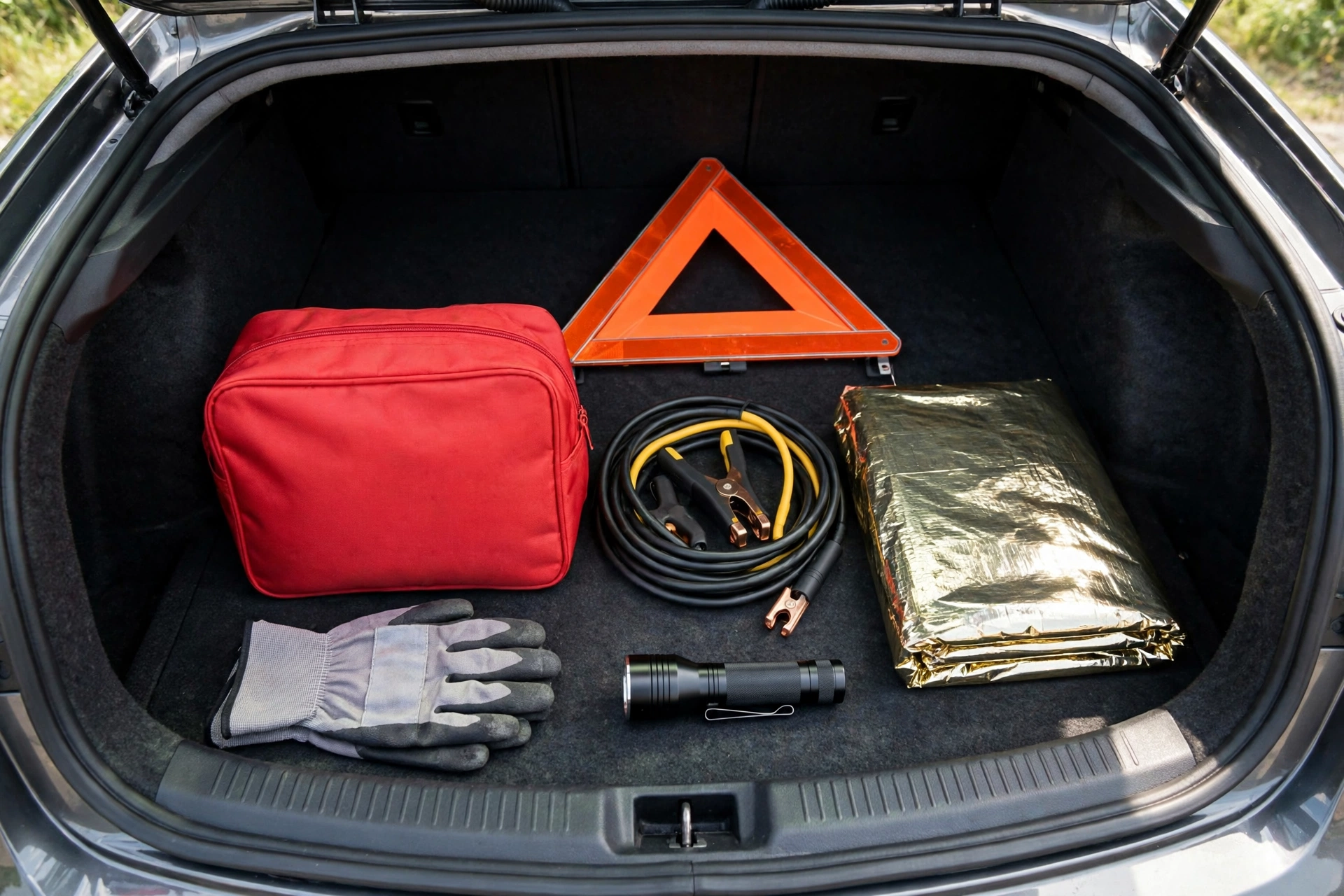
- Reflective warning triangle: Place it 50–100 feet behind your car so approaching drivers see it early. Practice unfolding it once in your driveway — it takes 30 seconds to learn and is awkward the first time.
- High-visibility vest: If you step out on a busy road, a reflective vest makes you impossible to miss. Keep one folded under the driver's seat, within reach.
- Flashlight with extra batteries (or a headlamp): A phone torch drains the battery you'll need to call for help. A headlamp is even better because it frees both hands under the hood. Check the batteries twice a year.
2. Fix the common problems yourself
These cover the two breakdowns you'll most likely face early on: a dead battery and a flat tire.
- Jumper cables or a portable jump starter: Cables need a second car; a portable jump starter works alone but must be recharged every few months. Whichever you choose, learn the correct connection order before you need it — our guide on how to jump-start a dead battery safely walks you through it.
- Tire pressure gauge and a portable inflator or sealant: A gauge tells you whether a low tire is safe to drive on; a small 12V inflator or a can of sealant can get you to the nearest garage. Pair this with knowing how to change a flat tire — and confirm your spare tire and jack are actually in the car.
- Multi-tool, pliers, and duct tape: For small jobs like tightening a loose battery clamp or temporarily securing a hanging bumper.
- Spare fuses: A blown fuse can kill your headlights or indicators. Your owner's manual shows the fuse box location and amperages — keep a few spares in the glovebox.
3. Stay comfortable while you wait for help
- Blanket or emergency thermal blanket: If the engine dies in cold weather, you lose your heater. A real blanket or a compact foil thermal blanket keeps you warm without running the engine.
- Water and non-perishable snacks: A couple of bottles and some granola or energy bars. Rotate them every 6–12 months and don't leave plastic bottles baking in extreme heat for months.
- Rain poncho: Changing a tire in pouring rain without one is miserable. A cheap poncho folds to pocket size and lasts for years.
4. Handle injuries and paperwork
- Basic first aid kit: Bandages, gauze pads, antiseptic wipes, adhesive tape, and painkillers — enough for cuts and scrapes until proper help arrives.
- Phone charger that stays in the car: Buy a cheap cable and leave it in the car permanently, or keep a charged power bank in the kit. The charger that gets borrowed and never returned is the most common kit failure.
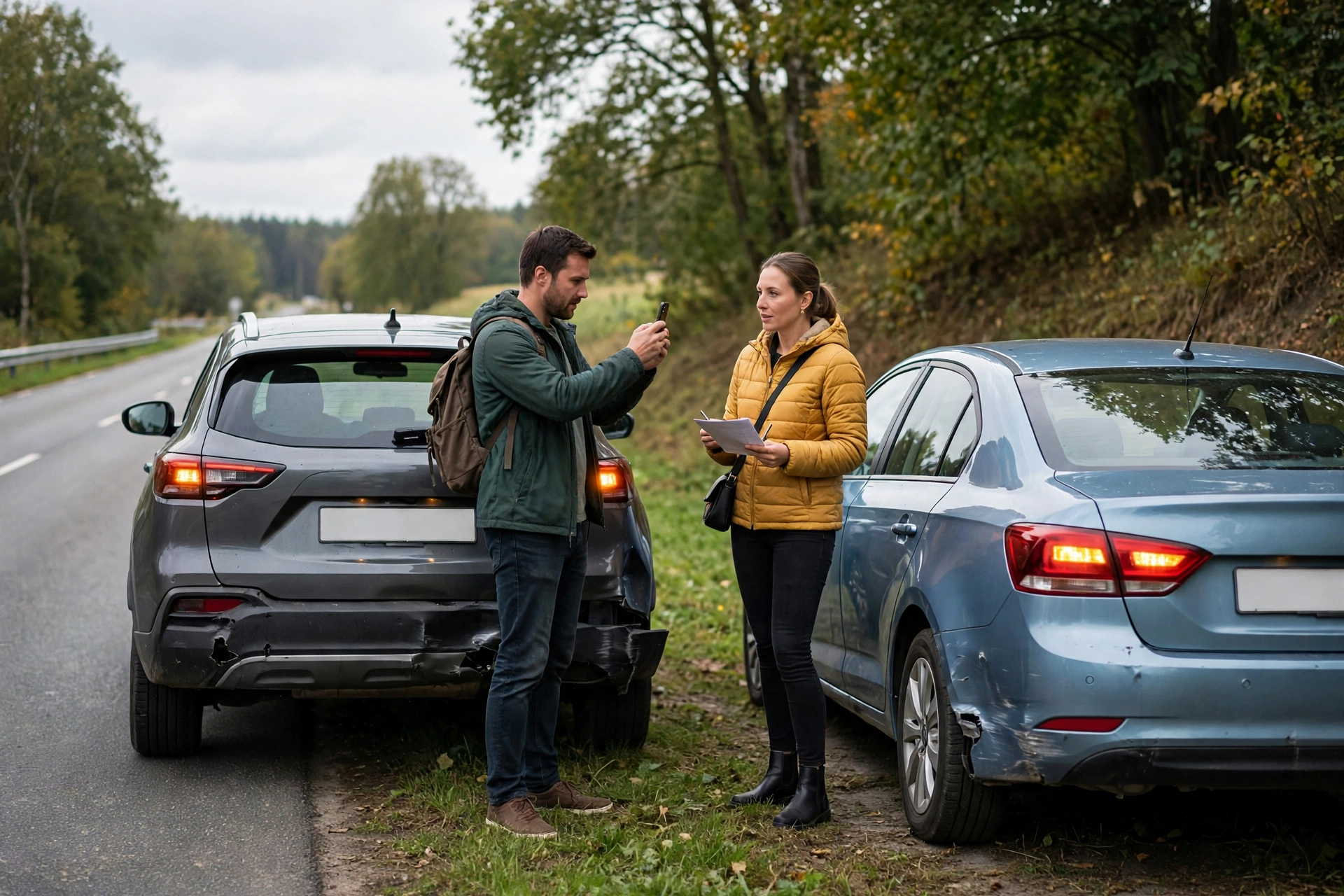
- Pen, notepad, and document copies: After any bump, you'll need to exchange details and note what happened. Keep a pen, a small notepad, and photocopies of your insurance card and registration in a waterproof zip bag.
What NOT to Put in Your Emergency Kit
- Heavy, loose items: Anything heavy must be secured — in a sudden stop, loose objects in the trunk become projectiles. Strap the kit down or wedge it so it can't slide.
- Tools you can't use: A full socket set is useless if you've never touched one. Pack only what you can actually operate — or take 20 minutes to learn each tool when you buy it.
- Perishable or heat-sensitive items: Chocolate, canned goods that can burst in heat, anything that melts or freezes. Stick to sealed granola bars, nuts, and water, and refresh them periodically.
Build Your Own Kit or Buy a Pre-Made One?
Both work. A pre-made roadside kit is convenient — just check its contents against the checklist above, because cheaper kits sometimes skip first aid supplies or include flimsy cables. Building your own takes one store trip and usually gets you better-quality items for less money.
For most beginners, the best path is a hybrid: buy a decent pre-made kit for the basics, then add the personal items it lacks — your phone charger, water, snacks, blanket, and document copies.
Where to Store It and When to Check It
Keep the kit in the trunk, secured so it doesn't slide. One exception: put the high-visibility vest and warning triangle where you can reach them without walking around the car in traffic — under a seat or just inside the trunk lid.
Twice a year — a good habit is alongside your seasonal tire pressure checks — open the kit and verify: flashlight batteries, snack and water expiry dates, the jump starter's charge, and that nothing has been borrowed back out. A kit with a dead flashlight and missing cables is just decoration. If you drive in winter, add an ice scraper, a small shovel, and a bag of cat litter or sand for traction, then swap them out in spring.
Emergency Kit FAQs for Beginners
How much does a car emergency kit cost?
Roughly the equivalent of $40–$80, whether you buy items individually or get a decent pre-made kit. You don't need premium brands — reliability matters more than features.
Do I still need a kit if I have roadside assistance?
Yes. Assistance can't teleport to you — waits of 30 minutes to over an hour are normal, longer in remote areas or storms. Your kit keeps you safe and self-sufficient during those waits, and for simple problems like a dead battery you might not need the tow truck at all.
How often should I check my emergency kit?
Twice a year: batteries, expiry dates on snacks and first aid supplies, the jump starter's charge, and that every item is still there. Tie it to something you already do, like seasonal tire pressure checks.
What should I do first if my car breaks down on a highway?
Pull as far off the road as you safely can, turn on hazard lights, and stay in the car with your seatbelt on if it's safe. Only step out on the side away from traffic, put on your high-visibility vest, place the warning triangle behind the car, then call for help. Never try to fix anything while standing in a live traffic lane.
Does an electric car need a different emergency kit?
The core kit is the same. Skip standard jumper cables (EV 12V systems have different jump procedures — check your manual) and add your charging adapters and cables. Follow your EV's manual exactly for any electrical work.
Conclusion
Building an emergency kit takes one afternoon and costs less than a tank of fuel — but the first time your car strands you, you'll wonder how you ever drove without one. Start with the visibility and safety items, add the basic fix-it tools, throw in water and a blanket, and keep a phone charger in the car permanently.
Then spend 20 minutes learning how to use what's in there: unfold the warning triangle once, read the jumper cable instructions, find your spare tire and jack. A kit you know how to use is the difference between a scary hour on the roadside and a 20-minute delay you'll barely remember.
Sources: AAA's car safety kit guidance (AAA Club Alliance — 10 important items) and road-trip safety recommendations (AAA — essential road trip safety kit).