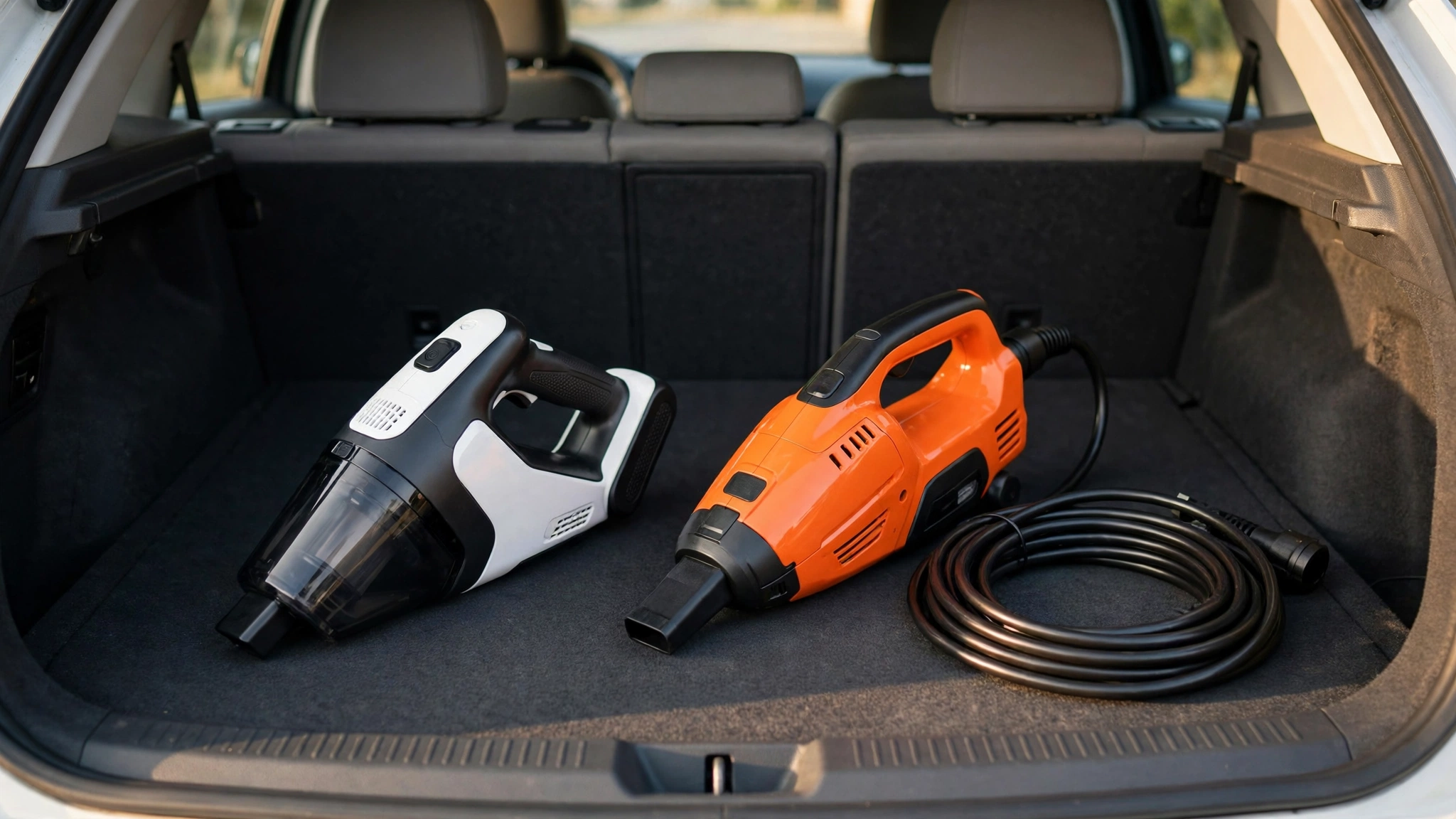
If you are shopping for your first car vacuum, you have probably hit the same fork in the road every beginner faces: cordless or corded? Both clean a car perfectly well — but they clean differently. Pick the wrong type for your habits and you will either be fighting a dying battery mid-cleanup or tripping over a cable you did not need.
Here is the honest answer in one line: choose cordless if your cleanups are short and frequent; choose corded if your cleanups are long and dirty. Below is the full breakdown — how the two types really differ, our top beginner-friendly picks for each side, and a simple decision guide so you buy the right one the first time.
Affiliate disclosure: FirstCarCare is reader-supported. When you buy through links on this page, we may earn a commission at no extra cost to you. This helps us keep our guides free for beginner car owners.
The short answer
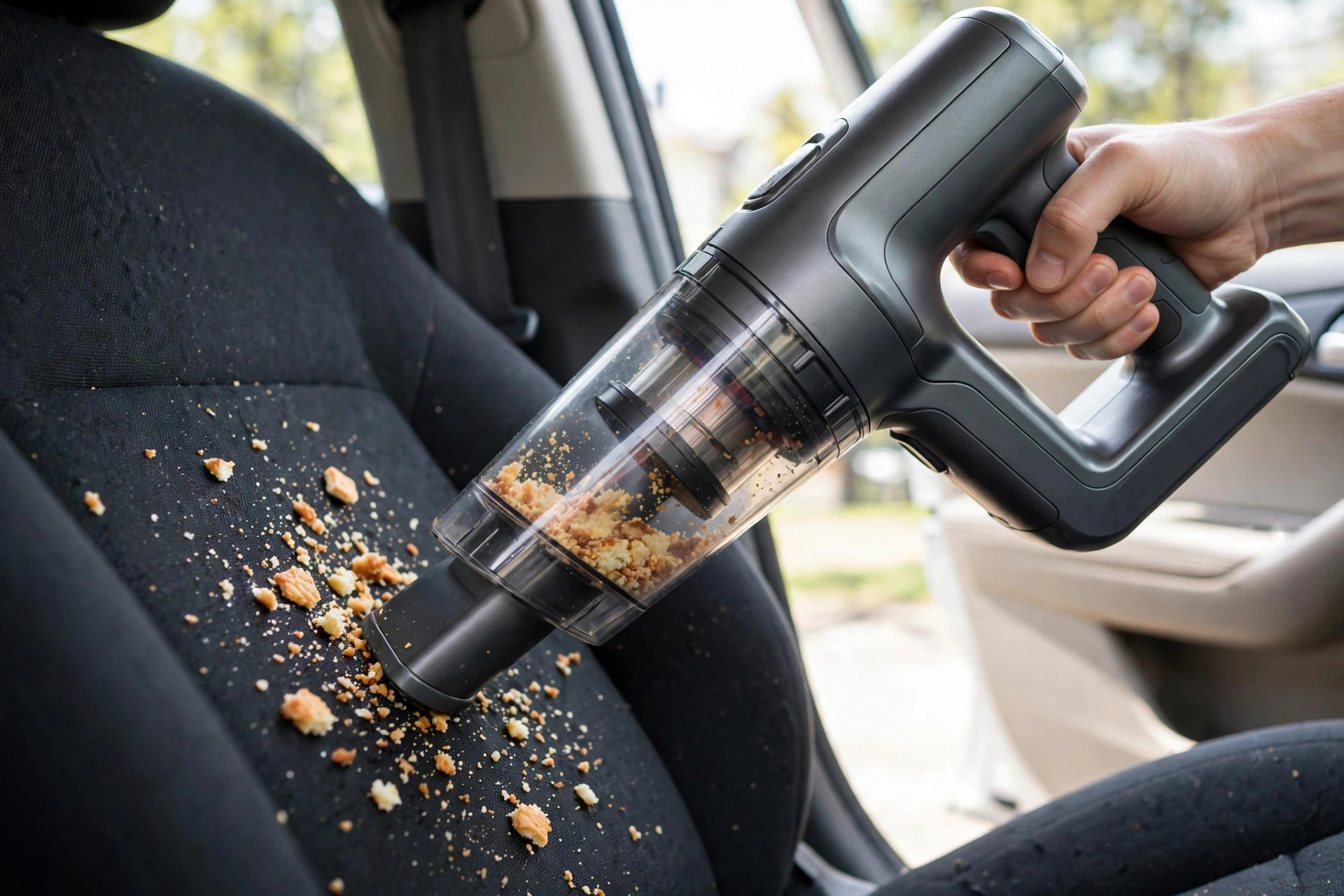
- Cordless vacuums (like the BLACK+DECKER Dustbuster) run on rechargeable lithium-ion batteries. You grab them, clean, and put them back — no wires, no setup. The trade-off: runtime is limited (roughly 10–17 minutes per charge on most handheld models), and suction fades as the battery drains.
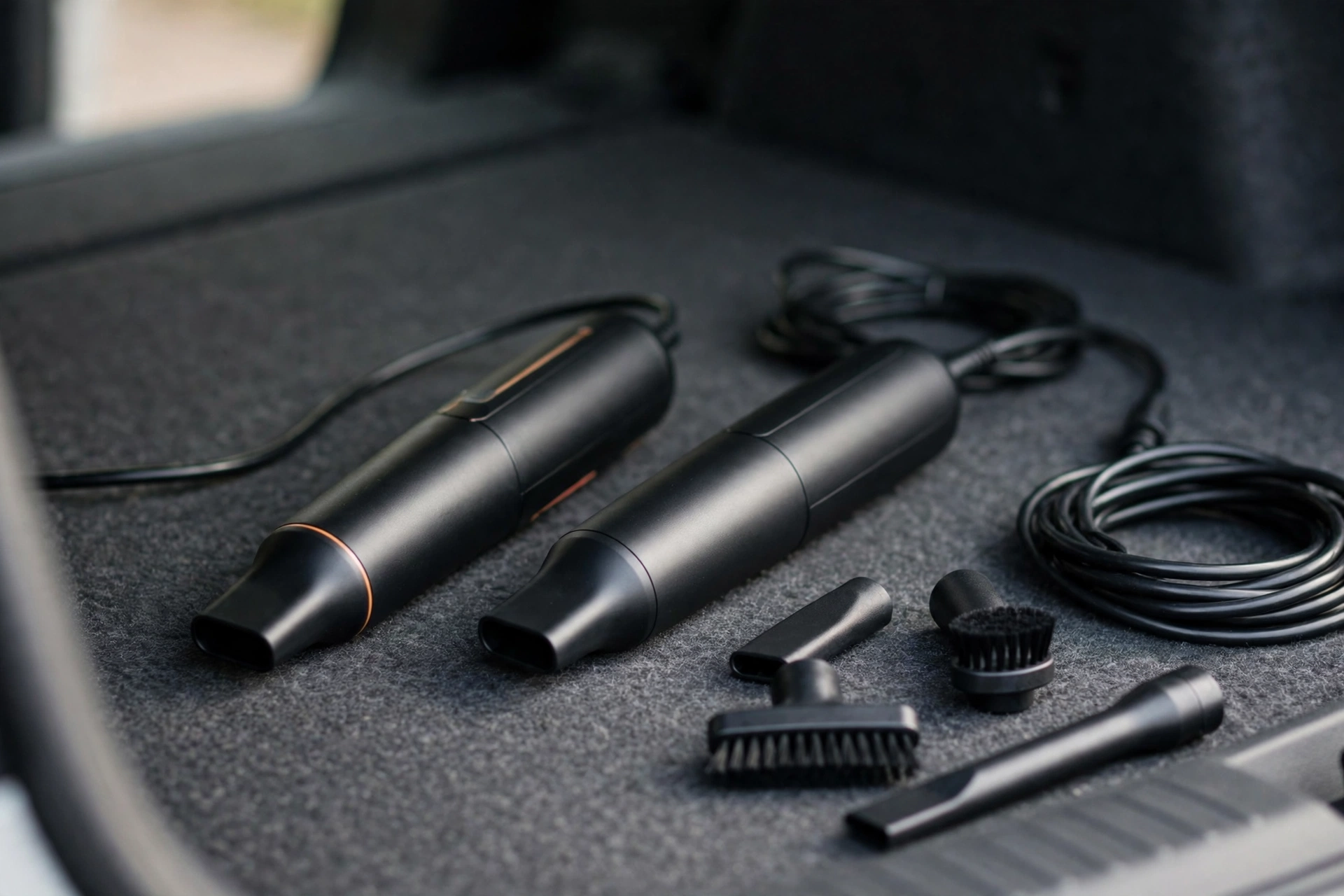
- Corded vacuums (like the THISWORX TWC-01) plug into your car's 12V outlet. They run at full power for as long as you clean, with no charging and no power fade. The trade-off: you are tethered to the car, and you have to manage a cable.
Neither type is "better" in general — it depends on your car, your mess, and how often you clean. Keep reading for the detailed comparison, then the picks.
Cordless vs corded: the real differences
| Factor | Cordless (battery) | Corded (12V car outlet) |
|---|---|---|
| Runtime | 10–17 minutes per charge on most models; then you wait hours to recharge | Unlimited — runs as long as your car battery has charge |
| Suction consistency | Fades as the battery drains | Stays constant from the first minute to the last |
| Convenience | Grab-and-go; no setup, cleans anywhere including the driveway or garage | Needs the car's 12V outlet and a few seconds of cable routing |
| Reach | Total freedom of movement | Limited by cord length (most are 16+ feet, which reaches the trunk of an SUV) |
| Upfront cost | Usually higher, because you pay for the battery pack and charger | Usually lower — simpler construction, no battery |
| Long-term cost | Lithium-ion batteries lose capacity over 2–3 years and eventually need replacement | No battery to replace; filters are the only consumable |
| Best for | Weekly quick cleanups, crumbs, dust, commuter cars | Deep cleans, pet hair, sand, SUVs and family cars |
Our top picks: the best of each side
Every product below is in our live catalog — click through to see the current details on Amazon. All links are reader-supported.
#1
BLACK+DECKER Dustbuster AdvancedClean CHV1410L — best cordless all-rounder
🏆 Best cordless pick for beginners
- 16V MAX lithium-ion battery — roughly 10–15 minutes of real-world cleaning per charge
- Rotating slim nozzle reaches cup holders, vents and seat rails; pull-out crevice tool and flip-up dusting brush are built in
- Washable dirt bowl and filter — no replacement bags to buy
- Charging dock included, so it is always ready when you grab it
Pros: grab-and-go convenience; zero setup; genuinely useful attachments; top-rated by tens of thousands of buyers.
Cons: limited runtime — not enough for a full deep clean of a very dirty SUV in one go; ~4 hours to recharge fully.
Best for: commuters and weekly quick-cleaners with small-to-medium cars who hate setup.
#2
BISSELL Pet Hair Eraser 2390A — best cordless for pet hair
🐾 Best cordless pick for dog/cat owners
- 14.4V lithium-ion battery with up to 17 minutes of runtime per charge
- Motorized brush tool agitates upholstery to lift embedded pet hair that suction alone leaves behind
- Large 0.7 L easy-empty dirt tank and triple-level filtration
- Crevice and upholstery tools included for seat seams and consoles
Pros: the motorized brush is a genuine advantage for pet hair on cloth seats; longest runtime of the cordless picks here.
Cons: heavier than most handhelds (~3 lb); still a targeted-cleanup tool, not a whole-car deep cleaner.
Best for: dog and cat owners fighting fur on cloth upholstery; pet-parent interiors.
#3
THISWORX TWC-01 — best budget corded pick
💰 Best value corded pick
- Plugs into the car's 12V outlet — 106W motor, 4.2 kPa suction, unlimited runtime
- 16-foot cord reaches the back seats and trunk of most SUVs without unplugging
- Washable HEPA-style filter plus a spare filter in the box — no running filter costs
- 3 attachments, filter brush and carry bag included
Pros: consistent full power with zero charging; one of the most-bought car vacuums on Amazon for a reason; dry-only but handles pet hair, crumbs and sand well.
Cons: corded means cable management; only works with 12V car power (not for household use); not for wet spills.
Best for: beginners who want the cheapest reliable deep-cleaner and do not mind a cable.
#4
HOTOR Corded Car Vacuum — strongest corded suction
⚡ Strongest corded pick
- 12V corded handheld with up to ~6 kPa suction — the strongest of our corded picks
- 16.4-foot cord for full-car reach; multi-layer filtration
- Cyclonic separation keeps fine dust from clogging the filter mid-clean
- Compact kit with crevice and brush attachments
Pros: the most cleaning power per dollar here; unlimited runtime for big family-car cleanups.
Cons: same corded trade-offs as the THISWORX; some buyers note the attachments can be fiddly to swap.
Best for: larger vehicles, beach sand, and heavy debris — where you need the most suction a 12V outlet can deliver.
Also worth knowing: the Shark UltraCyclone Pet Pro Plus is another strong cordless option with dual-cyclonic suction and washable filters, and the DEWALT 20V MAX DCV517B is a great cordless choice only if you already own DEWALT 20V batteries — it is a bare tool, so batteries and charger are sold separately, which makes it a poor first buy for someone starting from scratch.
Which should YOU buy? A 4-question decision guide
- How dirty does your car get between cleanups? Light dust and crumbs → cordless. Pet hair, beach sand, kids' snack disasters → corded.
- How big is your car? Small hatchback or sedan → a cordless handheld can do the whole car in one charge. Three-row SUV, truck or minivan → corded power and bigger debris capacity win.
- How often will you vacuum? Weekly 10-minute tidy-ups → cordless removes all friction, so you actually do it. Once-a-month deep sessions → corded, since batteries hate sitting around for weeks.
- What is your budget? The cheapest reliable entry is corded (you are not paying for a battery pack). If you already own 20V tool batteries, the DEWALT cordless becomes the cheapest option of all.
If you are still on the fence, go cordless for convenience or corded for power — matching your most common cleanup, not your worst one.
How to make any handheld car vacuum last longer
- Empty the bin every time. A half-full bin chokes suction — especially on cordless models where power is already limited.
- Wash or tap out the filter monthly. Clogged filters are the #1 reason a vacuum "stops sucking." Let washable filters dry completely before re-fitting.
- Cordless rule: recharge after every use, but do not leave the battery on the charger for weeks untouched. Store it at a partial charge if you clean infrequently.
- Corded rule: run your car (or at least the ignition to accessory) while vacuuming so you do not drain the 12V battery, and wrap the cord loosely — tight coils crack insulation over time.
- Both types: clear tangled hair from brush rolls and crevice tools regularly; hair wrapped around moving parts overheats motors.
Verdict: match the vacuum to your routine
There is no universal winner. For most beginner car owners who clean weekly, a cordless vacuum like the Dustbuster — or the BISSELL Pet Hair Eraser if pets ride along — gets used more often, and a vacuum you actually use beats a powerful one that stays in the trunk. For deep cleans, big vehicles and heavy messes, a corded model like the THISWORX TWC-01 or HOTOR delivers unlimited full-power cleaning at a lower price.
Want the full lineup instead of a shortlist? See our 7 best car vacuums for beginners roundup, and pair your vacuum with a starter kit in our first car cleaning bundle guide.
Frequently asked questions
Are cordless car vacuums as powerful as corded ones?
Not usually. Corded 12V models deliver consistent suction for the whole session, while cordless models fade as the battery drains and often have weaker motors to protect battery life. For light cleanups you will not notice the difference; for deep cleans you will.
How long does a cordless car vacuum last on one charge?
Most handheld cordless car vacuums run 10–17 minutes per charge (the BISSELL 2390A is rated up to 17 minutes; the Dustbuster around 10–15). That is enough for one tidy-up of a sedan, but plan on recharging before a second session — full charges take 3–4+ hours.
Can a corded car vacuum drain my car battery?
A 12V vacuum draws roughly 100W, similar to headlights. A healthy car battery handles a 20–30 minute session fine, but to be safe, keep the engine running or the ignition on accessory while you vacuum — especially in winter or with an older battery.
Can I use a corded 12V car vacuum in my house?
Not directly — it needs a car's 12V outlet. Household outlets are 120V/230V AC, so the vacuum will not plug in. If you want one tool for car and home, a cordless model like the Dustbuster works anywhere.
Do car vacuums handle wet spills?
The handheld dry-only models in this guide do not. For wet spills you need a wet/dry vacuum — see our best wet/dry vacuums for car and garage roundup.