
Driving in heavy rain is one of the riskiest things a beginner driver will face. Nearly three-quarters of all weather-related crashes happen on wet pavement, and almost half of those happen during rainfall. Your car behaves very differently on a soaked road: tires lose about a third of their traction, stopping distances stretch out, and visibility can drop to a few car lengths in a downpour.
The good news? Rain driving is a skill you can learn, and most of the danger comes down to a handful of habits. Here are 12 practical tips that will make you a far safer wet-weather driver from your very next rainy trip.
Before you set off: the 2-minute rain prep check
Most rain-safety work happens before you turn the key. Do this quick check whenever rain is forecast:
- Test your wipers. Lift each blade and look for cracked, torn, or stiff rubber. Run the washer jets — if the blades streak or chatter, replace them. You can’t drive safely in rain through a smeared windshield.
- Top up your washer fluid. A dry washer reservoir in a downpour is a nasty surprise. Keep the fluid topped up so you can clear spray and grime on the move — see our guide on how to refill windshield washer fluid if you’ve never done it.
- Check your tires. Tread depth is what channels water out from under your tires. If the tread is worn, your risk of hydroplaning climbs sharply — do the coin test for tire tread depth monthly, and keep pressures at the figure on your door jamb sticker. Our guide on how often to check tire pressure covers the full routine.
- Clean all glass and mirrors. Dirty glass fogs up and halos in rain. A clean windshield, side windows, and mirrors buy you precious extra seconds of visibility.
12 tips for driving in heavy rain
1. Slow down — more than you think. Speed is the number one factor in hydroplaning. Even brand-new tires can start losing contact with the road at speeds as low as 35 mph (56 km/h) in standing water, according to AAA. A good rule of thumb: reduce your speed by about one-third compared with your dry-weather speed. If rain is pooling on the road, go slower still.
2. Double (or triple) your following distance. On wet roads, stopping distances grow dramatically. Where a 3-second gap is fine on dry pavement, aim for 5 to 6 seconds in heavy rain — more if it’s dark too. Pick a landmark, count when the car ahead passes it, and make sure you don’t reach it too soon. Remember: space is your friend.
3. Turn off cruise control. Cruise control fights you in wet conditions. It tries to hold a constant speed, which is exactly the wrong thing if your tires start to slide, and your foot isn’t on the accelerator ready to react. Always control your own speed manually in the rain.
4. Turn on your headlights — low beams, not high beams. Headlights make you visible to other drivers, which is the real point in rain. High beams are worse: the extra light reflects off the rain and blinds you with glare. Also, don’t use fog lights as a substitute unless your car actually has rear fog lamps designed for it.
5. Do one thing at a time. On a slippery road, brake, then turn, then accelerate — never combine them sharply. Smooth, gentle inputs are the whole game: ease off the accelerator before a bend, brake early and gently on the straight, then steer through the turn. Sudden braking, hard acceleration, or jerky steering can break traction instantly.
6. Avoid standing water and the outer lanes. Puddles you can’t judge the depth of are hydroplaning traps — steer around them when it’s safe to do so. On multi-lane roads, the middle lane is often safest, since road crowning sends water toward the left and right edges where it pools.
7. Follow the tracks of the car ahead. The vehicle in front of you has already pushed some of the water aside, leaving a slightly clearer path. Driving in its tire tracks (at a safe distance) gives your own tires less water to displace. Don’t follow too closely to do this, though — keep that 5-second gap.
8. Watch for the first 10 minutes — they’re the worst. When rain first hits a dry road, it mixes with oil, dust, and tire residue to make a slick, greasy film. This “first rain” effect is when hydroplaning is most likely. If rain has just started after a dry spell, treat the road as especially dangerous for the first 10–15 minutes.
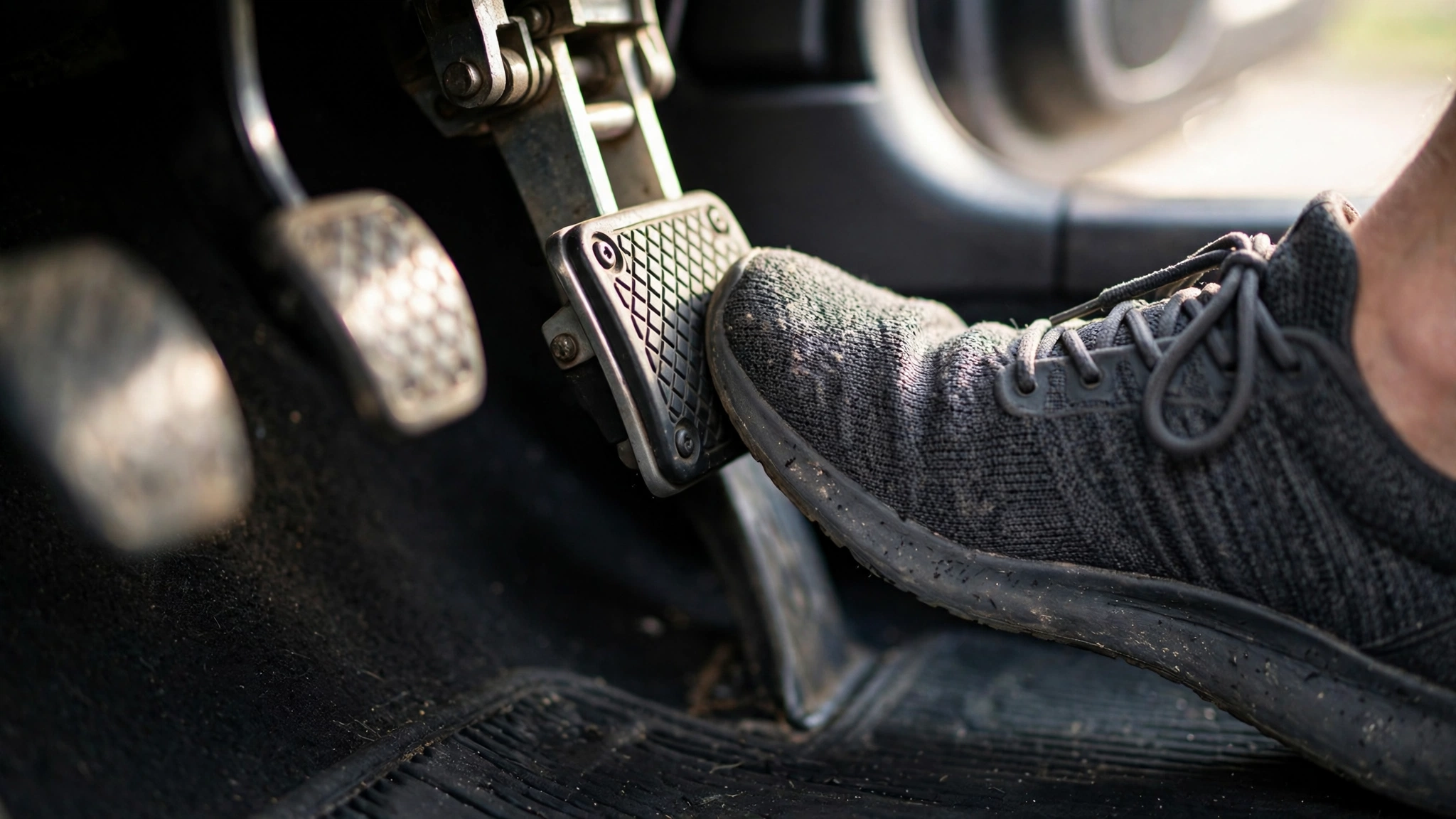
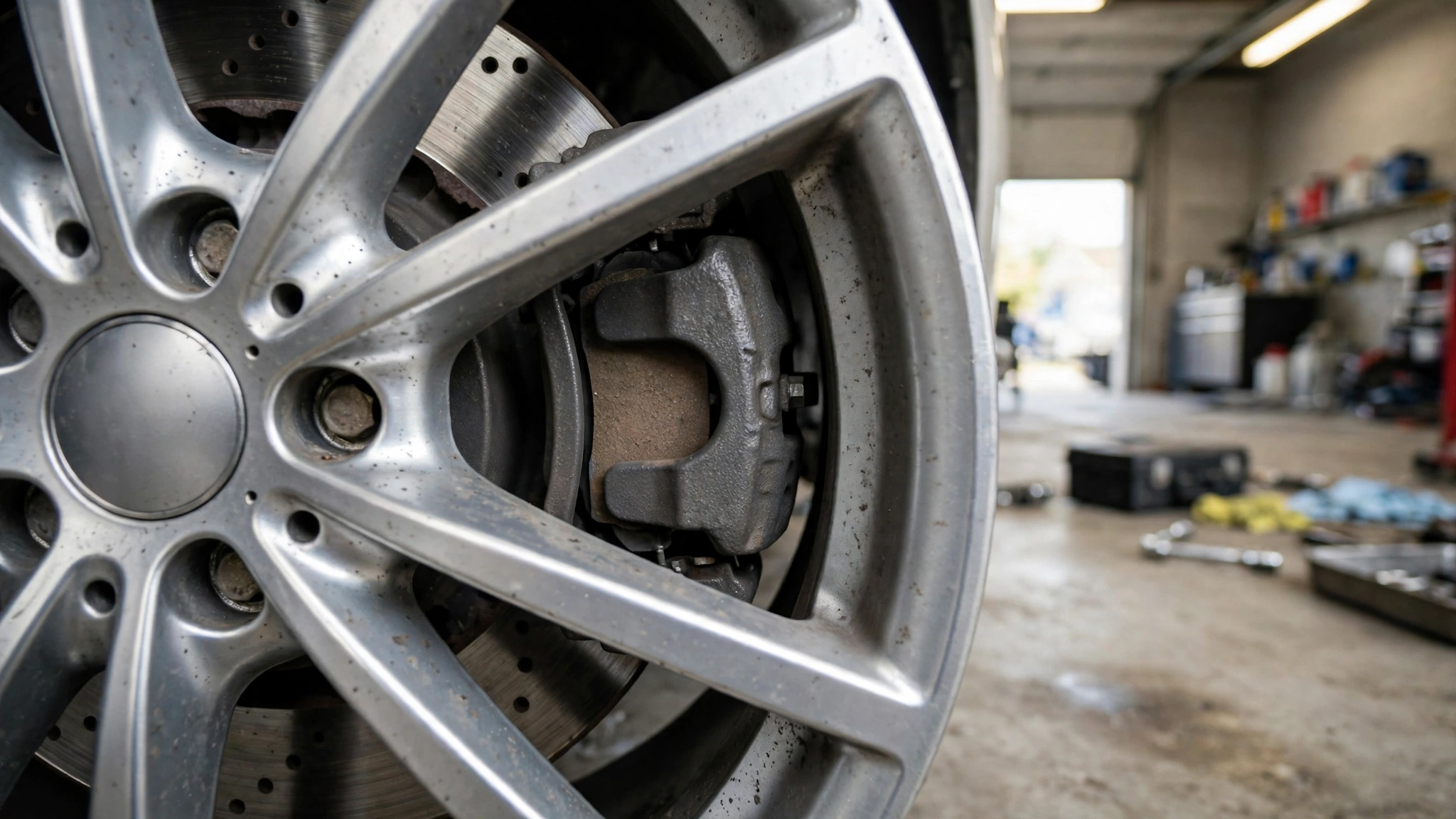
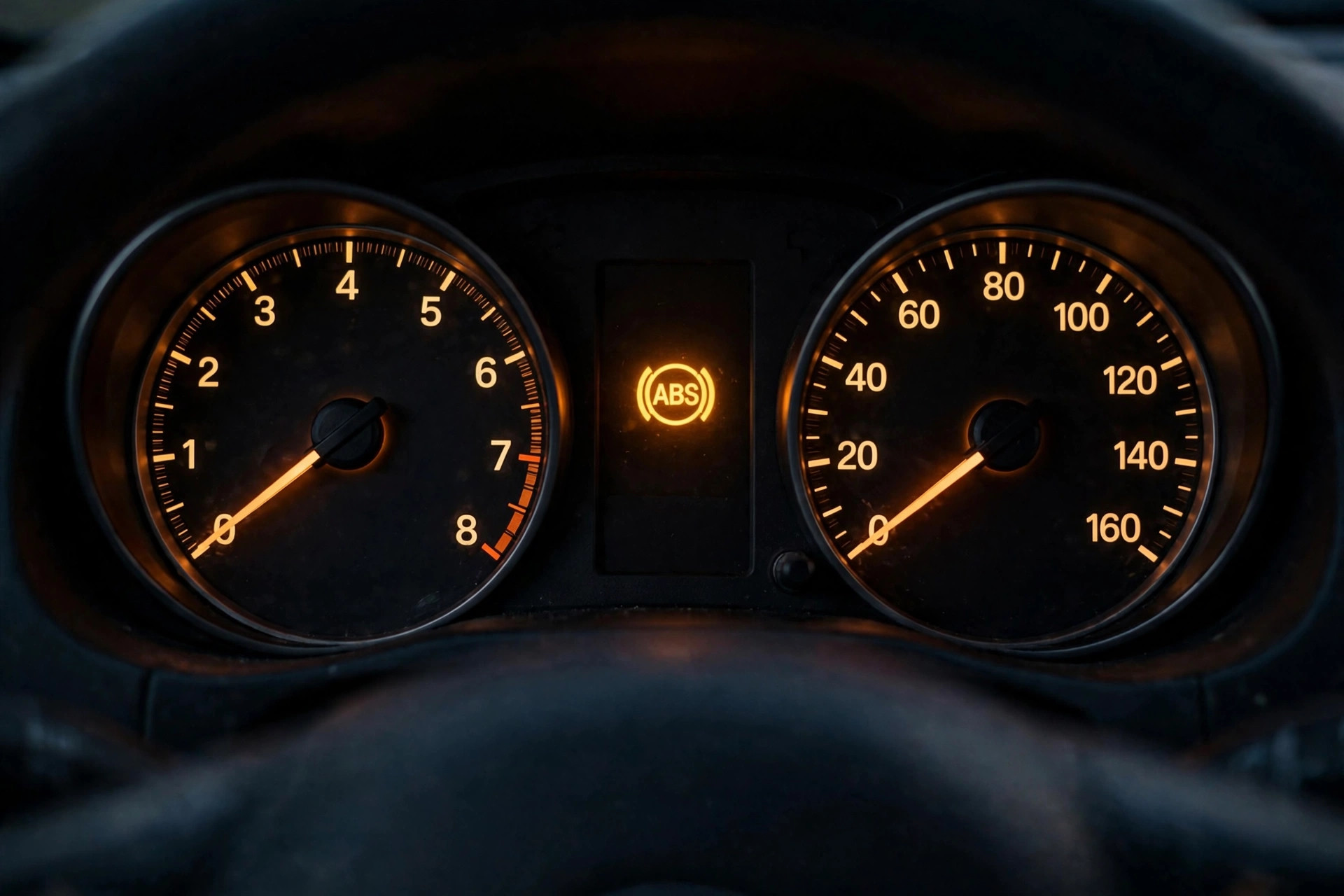
9. Brake early and lightly. Your brakes work fine in the rain — it’s your tires’ grip that’s reduced. Start slowing down well before intersections, turns, and stopped traffic. If your car has ABS, brake firmly and steadily in an emergency and let the system pulse; don’t pump the brakes. If the brake pedal ever feels spongy afterward, see our guide on spongy brake pedal causes — but if anything feels wrong, see a mechanic.
10. Keep your windscreen clear of fog. Rain plus warm, humid air fogs windows fast. Run your air conditioning (yes, even when it’s cool) with the defroster on — the A/C dries the air and clears the glass. Crack a window slightly if you need a quick fix while it works.
11. Know what to do if you hydroplane. If the steering suddenly feels light and the car stops responding, stay calm: ease your foot off the accelerator, hold the steering wheel straight, and do NOT slam the brakes or jerk the wheel. Let the tires slow down naturally until they bite again, then gently steer. For a deeper walkthrough, AAA’s wet-weather driving guide is an excellent authority reference.
12. If you can’t see, pull over. When visibility drops to the point where you can’t see the road edges or the car ahead, the safest move is to stop driving. Pull completely off the road, as far from traffic as possible, turn on your hazard lights, and wait for the rain to ease. Never stop in a travel lane, and never drive with hazard lights flashing while moving — it confuses other drivers and is illegal in some places.
Pack for the season
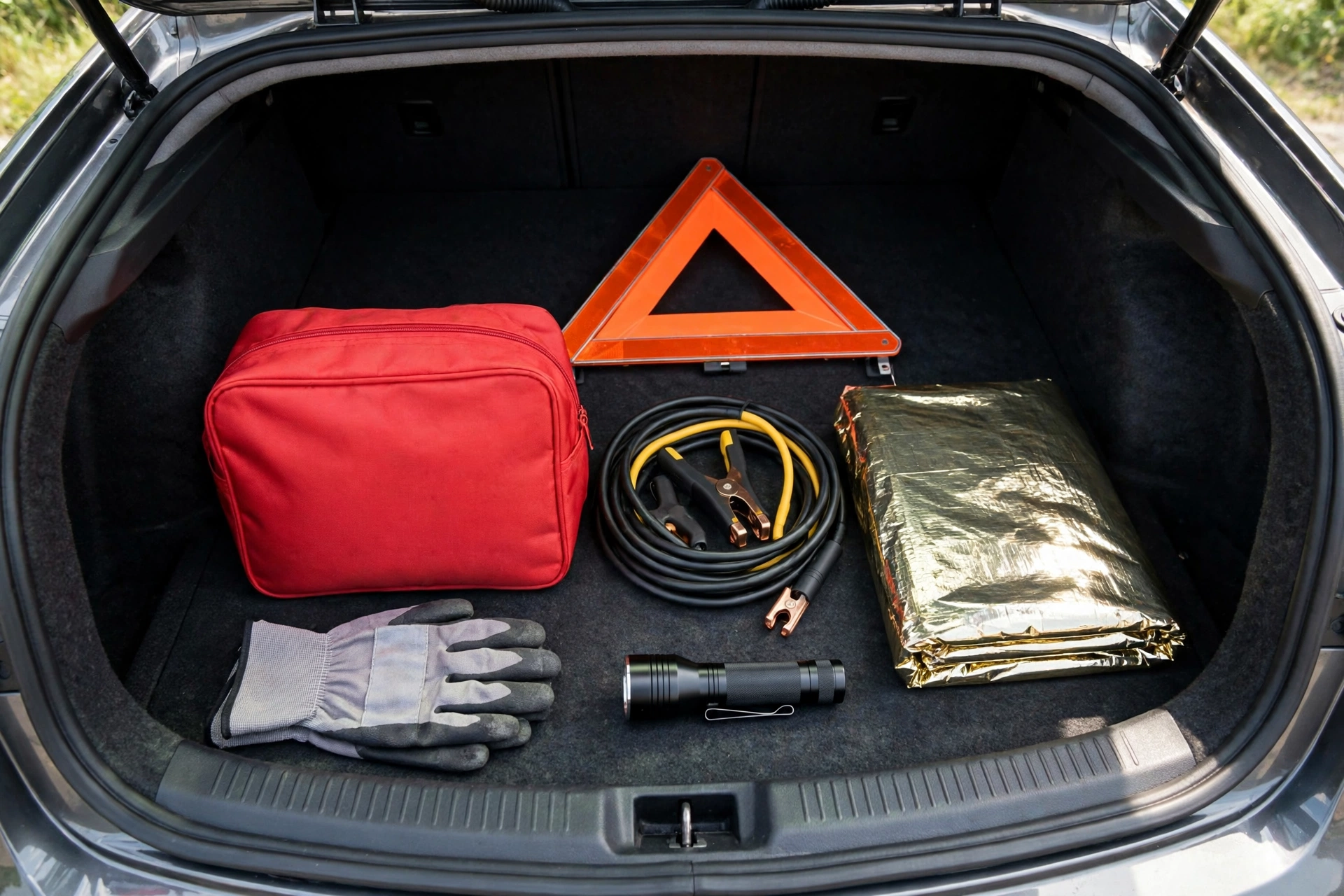
Rainy-season driving is much less stressful when your car is ready for it. Keep an emergency kit in your car with a flashlight, phone charger, warning triangle or flares, and a basic first aid kit. Add a rain poncho, a spare set of wiper blades, and a microfiber cloth for clearing misty glass, and you’ll handle most wet-weather surprises without drama.
FAQs
At what speed can a car hydroplane?
Hydroplaning can begin at speeds as low as 35 mph (56 km/h) — even with new tires — when water is standing on the road. Worn tires can hydroplane at even lower speeds. Slow down by 5–10 mph below the posted limit in heavy rain, and more where water is pooling.
Should I use cruise control in the rain?
No. Cruise control maintains speed even when you should be slowing down, and it adds a delay before you can react to a loss of traction. Keep your foot on the accelerator and control your speed manually in wet weather.
Should I turn on hazard lights while driving in heavy rain?
No. Hazard lights are for stopped or disabled vehicles — using them while moving confuses other drivers and is illegal in some states and countries. Use your low-beam headlights to stay visible, and only switch hazards on once you’ve pulled safely off the road.
How much following distance should I leave in the rain?
Aim for 5 to 6 seconds behind the vehicle ahead in heavy rain (add another second if it’s also dark). That’s roughly double the normal dry-weather gap, and it gives you the extra stopping room wet roads demand.
How do I stop my windshield fogging up in the rain?
Run the air conditioning with the defroster directed at the windshield — the A/C removes moisture from the cabin air. Keep the inside of the glass clean, and crack a window slightly for quick relief while the system catches up.
The bottom line
Heavy rain demands one thing above all: patience. Slow down, leave space, stay smooth with every input, and never feel pressured to keep up with traffic when conditions are bad. Prepare your wipers, tires, and washer fluid before the rainy season, and you’ll already be ahead of most drivers. The road will dry — there’s no appointment worth risking a crash for.