Your brake pads are the one part of your car that is supposed to wear out. Every time you press the brake pedal, the pads squeeze against the spinning brake rotors, creating the friction that slows you down — and a tiny layer of pad material sacrifices itself in the process. So worn brake pads aren't a failure; they're normal. The danger is only in not noticing.
As a first-time car owner, you don't need to be a mechanic to spot worn pads. Your car gives you plenty of warnings — sounds, feelings, even dashboard lights. This guide walks you through every sign, how to do a simple visual check yourself, and exactly what to do when you spot one.
Why brake pads wear out — and how fast
Brake pad life depends far more on how you drive than on the calendar. City driving with constant stop-and-go traffic, riding the brakes downhill, or carrying heavy loads can wear pads out in as little as 25,000 miles (40,000 km). Gentle highway driving can stretch them past 60,000 miles (100,000 km). There is no single mileage where every car's pads must be replaced — which is why recognizing the signs matters more than counting miles.
New brake pads start with about 10–12 mm of friction material. The widely accepted replacement point is around 3–4 mm of remaining material (roughly 1/8 inch). Below that, you're gambling with your stopping distance and risking damage to the much more expensive rotors.
The 7 warning signs your brake pads are worn
1. A high-pitched squeal when you brake
This is the most common and most deliberate sign. Most brake pads have a small metal tab — called a wear indicator or "squealer" — built into them. When the friction material wears down to roughly 3 mm, the tab starts touching the rotor and produces a loud, high-pitched squealing sound every time you brake.
The key detail: the squeal is intentionally annoying. It is the car's way of saying "schedule a replacement now," not "something broke." If you hear a consistent squeal during normal braking (not just after rain or first thing in the morning), take it seriously and get the pads checked within the next few hundred miles.
2. A deep grinding or growling sound
If you ignored the squeal, the friction material eventually wears away completely, and the steel backing plate of the pad scrapes directly against the rotor. That's the harsh metal-on-metal grinding sound.
This is no longer a gentle warning — it's an emergency. Grinding means the rotors are being damaged with every stop, rotors cost far more than pads, and your stopping distance is badly compromised. Do not keep driving on grinding brakes. Get to a mechanic as soon as safely possible.
3. It takes longer to stop
Notice you're pressing the pedal harder or earlier than you used to? Worn pads can't generate the same friction, so stopping distances grow. This one is easy to miss because it happens gradually — you unconsciously adapt by braking earlier. Ask yourself honestly: has your car felt a bit "weak" when braking lately? If yes, add pad inspection to your list.
4. The brake pedal feels soft, spongy, or sinks lower
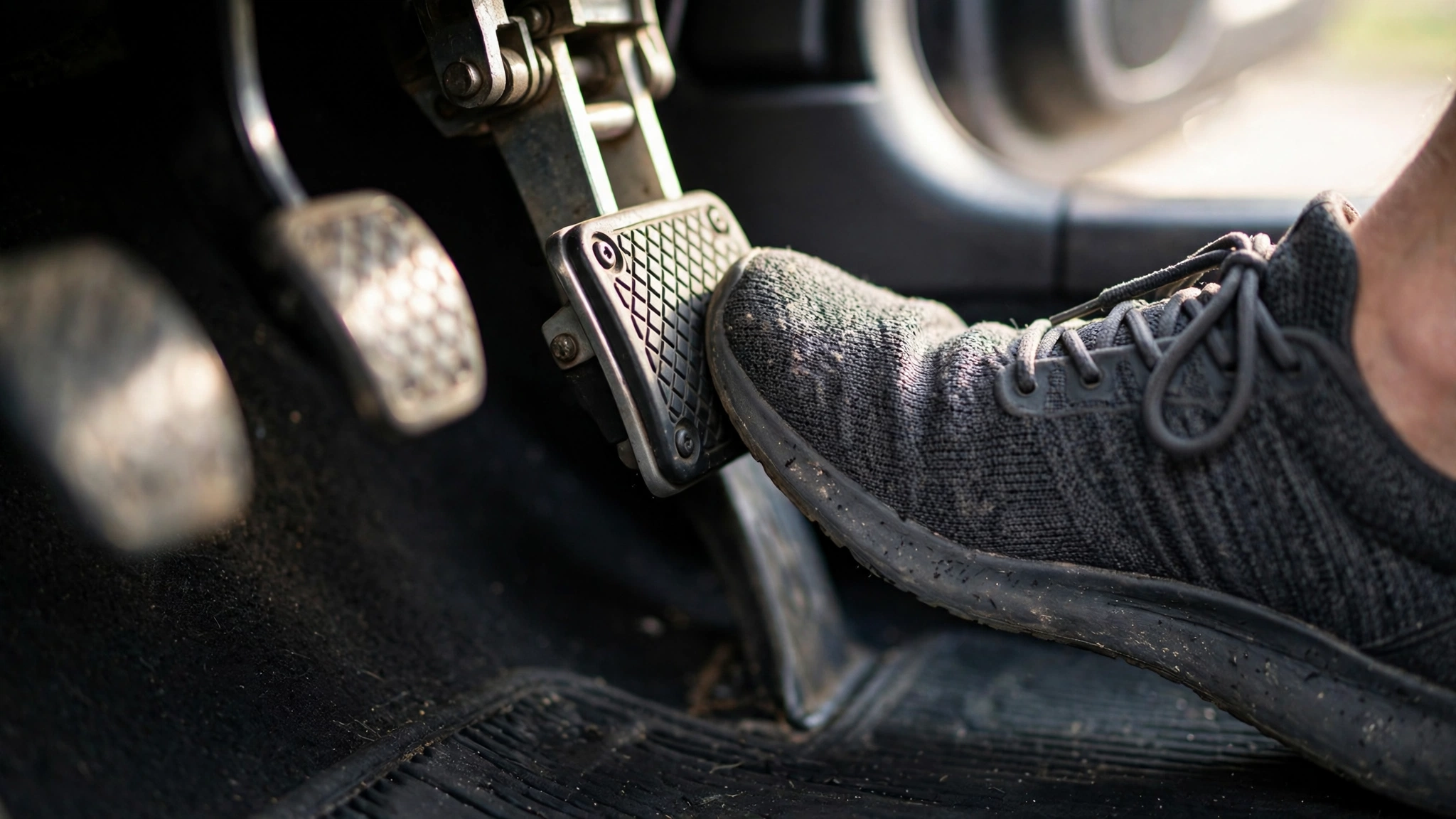
A soft or spongy pedal can have several causes — worn pads, low brake fluid, or air in the brake lines — but all of them need attention. If the pedal travels noticeably farther before the brakes bite, or feels mushy under your foot, treat it as a brake-system warning and get it inspected promptly.
5. Vibration or pulsation through the brake pedal
If you feel a pulsing or shaking in the pedal when braking, worn pads may have allowed excess heat to build up, warping the rotors. This is different from the pulsing of ABS during an emergency stop (which is normal) — this happens during ordinary, gentle braking. Rotor problems and pad problems often arrive together, so a vibration complaint usually leads a mechanic to check both.
6. The car pulls to one side when braking
If the car drifts left or right under braking, one side's pads may be wearing unevenly — often because a caliper is sticking or slide pins are seized. Uneven wear can also show up in a visual check: if the inner pad looks much thinner than the outer pad (or vice versa), there's likely a caliper issue that needs fixing along with the pads.
7. A dashboard brake-pad warning light
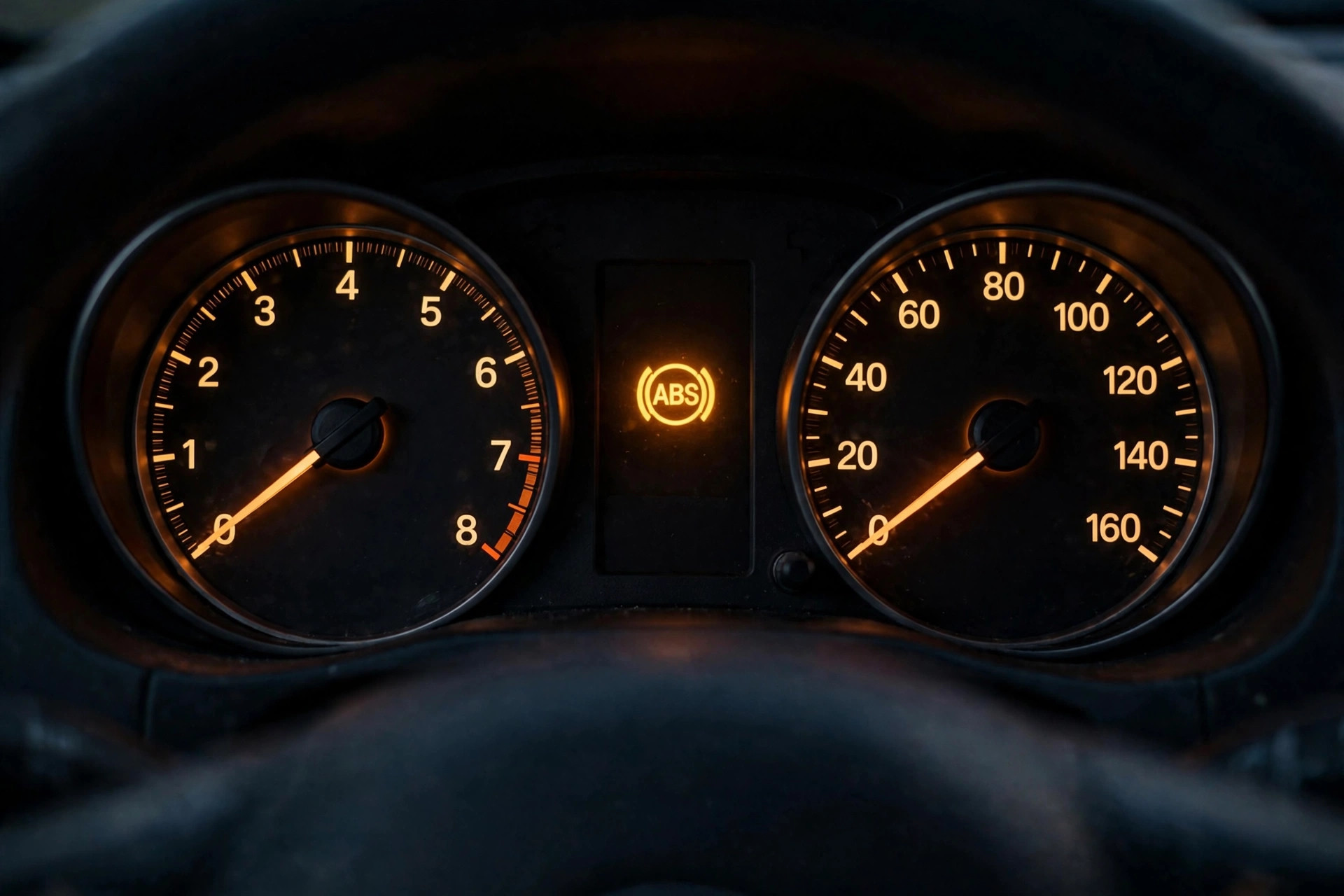
Many newer cars have electronic pad-wear sensors built into the pads. When the material reaches the replacement threshold, a dashboard light comes on (often a circle with dotted parentheses around it). If your car has this feature, trust the light — it's reading actual pad thickness, not guessing.
How to check your brake pads yourself (2-minute visual check)
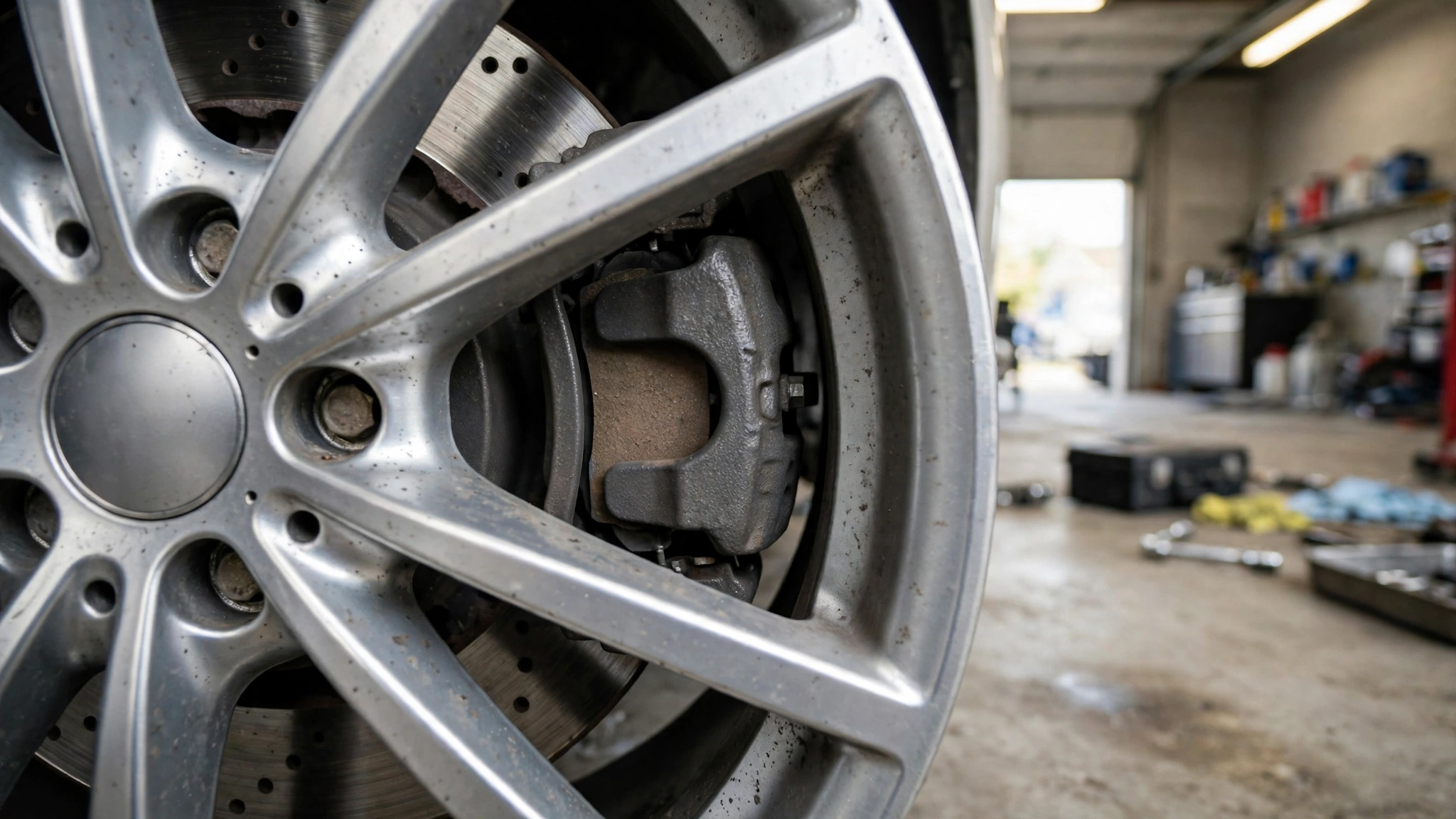
You don't need to remove the wheel. On most cars with alloy wheels, you can see the brake assembly through the spokes:
- Park on a flat surface, switch the engine off, and turn the front wheels slightly for a better view.
- Look through the wheel spokes at the shiny brake rotor disc. You'll see the caliper — the chunky bracket-like part sitting on the edge of the rotor.
- The pad sits between the caliper and the rotor. Compare the thickness of the friction material (the pad itself) to the steel backing plate behind it. New pads have 10–12 mm of material. If the pad material looks about the same thickness as its metal backing plate — or thinner — it's time for replacement (roughly 3–4 mm or less).
- Look for cracks, a glazed shiny surface, or crumbly edges — all signs the pads should be replaced even if some thickness remains.
Honesty note: a quick look through the spokes shows you mainly the outer pad. The inner pad can wear faster (especially with a sticky caliper), so this check is a useful early warning, not a final verdict. Ask your mechanic to measure both pads at every service.
What to do when you spot the signs
Follow this simple decision rule:
- Squealing only: pads are low but still working. Safe to drive to a mechanic this week. Book the appointment now — don't put it off.
- Grinding: the pads are gone. Drive as little as possible, avoid highways and heavy braking, and get to a mechanic immediately. Expect rotors may need work too.
- Soft pedal, pulling, or vibration: these can have multiple causes. Get a brake inspection soon; don't guess.
- Any doubt at all: see a mechanic. Brakes are the single most important safety system on your car. A professional inspection is cheap; a brake failure is not.
When pads are replaced, a good mechanic will also inspect the rotors and calipers. Replacing pads alone while ignoring scored rotors or a seized caliper just means you'll be back sooner.
How long do brake pads typically last?
As a rough guide for beginners:
- Normal mixed driving: 40,000–60,000 miles (65,000–100,000 km) per set.
- Mostly city / stop-and-go: as little as 25,000 miles (40,000 km).
- Aggressive driving (hard, late braking): wears pads dramatically faster.
- Highway commuters: can exceed 60,000 miles.
Pad material matters too: ceramic pads typically last longer and run quieter, while semi-metallic pads are cheaper but wear faster and can be noisier. Your owner's manual and a trusted mechanic can tell you what's right for your car.
Related reading: your brake system's hydraulic fluid also degrades over time — see our guide on how to check and top up brake fluid safely. And if you feel vibration through the steering wheel or pedal, our explainer on wheel alignment vs balancing covers the other common causes.
FAQ
Can I drive with worn brake pads for a while?
Briefly, if the only symptom is mild squealing — the wear indicator is designed to give you a grace period. But don't stretch it: worn pads lengthen stopping distances and can damage rotors, turning a cheap pad replacement into an expensive repair. Grinding means stop driving and get service immediately.
How much does it cost to replace brake pads?
Costs vary widely by car, region, and whether rotors also need work. Rather than guess a number, the honest answer: replacing pads alone is one of the more affordable brake services, while pads + rotors cost noticeably more. Ask your mechanic for a written quote before authorizing work, and be wary of anyone who quotes without inspecting first.
Do I need to replace all four brake pads at once?
Pads are replaced per axle (both front wheels or both rear wheels together), not necessarily all four. Front pads usually wear faster than rears because the front does most of the braking. A mechanic will check both axles and advise.
How do I know if it's the pads or the rotors?
Squealing points to pads; grinding and pedal pulsation often involve the rotors too. But only an inspection can tell for sure — that's why a good brake service checks pads, rotors, calipers, and fluid together. Learn more about what a thorough brake inspection covers from this detailed brake pad replacement guide and Bumper's used-car brake inspection walkthrough.
The bottom line
You don't need to memorize brake pad thicknesses to drive safely — you just need to pay attention. A squeal is a request for attention, grinding is an emergency, and a soft pedal or pull is a warning to investigate. Do the quick visual check through your wheel spokes every few months (tire rotations are a perfect reminder), and let a mechanic measure both pads at every service. Your brakes take care of you every single day — notice them before they have to shout.