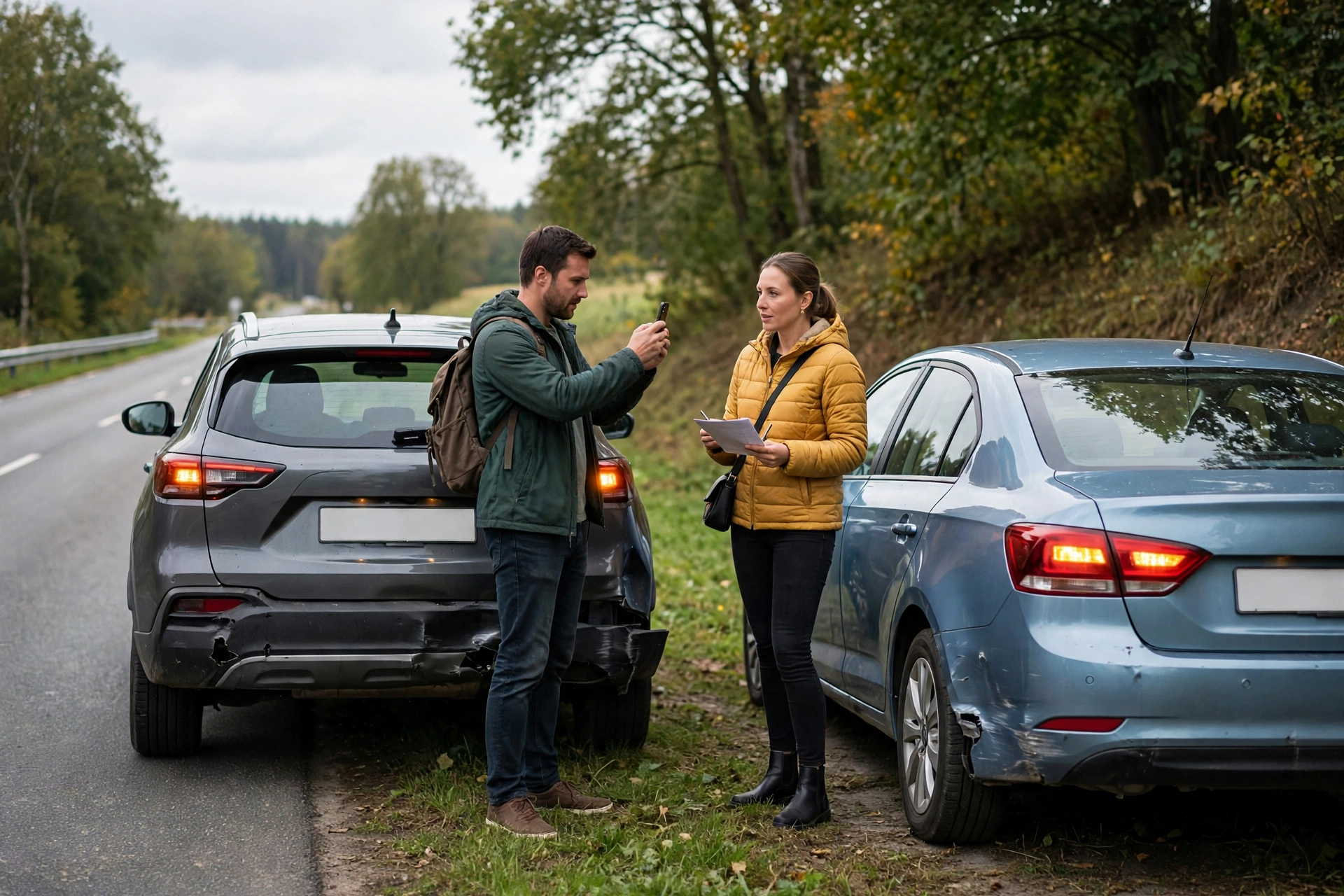
A minor car accident — a bumper tap in traffic, a scrape in a car park, a slow rear-end shunt — can shake even a calm driver. Your heart races, your hands shake, and suddenly you have to make decisions you never practised. The good news is that a minor crash does not need a complicated response. It needs a calm, ordered one.
Follow the steps below, in this order, and you will protect your safety first, your evidence second, and your insurance position third.
Step 1: Stop, breathe, and make the scene safe
Stop your car as soon as it is safe to do so. Never drive away from a crash, even a tiny one — leaving the scene can turn a minor incident into a serious legal problem. Switch on your hazard lights straight away so other drivers can see you.
Next, check yourself and your passengers. Ask everyone, out loud, “Are you hurt? Do you feel any pain?” Adrenaline can hide pain for minutes or even hours, so do not rush this check. If anyone is injured, feels dizzy, or is in severe pain, call emergency services (911 in the US) immediately and do not move an injured person unless they are in immediate danger, such as from fire or oncoming traffic.
If your car is drivable and it is safe to move it, pull it to the side of the road, a lay-by, or a nearby car park, out of the flow of traffic. If it is not drivable, stay inside with your seat belt on, hazards flashing, until help arrives. Standing in a live traffic lane is one of the most dangerous things you can do after a crash.
Step 2: Photograph everything before cars move
If it is safe to do so, take a few quick photos before you move the cars — they show the positions that matter most. Then take a full set after moving to safety. Your phone is your best tool here.
- Wide shots: the whole scene, both cars, lane markings, traffic signs, and signals.
- Close-ups: every dent, scrape, cracked light, and tyre mark on both vehicles.
- Details: both number plates, the road surface, weather conditions, and any debris.
- Context: the street name or a nearby landmark, so the location is clear later.
Also note the date, time, and weather, and jot down what happened while it is fresh. Do not rely on memory alone — insurers often ask about small details weeks later.
Step 3: Exchange details — calmly and politely
Once everyone is safe, exchange information with the other driver. Keep the conversation short, factual, and polite, even if you feel upset. You need:
- Full name and phone number
- Insurance company name and policy number
- Vehicle make, model, colour, and number plate
- Driver’s licence details, if they are willing to share them
Photographing the other driver’s insurance card (with permission) is quicker and more accurate than copying by hand. If there are witnesses, ask for their names and numbers too — an independent witness matters if accounts later differ.
If the other driver refuses to share details, becomes aggressive, or drives off, do not chase them or argue. Note everything you can — plate number, car description, direction of travel — and call the police. Your safety always comes before an argument.
Step 4: Decide whether to call the police
For a truly minor crash with no injuries, no blocked road, and full details exchanged, police may not need to attend in every area — but a report still helps. Call the police if anyone is hurt, the road is blocked, a driver refuses details, you suspect drink-driving, or the damage looks larger than “minor”.
When police attend, give a clear, factual account without guessing. Ask for the report or reference number. If they do not attend, your photos and notes become your record — keep them carefully.
Step 5: What NOT to say or do at the scene
This step protects you as much as any other. In the stress of the moment, it is easy to say something that later gets read as an admission of fault.
- Do not admit fault. Do not say “It was my fault” or “I’m sorry, I caused this” — even if you think you did. Fault is decided later, from evidence, by insurers and, if needed, investigators.
- Stick to facts. “I was travelling in this lane, and our cars made contact here” is factual. Guesses about speed or blame are not helpful.
- Do not agree to a cash deal on the spot without photos, details, and a written record. Hidden damage often costs more than a quick look suggests.
- Do not sign anything from the other driver without checking with your insurer first.
- Do not post about the crash on social media. Posts can be screenshot and used in a dispute.
Being polite is not the same as accepting blame. “Are you okay? Let’s exchange details” is all you need to say.
Step 6: Tell your insurer promptly
Contact your insurer as soon as you can — many policies require prompt notice, even if you do not plan to claim. Reporting is not the same as claiming: you are simply telling them what happened. Have your photos, the other driver’s details, and the police reference (if any) ready.
Your insurer will ask what happened, what damage you can see, and whether anyone was hurt. Answer honestly and stick to what you know; if unsure, say so rather than guessing. Then ask: “What is my excess/deductible, and will claiming affect my premium?”
For very small damage, you may decide — after a repair quote — that paying privately costs less than your deductible plus a possible premium rise. Only do this after documenting everything and telling your insurer. See our car insurance basics for first-time owners for cover types and deductibles.
Step 7: Get the car checked — even if it looks fine
A bumper that looks only scuffed can hide a cracked bracket, a bent sensor mount, or a misaligned panel underneath. Modern bumpers also hide parking sensors and cameras that may stop working after a light knock. Get a reputable garage or body shop to inspect the car, and get the estimate in writing.
Ask the garage to check lights, wheel alignment, tyres, and any new dashboard warning lights. Keep every invoice, estimate, and receipt — including towing or rental costs — in one folder.
Watch for delayed symptoms
Not all injuries show up at the roadside. Neck stiffness, headaches, back soreness, or dizziness can appear hours or days later. If any symptom appears, see a doctor promptly, mention the crash, and keep a record of symptoms and appointments.
Your 60-second checklist (save this)
- Hazards on. Everyone checked for injuries.
- Move to safety if the car is drivable.
- Photos: wide scene, close-up damage, plates, signs.
- Exchange name, phone, insurance, and plate details.
- Note witnesses, time, location, and weather.
- Call police if anyone is hurt or details are refused.
- Say facts only — do not admit fault or sign anything.
- Tell your insurer promptly; keep all paperwork.
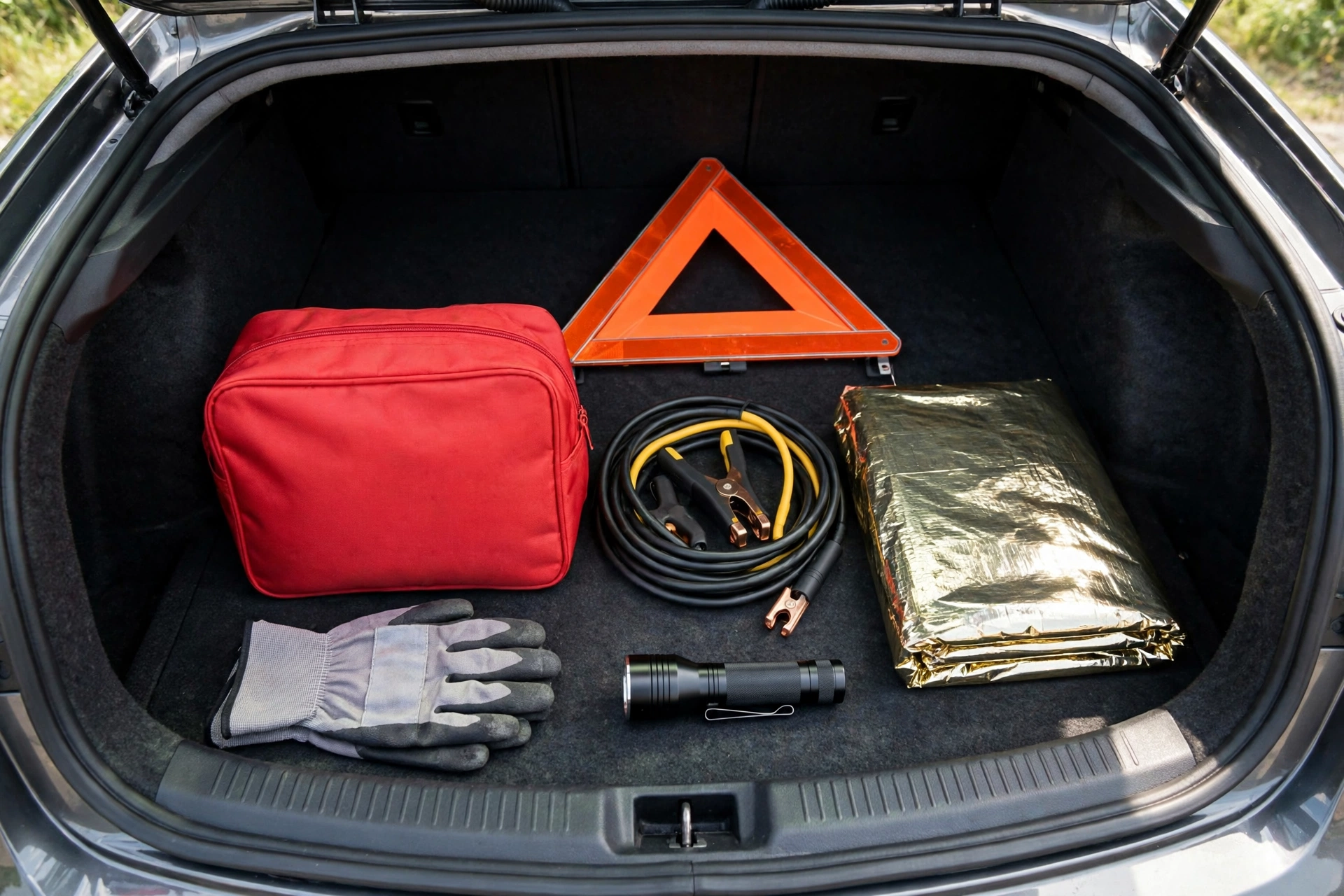
Keep a printed copy with your insurance documents in the glovebox. A well-stocked emergency kit in the car makes the first minutes easier too.
Frequently asked questions
Do I have to report a minor accident to my insurer?
In most cases, yes — promptly, even if you do not claim. Many policies require it, and late notice can complicate a claim if damage or an injury emerges later. Reporting and claiming are two different things; ask your insurer what each means for you.
Should I call the police for a minor crash?
Call them if anyone is injured, the road is blocked, a driver will not share details, or you feel unsafe. Otherwise, follow your local rules and keep your own full record of photos and details. When in doubt, a short call to the non-emergency police line can clarify what is needed in your area.
What if the other driver offers cash at the scene?
Be cautious. Get full photos and details and a written, signed note of what was agreed before accepting anything — and get a repair quote first. Hidden damage often exceeds a roadside guess, and a handshake deal is hard to enforce if costs grow.
What if it was a hit-and-run?
Do not chase the other car. Note the plate, car description, direction, time, and location, photograph the scene, and report it to the police and your insurer promptly. Witness details and nearby camera footage can help, so act quickly.
Can I still drive the car after a minor accident?
Only if it is genuinely safe: steering, brakes, lights, and tyres all working, no fluid leaks, and no warning lights you cannot explain. If anything feels off — pulling to one side, a strange noise, a warning light — have it checked before driving further. When in doubt, call for recovery rather than risking a second incident.
Conclusion
A minor accident feels big in the moment, but a calm sequence makes it manageable: people first, photos second, details third, insurer fourth. Do not rush, argue about fault, or let “it looks fine” stop you documenting and checking the car.
Drive on, a little wiser — and if wet roads were a factor, our guide on driving safely in heavy rain and our first-car checklist are good next reads. For a deeper, insurer-written version of these steps, see GEICO’s minor car accident checklist.