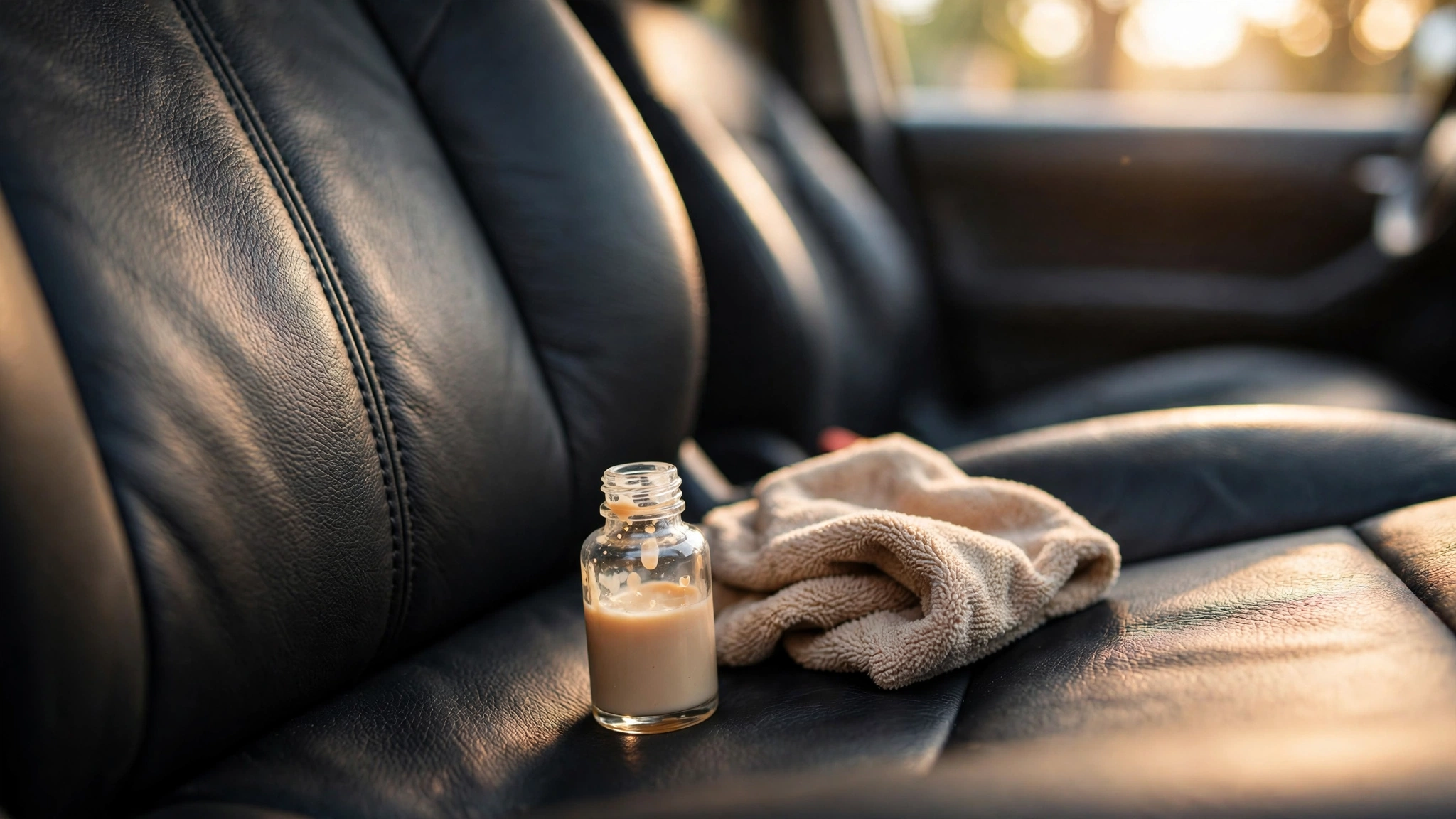
Run your hand across a leather car seat that has never been conditioned and you can feel the problem: dry, slightly stiff, a little pale where the sun hits it every day. Leave it like that for a year or two and the surface starts to crack — first as fine lines on the driver's bolster, then as splits that no conditioner can undo. Leather is skin, and like skin it dries out. A bottle of conditioner every few months is the cheapest insurance a leather interior has.
The catch is that not all conditioners do the same job. Some are deep, slow-soaking formulas for neglected leather. Some are quick sprays for a ten-minute monthly routine. And some will darken light-colored seats, which is a nasty surprise if nobody warns you first. This guide covers the five leather conditioners that earned their place in 2026 roundups, matched to the leather in your car and the amount of effort you want to spend.
Affiliate disclosure: FirstCarCare.com is a participant in the Amazon Services LLC Associates Program. As an Amazon Associate, we earn from qualifying purchases made through links on this page, at no extra cost to you. We only recommend products that fit a beginner's real needs.
Our top 3 at a glance
- Best deep care — Leather Honey Leather Conditioner (8 oz): the thick, slow-soaking classic made since 1968; one application is claimed to last up to six months, and it holds a 4.5-star average from more than 68,000 Amazon ratings.
- Best complete kit — Chemical Guys Leather Cleaner & Conditioner Kit (2 × 16 oz): a matched two-bottle system with a pH-balanced cleaner and a Vitamin E conditioner, rated 4.6 stars from 40,000+ Amazon reviews.
- Best budget 3-in-1 — Meguiar's Gold Class Rich Leather Cleaner & Conditioner (G10916): cleans, conditions, and adds UV protection in one spray — TrueCar's budget pick for routine care.
First, know what leather you actually have
Almost every car on the road today has coated (also called finished or pigmented) leather: real leather with a thin protective coating on top. The coating is what you are really maintaining — a conditioner mostly protects that coating and keeps it flexible, rather than feeding the hide underneath. A small number of luxury cars have uncoated or aniline leather, which has no coating and absorbs conditioner directly. The distinction matters, because a heavy, deep-soaking conditioner is wasted on coated leather and a light spray is not enough for uncoated leather. Garageproof's 2026 guide to coated vs uncoated leather explains the difference in detail, with a pick for each type.
How do you tell? Check your owner's manual first — it usually names the leather type. A simple check detailers use is the water-drop test: put a single drop of water on a hidden part of the seat. If it beads and sits on the surface, your leather is coated. If it soaks in and darkens the spot, it is uncoated. When in doubt, assume coated and use a light coat — that is the safe default for a beginner, and it is what the Lexol and Meguiar's picks in this guide are made for. For uncoated or older, dry leather, the deep-penetrating pick is Leather Honey.
How to choose: conditioner, cleaner, or 2-in-1?
1. Dedicated conditioner — for seats that need real care
A dedicated conditioner does one job: restore flexibility and add a protective layer. It does not clean, so you use it after a separate cleaner. This is the right choice when your seats feel dry or stiff, or when they have not been treated in a year or more. Leather Honey and Lexol are dedicated conditioners, and Bick 4 is a conditioner with a light cleaning action built in. Expect to spend ten minutes per seat, and to let the product dwell before buffing.
2. Two-step kit — the best starting point for a beginner
A kit pairs a dedicated cleaner with a matched conditioner, so you never have to guess whether two products work together. Clean first, let the seat dry, then condition. The Chemical Guys kit in this guide is the classic example: two 16 oz bottles, pH-balanced, colorless, and odorless. If you have never conditioned leather before, start here — the process teaches you what each step does, and the results are the most predictable.
3. 2-in-1 or 3-in-1 spray — for quick routine care
A spray that cleans, conditions, and protects in one pass is the fastest option, and it is genuinely good enough for monthly maintenance on healthy leather. Meguiar's Gold Class 3-in-1 is the pick here: spray, wipe, done in about five minutes per seat. The trade-off is depth — a 2-in-1 will not revive leather that is already dry and stiff. Use it to maintain good leather, not to rescue bad leather.
4. Watch the finish: matte, not shiny
A good conditioner leaves leather looking like leather: soft, matte, natural. If a product leaves a greasy shine, you used too much, or the product is wrong for your seats. Apply a thin coat, let it sit for a few minutes, then buff off every bit of excess with a clean microfiber cloth. Shine that stays after buffing is residue — wipe it again. The Lexol and Bick 4 picks are specifically known for a matte, non-greasy finish.
5. Color: the warning nobody gives beginners
Deep-penetrating conditioners can slightly darken leather, because they soak in and change how light reflects off the surface. On black or dark brown seats you will never notice. On tan, cream, or white seats you will. If your interior is light-colored, use a color-safe formula (Bick 4 is the pick in this guide) and always test on a hidden spot first — under the seat or on the back of a bolster — and check the color after it dries completely.
How to apply leather conditioner (the 10-minute method)
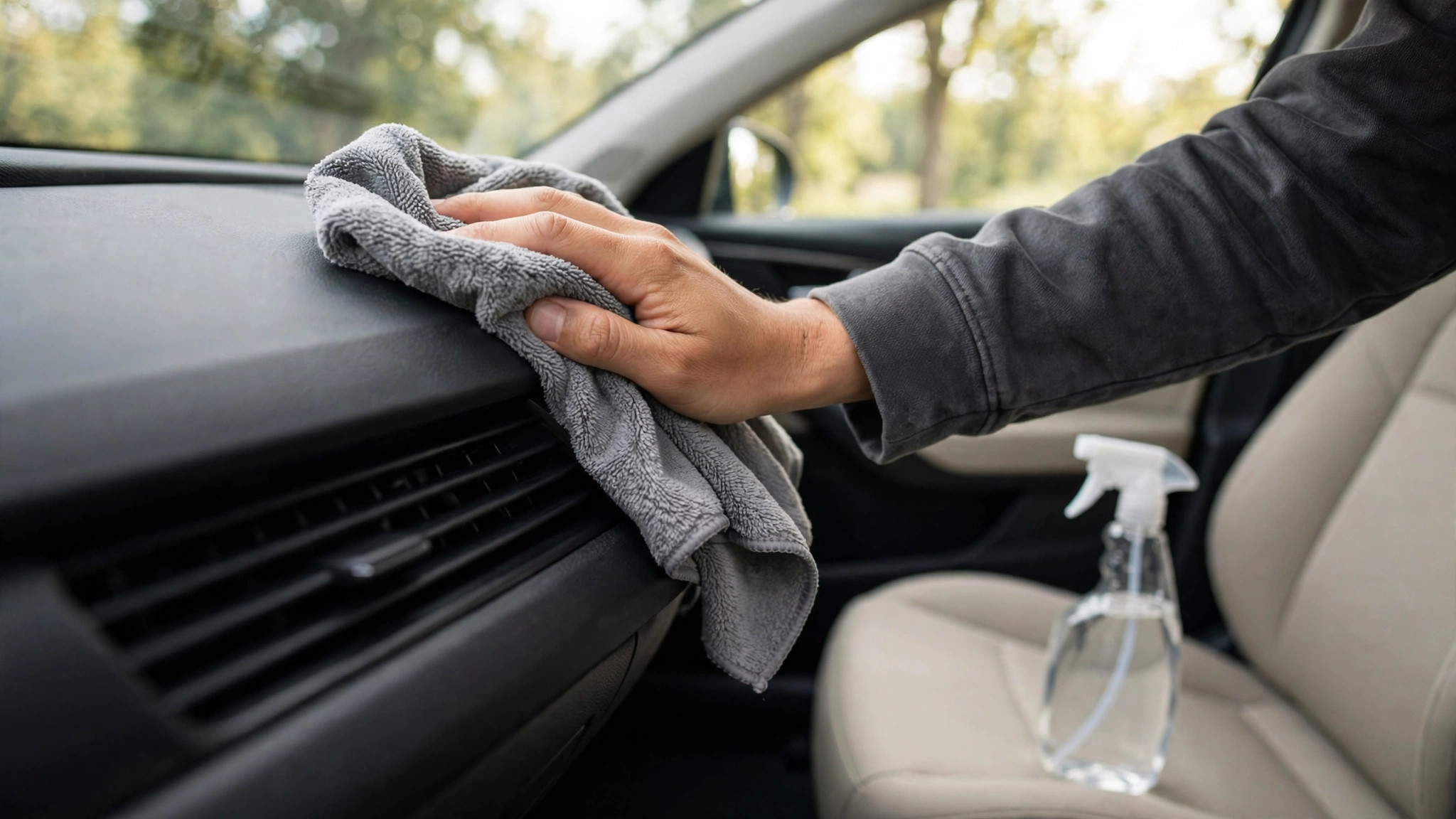
- Vacuum and wipe first. Vacuum the seat, then wipe it with a damp microfiber cloth to lift surface dust. For anything dirtier than dust, use a dedicated leather cleaner and let the seat dry completely before conditioning.
- Test a hidden spot. Apply a small amount to an unseen area, wait for it to dry, and check the color and feel. If it darkens the leather more than you like, switch to a color-safe pick before doing the visible seats.
- Apply thin, in small sections. Put a coin-sized amount on a microfiber applicator or cloth, work it into one panel at a time — seat base, then backrest, then bolsters — using small circles. Thin beats thick: you can always add a second coat, but excess product just sits on the surface.
- Let it dwell, then buff. Give it 5–10 minutes to absorb (Leather Honey benefits from a longer dwell — up to 30 minutes on dry leather), then buff off all excess with a clean, dry microfiber cloth. The seat should feel soft and dry to the touch, not tacky.
- Repeat every 3–6 months. Sun-exposed cars every 3 months; garage-kept cars every 6. Do not condition weekly — over-conditioning builds a sticky film that attracts dust and can soften the coating. For the full seat-care routine, see our guide to cleaning and protecting leather car seats.
The 5 best leather conditioners for cars (2026)
#1 — Best Deep Care
Leather Honey Leather Conditioner (8 Fl Oz)
Rating: 4.5/5 · from ~68,000 Amazon ratings (per marcellinony.com, listing read October 2026)
- Thick, slow-soaking formula made by the same family company since 1968 — it penetrates the leather rather than coating the surface
- One application is claimed to last up to six months, so you condition twice a year instead of every month
- Non-toxic, fragrance-free, and free of silicone, solvents, and animal products; safe for all colors, including white
- Works on auto interiors, furniture, shoes, and bags — one bottle covers the whole car and the house
Pros: This is the deep-care pick for a reason: the rating pool is enormous (68,000+ ratings at 4.5 stars), the six-month claim means the least frequent routine in this roundup, and it is the only pick here that genuinely revives dry, stiff, neglected leather. Garageproof's 2026 guide names it the best choice for uncoated and aniline hides, and Car Care Total's 2026 roundup puts it at the top of its list.
Cons: It is a conditioner only, not a cleaner — you must clean the seat first with a separate product. It can slightly darken leather, so light interiors need a test spot first. And it is thick and slow: on dry leather it needs a long dwell before buffing, so this is a weekend job, not a five-minute one.
Best for: Older or neglected leather, uncoated hides, and anyone who wants to condition twice a year and forget about it.
#2 — Best Complete Two-Step Kit
Chemical Guys Leather Cleaner and Conditioner Kit (2 Bottles, 16 oz Each)
Rating: 4.6/5 · from ~40,000 Amazon ratings (per dtoplist 2026)
- Matched pair: a pH-balanced leather cleaner plus a Vitamin E-enriched leather conditioner, 16 oz each
- Colorless and odorless formulas, safe on natural, synthetic, faux leather, and pleather
- Cleaner lifts dirt and body oils first, so the conditioner can actually absorb instead of sitting on grime
- Model SPI_109_16 — the kit that tops Car Care Total's 2026 list as the best complete two-step system
Pros: The best starting point for a beginner: the two-step process is the correct way to care for leather, the kit removes all guesswork about which products go together, and the 4.6-star average across 40,000+ reviews is the highest rating in this roundup. It is also the most versatile pick — the same two bottles work on seats, steering wheels, door panels, and even leather bags at home.
Cons: Two steps take twice as long as a 2-in-1 spray, and you use two bottles instead of one. It is a routine-care system, not a rescue product — for leather that is already cracked or very stiff, Leather Honey's deep formula does more. And the conditioner is not the best choice for uncoated leather.
Best for: First-timers and anyone who wants one purchase that covers the whole leather-care routine properly.
#3 — Best Budget 3-in-1
Meguiar's Gold Class Rich Leather Cleaner and Conditioner 3-in-1 Spray (15.2 Oz)
Rating: Best budget pick in TrueCar's 2026 leather care guide
- One spray cleans, conditions, and protects — gentle cleaners lift grime, aloe and moisturizing oils nourish the leather, and UV protection helps prevent fading and cracking
- Non-greasy, non-whitening formula: no white residue, no artificial gloss, just a natural finish
- Spray format is the fastest application here — about five minutes per seat
- Model G10916, 15.2 oz bottle — the same Gold Class line as the wash and wax products in our detailing guides
Pros: The honest budget answer: for the price of one bottle you get cleaning, conditioning, and UV protection in a single pass, and TrueCar's 2026 guide calls it the best budget leather cleaner-conditioner. The UV protection is the feature that matters most for a car that parks outside every day, and the spray format means you will actually do the job instead of putting it off.
Cons: A 3-in-1 is a compromise by design — the cleaner is gentler than a dedicated cleaner and the conditioner is lighter than a dedicated conditioner, so it will not revive dry or neglected leather. For seats that are already stiff, use the Chemical Guys kit or Leather Honey first, then maintain with this spray.
Best for: Monthly routine care, sun-parked cars that need UV protection, and beginners who want the fastest possible routine.
#4 — Best Everyday Classic
Lexol All Leather Conditioner (16.9 Oz Bottle)
Rating: 4.6/5 · from ~4,200 Amazon ratings (per marcellinony.com, listing read October 2026)
- The long-standing automotive standard — Lexol has made leather care products since 1933
- Water-based emulsion in a thin, runny liquid: spreads fast with a damp sponge and soaks in without a greasy film
- Matte, non-greasy finish that leaves leather feeling like leather, not like vinyl
- Step 2 of Lexol's two-step system — pair it with the Lexol leather cleaner for the full routine (cleaner sold separately)
Pros: Garageproof's 2026 guide names Lexol the best overall conditioner for coated leather — which is what almost every car actually has. The thin liquid is the easiest to apply evenly of any pick here, it dries matte with no shine, and the 16.9 oz bottle goes a long way because a little spreads far. It has been the detailer's default for decades for a reason.
Cons: It is a conditioner only, so you need a separate cleaner (the Lexol cleaner is a separate purchase). The runny consistency means it can drip if you pour too much on the applicator. And it is a maintenance product for healthy coated leather — it will not rescue leather that is already dried out and cracked the way Leather Honey can.
Best for: Everyday coated-leather cars, owners who condition on a schedule, and anyone who hates a shiny or greasy finish.
#5 — Best Color-Safe Pick
Bickmore Bick 4 Leather Conditioner (8 Oz)
Rating: Color-safe pick — won't darken light leather (per Ezvid Wiki's 2026 roundup)
- Conditions, cleans, polishes, and preserves all smooth finished leather in one bottle
- Color-safe formula: made to condition without changing the leather's shade, so light tan, cream, and white interiors stay the color they are
- Light, easy-to-apply lotion that spreads evenly and buffs to a natural matte finish
- Model 10FPR107, 8 oz — also widely used on boots, bags, and furniture, so the bottle earns its keep outside the car
Pros: The pick that solves the one problem the others create: Ezvid Wiki's 2026 roundup calls Bick 4 the choice "for anyone who wants the color to stay put," which is exactly what a light-interior owner needs to hear. It is the simplest product here — one bottle, no kit, no separate cleaner for light soiling — and it leaves no greasy film.
Cons: It is a light conditioner, not a deep one: it maintains healthy leather well but will not revive leather that is already dry and stiff. The 8 oz bottle is the smallest here, so a full SUV interior uses a noticeable share of it. And it is for smooth finished leather only — never use it on suede or nubuck.
Best for: Light-colored interiors, and anyone whose biggest worry is a conditioner changing the color of their seats.
Quick comparison
| Conditioner | Type | Best for | Rating note |
|---|---|---|---|
| Leather Honey | Dedicated conditioner | Deep care, neglected leather | 4.5/5 · ~68,000 ratings |
| Chemical Guys kit | Two-step kit | Complete beginner routine | 4.6/5 · ~40,000 ratings |
| Meguiar's G10916 | 3-in-1 spray | Fast monthly care + UV | TrueCar budget pick |
| Lexol | Dedicated conditioner | Everyday coated leather | 4.6/5 · ~4,200 ratings |
| Bick 4 | Conditioner + light clean | Light-colored interiors | Color-safe pick |
5 mistakes beginners make with leather conditioner
- Conditioning dirty leather. Conditioner over dirt seals the dirt in and blocks absorption. Clean first, every time — even if the seat looks clean, a quick wipe with leather cleaner makes the conditioner work properly.
- Using too much product. A thick coat does not condition better; it sits on the surface, stays tacky, and attracts dust. Thin coat, let it dwell, buff off the excess. If the seat feels sticky an hour later, you used too much.
- Using the wrong product on suede or nubuck. Conditioner is for smooth finished leather only. Suede and nubuck (the soft, velvety material on some seats and steering wheels) are ruined by conditioner — they need a dedicated suede cleaner and brush, not this bottle.
- Ignoring the sun. UV is the main reason leather fades and cracks, and it works even through windows. If your car parks outside all day, a conditioner with UV protection (Meguiar's 3-in-1) or a sun shade matters more than the brand of conditioner. Our guide to the best windshield sun shades covers the other half of the job.
- Waiting until the leather cracks. Conditioner maintains leather; it does not repair cracks. Once the surface splits, no product brings it back — only a retrim or a repair kit helps. Start conditioning while the leather is still healthy, and the seats will look new for years. Pair the routine with the right interior detailing products and the whole cabin stays in the same condition.
Frequently asked questions
How often should I condition my car's leather seats?
Every 3 to 6 months is the right rhythm for most cars. If your car sits in strong sun every day, condition every 3 months; a garage-kept car can go 6. Leather Honey claims one application lasts up to six months, which matches that schedule. Conditioning more often does not help — too much product just leaves a sticky film that attracts dust.
Do I need to clean leather before conditioning?
Yes — always clean first. Conditioner applied over dirt seals the dirt into the leather, and it will not absorb properly. Wipe the seat with a dedicated leather cleaner (or the cleaner bottle in a two-step kit like the Chemical Guys or Lexol pair), let it dry completely, then apply conditioner in a thin coat. A damp microfiber cloth is all you need for the cleaning step.
Can leather conditioner damage my seats?
On the coated (finished) leather fitted to most cars, a light coat of a reputable conditioner is safe — the conditioner mostly protects the coating, not the hide underneath. Test any new product on a hidden spot first, use a thin coat, and buff off the excess. Never use conditioner on suede or nubuck, and check your owner's manual: some makers warn against conditioners on perforated leather, where product can pool in the holes.
Will leather conditioner darken my seats?
Some deep-penetrating conditioners can slightly darken leather — Leather Honey is known for this, because it soaks in rather than sitting on the surface. If you have light-colored seats, that matters: pick a color-safe formula like Bick 4, which is made to condition without changing the shade. Whatever you buy, test it on a hidden spot (under the seat, or the back of a bolster) and check the color after it dries.
Is a 2-in-1 cleaner-conditioner good enough?
For routine monthly care, yes — a 3-in-1 spray like Meguiar's Gold Class cleans light dirt, conditions, and adds UV protection in one pass, which is exactly what a beginner needs most of the time. But if your seats are dry, stiff, or have not been treated in a year or more, a dedicated two-step kit (Chemical Guys) or a deep-penetrating conditioner (Leather Honey) does a better job, because the cleaner and the conditioner each get to work properly.
The verdict
For most beginners, the Chemical Guys kit is the pick: it teaches the correct two-step routine, it works on every type of finished leather, and its 4.6-star average across 40,000+ reviews is the strongest rating in this roundup. If your leather is already dry or you only want to do the job twice a year, Leather Honey is the deeper answer. And if you just want the fastest monthly routine, Meguiar's 3-in-1 spray does the job in five minutes a seat — with UV protection included.
Whichever one you choose, the rule is the same: clean first, thin coat, buff the excess, and repeat every few months. A $20 bottle used twice a year is the difference between seats that still look new at 100,000 miles and seats that crack at 40,000. Start with the full routine in our car cleaning kit essentials guide, and your leather will be the easiest part of the car to keep looking new.
Sources: Car Care Total's 2026 leather cleaner and conditioner guide, Garageproof's 2026 coated-vs-uncoated leather guide, and the rating sources cited in the text. Ratings are Amazon figures as read by the cited reviewers in October 2026; we have not tested these products ourselves.