You press the brake pedal expecting a smooth, quiet stop — and instead you hear a harsh, gravelly grind, like metal dragging on metal. It is one of the most alarming sounds a car can make, and for good reason: in most cases, it means something in your braking system has worn out completely. This guide explains what that grinding noise usually means, the five most common causes, a five-minute check you can safely do yourself, and when to stop driving and call a mechanic.
What That Grinding Sound Actually Means
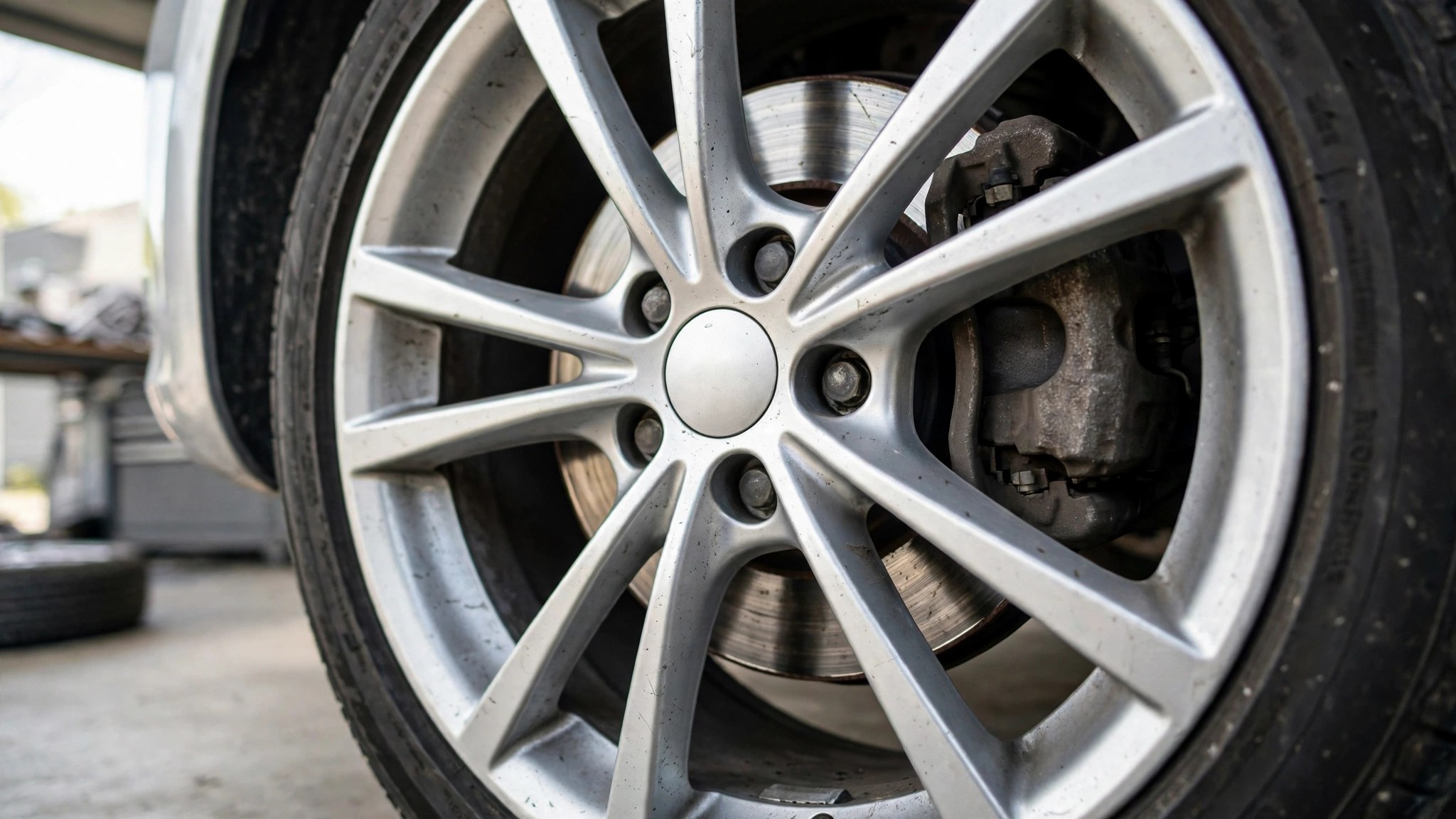
Each wheel has a metal disc called a rotor that spins with the wheel. When you press the brake pedal, a clamp called a caliper squeezes two brake pads against that disc, and the friction slows the wheel down. Each pad is a layer of friction material bonded to a steel backing plate, and that friction material is designed to wear away slowly over tens of thousands of miles.
When it wears away completely, the steel backing plate presses directly against the rotor — steel on steel. That metal-on-metal contact is the grinding sound you hear, and every stop while it is happening scores grooves into the rotor and heats up parts that were never meant to take that abuse.
There is one exception: a light grinding that appears after rain, a car wash, or a few days parked, and fades after two or three stops, is usually just surface rust on the rotors. Bare cast iron rusts fast when wet, and the first few stops scrape it off. If the noise clears quickly and never comes back, that is normal. If it happens on every stop, it is not.
5 Common Causes of a Grinding Noise When Braking
1. Brake pads worn down to the metal
The most common cause by far. The friction material is gone, the steel backing plate is grinding the rotor, and the noise happens on every stop. You may also feel a vibration through the brake pedal, and stopping distances may get longer. Never drive on this for long — a pads-only job turns into a pads-plus-rotors job with every mile.
2. Surface rust on the rotors
After rain, a wash, or a few days parked, a thin layer of rust forms on the rotors. The first few stops sound rough, then it clears completely. If the noise is gone after three or four stops and does not return, this was the cause. Mention it at your next service so a mechanic can confirm the rotors are smooth.
3. A stone or debris caught between the pad and rotor
A small stone or rust flake can wedge between the pad and the rotor, or behind the thin metal dust shield. This usually starts suddenly, often on one wheel only, and sounds like a harsh scrape. Sometimes it clears on its own; sometimes a mechanic needs to remove the wheel to get it out.
4. Scored or warped rotors
Rotors can develop deep grooves from extended metal-on-metal contact, or warp from repeated overheating. The signs are a pulsing brake pedal, a shaking steering wheel while braking, or the car pulling to one side. Once a rotor is deeply scored it usually cannot be resurfaced — cutting it flat would take it below its safe minimum thickness — so it has to be replaced with the pads.
5. A stuck caliper or seized slide pins
The caliper must release fully when you lift your foot off the pedal. If a caliper piston sticks, or the slide pins it moves on corrode and seize, one pad stays clamped against the rotor. That wears one pad far faster than the others, can make one wheel noticeably hotter than the rest, and may come with a burning smell. This is a mechanic's job — a stuck caliper can drag the car to one side and overheat the brakes.
Grinding vs Squealing vs Other Brake Noises
Not every brake noise is an emergency, and telling them apart saves you both worry and money:
- High-pitched squeal on every stop: usually the wear indicator — a small metal tab built into the pad that squeals on purpose when the pads get thin. You have days to weeks, not months. Book an inspection soon.
- Squeal that fades after a few stops: often moisture or light surface rust. Harmless if it clears.
- Grinding or growling, metal on metal: pads worn through. Urgent — stop driving as much as possible and get it inspected now.
- Clicking or clunking when you brake: often loose pad hardware or a missing clip. Get it checked soon — a loose pad can shift or wedge.
- Pulsing pedal or shaking steering wheel: usually rotor thickness variation from wear or warping. Not an emergency on its own, but it will not fix itself.
For a deeper look at the earlier warning signs, see our guide on how to tell when your brake pads need replacing.
A 5-Minute Check You Can Do Yourself (Safely)
You do not need tools for this — just your eyes, your ears, and a safe place to park. Do it with the car parked on flat ground, engine off, and the parking brake on. Never crawl under a car or remove a wheel for this check.
- Notice when it happens. Only on the first few stops after rain or sitting? Or on every stop? Rust clears; worn pads do not.
- Listen for which corner. One wheel points to debris or a stuck caliper; all of them points to general pad wear.
- Look through the wheel spokes. With a flashlight, look at the rotor — the shiny disc behind the wheel. A healthy rotor looks smooth and shiny; deep circular grooves or heavy rust are warning signs.
- Check pad thickness if you can see it. AAA advises that pads worn to about 3 mm (roughly an eighth of an inch) or less are due for replacement.
- Feel the pedal and watch the lights. A soft or sinking pedal, a car that pulls to one side, or a red brake warning light are all stop-driving-now signs. If the pedal feels spongy, read our guide on why a brake pedal feels spongy — but do not keep driving to test it.
- Write it down. Note what you heard, which wheel, when it happens, and since when. A short symptom note makes the mechanic's diagnosis faster and cheaper.
Is It Safe to Keep Driving With Grinding Brakes?
Short answer: if the grinding happens on every stop, no — not for longer than you have to. Steel on steel still stops a car, but badly: stopping distances grow, heat builds up, and every mile damages parts you did not need to replace.
- Stop driving now and call for a tow: grinding on every stop plus a soft or sinking pedal; the car pulls hard to one side; the red brake warning light is on; you smell hot brakes; or stopping distances are clearly longer than normal.
- Drive carefully to the nearest shop, short distance only: grinding on every stop, but the pedal feels normal, there are no warning lights, and the car stops straight. Keep your speed low, leave extra following distance, and avoid highways.
- Monitor it and mention it soon: noise that appeared after rain or sitting and completely disappeared after a few stops. Mention it at your next service so a mechanic can confirm the rotors are in good shape.
While you are at it, check your brake fluid — low or old fluid can make pedal problems worse. See how to check and top up brake fluid safely.
What a Mechanic Will Do — and What It Usually Costs
A brake inspection is quick and usually cheap — many shops do it free or for a small fee. The mechanic removes the wheels, measures pad and rotor thickness, checks for debris, and checks that each caliper releases properly. Ask them to show you the measurements: pad thickness in millimetres and whether the rotors are still above the minimum thickness stamped on the hub.
What you pay depends on how early you caught it. Caught at the squeal stage, it is usually a pads-only job: AAA Club Alliance puts typical pad replacement at roughly $100 to $300 per axle on most cars, and RepairPal's September 2026 national estimate puts brake pad replacement at $335 to $394 before tax. Once the pads have ground the rotors, you are looking at pads plus rotors — typically $250 to $500 per axle — and if a caliper has been damaged by heat, costs climb further. Prices vary a lot by car model and region, so treat these as reported ranges, not quotes. The Mavis guide to brakes grinding symptoms and causes explains what a shop checks and why the bill grows when you wait.
How to Prevent Grinding Brakes Next Time
Grinding almost never appears out of nowhere — it is the last stage of wear your car warned you about weeks earlier. Three habits keep you from ever hearing it again. First, act on the squeal, not the grind: that high-pitched squeal is the wear indicator doing its job, so book a pad inspection within days, not months. Second, have the brakes inspected at every tire rotation — AAA recommends checking pads and rotors whenever the tires are rotated, typically every 5,000 to 7,500 miles. Third, do not ride the brakes: on long downhill stretches, use a lower gear instead of keeping your foot on the pedal, because constant light braking overheats pads and rotors and wears them out far faster.
Keep an eye on the other warning signs your car gives you, too: a shaking steering wheel at speed can also point to brake or tire trouble — see why your car shakes at highway speed. For general brake care habits, the Aceable guide on how to take care of your brakes is a useful, beginner-friendly reference.
Frequently Asked Questions
Can I drive with grinding brakes?
Only as far as absolutely necessary. If the grinding happens on every stop, the pads are worn through and you are damaging the rotors with every stop. Drive slowly to the nearest shop if the pedal feels normal and there are no warning lights; otherwise, call for a tow. Do not take it on the highway.
Why do my brakes grind after rain or after sitting for a few days?
Bare cast iron rotors rust quickly when wet. The first few stops scrape that thin rust layer off, which sounds rough or grindy. If the noise clears completely after three or four stops and does not come back, it was surface rust and is harmless. If it happens on every stop, it is not rust — it is wear.
How long can I drive on grinding brakes?
There is no safe number of miles. The pads are already gone, so every stop is grinding the rotor and heating the caliper. A trip to the nearest shop is reasonable if the pedal feels normal; a week of commuting is not. The longer you wait, the more parts you will have to replace.
Will grinding brakes fail completely?
Total brake failure from worn pads alone is rare, but the real risk is different: stopping distances get longer, the brakes overheat and fade, and a damaged caliper can stick or leak. In an emergency stop, those extra feet can be the difference between a close call and a crash.
How much does it cost to fix grinding brakes?
It depends on what is damaged. A pads-only job typically runs $100 to $300 per axle (AAA Club Alliance), or $335 to $394 nationally according to RepairPal's September 2026 estimate. If the rotors are scored and need replacing too, expect roughly $250 to $500 per axle. Prices vary by vehicle and region — get a written estimate before approving any work.
Conclusion
A grinding noise when you brake is your car's final warning before a small job becomes an expensive one. Most of the time it means the brake pads are worn down to metal — but a quick check can tell you whether it is harmless surface rust, a trapped stone, or something that needs a mechanic today. Listen for when it happens, look through the wheel spokes, trust the pedal feel, and do not drive on grinding brakes any further than you must. Catch it at the squeal and you pay for pads; catch it at the grind and you pay for pads, rotors, and maybe more. Your brakes are the one system you never want to gamble with — when in doubt, get them checked.