You are pulling out of a parking space, you turn the wheel hard — and you hear it: click, click, click, in a steady rhythm. Straighten the wheel and it is gone. Turn again and it is back. That sound is your car telling you something specific, and for a beginner the good news is that the sound itself is the biggest clue. A rhythmic click that only appears when you turn is, in most cases, a worn outer CV joint. This guide explains what that means in plain English, how to confirm it yourself in about five minutes without any tools, how to tell which side is bad, what else it could be, and when you should stop driving and call a mechanic.
What Is a CV Joint, in Plain English?
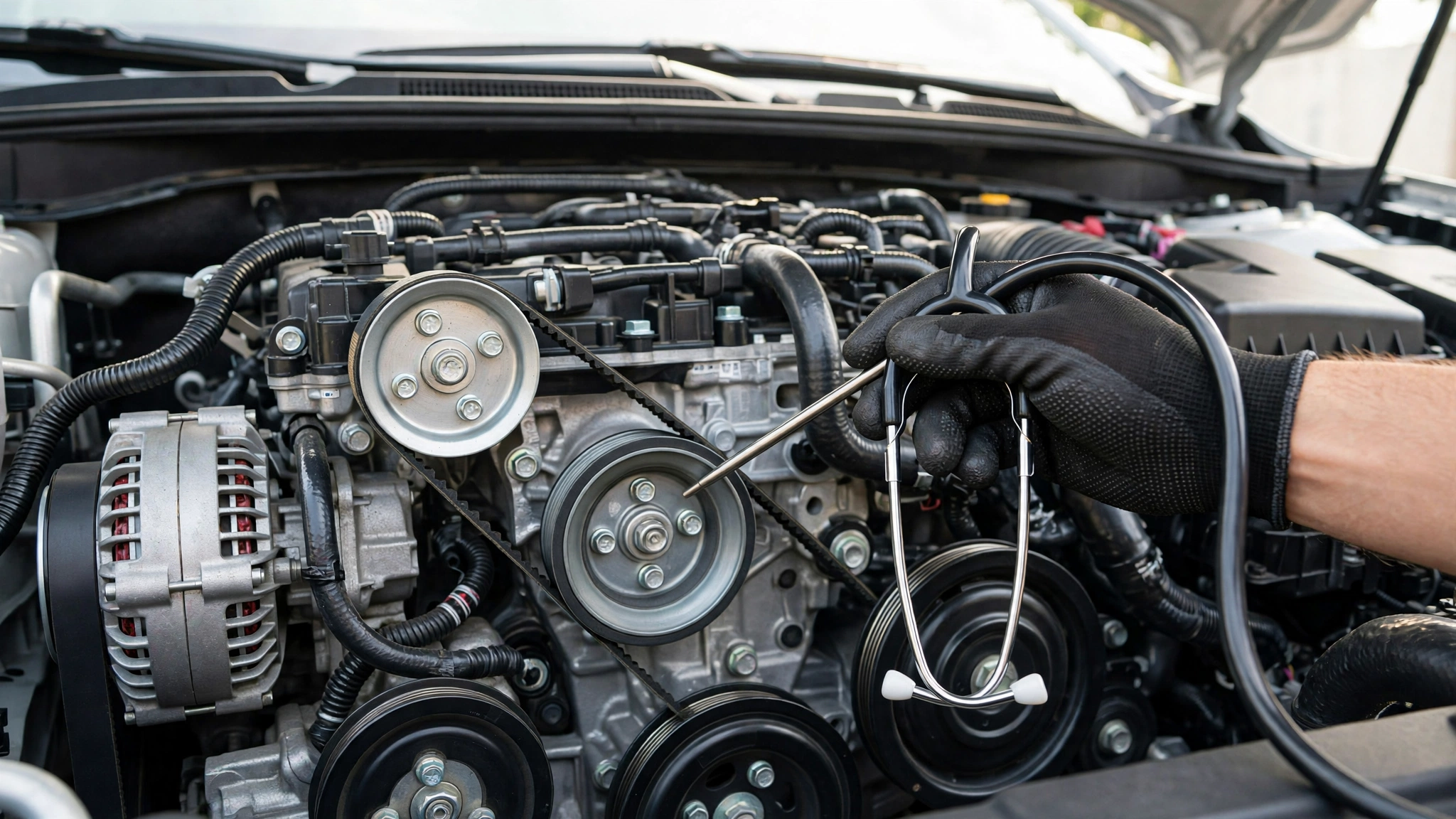
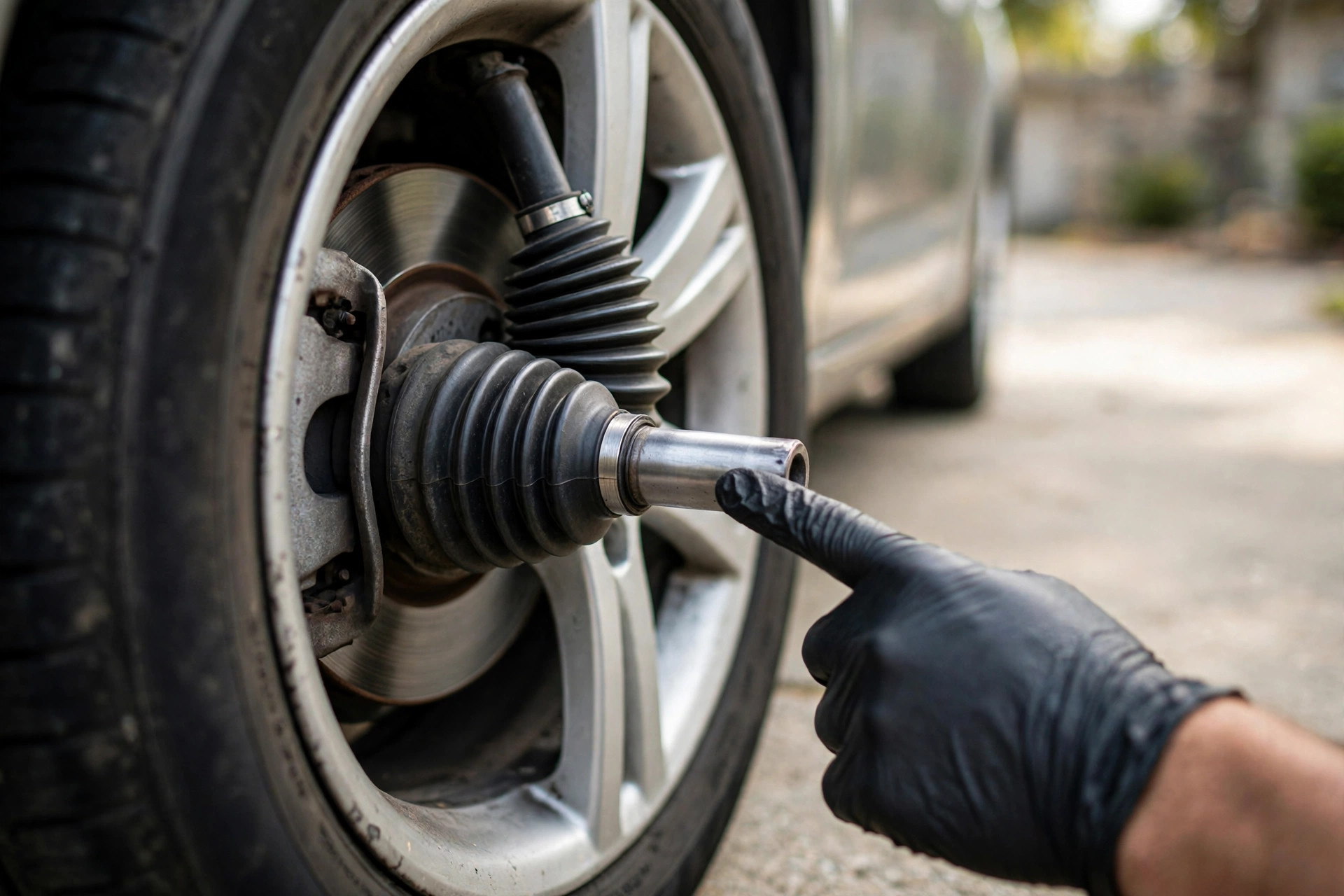
CV stands for constant velocity. On most front-wheel-drive cars — and many all-wheel-drive cars — a CV joint sits at each end of the axle shaft that carries power from the engine to a front wheel. It has one difficult job: keep sending power smoothly while the wheel turns left and right and moves up and down over bumps. Inside the joint, six steel balls roll in curved tracks, packed in thick grease and sealed inside a flexible rubber cover called a boot. As long as the grease stays in and dirt stays out, the joint turns quietly for years. When that seal fails, the joint wears out — and the wear is what you hear.
Think of it like a knee. The joint bends every time you steer, so it needs constant lubrication. Take the lubrication away and every bend starts to grind and catch. That catching, repeated once per wheel revolution, is the click.
Why the Click Only Happens When You Turn
In a straight line the outer CV joint runs almost straight, so the steel balls share the load evenly and roll smoothly, even if they are already worn. Turn the wheel sharply and the joint has to bend to its maximum angle. Now the balls ride at the very edges of their worn tracks, where the damage is worst. Each ball skips and snaps through a worn spot as the wheel turns, and you hear one click per revolution.
That is why the classic pattern is so recognisable: the click is rhythmic, it speeds up as the wheel turns faster, it is loudest at low speed with the steering at or near full lock — parking manoeuvres, U-turns, pulling out of a driveway — and it usually disappears completely on a straight road or at motorway speed. If your noise matches that pattern, the outer CV joint is the first thing to suspect.
The 5-Minute Check: Confirm It Yourself
You do not need tools or a jack for this check. You only need an empty car park, a torch, and five minutes. Do the listening test first, then the visual check.
Step 1: The figure-eight test
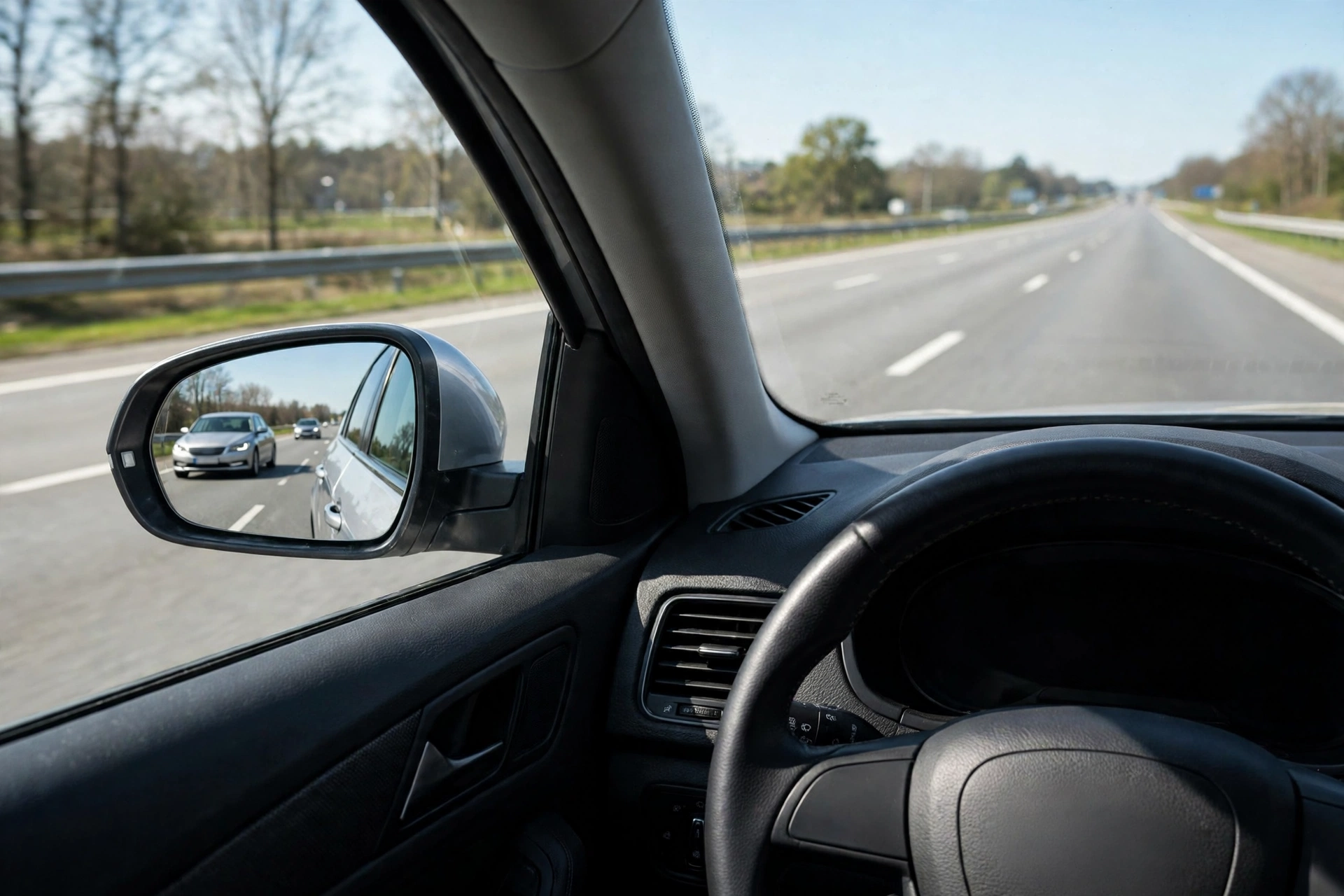
Find a safe, empty area such as an empty car park. Drive slowly in a tight circle to the left, then a tight circle to the right, and listen. Note three things: does the click speed up as the wheel turns faster, is it louder on one side than the other, and does it vanish when you straighten up? A rhythmic click that tracks wheel speed and only appears in turns points strongly to the outer CV joint. If the click is loudest when you turn left, the right front joint is under the most load and is the likely culprit; if it is loudest when you turn right, suspect the left front joint.
Step 2: Look at the boots
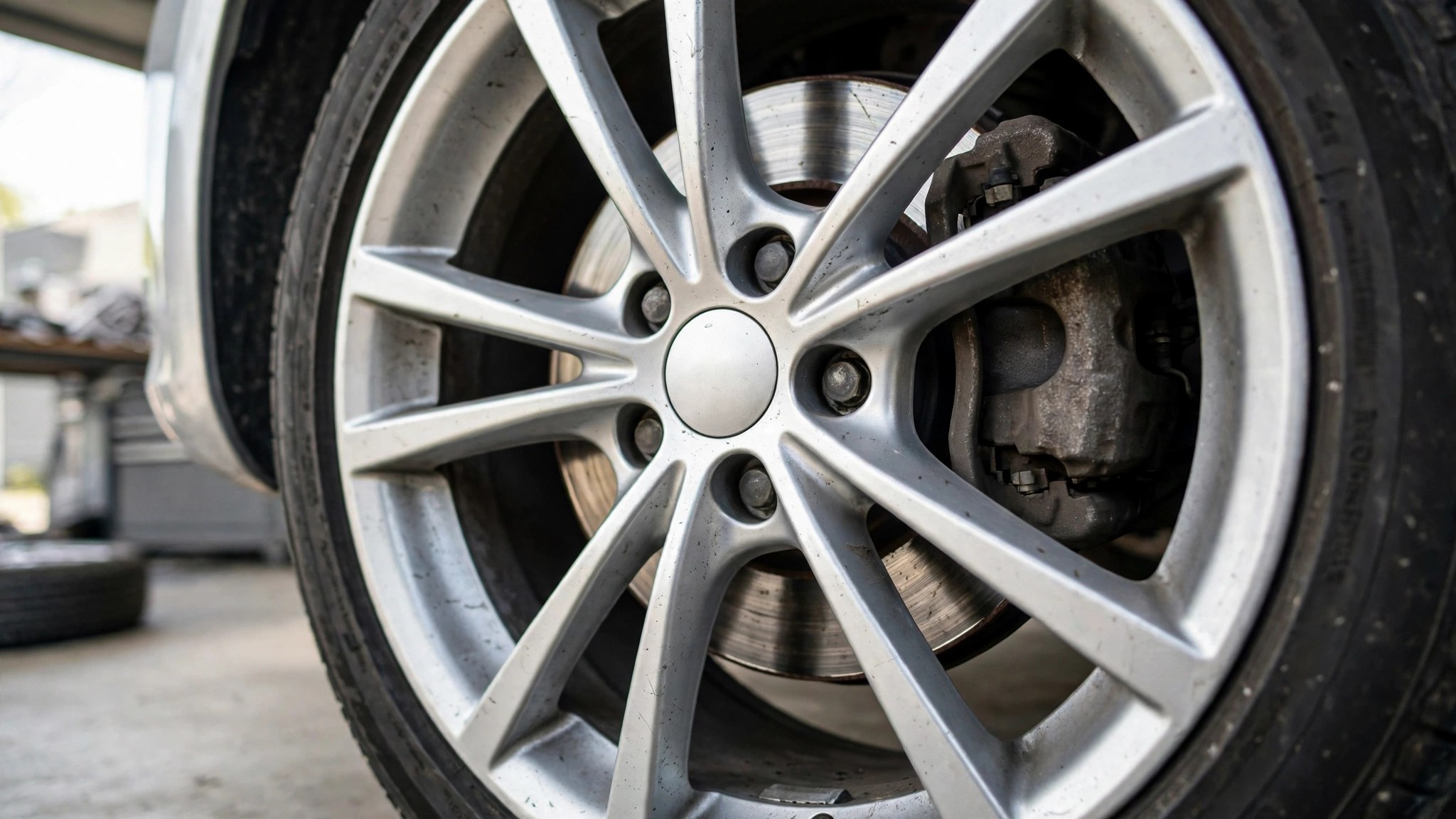
Park on level ground, switch the engine off, and apply the handbrake. Turn the steering wheel fully to one side so you can see behind the front wheel. With a torch, look at the black rubber accordion-shaped boot at the outer end of the axle shaft, right behind the wheel hub. Check both sides. A healthy boot is dry, flexible, and free of cracks. A failed boot is torn or split, or you will see dark grease flung in a ring around the inside of the wheel and the wheel arch. Grease on the inside of the wheel is the fastest visual confirmation there is: it means the boot has been leaking, the joint has been running with less grease and more grit, and wear has already started.
Step 3: The quick safety checks
Before you assume it is the CV joint, rule out two simple things. First, check that all the wheel nuts are tight — loose lug nuts can cause a rotational click and are dangerous. Second, listen carefully: does the click happen only while the car is moving, or also when you turn the steering wheel while parked? A click while parked points to the steering or suspension, not the CV joint. If the click happens while braking rather than while turning, read our guide on car makes a grinding noise when braking instead, because brake hardware is the more likely cause there.
What Else Could It Be?
The CV joint is the most common cause, but it is not the only one. Use this table to compare what you hear with the other suspects.
- Worn outer CV joint: rhythmic click or pop, only on turns, faster with wheel speed, often with grease around the wheel. Most likely cause.
- Worn inner CV joint: more of a clunk when you pull away or change gear, or a shudder when you accelerate, rather than a click in turns.
- Failing wheel bearing: usually a steady hum or growl that gets louder with speed and stays there even when you drive straight. It does not follow the turn-only pattern.
- Worn ball joint or tie-rod end: a knock or clunk over bumps or when you turn, sometimes with vague or wandering steering. This one matters for safety, because a ball joint holds the wheel in place.
- Loose brake hardware or a stone: a light ticking or clicking that may change when you brake, or a small stone trapped between the brake disc and its metal dust shield. Often easy and cheap to fix.
- Loose wheel nuts: a click tied to wheel rotation. Check the nuts first — it costs nothing and it is a safety issue.
If your noise is a hum rather than a click, or your car shakes at speed, the problem is probably different. Our guide on why your car shakes at highway speed covers the vibration side of things.
Is It Safe to Keep Driving?
Be honest with yourself here, because a worn CV joint is not a noise you can safely ignore for months. Use this table as your decision rule.
- Book a mechanic this week: the click is light, only on full lock at parking speed, the car drives normally otherwise, and there is no vibration or clunking. Drive gently, avoid full-lock turns where you can, and do not take a long trip before the appointment.
- Drive only to the mechanic, slowly: the click is loud, it happens on gentle turns as well as sharp ones, you feel a vibration through the steering wheel, or you can see a torn boot with grease everywhere. Keep your speed low and your turns gentle.
- Stop and get help: the clicking has turned into a loud clunk, the car pulls or shudders, the wheel feels loose, or you hear a bang. A CV joint that fails completely can leave a wheel with no drive — or worse, lock up. Do not drive it. Call for recovery.
One thing never helps: turning the radio up. The click will get louder over weeks as the wear grows, and the repair does not get cheaper while you wait. A torn boot caught early can sometimes be fixed with a boot kit alone. Once the joint itself is clicking, the joint is already worn, and most mechanics recommend replacing the whole axle shaft — called a half-shaft — because it is often nearly the same price as rebuilding the joint and it removes the risk of doing the job twice.
What Will the Repair Cost?
Costs vary widely by car, which is why you will see very different figures online. As a rough guide, EngineerFix quotes roughly $300 to over $1,500 for a single CV axle replacement, including parts and labour, depending on the vehicle. A boot-only repair, when the joint is still healthy, is usually much less, because it is mostly labour plus a small kit. Ask the mechanic for two numbers before you agree to anything: the price of a boot kit if the joint is still good, and the price of a full axle if it is not. That one question stops you paying for a full axle when a boot would have done, and it stops a boot repair being sold when the joint is already worn out.
When you book the repair, tell the mechanic exactly what you found: which side clicks, whether it is worse turning left or right, and whether you saw grease or a torn boot. That description saves diagnostic time, and it shows the mechanic you have done the basic checks. If you are not sure how to judge a garage, read our guide on how to find a trustworthy mechanic before you go.
Can You Prevent It?
You cannot make a CV boot last forever — rubber ages, and road debris happens. But you can catch the cheap version of this problem instead of the expensive one. Every time you check your tyres, take ten seconds to glance at the boots behind the front wheels. Look for cracks, splits, or dark grease on the wheel arch. Avoid hitting kerbs hard when parking, because a sharp kerb strike can split a boot in one go. And if a mechanic mentions a "slight boot split" during a service, do not file it away for next year — a split boot is a countdown. Fixing it while the joint is still quiet is the cheapest repair on this whole page.
Frequently Asked Questions
Why does my car click when turning left but not right?
Because the joint on the opposite side takes the most load in a turn. A click that is loudest when you turn left usually points to the right front outer CV joint, and a click loudest when you turn right usually points to the left front joint. Confirm it with the figure-eight test and the boot check before you book a repair.
Can I drive with a clicking CV joint?
For a short time and gently, yes — many drivers do. But a clicking joint is already worn, and it will not heal. It gets louder, looser, and more expensive over weeks. Book a mechanic within the week, avoid full-lock turns and long trips, and stop driving if the click becomes a clunk or you feel vibration or looseness.
Does a clicking noise when turning always mean the CV joint?
Almost always, when the click is rhythmic, tied to wheel speed, and only happens in turns. The exceptions are loose wheel nuts, loose brake hardware, a stone behind the dust shield, or a worn ball joint or tie-rod end. The five-minute check above — figure-eight test, boot look, and lug-nut check — separates the CV joint from the rest.
How long does a CV joint last?
There is no fixed mileage. A joint with an intact boot can last the life of the car. Once the boot tears, the joint can go from silent to clicking in a few hundred miles in wet or gritty conditions, because the grease escapes and dirt gets in. That is why the boot check matters more than the mileage.
Is it the CV joint if the noise happens when I turn the wheel while parked?
Probably not. A CV joint only clicks while the wheel is rotating under power. A click while parked usually comes from the steering column, a suspension mount, or a ball joint. Note exactly when the noise happens — parked or moving, turning or braking — and tell the mechanic, because that detail points straight at the cause.
Conclusion
A rhythmic click when you turn is one of the most recognisable sounds a car makes, and now you know what it usually means: a worn outer CV joint, most often because its rubber boot tore and let the grease out and the grit in. Do the five-minute check — the figure-eight test, the boot look, and the lug-nut check — and you will know which side is bad before you speak to a mechanic. Book the repair this week, drive gently until then, and stop driving if the click turns into a clunk or the wheel feels loose. Catch the next one early by glancing at the boots whenever you check your tyres: a split boot fixed while the joint is still quiet is the cheapest version of this repair, and the one every beginner should aim for.
Sources: EngineerFix — clicking sound when turning and Kwik Kar — CV axle noise.