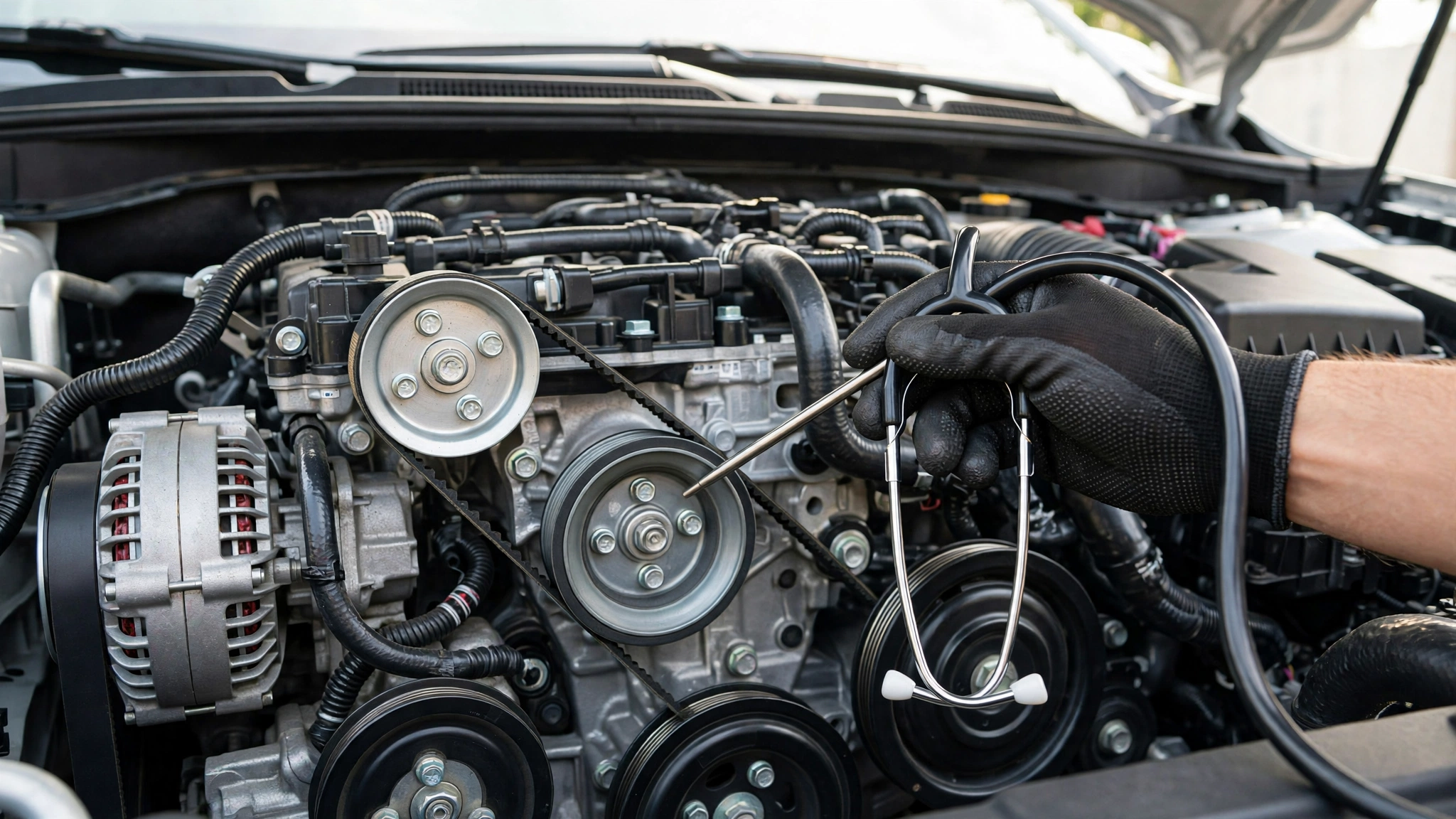
You press the gas, and your car answers with a high-pitched whine that rises as you speed up. It is one of the most common noises first-time car owners hear — and one of the most confusing, because a whine can come from half a dozen different parts. The good news: you do not need to be a mechanic to narrow it down. In most cases, a simple five-minute test tells you which system is making the noise, and whether it is a "book a visit this week" problem or a "stop driving now" problem.
This guide explains, in plain English, what a whining noise when accelerating usually means, the most common causes, a step-by-step check you can do in your driveway, and the warning signs that mean you should not keep driving.
First: figure out what the whine follows
A whine is made by something spinning. The single most useful clue is what the pitch of the whine follows — engine speed or road speed. Every cause below belongs to one of those two groups, so this one observation cuts the list of suspects in half.
The Park test (do this first). With the car parked on flat ground, the parking brake on, and the engine warm, gently press the gas while in Park (or Neutral for a manual) and listen:
- The whine rises as the engine revs, even though the car is not moving. The problem is under the hood, in something the engine spins directly: the serpentine belt, a pulley, the alternator, the power steering pump, or the water pump.
- No whine in Park, but it appears as soon as you drive and rises with road speed. The problem is in the drivetrain: the transmission, the differential, a wheel bearing, or the tires.
- The whine changes when you turn the steering wheel while parked. That points strongly at the power steering system.
Write down what you found before you call a mechanic — "it whines in Park when I rev it" is far more useful than "it makes a noise," and it helps the shop diagnose the car faster (and bill you for less guessing).
The 6 most common causes of a whining noise when accelerating
Here are the causes mechanics see most often, in rough order of how common they are for a beginner's car.
1. Low or worn-out transmission fluid
Automatic transmissions use fluid for three jobs at once: lubrication, cooling, and hydraulic pressure to shift gears. When the fluid is low — usually because of a slow leak — or old and degraded, the internal pump and gears are starved, and the transmission whines under load. This whine often shows up most clearly between about 45 and 70 mph, and it may come with rough or delayed gear changes.
Beginner check: many cars have a transmission dipstick (check your owner's manual — some newer cars do not, and the level can only be checked by a shop). If yours does, check the level with the engine warm, following the manual's instructions. Low fluid is a symptom, not just a top-up job: if it is low, something is leaking, and the leak needs finding.
How urgent: fairly urgent. A transmission that whines because it is short of fluid wears out much faster, and transmission damage gets expensive quickly once it starts. Book a mechanic within days, not weeks.
2. A CVT that is starting to wear
A CVT (continuously variable transmission) does not have fixed gears. Instead it runs a belt or chain between two pulleys, and worn bearings inside the unit can whine as the pulleys move. A faint whine from a CVT can be normal on some cars — the test is whether the noise is new, getting louder, or paired with shuddering or slipping. If your car has a CVT and the whine is new, treat it the same way as cause 1: get the fluid level and condition checked promptly.
3. The power steering pump (hydraulic steering only)
On cars with hydraulic power steering, a pump driven by the serpentine belt builds the pressure that makes the wheel easy to turn. When its fluid runs low, air gets into the system and the pump whines — the noise rises with engine speed and gets louder or changes pitch when you turn the wheel. Many newer cars use electric power steering instead, which has no pump and no fluid; if yours does, you can cross this cause off the list.
Beginner check: with the engine off and cool, find the power steering fluid reservoir (your owner's manual shows where it is) and check the level against the MIN/MAX marks. Low fluid usually means a leak somewhere in the system, so top it up only with the exact fluid type your manual specifies, and get the leak checked.
4. A worn serpentine belt, tensioner, or idler pulley
The serpentine belt is the single long belt at the front of the engine that spins the alternator, the power steering pump, the air conditioning compressor, and the water pump. As the belt ages, or as the tensioner or an idler pulley bearing wears out, it can whine under acceleration, when the load on those accessories increases. One useful detail: a belt on its own usually chirps or squeals rather than whines — a true whine from this area more often means a worn bearing in a pulley, the tensioner, or one of the accessories the belt drives.
Beginner check: with the engine off, look at the belt for cracks, fraying, or a shiny glazed surface. Never touch a running belt. If the belt looks damaged, or the whine clearly comes from the front of the engine, this is a cheap-to-moderate repair and a good first thing for a mechanic to rule out.
5. A failing alternator bearing
The alternator converts the engine's spinning motion into electricity to charge the battery and run the car's electrics. Its internal bearings spin constantly at high speed, and when they wear out they produce a steady high-pitched whine that rises with engine RPM — present in Park, and louder as you accelerate. A failing alternator bearing sometimes comes with a flickering battery light or dimming lights, but often the whine is the first sign. If the alternator fails completely, the car will run on the battery alone for a short time and then stop, so do not ignore this one.
6. The differential or a wheel bearing
These two live at the wheels, so their whine follows road speed, not engine speed — the Park test above will be silent.
- Differential (also called the final drive on a front-wheel-drive car): the last set of gears before the wheels. Its whine changes between accelerating and coasting, and it is more common on rear-wheel-drive and all-wheel-drive cars. Low gear oil or worn ring-and-pinion gears are the usual reasons.
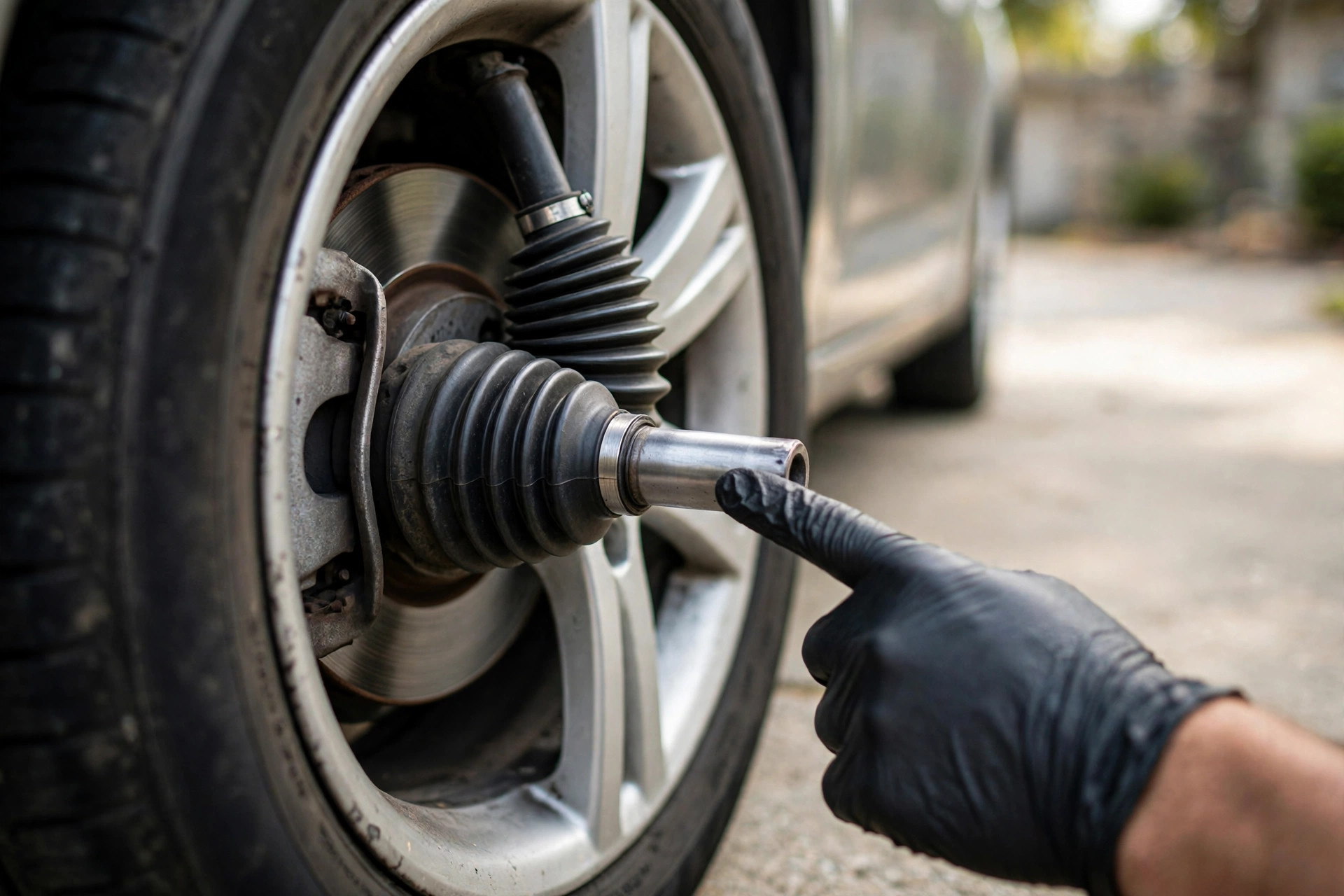
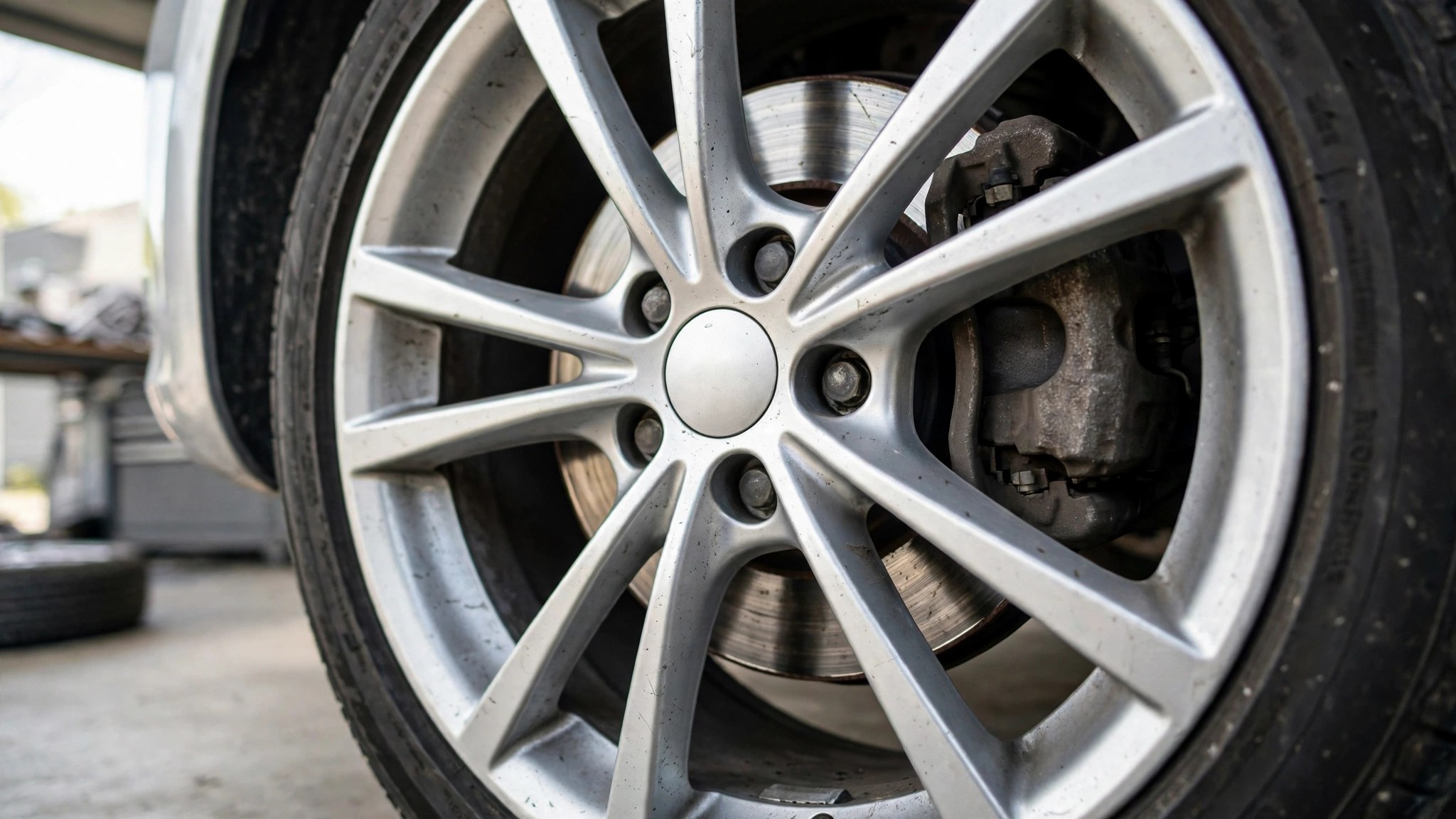
- Wheel bearing: a failing bearing hums or whines with road speed, and the sound often gets louder when you turn one way and quieter the other. Mechanics warn that bearing noise is easily mistaken for a differential or transmission problem, so do not jump to conclusions from sound alone.
- Tires: worn, cupped, or mismatched tires can also make a road-speed hum that sounds like a mechanical whine. If the noise appeared right after new tires, or after a tire rotation, mention that to your mechanic.
A note on turbocharged cars
If your car has a turbocharger, a soft whine as boost builds can be completely normal — a turbo spins at well over 100,000 RPM. What is not normal is a loud, siren-like whine that keeps getting louder with boost, or a whine that appears suddenly on a car that was quiet before. That usually means a failing turbo bearing or a boost leak, and it needs a mechanic promptly.
The 5-minute driveway check
Do these steps in order, in a safe place, and never put your hands near a running belt or fan.
- Park test: engine warm, car in Park, parking brake on. Rev the engine gently. Whine present? It is an engine-speed cause (belt, pulley, alternator, power steering pump). No whine? It is a road-speed cause (transmission, differential, bearing, tires).
- Steering test: still parked, turn the wheel slowly from side to side. If the whine changes pitch or gets louder, suspect the power steering pump or low power steering fluid.
- Speed test: on a quiet road, note when the whine appears. Only above a certain speed, rising with speed rather than RPM? That points to the drivetrain. Does it change between accelerating and coasting? That points more at the differential.
- Turning test: on a quiet road at low speed, turn left, then right. If the whine gets louder in one direction and quieter in the other, a wheel bearing is a strong suspect.
- Fluid look: with the engine off and cool, check the power steering fluid level (if your car has hydraulic steering) and look under the car for fresh drips or puddles. Note the colour and where they are — a mechanic will ask.
Take your notes with you to the shop. A mechanic who hears "whines only above 40 mph, louder turning right, silent in Park" can go straight to the right checks instead of spending your money hunting.
When to stop driving
Most whines can wait a few days for an appointment, but some mean the car should not be driven at all. Stop driving and arrange an inspection (or a tow) if the whine comes with any of these:
- The whine suddenly became very loud, or started all at once.
- The transmission slips, shudders, or refuses to shift.
- The steering suddenly feels heavy, or the wheel is hard to turn.
- A warning light is on (battery, oil, check engine, or transmission temperature).
- You see fluid leaking under the car, or the engine temperature gauge is climbing.
- The car vibrates strongly along with the noise.
When in doubt, the safe choice is the cheap choice: a tow costs far less than a transmission rebuild or an engine damaged by running without fluid.
What to tell your mechanic (and what they will do)
A good mechanic will start with the same Park test you did, then listen with a stethoscope-style probe to pinpoint which spinning part is noisy, and check fluid levels and condition before opening anything. Expect them to check the transmission fluid, the power steering fluid, the belt and pulleys, and — if the noise is road-speed related — to take the car for a road test with you in it, so you can point out exactly when the whine appears.
Before approving any work, ask for a written estimate and ask what happens if the first fix does not stop the noise. If you are still looking for a shop you can trust, read our guide on how to find a trustworthy mechanic — it covers the small test job that tells you whether a shop is honest, and the red flags to walk away from.
How much does it cost to fix?
Honestly: it depends entirely on which part is whining. A worn belt or a pulley bearing is usually one of the cheaper repairs on this list; a power steering pump or an alternator costs more; transmission or differential work is the most expensive, which is exactly why catching a whine early matters — the same noise that costs a little today can cost a lot if the part is left to fail completely. Never approve a repair on a verbal price alone: get the estimate in writing, with parts and labour listed separately.
Can you keep driving with a whining noise?
Sometimes, for a short while — a mild belt whine with no warning lights and no change in how the car drives is not an emergency. But a whine is a wear signal, not a quirk: the part making it is degrading, and it will not get better on its own. The practical rule is simple: if the noise is new, getting louder, or paired with any change in shifting, steering, or temperature, get it checked within days. If none of those apply, book the next available appointment and avoid long highway trips until then.
Frequently asked questions
Is a whining noise when accelerating dangerous?
It can be. A mild whine from a worn belt is usually not an emergency, but a whine paired with slipping gears, heavy steering, a warning light, or leaking fluid means something important is failing — stop driving and get it inspected.
Why does my car only whine when I accelerate, not at idle?
Because the faulty part only works hard under load. A transmission pump, a CVT, a differential, or a wheel bearing spins faster and carries more load as you accelerate, so the whine appears — or gets louder — when you press the gas, and fades when you coast.
Can low transmission fluid cause a whining noise?
Yes — it is one of the most common causes. Low or degraded fluid starves the transmission pump and gears, producing a whine that often shows up most clearly at highway speeds. Low fluid usually means a leak, so the leak needs finding, not just a top-up.
Is it the power steering pump or the transmission?
Do the Park test: if the whine changes when you turn the steering wheel while parked, suspect the power steering pump. If the whine only appears while driving and follows road speed, suspect the transmission or drivetrain instead.
How do I know if the whine is my turbo?
A soft whine as boost builds can be normal on a turbocharged car. A loud, siren-like whine that grows with boost, or a whine that suddenly appeared on a previously quiet car, usually means a failing turbo bearing or a boost leak — get it checked promptly.
Conclusion
A whining noise when you accelerate is your car telling you that a spinning part is wearing out. The fastest way to find it is the Park test: if it whines while parked, look under the hood at the belt, pulleys, alternator, and power steering pump; if it only whines while driving, look at the transmission, differential, and wheel bearings. Do the five-minute check, write down what you found, and book a mechanic within days — sooner if the whine comes with slipping, heavy steering, a warning light, or leaking fluid. Caught early, most whines are a modest repair. Ignored, the same noise can turn into the most expensive repair on this list.
If your car is making other noises too, our symptom guides can help you tell them apart: a grinding noise when braking usually points at the brakes, a clicking noise when turning usually points at a CV joint, and a shake at highway speed has its own set of causes.
Sources: Oil and Miles — Whining Noise When Accelerating: Transmission, Belt, Bearing and EngineerFix — Why Is My Car Making a Whining Noise When Accelerating?