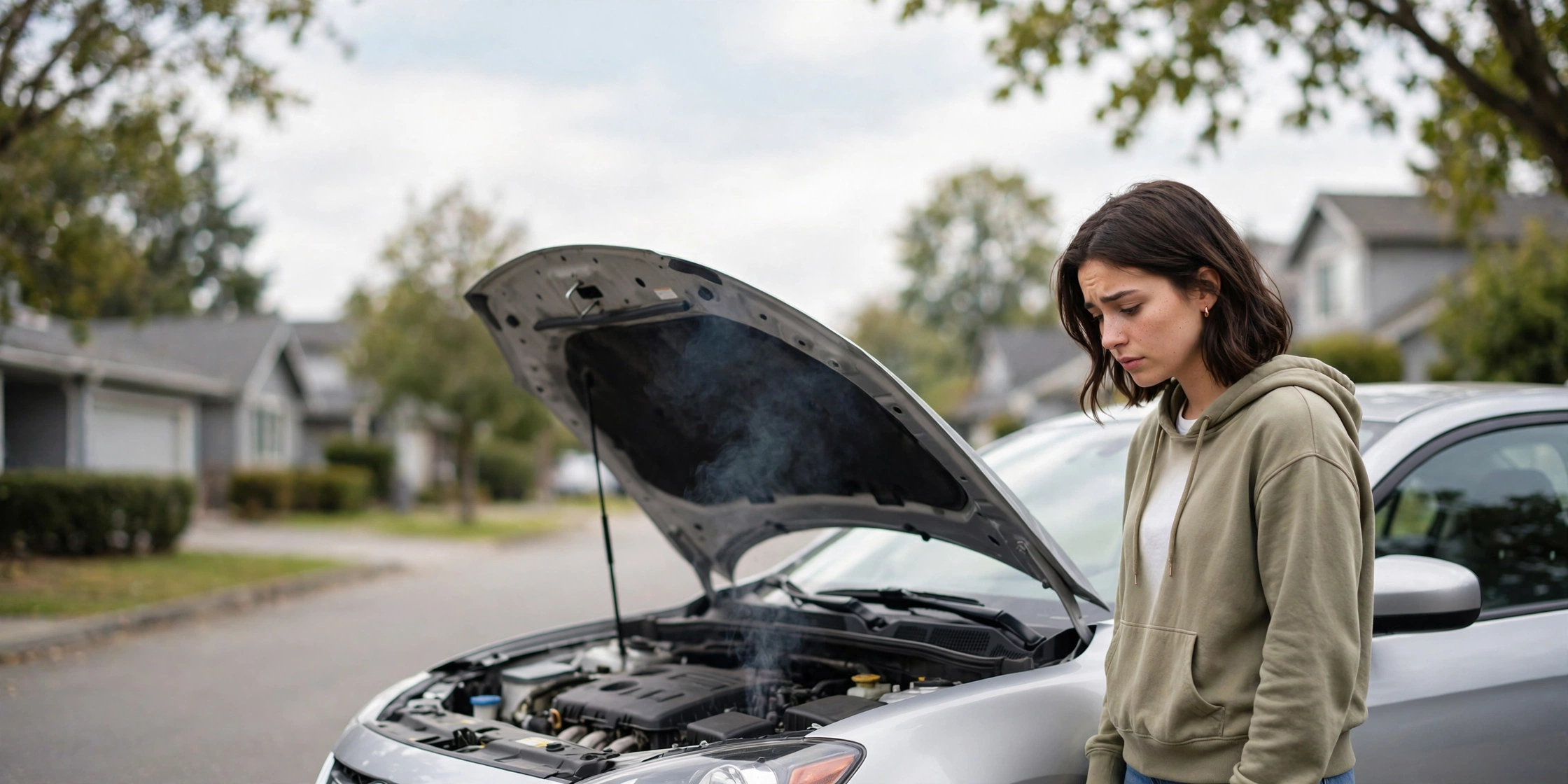
A burning smell in your car is one of those moments that makes your stomach drop. One minute you are driving normally, the next the cabin fills with a sharp, acrid smell: is something on fire?
The short answer: a burning smell is always worth taking seriously, but it is not always an emergency. Sometimes it is a plastic bag melted onto the exhaust. Sometimes it is a sign to stop driving immediately. The smell itself is your first clue.
The First 60 Seconds: What to Do Right Now
Do this first, in this order:
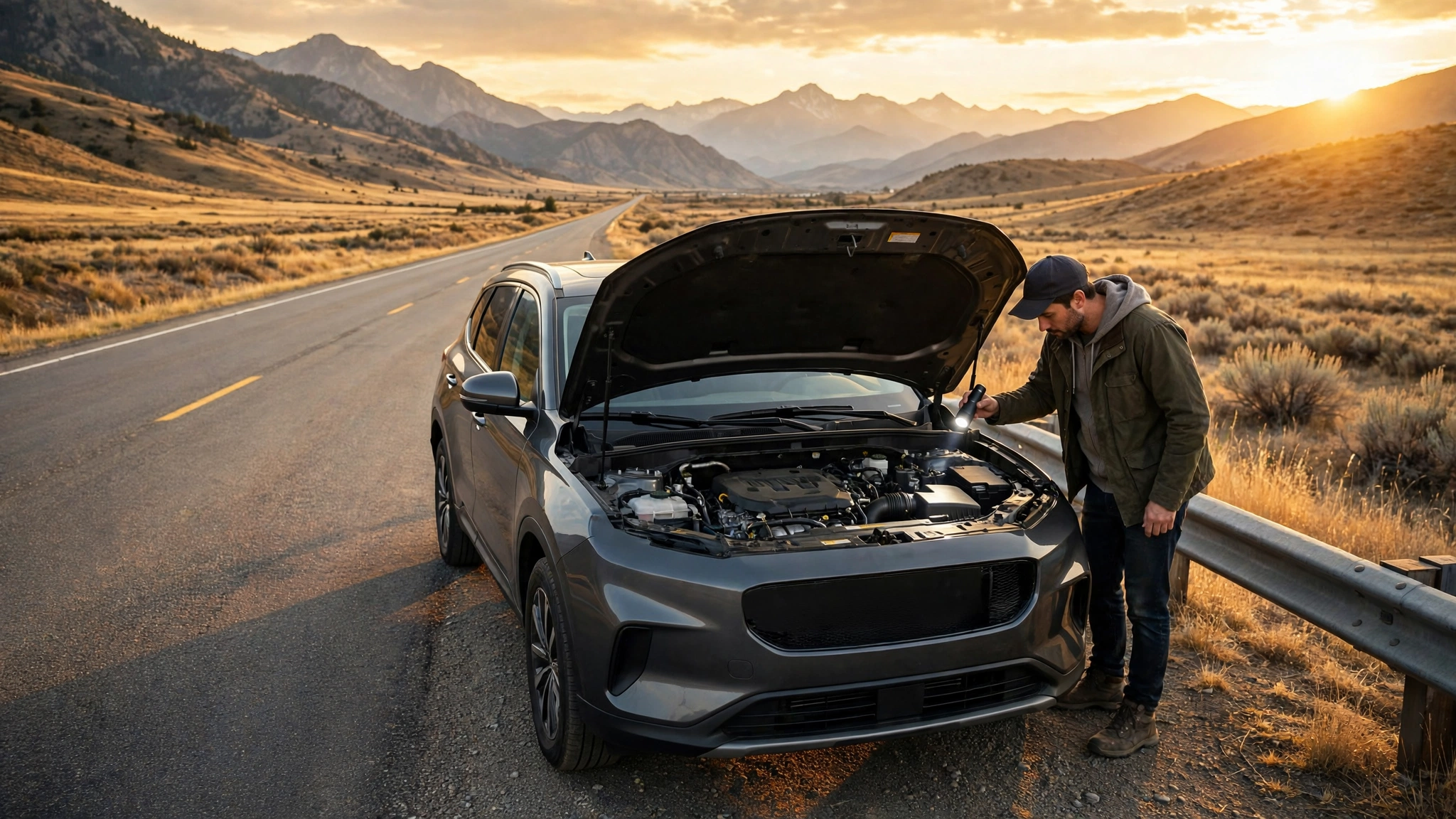
- Pull over somewhere safe. Signal, slow down smoothly, and stop on a shoulder, in a parking lot, or on a quiet side street — not over dry grass or leaves, which can catch fire from a hot exhaust.
- Turn the engine off. This cuts power to overheating systems.
- Look for smoke or flames — from a distance. If you see smoke or flames, get everyone out, move well away from traffic, and call your local emergency number. Do not open the hood: a rush of air can make flames flare up.
- If there is no smoke, let the car cool. Wait several minutes — engine parts stay hot enough to burn skin long after you switch off.
- Do not restart the engine just to "check" whether the smell is still there. If the smell was strong or persistent, or came with a warning light, a noise, or a change in how the car drives, call roadside assistance.
Never lean into the engine bay to sniff for the source, never touch wheel rims, belts, or exhaust parts, and never crawl underneath the car at the roadside.
Stop, Drive With Caution, or Watch? A Quick Triage
Once stopped, use this table:
| What you notice | What it usually means | Your move |
|---|---|---|
| Smoke, flames, or a strong fuel smell | Fire risk or fuel leak | STOP. Everyone out, move away, call emergency services. |
| Burning plastic or electrical smell | Wiring, fuse, or blower motor fault | STOP. Do not drive on; arrange inspection or a tow. |
| Burning smell plus a warning light, noise, or loss of power or braking | Active failure | STOP. Do not drive on; call for assistance. |
| Burning rubber smell after hard braking or a long downhill stretch, fading within minutes | Overheated brakes cooling down | CAUTION. Let brakes cool fully, then drive gently. |
| A brief whiff that fades quickly | Often harmless (see below) | WATCH. Note when it happened; if it returns, get it checked. |
When in doubt, stop. A tow costs far less than an engine fire or a brake failure.
What Each Burning Smell Usually Means
The type of smell is your best clue:
Burning rubber
A sharp rubber smell usually means friction somewhere it should not be: a slipping or worn serpentine belt, overheated brakes after heavy braking or a long descent, a stuck brake caliper, or a tire rubbing after hitting a curb. In a manual, a slipping clutch smells similar, often after riding the clutch in slow traffic or on a hill start. Smell strongest near a wheel? Suspect the brakes. Smell plus squealing? Suspect the belt.
Burning oil
A heavy, smoky smell usually means engine oil leaking onto a hot engine or exhaust part and burning off — often from a worn valve cover gasket, a loose oil filter, or spilled oil from a recent change. Because oil on a hot exhaust is a genuine fire risk, get this checked the same day. See our guide on how to check your engine oil level, and never let the level drop below the minimum mark.
Burning plastic or electrical
A sharp chemical or plasticky smell is the most serious. It usually means wire insulation is melting, a fuse has blown, or an electrical component such as the blower motor behind the dashboard is overheating. If it comes through the vents when you switch the fan or heater on, suspect the blower motor or its wiring. Electrical faults can cause fires, so stop driving and arrange an inspection the same day.
Sweet, syrupy smell
A sweet smell, sometimes with mist on the inside of the windscreen, usually means a coolant leak. Coolant contains ethylene glycol, which smells sweet — and is toxic to people and pets, so never taste it and keep children and animals away from any puddle. A coolant leak can lead to overheating, so check the level in the overflow reservoir (never open a hot radiator cap) and watch the temperature gauge. See our guide on how to tell what fluid is leaking from your car.
Rotten eggs or exhaust fumes
A rotten-egg smell usually means the catalytic converter is struggling, often with poor performance or a warning light. Exhaust fumes inside the cabin are more urgent — they can mean an exhaust leak, and exhaust gas is dangerous to breathe. If you smell exhaust inside the car, open the windows, stop, and get it checked before driving again.
When a Burning Smell Is Usually Harmless
Not every burning smell means trouble:
- A plastic bag or road debris on the exhaust. A bag on the hot exhaust pipe melts and smells awful for a day or two, then burns away.
- A brand-new car. New cars often smell faintly of burning for the first few hundred miles as protective coatings burn off. It should fade quickly.
- Hard braking or a long downhill stretch. Brakes get very hot under heavy use; a brief rubbery smell as they cool is normal if it fades within minutes and the brakes feel normal.
- First heater use in autumn. Dust on the heater elements burns off the first few times you use the heater.
- Spilled oil after a service. A little oil spilled during an oil change burns off over the next day or two. If the smell lasts longer, you see smoke, or the oil level drops, go back to the shop — it will re-check its own work for free.
Trust this pattern: a harmless smell fades fast, happens once, and the car drives normally.
What to Tell Your Mechanic (So It Gets Fixed First Time)
Mechanics fix burning smells faster when you give them clues instead of just saying "it smells funny." Before you call, jot down five things: what it smells like (rubber, oil, plastic, sweet, rotten eggs); when it started (driving, braking, heater on, after a service); where you notice it (cabin, vents, a wheel, under the hood); what else happened (warning light, noise, power loss, braking change, fluid on the ground); and what changed recently.
Try this script: "My car started smelling like burning rubber yesterday after a long downhill drive. The smell is strongest near the front left wheel, the brake pedal feels normal, and there are no warning lights. Can you check the brakes and the belt?" That one paragraph saves a mechanic twenty minutes of guessing. No trusted mechanic yet? Read how to find a trustworthy mechanic before you book.
Frequently Asked Questions
Can I keep driving if my car smells like burning?
Pull over first, then decide: smoke, flames, a fuel smell, a burning plastic smell, or any warning light or change in how the car drives means stop and call for help. A brief smell that fades within minutes is usually safe to watch — but get it checked if it returns.
Why does my car smell like burning rubber after driving?
Usually a slipping or worn serpentine belt, brakes overheated after hard braking or a long descent, a stuck brake caliper, or a slipping clutch in a manual car. Debris melting on the exhaust smells similar. Strongest near one wheel? Suspect that wheel's brake.
Why does my car smell like burning when I turn the heater on?
Usually dust burning off the heater elements — it clears after a few uses. If the smell is sharp, plasticky, or does not fade, the blower motor or its wiring may be overheating; get it inspected, because electrical faults can cause fires.
Is a sweet burning smell dangerous?
A sweet, syrupy smell usually means a coolant leak. It is dangerous twice over: coolant is toxic to people and pets, and losing it can make the engine overheat. Check the reservoir level once the engine is cool and get the leak fixed promptly.
How much does it cost to fix a burning smell in a car?
There is no single answer because the cause decides the cost — from removing melted debris off the exhaust to replacing a belt, a brake caliper, or wiring. The more precisely you can describe the smell and when it happens, the faster a mechanic finds the cause, and a faster diagnosis means a smaller bill. Always get a written estimate first.
The Bottom Line
A burning smell is your car waving a flag — sometimes a small one, sometimes a red one. Your job is not to diagnose it yourself; it is to stop safely, decide whether to drive on or call for help, and give your mechanic clear clues. Never ignore a smell that keeps coming back, never mask it with an air freshener, and never keep driving with smoke, a fuel smell, or a warning light. Caught early, most burning smells are cheap fixes.
For more on what your car is trying to tell you, read our guide to identifying mystery puddles under your car and what a flashing vs solid check engine light means. The RAC's car smells guide and Firestone's guide to burning smells cover the same causes with their own urgency ratings.