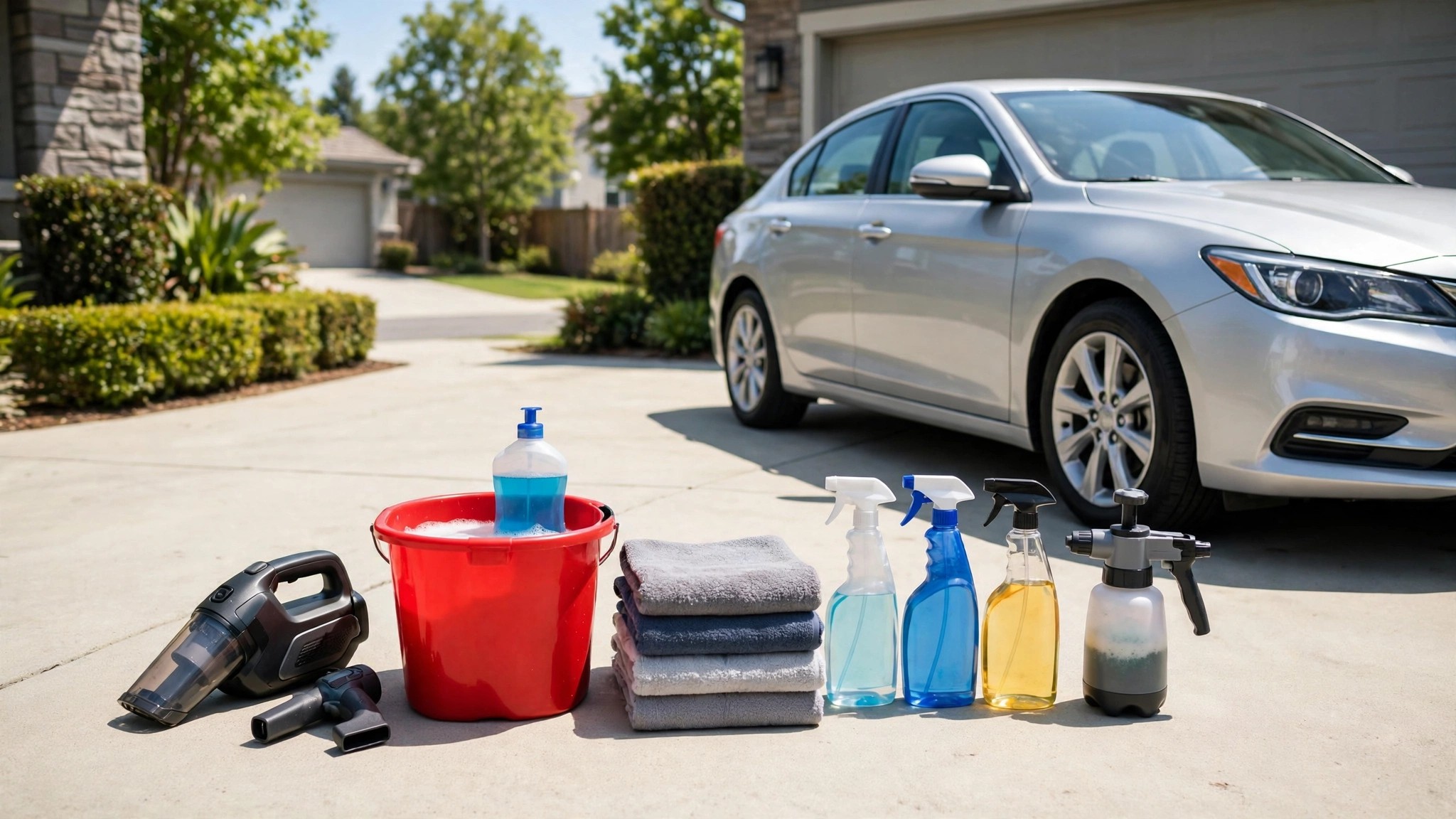
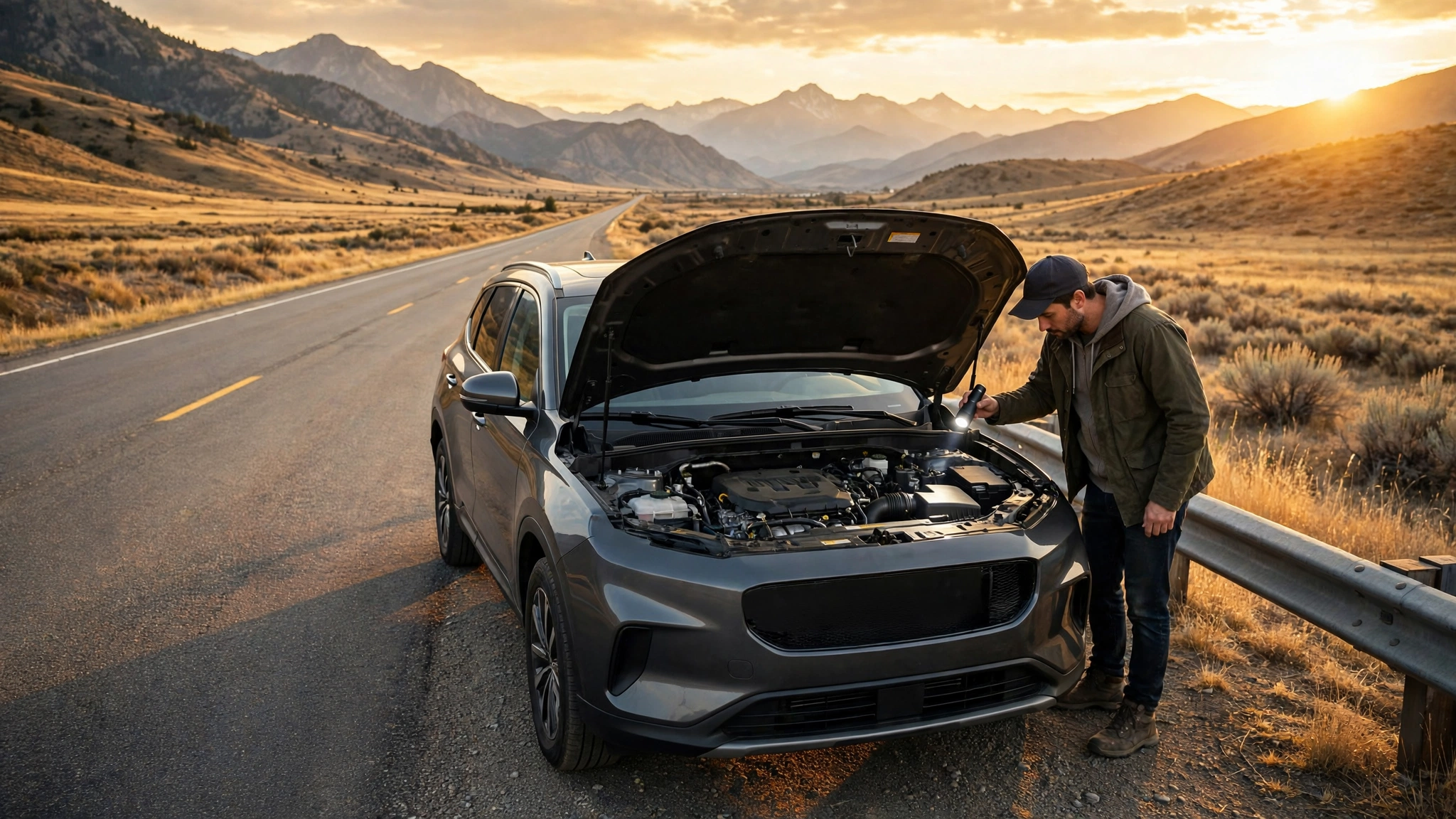
A road trip is the hardest thing most cars ever do: hours of sustained speed, heavy loads, heat, and long distances from your usual mechanic. The good news is that the problems most likely to strand you — a soft tire, a dying battery, low coolant — are also the easiest to catch before you leave.
This checklist takes about 20 minutes, needs no tools beyond a tire pressure gauge and your eyes, and is built for first-time car owners. For every check you get a simple rule: what "good" looks like, what "bad" looks like, and what to do about it. Do the night-before half tonight, the morning-of half with your keys in hand, and drive off confident.
The 20-minute plan: night before vs. morning of
Split the work across two short sessions so nothing is rushed:
- Night before (12 minutes): tires, fluids, lights, wipers, battery — everything in this guide.
- Morning of (5 minutes): tire pressures (cold reading is most accurate), the walk-around, and your emergency gear.
- If anything looks questionable the night before, you still have time to fix it or reschedule. Never do this inspection for the first time as the car is already loaded and running.
1. Tires: the number one roadside strander
Tires cause more highway breakdowns than anything else you can check yourself. Heat and sustained speed punish under-inflated or damaged tires — the U.S. National Highway Traffic Safety Administration calls underinflation a leading cause of tire failure. Check all four, plus the spare.
- Pressure (morning of, tires cold): Use a gauge on every tire including the spare. Compare the reading to the sticker on the driver's door jamb — not the number molded into the tire sidewall, which is the tire's maximum, not your car's recommended pressure. If you are more than 2–3 PSI below the sticker, inflate before you leave. For the full routine, see how to check your tire pressure.
- Tread depth: Stick a coin into the tread grooves (the classic coin test). If the tread doesn't reach the top of Lincoln's head on a U.S. penny — or the tread looks shallower than about 2/32 of an inch — the tire is too worn for a long highway trip, especially in rain. Our tire tread coin test guide shows exactly what to look for.
- Visual damage: Walk around each tire and look at the sidewalls for bulges, bubbles, cuts, or cracks. Pass/fail rule: a bulge or bubble means the tire's internal structure is damaged — do not drive on it; replace it before the trip.
- Uneven wear or vibration at speed hints at alignment or balance trouble worth a shop visit before you go, not during.
2. Fluids: the five-minute underhood round
Pop the hood with the engine cool (morning is ideal). You are not doing maintenance — you are spotting low levels and leaks before they become a tow.
- Engine oil: Pull the dipstick, wipe it, reinsert it fully, then pull it again. The film should sit between the MIN and MAX marks and look amber to dark brown — not gritty and not milky. Milky or foamy oil can mean coolant contamination: see a mechanic before driving far.
- Coolant: Check the translucent overflow reservoir (never open the radiator cap when the engine is warm). Level should sit between the MIN and MAX lines. If it is low or you see crusty colored residue around hoses, read our guide on checking your coolant level before topping up.
- Brake fluid: Find the small reservoir on the driver's side of the firewall; the level must be between MIN and MAX. Low brake fluid is not a "top it up and go" situation — it often means worn pads or a leak, so get brakes inspected first. See how to check and top up brake fluid for the safe procedure.
- Windshield washer fluid: Fill it to the top. On a 500-mile day, bugs and road film will eat through a half-empty reservoir by lunch.
3. Lights, wipers and visibility
You will be driving at dawn, at dusk, and probably in rain. Five minutes here pays off all trip.
- Light walk-around: With a helper (or using reflections in a shop window), test headlights, high beams, brake lights, turn signals, hazards, and reverse lights. One working bulb out is a ticket risk; all rear lights out is a safety risk. Our 5-minute light check walks through the whole sequence.
- Wipers: Run the washers. If blades streak, chatter, or leave wet arcs, replace them now — a $15 pair beats a rainstorm you can't see through. Here is how to swap wiper blades yourself in minutes.
- Glass: Clean the inside of the windshield too; interior film causes most of the glare people blame on oncoming headlights.
4. Battery: it fails on the hottest day, not the coldest
Batteries usually die without a polite warning, and road trips add heat, vibration, and heavy accessory use (phone chargers, fans, headlights). Before you leave:
- Age: Find the date sticker on the battery. If it is 4–5 years old and you are heading far from home, a free load test at an auto parts store is cheap insurance.
- Terminals: Look for white, green, or blue crusty buildup on the battery posts. Corrosion resists starting — clean it now using our corroded battery terminal guide, and make sure the cable clamps are tight.
- Slow cranking: If the engine turns over sluggishly on a normal morning, the battery is telling you its time is near. Don't find out at a rest stop. Read how long car batteries last to know what to expect.
5. Brakes and steering feel: the test drive that matters
Take a slow drive around the block before you load the car:
- Pedal feel: The brake pedal should feel firm and stop the car in a straight line. A spongy pedal, a pedal that sinks, or grinding/squealing noises mean the trip waits until a mechanic has looked at it — see what a spongy brake pedal means.
- Noises and vibration: Note any new squeal, grind, or pull to one side. Our guide to telling when brake pads need replacing explains the warning sounds.
- Steering: The wheel should track straight on a flat road with your hands light on it. A strong pull is an alignment or tire issue — fixable, but not a "drive 400 miles and hope" situation.
6. A 60-second look for leaks and worn belts
With a flashlight, glance under the hood: squeeze the big radiator hoses (they should feel firm, not mushy or cracked), and look for any fresh wet spots or colored drips under the engine. A small puddle where you park deserves a 30-second ID before a long drive — our fluid-leak-by-color guide tells you whether it is water from the AC (harmless) or something that should delay the trip.
7. What to pack: the emergency gear worth its space
Even a perfect car can meet a nail or a dead phone battery. Pack: a charged phone + car charger, the spare tire (checked), jack and lug wrench, tire pressure gauge, jumper cables or a portable jump starter, a flashlight, drinking water, a basic first-aid kit, and your roadside-assistance number saved in your phone — not just on a card in the glove box. Our full emergency kit guide for first-time drivers has the complete list with reasons for each item.
Your printable final checklist
Night before: tire tread + visual damage, all fluids, lights walk-around, wipers + washer fluid, battery terminals + age, brake/steering test drive, underhood leak look, pack emergency gear.
Morning of: cold tire pressures (all five tires), quick walk-around for new leaks or flat spots, confirm documents, phone charger, and spare key.
Red light vs. yellow light — what to do when something fails:
- RED LIGHT (fix or delay the trip): sidewall bulge, grinding brakes, spongy pedal, coolant leak, milky oil, battery that barely cranks, any dashboard warning light you don't understand.
- YELLOW LIGHT (fix today, drive tomorrow): one tire slightly low, washer fluid empty, one wiper streaking, minor corrosion on a battery terminal, a burned-out turn signal bulb.
- When in doubt, call a shop before you call the highway. A $30 inspection beats a $300 tow plus a ruined first day of vacation. For authoritative trip-prep reading, see NHTSA's summer driving and road-trip tips.
Frequently asked questions
How far in advance should I do a pre-road-trip inspection?
Do the full check 1–3 days before you leave, not the morning of. That gives you time to buy a bulb, inflate tires, or visit a shop if you find a red-light problem. The morning-of pass is just pressures, a walk-around, and loading.
Do I need a mechanic to inspect my car before a road trip?
Not for this checklist — it is designed for beginners with a tire gauge and a flashlight. But if anything fails a red-light rule (brake noises, leaks, bulging tire, warning lights), have a mechanic look at it before you drive. That call is part of the checklist, not a failure of it.
What should I do if the tire pressure light comes on during the trip?
Don't panic, but don't ignore it either. Pull over safely when you can, check the tires visually for a flat, and add air at the next gas station to the door-jamb pressure. If the same tire keeps losing air, have it checked at a tire shop — you may have a slow puncture.
Can I check tire pressure at a gas station air pump?
Yes, but read it with your own gauge, not the pump's display, which is often inaccurate. If you have driven more than a mile or two, the tires are warm and the reading will run a couple of PSI high — that's normal; still inflate to the sticker number and recheck cold in the morning.
How do I know if my car is too old for a long road trip?
Age alone doesn't disqualify a car — condition does. High-mileage cars just deserve extra attention to the cooling system (hoses, coolant level, fan operation) and belts. If your car has been reliable in daily use, passes every check above, and has no warning lights, it is as ready as a new one. If it has recurring overheating, stalling, or brake issues in daily driving, fix those first.
Conclusion
Twenty minutes in your driveway is the cheapest travel insurance you will ever buy. Work this checklist in order — tires first, then fluids, lights, battery, brakes, a leak check, and your emergency gear — and use the red-light/yellow-light rules honestly. Most trips go perfectly; this is how you make sure yours is one of them. Safe travels, and check back with FirstCarCare before your next adventure.