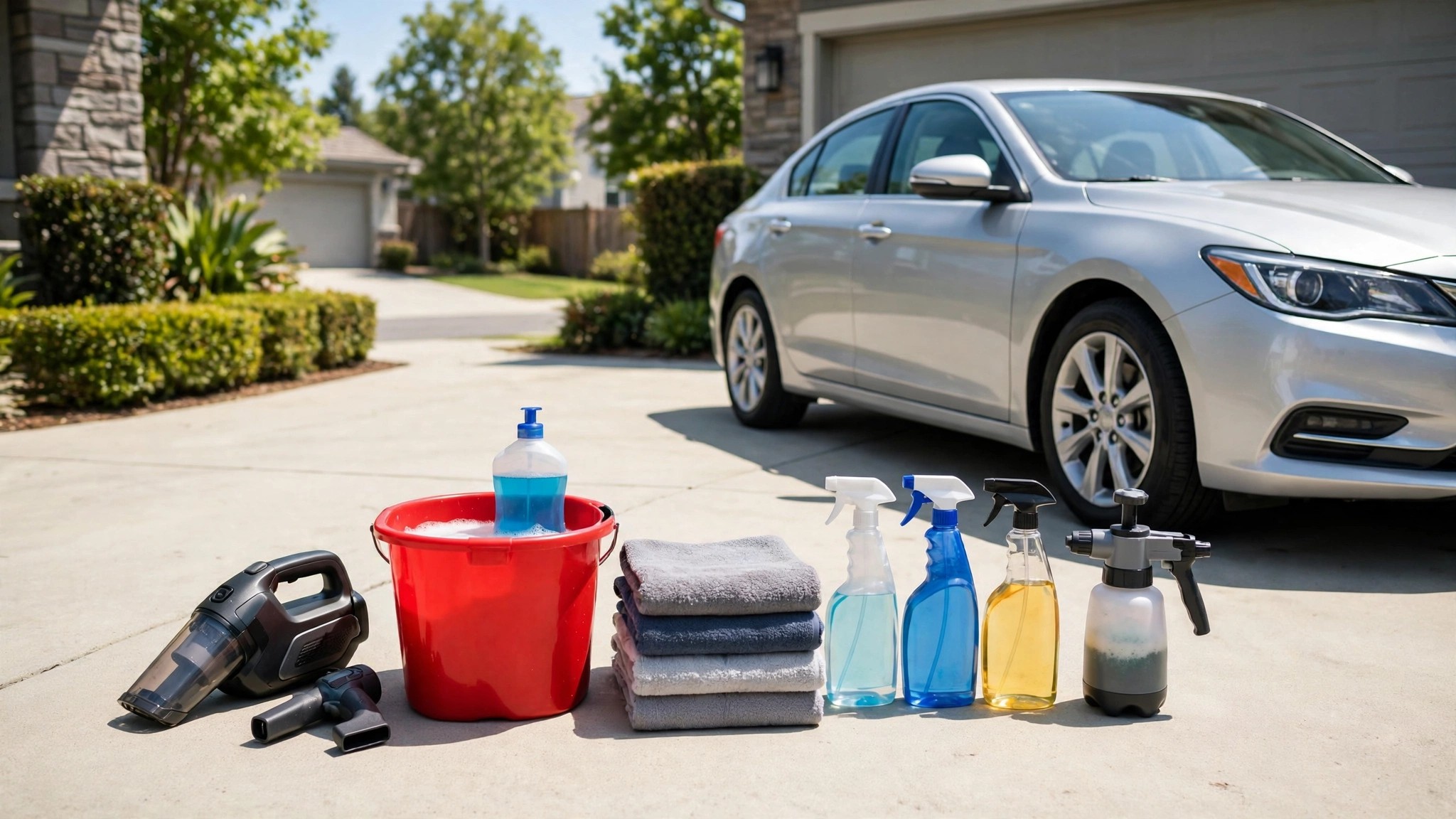
Streaks on a windshield are not a small annoyance. They catch the low sun on your drive home, they blur oncoming headlights at night, and they make a clean car look dirty from the driver's seat. Stoner Invisible Glass 92164 is the bottle detailers and forum regulars reach for first when streaks are the problem — but does a single glass cleaner really live up to a name like "Invisible Glass"? This review looks at the exact product — the 92164 22 oz trigger spray, sold as a 2-pack — in plain English, for a first-time car owner. No testing claims, no invented ratings: every result below comes from independent roundups and verified buyer feedback, linked at the end.
Disclosure: This post contains affiliate links. If you buy through them, FirstCarCare may earn a small commission at no extra cost to you. It never changes what we recommend — and we never print prices, because they change. Check the current price on Amazon before you buy.
The short answer
Yes — for most beginners, Invisible Glass 92164 is the easiest way to get a genuinely streak-free windshield. In CarCareTotal's 2026 hands-on test of seven glass cleaners, the 92164-2PK finished first overall, with the highest marks for streak-free results on interior and exterior glass, leaving zero residue even when applied in direct sunlight. MyAutoReview scored it 8.5 out of 10 and made it their number-one editorial pick. The catch is technique: the formula dries fast, so you have to wipe quickly and buff with a second dry towel — otherwise you will still see streaks, and the bottle will get the blame for a towel problem.
What the 92164 actually is
Stoner Inc. is an American company founded in 1942, and Invisible Glass is its best-known product. The 92164 is the 22 oz trigger-spray version, and the 2-pack gives you two bottles. The formula is ammonia-free, unscented, and contains no soaps or dyes — the three things that usually leave a film behind on glass. Stoner's ClearDry formula is designed to evaporate completely instead of drying into a haze, which is the whole point: a glass cleaner that leaves nothing on the glass at all.
That matters more than it sounds. Interior glass collects a thin, greasy film from dashboard plastics. Exterior glass collects road film, bug splatter, fingerprints and salt. A household glass cleaner often just moves that film around. A cleaner with no residue to leave behind cannot streak — as long as you remove the dirt itself, which is where your towel comes in.
Which Invisible Glass format should you buy?
"Invisible Glass" is a family, not one bottle, and beginners often buy the wrong one. Here is the simple version:
| Format | Size | Best for | Watch out for |
|---|---|---|---|
| 92164 trigger spray | 22 oz per bottle, 2-pack | Everyday cleaning, precise coverage, least overspray | Trigger needs more effort than an aerosol |
| 91164 aerosol foam | 19 oz cans, 2-pack | Heavy film and haze; foam clings to vertical glass | More overspray; costs more per use |
| Wipes | Single-use packs | Quick clean in the glovebox; no towel needed | Most expensive per clean; not for a full windshield |
| Reach & Clean tool | Handle + pivoting microfiber pad | Reaching the base of the windshield from inside | An accessory, not a cleaner — pair it with the spray |
Our pick for beginners: the 92164 trigger spray 2-pack. The spray gives you controlled coverage, the 22 oz bottle lasts through many full-vehicle cleanings, and the second bottle can live in the trunk. Buy the aerosol foam only if your glass is heavily filmed and you want the foam to do more of the work.
How to use it so it actually works (the two-towel method)
The cleaner is only half the job. The towel is the other half, and most streak complaints trace back to the towel. Follow these steps and the result is genuinely invisible glass:
- Work in the shade, on cool glass. The label directions caution against use on hot or sunny glass — the formula dries too fast and streaks. Park in shade or wait for evening.
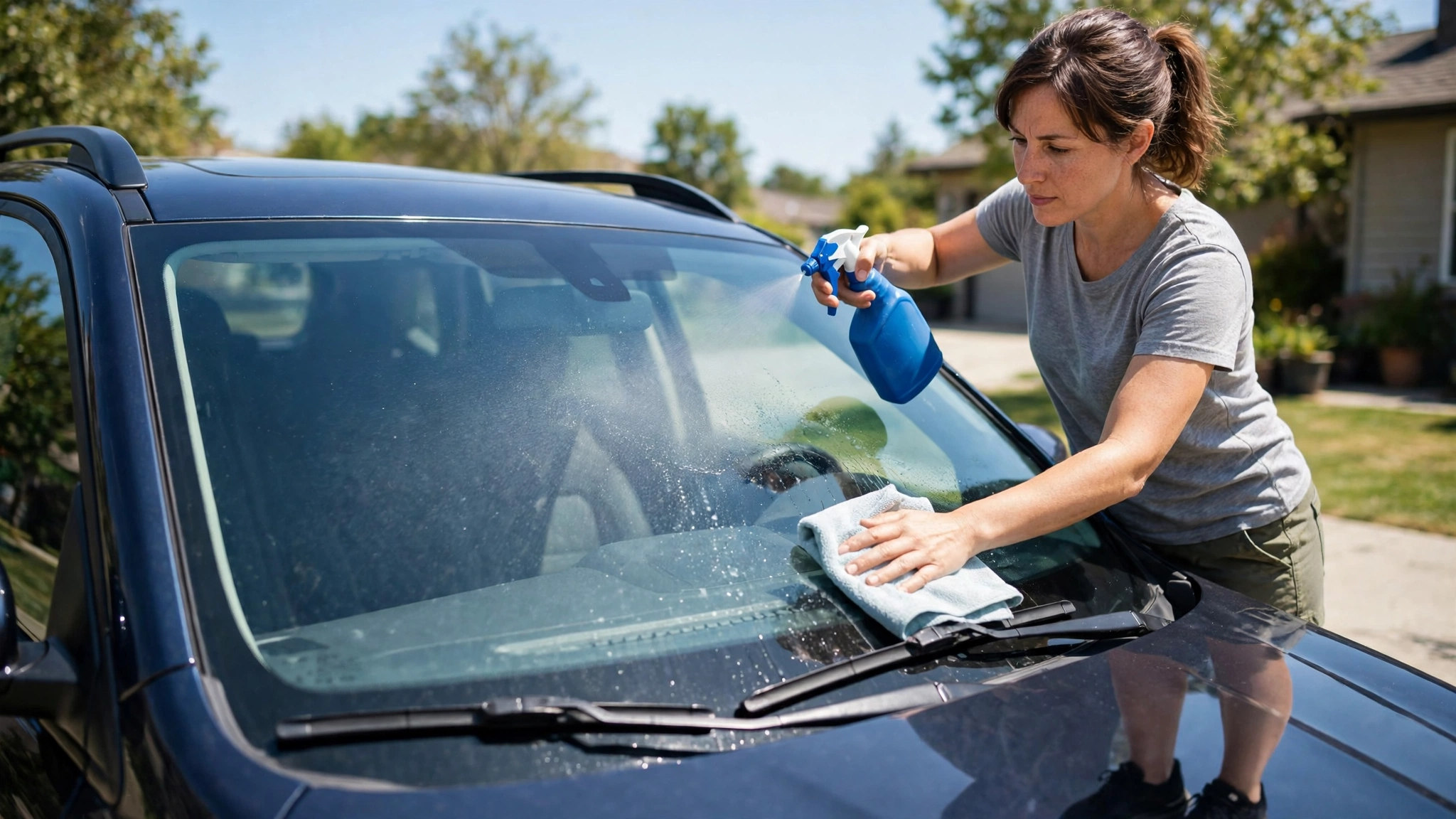
- Use two clean microfiber towels. One to wipe, one to buff dry. A dirty towel, a paper towel, or an old T-shirt will leave lint or drag old grime across the glass.
- Spray onto the cloth, not the glass, for interior windows. This keeps mist off the dashboard. For exterior glass you can spray the glass directly.
- Use less than you think. Two or three sprays per window is enough. Flooding the glass is the most common beginner mistake — excess product has to go somewhere, and it dries as streaks.
- Wipe in straight lines, then buff. Wipe with the first towel, then immediately buff with the second dry towel before the cleaner dries. Do the inside of the windshield last, because that is where the haze lives.
- Check your work in sunlight. Step back and look at the glass from an angle in bright light. If you see haze, buff once more with the dry towel — do not add more spray.
One more beginner tip: clean the inside of the windshield with the driver's door open and the seat slid back. The base of the windshield is the hardest spot to reach, and it is also where the film is thickest. That is exactly what the Reach & Clean tool is for, if your arms are short or your windshield is steeply raked.
Where it struggles: honest cons
No product is perfect, and a review that hides the downsides is not a review. Here is what independent testers actually found wrong with the 92164:
- It dries fast. The same quick-dry formula that prevents residue also punishes slow wiping. Work one window at a time and buff immediately, or you will chase streaks.
- Thick, baked-on bug residue needs a pre-soak. CarCareTotal found it struggles slightly with extremely thick, baked-on bug splatter unless you let the cleaner sit first. For heavy bug season, soak the spot for a minute, then wipe.
- The trigger can feel flimsy. Compared with heavier-duty bottles from competing brands, the spray trigger feels light. It works fine — it just does not feel premium in the hand.
- No scent, no show. It is unscented. If you like a fresh smell after cleaning, you will not get one here — though your nose will thank you on a hot day with the windows up.
- It is a cleaner, not a coating. It removes film and leaves glass clean, but it does not add water repellency. If you want rain to bead and roll off, you need a separate treatment — see the rain-repellent guide linked below.
Is it safe for tinted windows?
Yes. This is the single most important fact for a beginner with aftermarket tint, and it is the reason Invisible Glass beats a household cleaner. Window tint is damaged by ammonia, and most household glass cleaners contain ammonia. The 92164 is ammonia-free and marketed as safe for tinted windows, and independent roundups confirm the claim.
Two cautions still apply. First, if your tint was installed within the last few days, let it fully cure before cleaning it, and spray onto the cloth rather than directly onto fresh film edges. Second, never use a cleaner with ammonia on tint — if a bottle does not say "ammonia-free" on the label, do not use it on tinted glass.
The alternatives: 4 glass cleaners from the same shelf
The 92164 is our pick, but it is not the only good bottle. These four are all live in our Driver's Picks catalog, and each one suits a slightly different driver:
1. Stoner Invisible Glass 92164-2PK — Best overall
Rating: 4.6/5 · from 174 Target shopper ratings for the 22 oz bottle (an Amazon star figure was not independently verified for this listing)
Features: 22 oz trigger spray, 2-pack; ammonia-free and tint-safe; no soaps, dyes or scents; ClearDry formula evaporates completely; made in the USA.
Pros: Ranked #1 in CarCareTotal's 2026 test of seven glass cleaners; truly streak-free finish with no detectable residue; single pass is enough for moderate road film.
Cons: Dries fast, so you must wipe quickly; trigger feels flimsy; struggles with thick baked-on bug residue without a pre-soak.
Best for: Any beginner who wants one bottle that simply works on every window, inside and out.
2. Chemical Guys Streak-Free Glass Cleaner (CLD30016) — Best detailing-brand alternative
Rating: Top-rated by verified buyers (no per-product star figure independently verified)
Features: 16 oz streak-free glass cleaner from a detailing brand; ammonia-free formula; designed for auto glass, mirrors and screens.
Pros: Same streak-free, ammonia-free promise as the 92164; pairs naturally with the rest of a Chemical Guys wash routine.
Cons: Smaller 16 oz bottle than the 92164's 22 oz; no independently verified test score found for this exact listing.
Best for: Drivers who already buy Chemical Guys products and want their glass cleaner to match.
3. Rain-X 630018 Auto Glass Cleaner — Best if you want repellency too
Rating: Top-rated by verified buyers (no per-product star figure independently verified)
Features: 23 oz glass cleaner with water-repellent properties; cleans and helps rain bead on the windshield.
Pros: The only alternative here that adds a repellent layer while it cleans; useful if you drive in rain often.
Cons: A cleaner-plus-repellent is a compromise — it does not clean as purely as a dedicated residue-free spray, and it does not bead as long as a dedicated treatment.
Best for: Rainy-climate drivers who want one step instead of two.
4. Sprayway SW050R Glass Cleaner — Best foaming aerosol
Rating: Top-rated by verified buyers (no per-product star figure independently verified)
Features: Foaming aerosol spray; ammonia-free; clings to vertical glass instead of running off.
Pros: Foam stays where you put it, which helps on the inside of a steep windshield and on heavy haze.
Cons: Aerosol means more overspray to manage; costs more per clean than a trigger spray.
Best for: Drivers who prefer foam, or anyone fighting a thick interior haze.
5. Meguiar's D12001 Glass Cleaner Concentrate — Best value per bottle
Rating: Top-rated by verified buyers (no per-product star figure independently verified)
Features: Concentrated formula that dilutes with water; one bottle makes many bottles of ready-to-use cleaner; ammonia-free.
Pros: The cheapest per-clean option here by a wide margin; ideal if you clean glass often or run a small fleet.
Cons: You have to mix it yourself and keep a spare spray bottle; not as convenient as a ready-to-use spray for a beginner's first bottle.
Best for: Frequent cleaners and multi-car households who want the lowest cost per wash.
Quick comparison
| Product | Format | Size | Best for |
|---|---|---|---|
| Stoner Invisible Glass 92164-2PK | Trigger spray | 22 oz × 2 | Best overall streak-free clean |
| Chemical Guys Streak-Free CLD30016 | Trigger spray | 16 oz | Detailing-brand fans |
| Rain-X 630018 | Trigger spray + repellent | 23 oz | Rainy climates, one-step clean |
| Sprayway SW050R | Foaming aerosol | 19 oz | Heavy haze, foam lovers |
| Meguiar's D12001 | Concentrate | 1 gallon | Lowest cost per clean |
Verdict: who should buy it, and who should not
Buy the Stoner Invisible Glass 92164-2PK if you want the simplest answer to streaks: a residue-free, ammonia-free spray that independent testers ranked first, that is safe for tint, and that works on interior haze as well as exterior grime. It is the right first glass cleaner for a new driver, and the 2-pack means you will not run out mid-clean.
Skip it (for now) if you want water repellency as well — buy the Rain-X 630018 or a dedicated rain treatment instead — or if you clean glass every week for several cars, in which case the Meguiar's D12001 concentrate will save you far more money. And if your windshield is caked in baked-on bugs, pre-soak first, whatever bottle you buy: no glass cleaner is a bug remover.
The bottom line is the name. "Invisible Glass" is a bold claim, and on the evidence — a first-place finish in a seven-product hands-on test, an 8.5 out of 10 editorial score, and thousands of verified-buyer reviews praising the streak-free finish — it is a claim this bottle mostly earns, as long as you bring two clean microfiber towels and five unhurried minutes.
Frequently asked questions
Is Stoner Invisible Glass 92164 safe for tinted windows? Yes — the formula is ammonia-free, and ammonia is what damages window tint. The label markets it as safe for tinted windows, and independent roundups confirm the ammonia-free claim. If your tint is very new (under a few days old), wait until it has fully cured before cleaning it, and always spray onto the cloth, not directly onto fresh film edges.
Why do I still get streaks with Invisible Glass? Almost always the technique, not the cleaner. The formula dries fast, so wipe it off quickly with a clean microfiber towel, then buff with a second dry towel. Streaks also come from a dirty towel, too much product, or cleaning hot glass in direct sun. Clean the glass in the shade when it is cool, use two towels, and use less spray than you think you need.
Can I use Invisible Glass 92164 on the inside of my windshield? Yes — that is where it earns its keep. Interior glass builds up a hazy film from dashboard plastics, and this cleaner dissolves that film without leaving residue. Spray onto a microfiber cloth first (not onto the glass) so mist does not drift onto the dashboard, wipe in straight lines, then buff dry with a second cloth.
What is the difference between Invisible Glass 92164 and the 91164 aerosol? The 92164 is a 22 oz trigger spray; the 91164 is a 19 oz foaming aerosol, usually sold as a 2-pack. The foam clings longer, which helps on heavy grime and vertical glass, while the trigger spray gives more controlled coverage and less overspray. Both are ammonia-free and tint-safe. Beginners should start with the 92164 trigger spray.
How long does one 22 oz bottle last? A long time for most drivers. One bottle covers many full-vehicle cleanings because a few sprays per window is enough. The 2-pack exists because glass is the part of the car you clean most often — one bottle in the garage, one in the trunk, is a sensible setup. No exact price is printed here; check the current price on Amazon before you buy.
Keep your glass clear
Clean glass is a safety feature, not a cosmetic one — you cannot react to what you cannot see clearly. If this guide helped, read our 5 best glass cleaners for cars roundup to compare the whole category, our windshield rain repellent guide if you want water to bead off after cleaning, and how to defog your windshield quickly for the foggy-morning side of the same problem. A clean wash starts with a good soap — see best car wash soaps for beginners — and if you have ever scratched paint while cleaning, read 10 car cleaning mistakes that scratch your paint before your next wash.
Sources: CarCareTotal's 2026 hands-on test of seven glass cleaners (carcaretotal.com/best-windshield-cleaners/) and Homesteadauthority's 2026 auto window cleaner guide (homesteadauthority.com/best-auto-window-cleaner/). Test scores and buyer-feedback claims in this article are attributed to those sources; no product was tested by FirstCarCare.