You have cleaned your car windows, stepped back, and they looked great — until the sun hit them and every streak showed up. Streaky glass is not just annoying. At night, oncoming headlights scatter across that haze and cut your visibility badly, and in low winter sun a smeared windshield can hide a brake light for a second too long.
The good news: streak-free windows are not about expensive products. They come down to three things — the right cleaner, the right cloth, and a simple two-cloth technique. This guide walks you through the whole job, inside and out, in about 15 minutes.
Why Car Windows Streak in the First Place
Streaks are almost always residue left behind, not dirt you missed. The usual causes are easy to fix once you know them:
- Cleaning in direct sun or on hot glass. The cleaner evaporates before you can buff it off, leaving its own residue baked onto the glass.
- Too much product. A flooded window leaves a film no matter how hard you wipe. Less cleaner works better.
- The wrong cloth. Paper towels shed lint and push residue around. Old, dirty, or fabric-softener-washed microfiber cloths smear instead of lifting.
- Spraying cleaner directly on interior glass. Overspray lands on the dashboard and vents, then the car's ventilation system slowly deposits that film back onto the inside of the windshield.
- Interior haze. The inside of your windshield collects an oily film from plastics slowly releasing gases (called outgassing), plus skin oils and dust. This film is the main cause of that milky glare you see at night.
What You Need
Keep it simple — you probably own most of this already:
- An ammonia-free glass cleaner (or a 50/50 mix of white vinegar and distilled water in a spray bottle). Ammonia-free matters most if your windows are tinted, because ammonia can damage tint film over time.
- Two clean microfiber cloths — one for cleaning, one for buffing dry. Use a flat-weave or glass-specific microfiber if you have one; plush towels can leave lint. Wash microfiber separately, with no fabric softener, so it stays absorbent.
- Distilled water if your tap water is hard. Minerals in tap water dry into the white spots and streaks people often blame on the cleaner.
- A small step stool or a glass-cleaning wand for the far corners of the windshield — the base of the windshield is where most people give up and leave haze behind.
The Two-Cloth Method: Step by Step
This is the method professional detailers use: the second cloth removes the thin film the first cloth leaves behind. Always work in the shade or in a garage, on cool glass.
Step 1: Dust first
Wipe each window with a dry microfiber cloth before any liquid touches it. This lifts loose dust and grit so you are not grinding it across the glass.
Step 2: Clean the exterior
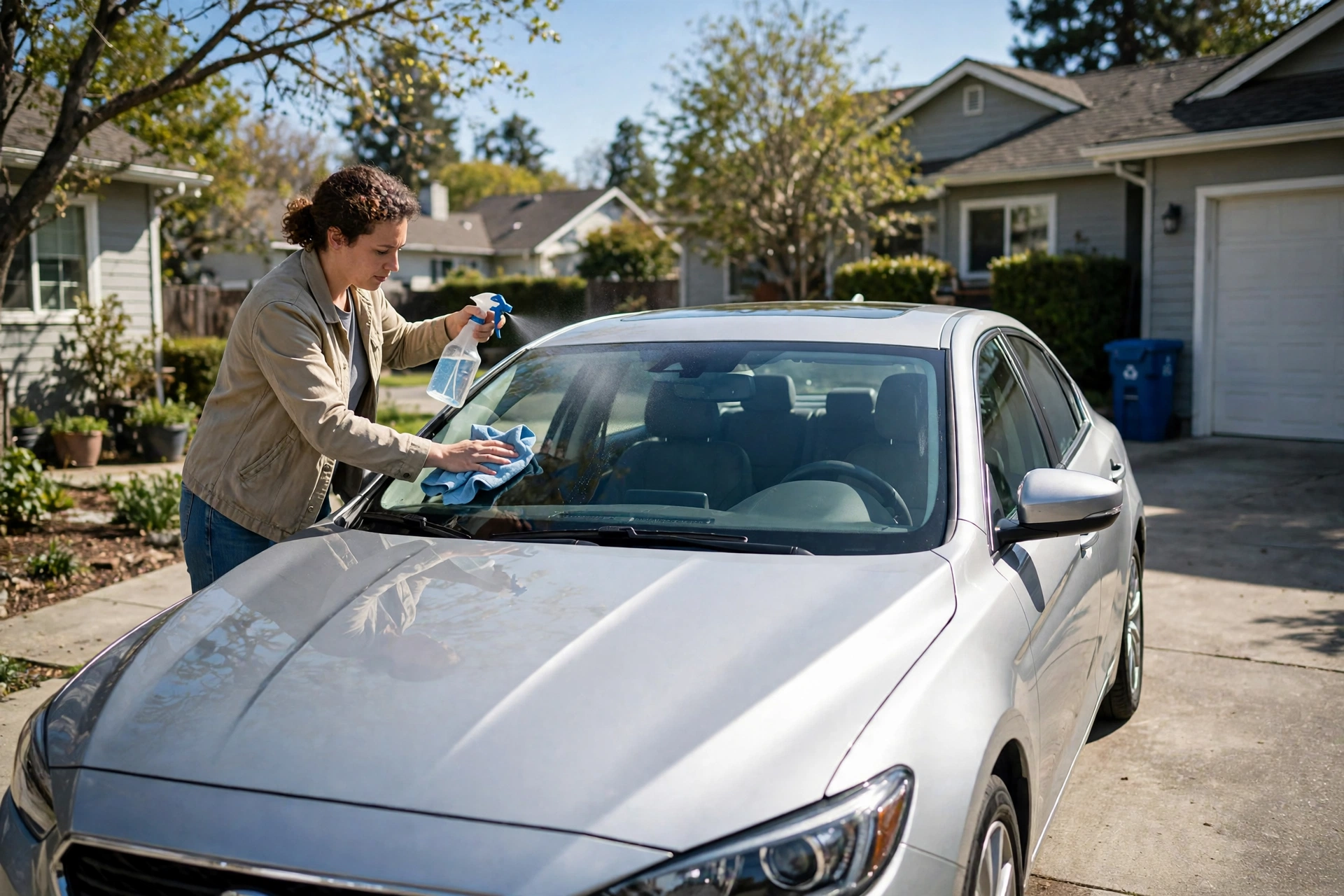
Spray cleaner onto your first cloth — not directly onto the glass — and wipe the outside of each window in straight, overlapping vertical strokes, top to bottom. Roll each side window down a couple of centimetres first so you can clean the top edge, where dirt and cleaner residue collect.
Step 3: Buff the exterior dry
Immediately follow with your second, dry cloth, using the same vertical strokes. Do not let the cleaner air-dry. If a section has already dried, mist it lightly again and buff at once.
Step 4: Clean the interior
For the inside, spray the cleaner onto the cloth only — never onto the glass. Overspray on the dashboard is hard to remove. Wipe in straight, overlapping horizontal strokes, left to right. The bottom corners of the windshield are the hardest to reach; sit in the passenger seat to reach the driver's side and vice versa.
Step 5: Buff the interior dry
Buff with a dry cloth right away. Then step back and check your work from the driver's seat, looking through the glass at an angle — that is where leftover haze shows up first.
The Inside-Outside Direction Trick
Here is the trick that makes troubleshooting easy: wipe the outside vertically and the inside horizontally (or the other way around — just keep the two directions different). When you spot a streak afterwards, its direction tells you instantly which side it is on. A vertical streak means the outside needs another pass; a horizontal one means the inside does. This inside-outside direction method is also recommended in Street Survival's car window cleaning guide.
Cleaning Tinted Windows Safely
Factory tint is inside the glass and fairly tough, but aftermarket tint film sits on the inside surface and is easy to damage. If your windows are tinted:
- Use only an ammonia-free cleaner — ammonia can discolour and bubble tint film.
- Apply cleaner sparingly and keep it away from the edges, where liquid can seep under the film and weaken the adhesive.
- Use a soft microfiber cloth only. Never use a razor blade, scraper, or abrasive pad on tinted glass.
- If you are unsure whether your tint is factory or aftermarket, treat it as aftermarket and be gentle.
Stubborn Problems and How to Fix Them
Interior haze that will not go away: The oily film on the inside windshield often needs more than glass cleaner. Wipe the glass with a cloth dampened with a 50/50 mix of isopropyl alcohol and distilled water, then follow with your normal two-cloth routine. The alcohol cuts the oil film that regular cleaner leaves behind.
Hard water spots: White mineral spots from sprinklers or hard tap water will not come off with ordinary cleaner. Dab white vinegar onto a cloth, hold it on the spot for a minute, then wipe and buff. For severe spots, a dedicated water-spot remover is worth buying — do not use anything abrasive on glass.
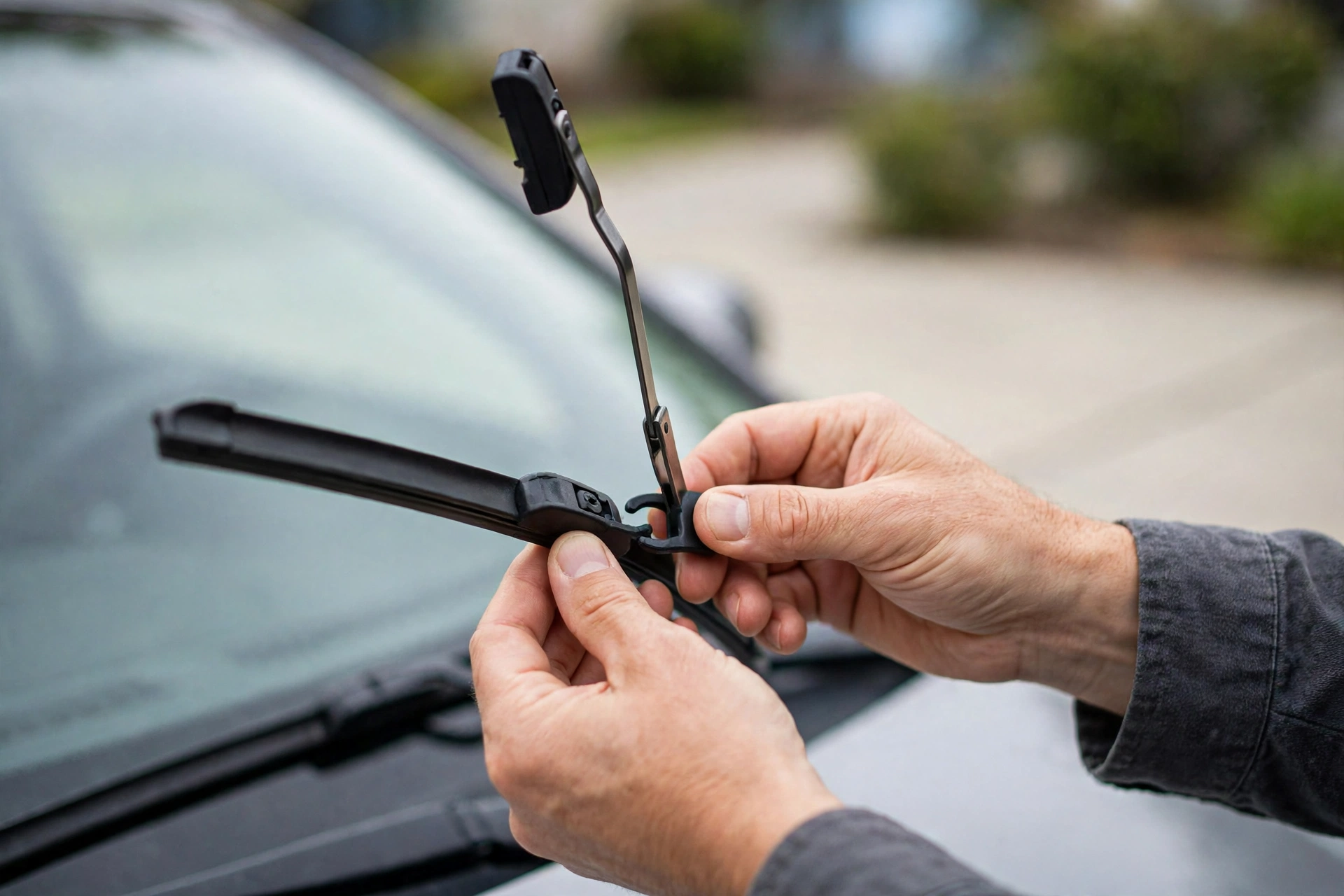
Streaks that appear only at night: This is almost always interior film. Clean the inside windshield with the alcohol method above. If your wipers are smearing instead of clearing, they may need replacing; see our guide on how to replace windshield wiper blades.
Five Mistakes That Cause Streaks
- Cleaning in hot sun. Move to shade, a garage, or early morning. Cool glass is non-negotiable.
- Using paper towels or old rags. They leave lint and push residue around. Two clean microfiber cloths cost very little and last for years.
- Spraying cleaner straight onto the glass. It runs, pools at the edges, and oversprays the dashboard. Spray the cloth instead.
- Using the same cloth for the whole car. Once a cloth is damp and dirty, it smears. Keep one cloth for cleaning and one dry cloth for buffing, and swap to a fresh cloth when it gets damp.
- Skipping the edges. Roll windows down slightly and wipe the top edge, and clean the corners of the windshield properly. Streaks love the places you cannot quite reach.
How Often Should You Clean Your Car Windows?
Clean the exterior windows every one to two weeks, or whenever you wash your car — road film builds up fast, and dirty glass makes wipers work harder. Clean the inside of the windshield at least once a month, because the oily film builds so gradually you will not notice it until a night drive shows you the glare. In winter, clean more often: road salt spray and low sun angles make clarity critical. Top up your washer fluid at the same time — here is how to refill windshield washer fluid in two minutes. Clear glass is also part of safe driving in bad weather, as our heavy rain driving guide explains. See also this step-by-step streak-free window guide.
Frequently Asked Questions
What is the best cleaner for car windows?
An ammonia-free automotive glass cleaner is the safest all-round choice, especially on tinted windows. A 50/50 mix of white vinegar and distilled water is a cheap, effective alternative that is also tint-safe.
Can I use vinegar on car windows?
Yes. White vinegar mixed 50/50 with distilled water cuts through grime and oily film without damaging glass or tint. Apply it to a microfiber cloth rather than spraying it directly on the glass, and buff dry immediately. Use distilled water, not tap water, to avoid mineral deposits.
Why do my windows still streak after cleaning?
The most common causes are cleaning in direct sunlight, using too much product, a dirty or fabric-softener-washed cloth, or wiping with paper towels. Clean in the shade, use less cleaner, switch to two fresh microfiber cloths, and buff dry at once.
How do I clean the inside of my windshield without streaks?
Spray cleaner onto a cloth, never onto the glass. Wipe in horizontal strokes, buff dry with a second cloth right away, and use the alcohol-and-water mix above if an oily haze remains. Sit in the opposite seat to reach the far corners properly.
Is it safe to use newspaper on car windows?
Old advice, not worth it today. Modern newspaper ink and paper can leave residue and fine scratches. A clean microfiber cloth does the job better and costs almost nothing.
Conclusion
Streak-free car windows come from a method, not a miracle product: work in the shade, spray the cloth instead of the glass, wipe the outside vertically and the inside horizontally, and always buff dry with a second cloth. Add a monthly interior clean to fight the oily film that causes night-time glare, and treat tinted glass gently with ammonia-free cleaner. Fifteen minutes, two cloths, and a bottle of cleaner — that is the whole job, and your next night drive will show you the difference.