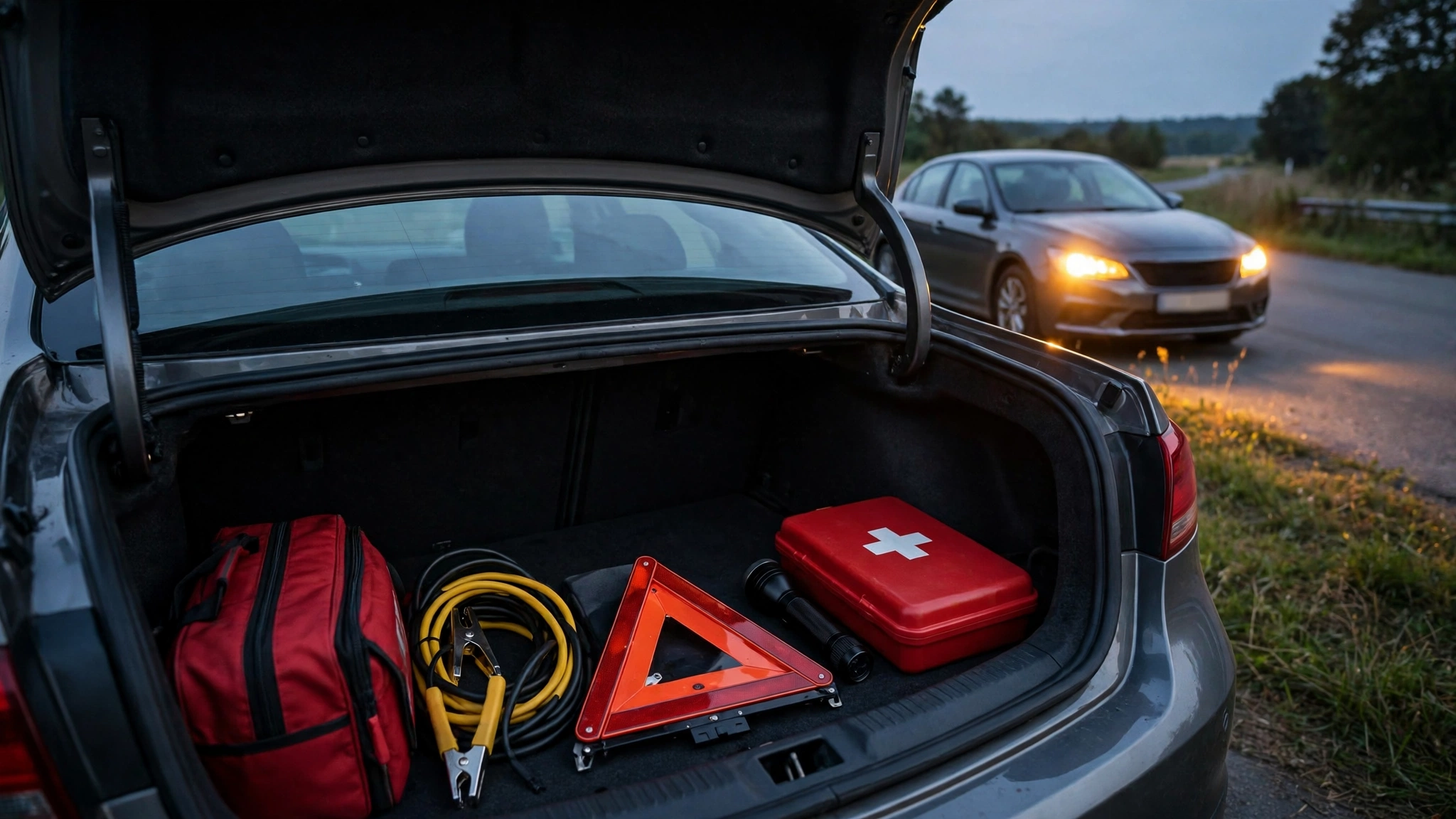
It is 9 p.m., you are on a road you barely know, and your engine will not turn over. Roadside help is forty minutes away. Now picture the same scene with one difference: a bag in your trunk with jumper cables, a flashlight, a warning triangle, and a first aid kit. That is what an emergency roadside kit buys you: a way to help yourself while you wait.
Every first-time driver should keep one. Most kits look identical in photos, so we compared the five that real buyers rate highest in 2026, checking every claim against the listing and independent roundups.
Affiliate disclosure: FirstCarCare is a participant in the Amazon Services LLC Associates Program. As an Amazon Associate, we earn from qualifying purchases made through links on this page, at no extra cost to you. We only recommend products with strong buyer ratings that we would suggest to a friend buying their first car.
Our top 3 picks at a glance
- Best Overall — EVERLIT Survival Car Emergency Kit: the only kit here with a built-in digital tire inflator, plus the deepest first aid kit.
- Best Value — LIANXIN 142-Piece Roadside Kit: the most pieces for the least money, with UL-certified cables and a real tool kit.
- Best for Winter — Vetoos Car Roadside Emergency Kit: the thickest jumper cables here (6-gauge) plus a folding survival shovel.
What a good roadside kit must cover (before you buy)
A good kit does four jobs. Fail any of them and it is a bag of clutter, not an emergency kit.
1. Get the car moving again
Two numbers matter: length and gauge. Twelve feet reaches a helper car parked nose-to-nose; eight feet can leave you short. Gauge runs backwards — a lower number means a thicker cable that carries more current. Eight-gauge is the minimum for a small car; six-gauge is better, especially for larger engines. A tire inflator is a bonus: the EVERLIT kit is the only one here with one built in.
2. Make you visible
Most roadside injuries happen because other drivers do not see a stopped car in time. A reflective warning triangle, a high-visibility vest, and a working flashlight are not optional extras — every kit here includes them. Check the flashlight takes standard batteries you can replace.
3. Treat minor injuries
A real first aid kit means bandages, antiseptic wipes, gauze, gloves, and tape — not a handful of plasters. The EVERLIT kit's 108-piece set is the deepest here; the LIANXIN kit, honestly, has no first aid kit at all — its biggest weakness. If your kit lacks one, add a small first aid pouch yourself.
4. Keep you comfortable while you wait
Help can take an hour. A mylar blanket, a rain poncho, and gloves turn a miserable wait into a bearable one. Federal guidance from Ready.gov lists exactly these items, and NHTSA's winter driving tips add a snow shovel, sand for traction, and a charged phone.
The 5 best emergency roadside kits for beginners in 2026
#1 — Best Overall
EVERLIT Survival Car Emergency Kit
- Digital tire inflator with auto shut-off and LED light — the only built-in compressor in this roundup
- 12-foot, 8-gauge jumper cables (300 amp) plus a 10,000 lb tow strap
- 108-piece first aid kit with bandages, antiseptic wipes, a CPR mask, and gloves
Pros: The most complete single purchase here. The inflator alone is worth the price — a slow leak is the most common roadside problem a beginner faces.
Cons: The heaviest kit here at around 9 pounds, and the jumper cables need a second car — there is no jump starter inside.
Best for: Most beginners, especially anyone who drives alone at night.
#2 — Best Value
LIANXIN Roadside Assistance Emergency Kit (142 Pieces)
- UL-certified jumper cables with heavy-duty alligator clips — safer than uncertified cables
- 142 pieces including a tool kit in its own hard case, snow shovel, reflective triangle, and tow rope
- Safety hammer, seatbelt cutter, emergency blanket, and raincoat
Pros: The best value here — a real tool kit and a snow shovel for less than most tool sets cost — with the largest rating base in this roundup.
Cons: No first aid kit — the one thing every beginner needs and the one thing this bag skips. The "142 pieces" count includes small items like safety pins.
Best for: Budget-conscious beginners who already have a first aid kit at home. Pair it with a small first aid pouch and it covers everything.
#3 — Best for Winter
Vetoos Car Roadside Emergency Kit
- 6-gauge jumper cables — the thickest cables in this roundup, carrying more current than the 8-gauge sets
- Folding survival shovel plus a car repair tool set for winter breakdowns
Pros: The 6-gauge cables are a real step up from the 8-gauge sets most kits include, and they matter most in cold weather.
Cons: No tire inflator and no first aid kit — add both yourself. In warm climates, the shovel is dead weight.
Best for: Drivers in cold or snowy regions, and cars with larger engines that need thicker cables to jump reliably.
#4 — Best for New Drivers
Always Prepared Premium Roadside Emergency Kit (125 Pieces)
- 125 pieces: jumper cables, tools, first aid supplies, and visibility gear in one organized bag
- 8-gauge copper jumper cables for reliable jump starts
Pros: The best-organized kit here for a new driver, and one of the most-bought kits on Amazon right now.
Cons: No tire inflator, snow shovel, or tow strap — it covers the basics and stops there.
Best for: New drivers and small-car owners who want a tidy starter kit — and parents buying a first kit for a young driver.
#5 — Best Gift Pick
Kitgo Car Emergency Kit (126 Pieces)
- 126 pieces with jumper cables, tow rope, and a full set of roadside essentials
- Sturdy carrying case with organized compartments — easy to find what you need in the dark
Pros: The best gift-format kit here: a well-organized case covering the essentials without padding.
Cons: No tire inflator, and the first aid kit is not deep enough to rely on — add a small pouch. Standard-gauge cables, so very large engines may need thicker ones.
Best for: Gift buyers, and drivers who want a neat bag they can move between cars.
Comparison table
| Kit | Jumper cables | First aid | Extra standout | Best for |
|---|---|---|---|---|
| EVERLIT Survival | 12 ft, 8-gauge | 108 pieces | Digital tire inflator | Best overall for most drivers |
| LIANXIN 142-pc | 8.2 ft, UL-certified | None — add one | Tool kit + snow shovel | Best value on a budget |
| Vetoos | 6-gauge (thickest) | None — add one | Folding survival shovel | Winter and larger engines |
| Always Prepared 125-pc | 8-gauge copper | Basic kit included | Compact, organized case | New drivers, small cars |
| Kitgo 126-pc | Standard | Basic kit included | Gift-ready organized case | Gifts and shared family cars |
What no kit includes (and what to add yourself)
Even the best pre-made kit is a starting point. Four things are worth adding, whatever kit you buy:
- A portable jump starter. Jumper cables need a second car; a jump starter does not. Our guide to the best portable jump starters for beginners covers the ones worth buying, and how to use a portable jump starter shows the safe way to connect it.
- Water and a snack. A bottle of water and a granola bar cost almost nothing and matter a lot on a long wait.
- A phone charger. A dead phone turns a breakdown into a real problem. Keep a charged power bank or car charger cable in the kit bag.
- A warm blanket. The mylar blanket in most kits is better than nothing, but a real fleece blanket is far warmer in winter.
Know the basics before you need them: our guide on how to jump-start a car safely takes five minutes and saves you from the most common beginner mistake — connecting the cables in the wrong order. Our emergency kit checklist for first-time drivers covers the complete list, kit or no kit.
Our verdict
For most first-time car owners, the EVERLIT Survival kit is the right buy: the only one with a tire inflator and a deep first aid kit, rated 4.7 stars by nearly 3,000 buyers. If budget matters most, the LIANXIN 142-piece kit gives you the most tools for the least money — just add a small first aid pouch. Cold regions: Vetoos. New drivers: Always Prepared. Gifts: Kitgo. Whichever you choose, put it in the trunk today — the kit you own is the only one that helps.
Frequently asked questions
What should be in a car emergency kit for a beginner?
Jumper cables, a flashlight, a reflective warning triangle or vest, a first aid kit, a tow rope, a tire-pressure gauge, and a blanket — the core of every kit here.
Are pre-made roadside kits worth it?
Yes, for most beginners. Buying the same items separately costs more, and a pre-made kit keeps everything in one bag. Check the cable gauge before you buy — budget kits often include thin cables.
What gauge jumper cables should a beginner get?
Eight-gauge is the minimum for a small car; six-gauge is better because it is thicker and carries more current. (Gauge numbers run backwards.)
Do emergency roadside kits include a jump starter?
Almost never. Kits include jumper cables, which need a second car. To restart alone, add a portable jump starter — see our guide to the best portable jump starters for beginners.
How often should I check my emergency kit?
Twice a year: once in spring and once before winter. Check the flashlight batteries and first aid expiry dates, and replace anything borrowed and never returned.