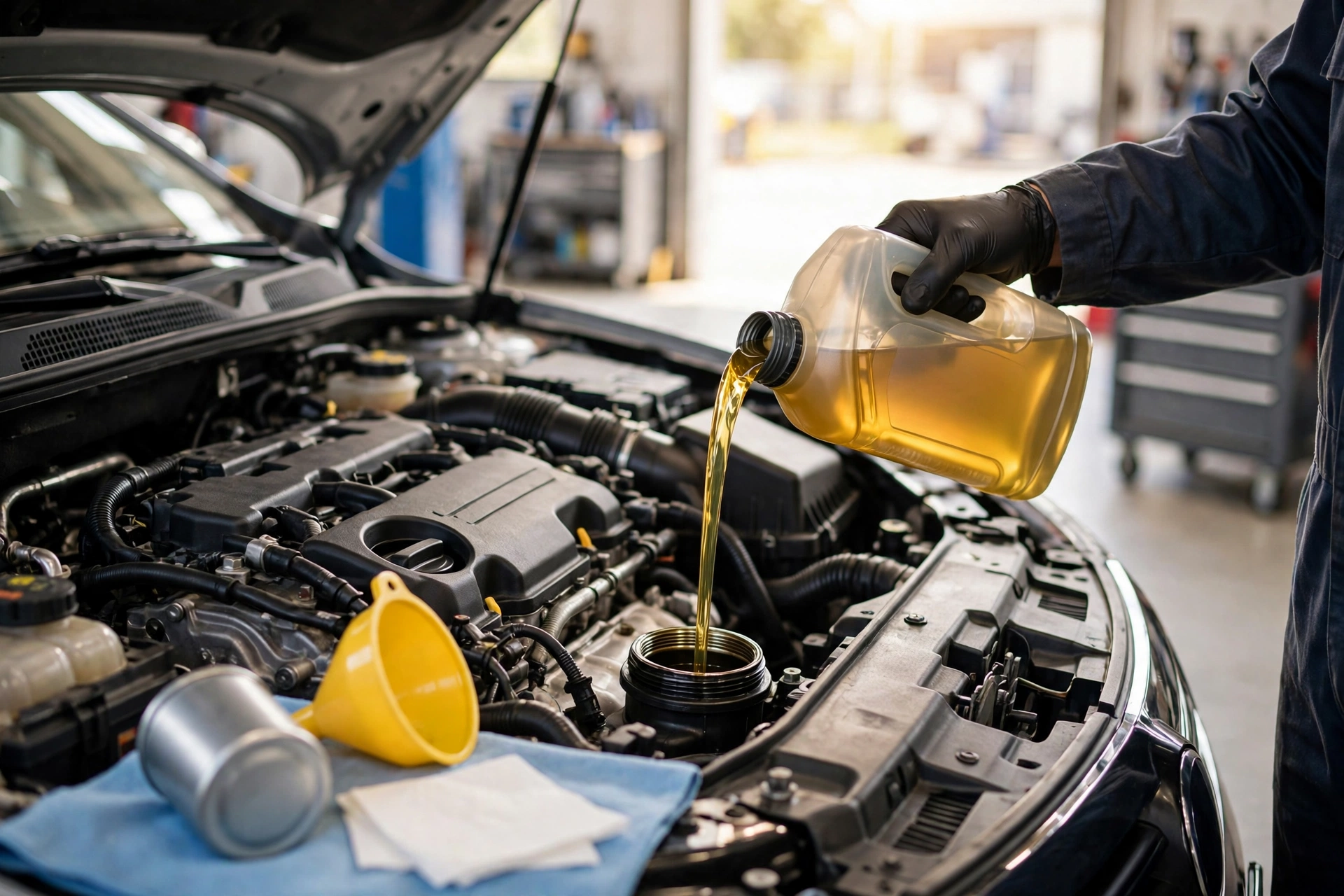
Your first oil change comes with a simple question that somehow has no simple answer: how much should this actually cost? One shop quotes $29.99, another quotes $129, and both insist they are doing the same job. In 2026, a standard oil change costs $35 to $125 for most drivers — but that range hides a lot. The oil type, the shop you choose, and your car itself can move the price by $50 or more. This guide covers what you should pay, what is in the bill, and how to avoid overpaying.
The short answer: expect $65–$100 for a full synthetic oil change at a shop in 2026, or $35–$75 for conventional oil if your car still takes it. Most cars built after 2012 need full synthetic, so the higher number is the realistic one for most new drivers.
Oil Change Cost by Oil Type in 2026
The oil itself is the biggest cost driver — not the labor. What goes into your engine sets the floor price.
| Oil type | Typical 2026 price (5 quarts + filter) | Change interval | Best for |
|---|---|---|---|
| Conventional | $35–$75 | 3,000–5,000 miles | Pre-2012 cars |
| Synthetic blend | $45–$90 | 5,000–7,500 miles | Mid-age cars |
| Full synthetic | $65–$125 | 7,500–10,000 miles | Most 2012+ cars |
| High-mileage synthetic | $60–$135 | 5,000–7,500 miles | High-mileage engines |
| European / specialty synthetic | $90–$180+ | 7,500–10,000 miles | European cars |
| Diesel pickup | $100–$250+ | 5,000–10,000 miles | Diesel trucks |
Typical US ranges from 2026 pricing guides (Kelley Blue Book via SoFi, AutoCostGuides, Jerry). Your exact price depends on your car, location, and shop — get a written quote first. Full synthetic costs more per visit but lasts roughly twice as long, so the "expensive" oil is often cheaper over a year.
Oil Change Cost by Shop: Where You Go Matters
The same oil change can cost double depending on where you have it done.
| Where | Conventional | Full synthetic | What you get |
|---|---|---|---|
| Walmart Auto Care | $25–$45 | $50–$80 | Cheapest; long waits |
| Quick-lube chains (Jiffy Lube, Valvoline) | $42–$56 | $78–$115 | Fast; heavy upsells |
| Independent mechanic | $40–$60 | $70–$100 | Best value for most |
| Dealership | $75–$100 | $100–$180 | OEM parts, full inspection |
| DIY (parts only) | $25–$40 | $30–$60 | Cheapest; DIY disposal |
Chain prices are typical 2026 ranges from independent guides — chains rarely publish national menus. Kelley Blue Book figures cited by SoFi put the dealership average around $100 including the filter.
Which shop should a beginner pick? Under warranty, stick with the dealership or a shop using your manufacturer's approved oil. Out of warranty, a well-reviewed independent mechanic usually gives the best mix of price and care — see our guide on how to find a trustworthy mechanic. Quick-lube chains are fine in a hurry, but know the price before they start.
What Is Actually in the Bill?
An oil change bill has three parts — knowing them helps you spot a fair price, and a padded one.
- Oil (the biggest part): 5 quarts typically cost a shop $25–$90 depending on type. Full synthetic is the expensive part of the bill, not the labor.
- Oil filter: $5–$15 for a standard filter; cartridge-style filters on some European and newer cars cost more.
- Labor: $20–$60 at most shops. The job takes 30–45 minutes, and quick-lube chains often bundle labor into the package price.
- Shop supplies and disposal: $5–$15 at many shops for rags, disposal, and environmental fees. This should be a small line, not a surprise.
Extra quarts are a common surprise: each quart beyond the standard five adds roughly $7–$12 — ask how many quarts your engine takes when you get the quote.
5 Things That Push Your Price Up
- Your car needs more oil. Trucks, SUVs, and European cars with 7–9 quart sumps cost more than a sedan that takes 5.
- Your car needs a specific approval. European cars often require oil meeting a manufacturer spec (like VW 502.00). That oil costs more — substituting cheaper oil is not worth the risk.
- A cartridge filter or awkward filter location. Some cars hide the filter behind a skid plate or use a cartridge housing, adding labor time.
- Where you live. High-cost cities charge 25–40% more than the national average; rural areas in the Midwest and South are usually cheapest.
- Add-ons at the counter. A $65 oil change becomes a $140 ticket through extras you did not ask for — see the list below.
Which Oil Does Your Car Actually Need? (60-Second Check)
You do not get to choose the cheapest oil and hope for the best — your car decides:
- Check the oil cap. Many cars print the required grade (like 0W-20) right on the cap.
- Check your owner's manual. Look up "engine oil" in the specifications section — it lists the exact grade and whether synthetic is required.
- Check the sticker under the hood. Some cars have an oil-spec label near the radiator support.
The simple rule: most cars built after 2012 require full synthetic, and the $29.99 special on the sign is almost always conventional oil your car cannot use. If a shop offers conventional for a car that specifies synthetic, walk away. Unsure what the grades mean? See our guide to engine oil grades explained.
How Often You Will Pay: The Annual Cost
Price per visit is only half the story — the annual cost depends on how often your car needs fresh oil. Follow your owner's manual, not the 3,000-mile windshield sticker.
| Oil type | Typical interval | Visits/year (12k miles) | Rough annual cost |
|---|---|---|---|
| Conventional | 3,000–5,000 miles | 3 | $105–$225 |
| Synthetic blend | 5,000–7,500 miles | 2 | $90–$180 |
| Full synthetic | 7,500–10,000 miles | 1–2 | $65–$200 |
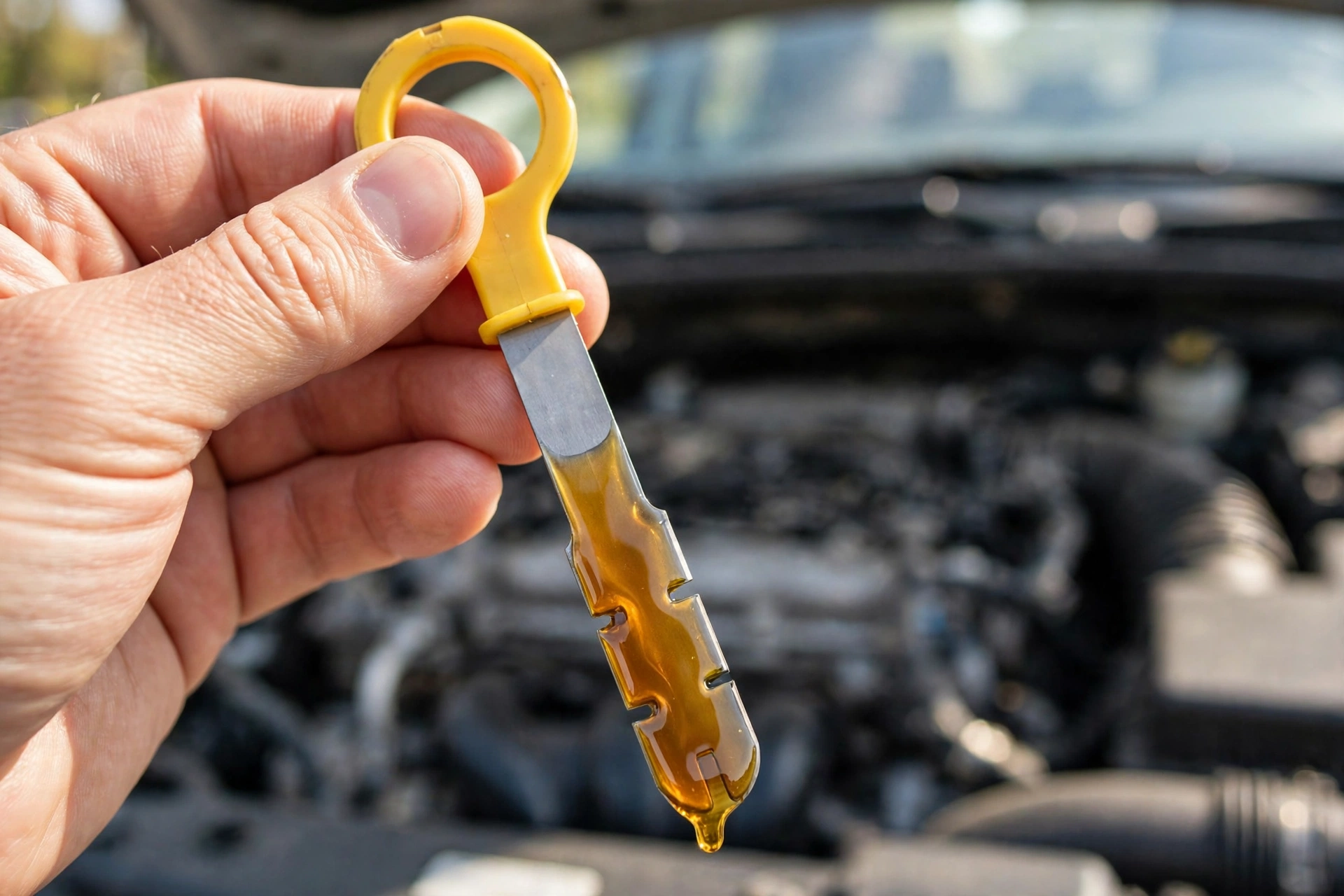
For full interval guidance, see how often to change engine oil — and between changes, a 60-second dipstick check keeps you informed; see how to read a dipstick and how to check your engine oil level.
6 Ways to Pay Less for an Oil Change
- Ask for the out-the-door price first. "What is the total, including fees, for full synthetic on my car?" A reputable shop answers without hesitation.
- Use the chain's own coupons. Valvoline and Jiffy Lube regularly run $10–$15-off coupons on their websites — check before you drive over.
- Try Walmart Auto Care for the basics. It is the cheapest nationwide option, and fine for a straightforward conventional or synthetic change.
- Bundle it with other work. If your car is already in for tires or brakes, adding an oil change to the same visit usually costs less.
- Skip the extras (see below). Most of the money lost at an oil change is in add-ons, not the oil change itself.
- Learn to check your own oil. Checking the level and condition yourself means you will never pay for an oil change you do not need.
Upsells to Say No To at the Counter
Quick-lube shops make much of their money after the oil change is quoted. These are the most common add-ons, and when to decline them:
- Engine flush ($40–$120): almost never needed on a car with regular oil changes. Decline unless a mechanic shows you a specific problem.
- Fuel system cleaning: not part of routine maintenance for a healthy engine. Decline.
- New wiper blades at triple the price: fine to replace if yours streak — but check the price first; blades are cheap at any auto parts store.
- Air filter or cabin filter: check it yourself first. A filter that looks clean does not need replacing, and both are usually a 5-minute DIY job.
- Transmission or coolant flush: real services, but with their own schedules — never as a surprise add-on during an oil change.
Rule of thumb: if the add-on was not on your list when you walked in, and nobody can show you the worn part or the manual page that calls for it, say "not today."
Frequently Asked Questions
How much is a full synthetic oil change in 2026?
A full synthetic oil change typically costs $65–$125 in the US in 2026, with most drivers paying $65–$100 at a shop. Dealerships and European cars run higher ($100–$180); Walmart and independent shops are usually cheapest.
Why do dealerships charge more for an oil change?
Dealerships use manufacturer-approved (OEM) oil and filters, factory-trained technicians, and a multi-point inspection. Kelley Blue Book figures cited by SoFi put the dealership average around $100 including the filter.
Is the $19.99 oil change real?
Yes, but it is almost always conventional oil only, for a standard 5-quart engine, before fees — and it exists to get you in the door. Most modern cars require full synthetic, so the $19.99 price does not apply to them. Always ask what is included and what the out-the-door total is.
How often should I change my oil?
Follow your owner's manual, not the windshield sticker. Most modern cars on full synthetic go 7,500–10,000 miles between changes; conventional oil is 3,000–5,000 miles. Our guide on how often to change engine oil covers the details.
The Bottom Line
An oil change in 2026 costs $35–$75 for conventional oil and $65–$125 for full synthetic, with most drivers paying $65–$100 for the synthetic change their car needs. Where you go matters as much as what oil you buy: Walmart and independent shops are usually cheapest, dealerships cost the most, and quick-lube chains sit in the middle with the most upsell pressure. Before your next visit, check your manual for the required oil grade, ask for the out-the-door price up front, and decline any add-on nobody can justify. That 30 seconds is usually worth $30–$50 — every time.
Sources: typical 2026 US ranges from Kelley Blue Book (via SoFi) and AutoCostGuides, cross-checked against Jerry, MotorLogic, and thehowmuch. Prices vary by vehicle, location, and shop — get a written quote first.