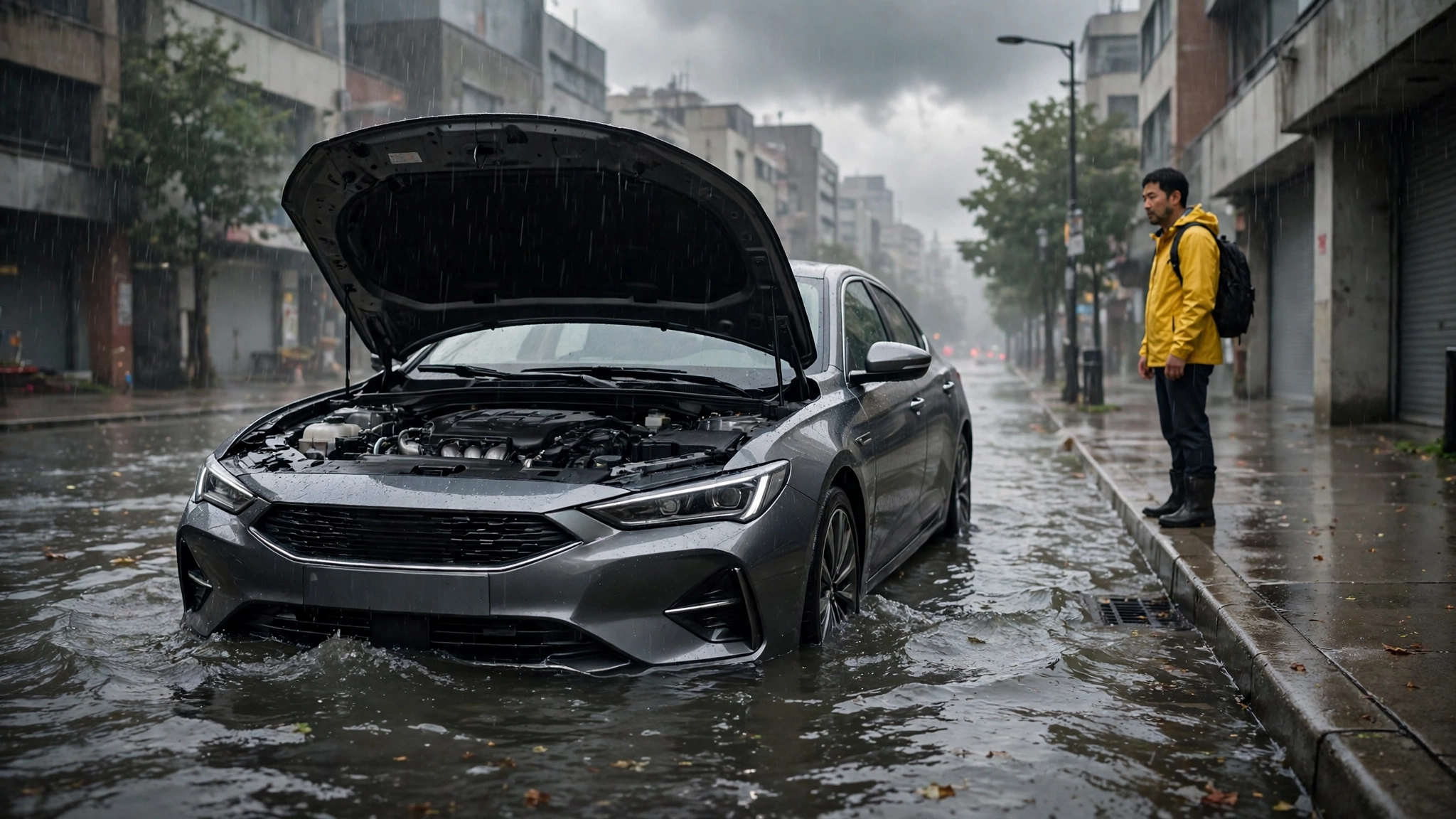
Picture this: you drive through a flooded street after heavy rain, and halfway across, the engine dies. You turn the key. Nothing. Maybe a single heavy clunk, or a rapid clicking. You try again — and again. Each attempt may be making things worse.
This is the textbook start of a hydrolocked engine, one of the most expensive problems a beginner driver can accidentally cause. The good news: understanding what it is and what to do in the first five minutes can be the difference between a tow-truck bill and a new engine. Here's the whole thing in plain English.
What "hydrolocked" actually means
Hydrolock is short for hydrostatic lock. It happens when a liquid — usually water, sometimes coolant — gets inside one or more of the engine's cylinders in a large enough amount that the piston can't complete its stroke.
Here's the simple version. Your engine works by squeezing a mixture of air and fuel in each cylinder, then igniting it. Air and fuel compress easily — that's what engines are built to do. Water does not compress at all. It doesn't matter how strong the engine is; you cannot squeeze water into a smaller space.
So when the piston rises and meets a cylinder holding water, something has to give. The engine stops instantly, and the force has to go somewhere — usually into the connecting rod (the arm linking the piston to the crankshaft), which bends or breaks. In bad cases, the piston, cylinder head, or even the engine block cracks. That's why mechanics talk about hydrolock the way doctors talk about a heart attack: sudden, serious, and often preventable.
How water actually gets into an engine
Water doesn't belong in a cylinder, so how does it get there? Almost always through one of three routes.
1. Driving through deep standing water
This is the classic cause and the one you can control. Your engine breathes through an air intake, which on most cars sits behind the front grille or in the wheel-well area, fairly low. If you drive through water deep enough to reach it, the engine can gulp water straight into the cylinders. This is the exact scenario in our guide to driving safely in heavy rain — the floodwater rule: if you can't see the road, don't drive it.
2. A coolant leak inside the engine (blown head gasket)
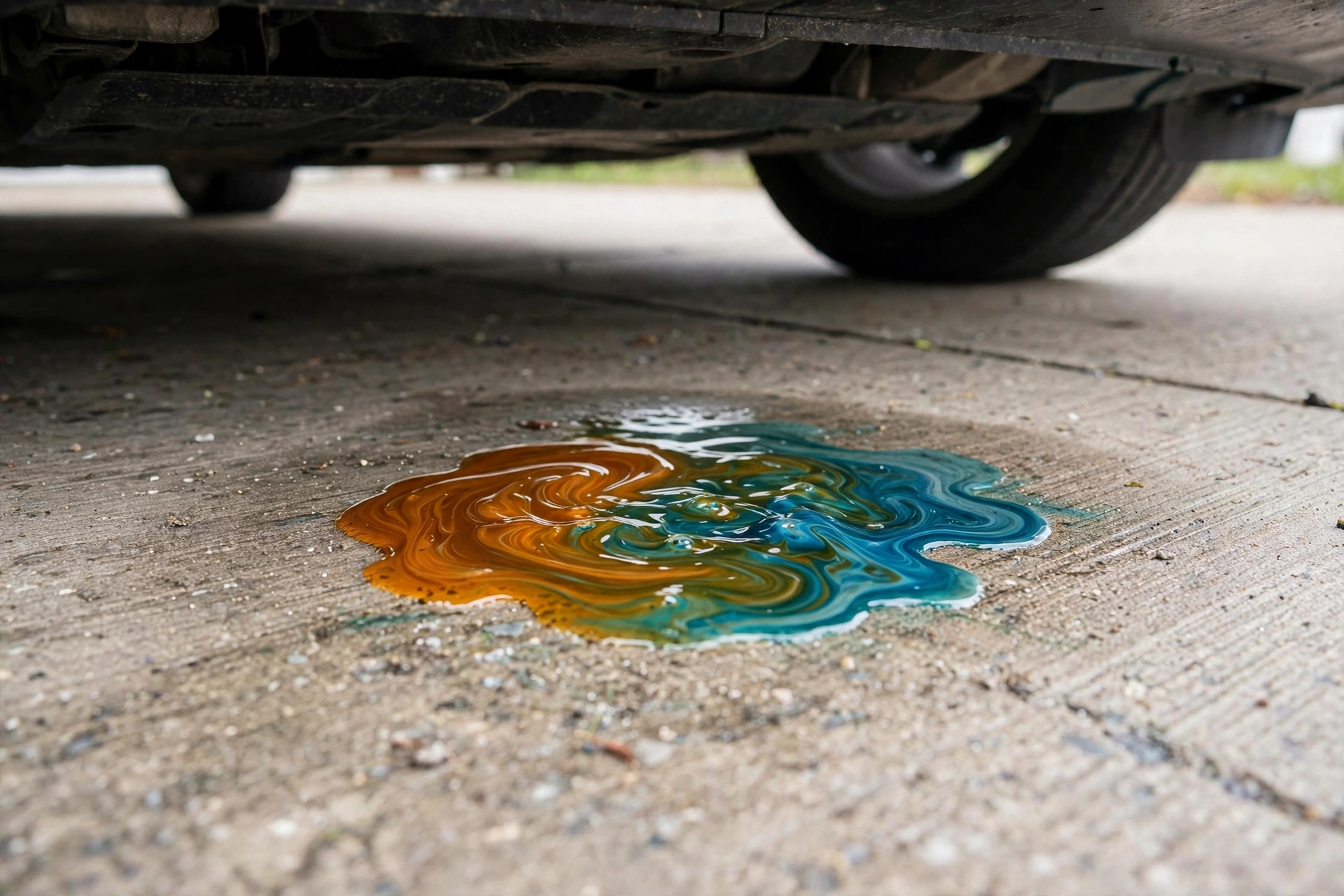
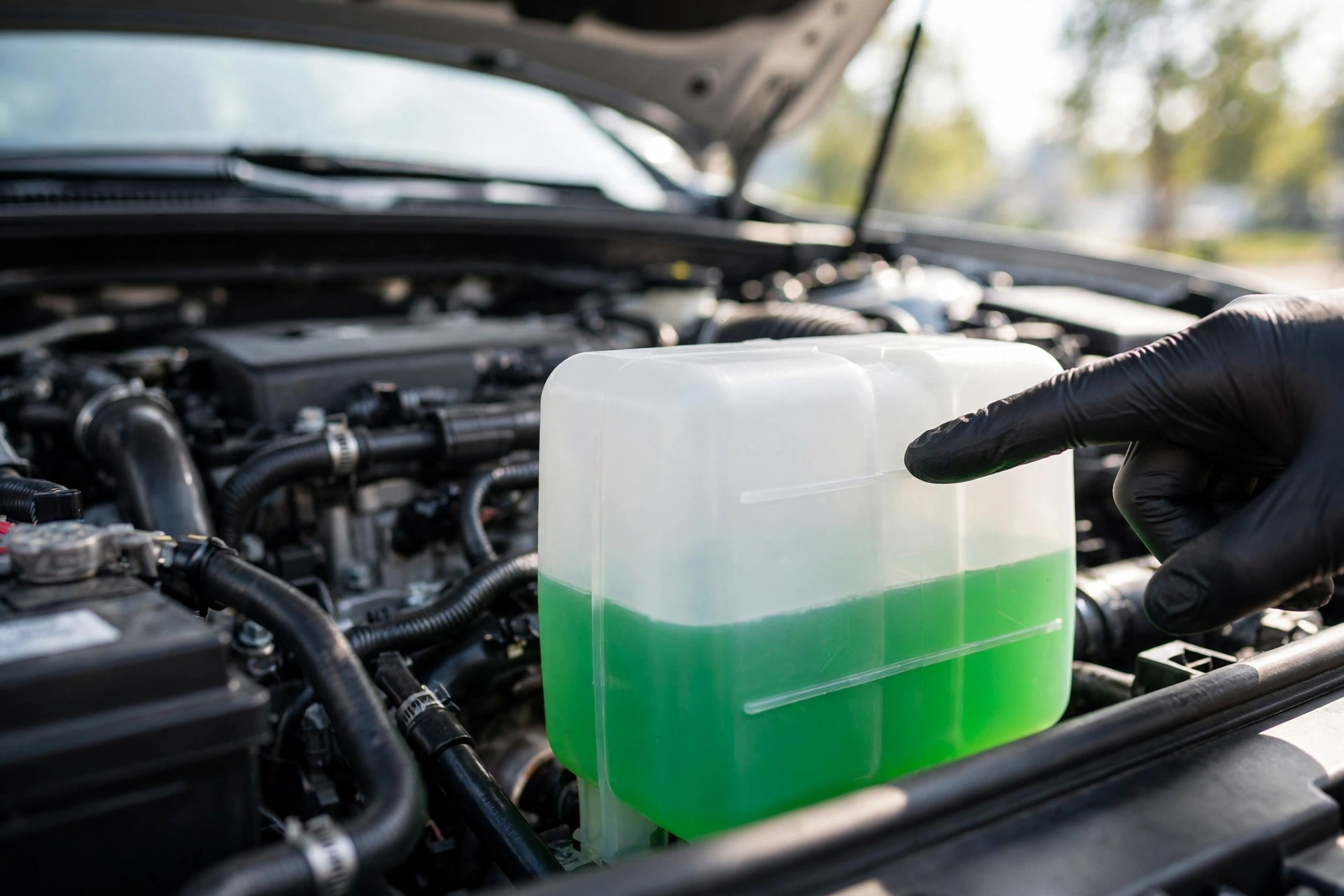
The head gasket seals the combustion chambers from the engine's coolant passages. If it fails, coolant — which is mostly water — can seep directly into a cylinder. This often happens while the car sits parked: fluid accumulates overnight, and the engine refuses to turn in the morning. Keeping an eye on your coolant level and acting fast on overheating are your best early warnings for this route.
3. Aftermarket low air intakes and heavy splash
Some owners fit aftermarket "cold air" intakes that move the air filter lower in the engine bay, closer to the road. That small mod makes hydrolock much easier in ordinary flooding. If your car has one, treat every deep puddle with extra respect.
Signs your engine is hydrolocked
The symptoms look different depending on when the water entered.
If it happened while you were driving through water:
- The engine stops abruptly — not a gradual sputter, but an instant shut-off, often with a loud knock or metallic bang. That sound can be a connecting rod failing, and it means internal damage may already be done.
- You may notice the car losing all power the moment the front dips into the deep section.
If it happened while the car was parked (internal leak):
- Turning the key produces a single heavy clunk, a rapid clicking from the starter, or nothing at all. The starter is trying to turn a crankshaft that a piston is holding locked against an incompressible column of liquid.
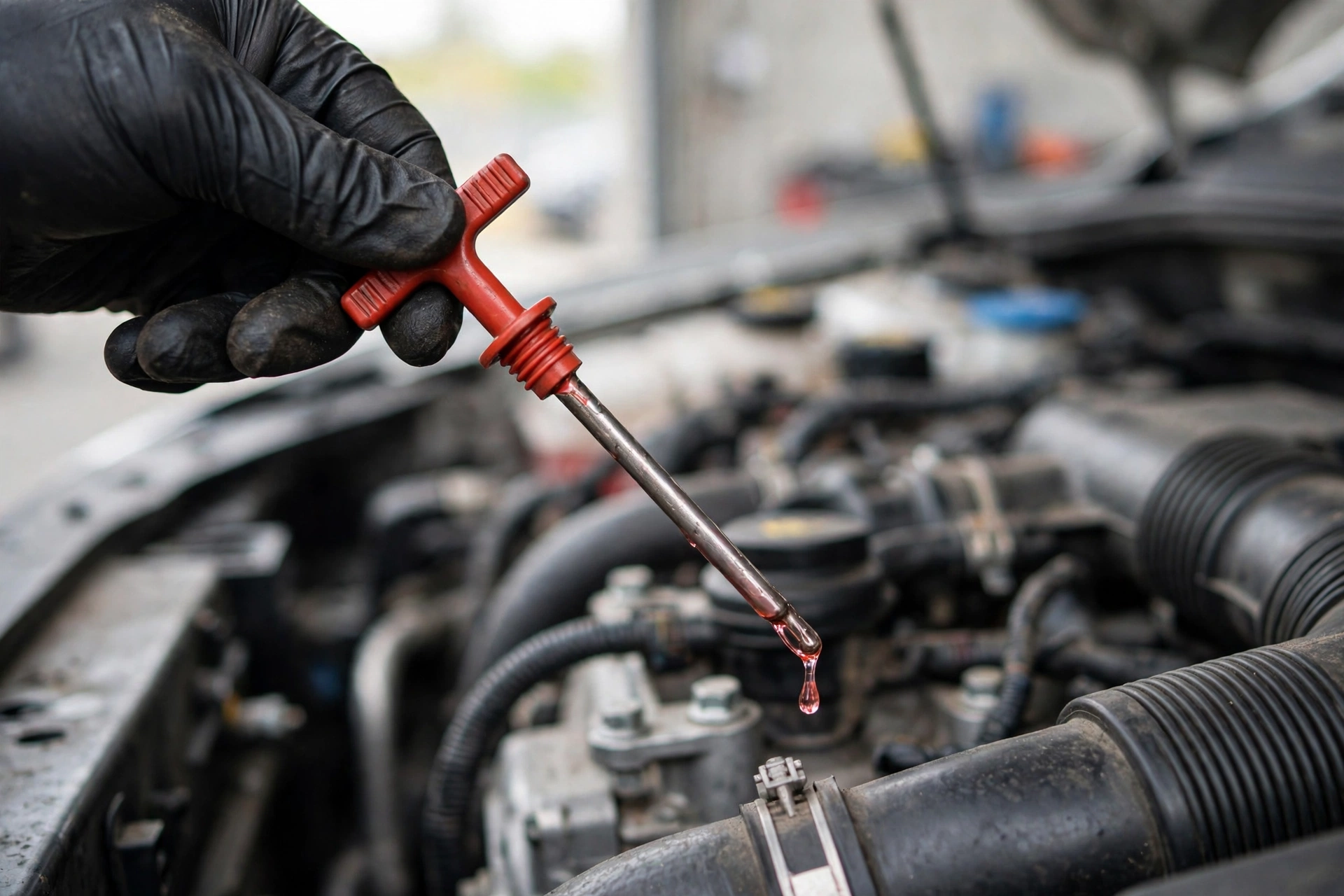
- Milky, tan-colored oil. Pull the dipstick: oil contaminated with water takes on a color people describe as a coffee milkshake. That means water has reached the crankcase — check our guide to checking your engine oil to do this safely.
- A soaked air filter. If the airbox filter is wet after driving through standing water, the intake almost certainly drew in water.
What to do in the first five minutes
This is the section that matters most, because the single most common mistake is trying to restart the engine over and over. Do not crank a hydrolocked engine. Even the starter motor alone applies enough force to bend a connecting rod or crack a piston if there's water trapped in a cylinder. The Jeep owner's manual puts it bluntly: if the engine stalls in water, do not attempt to restart it — first determine whether it has ingested water. (A detailed walkthrough of that off-road scenario is at Off-Road Handbook's hydrolock guide.)
Do this:
- Turn the engine off and leave it off. Resist the urge to keep turning the key.
- If you're in a flooded street, put on your hazard lights and — only if it is safe — move yourself and your passengers to dry ground. The car can wait; people can't.
- Call roadside assistance or a tow. Tell them the engine stalled in standing water; they'll send a flatbed, because towing a possibly-hydrolocked car on its own wheels is fine, but starting it is not.
- Have the car taken to a trusted mechanic. They'll remove the spark plugs and crank the engine by hand or with the starter to push the water out without compression, then change the oil and filter and assess damage.
- Once it's home safe, don't forget to note what happened for your insurance company (more on that below).
Don't do this:
- Don't keep cranking "just to see." Every attempt risks more damage.
- Don't try to drain or fix anything yourself at the roadside — water inside the engine is a shop job, not a DIY one.
- Don't drive it home even if it starts. A hydrolock event can leave a slightly bent rod that fails weeks later. Get it inspected first.
Can a hydrolocked engine be repaired?
Sometimes — and the honest answer is "it depends on when the engine stopped and what you did next."
- Best case: the engine stalled while idling or at low speed, and you never tried to restart it. A mechanic can remove the water, replace the oil and filter, and the engine may run perfectly. This is the cheapest outcome by far.
- Middle case: one or more connecting rods bent. The engine needs internal repair — a serious, expensive job, but the block and head survive.
- Worst case: the engine hydrolocked at speed. The force can crack pistons, the cylinder head, or the engine block itself. At that point, a replacement engine is often cheaper than the repair.
Because the range of outcomes is so wide, nobody can quote you a price without seeing the engine. What you can control is the one variable that matters most: whether you keep cranking. No cranking = the best possible odds.
How to prevent hydrolock (beginner's checklist)
- Never drive through water you can't gauge. If you can't see the road surface, turn around or wait. Six inches of moving water can reach some air intakes, and floodwater hides potholes too.
- Slow down before standing water — bow waves from speed push water higher, straight into the grille.
- Watch your coolant and oil. Check the coolant level monthly and look for milky residue on the dipstick when you check your oil. Both catch a failing head gasket before it floods a cylinder.
- Never ignore overheating. An overheated engine is how head gaskets fail in the first place — here's what to do when your car overheats.
- Know where your air intake sits. Pop the hood once and find the airbox — knowing its height tells you your car's personal flood limit.
Frequently asked questions
Can you still drive a hydrolocked engine?
No. By definition, a hydrolocked engine cannot run — either it stopped instantly while driving, or it refuses to crank at all. Any engine that starts and runs roughly has a different problem (though water contamination may still be present, so get it checked).
How much water does it take to hydrolock an engine?
Surprisingly little — only enough to reach the air intake, which on some cars is less than a foot off the ground. It doesn't take a flooded river; a deep street puddle after heavy rain can be enough if the intake is low. (The technical definition is at Wikipedia's hydrostatic lock article.)
Can rain alone cause hydrolock?
No. Normal rainfall can't get into the cylinders — it has to be standing water deep enough to be drawn in through the intake. That's why the danger comes from flooded streets and deep puddles, not from driving in rain itself.
Does car insurance cover a hydrolocked engine?
Often, if the cause was flooding — comprehensive coverage typically covers flood damage, which includes a flood-caused hydrolock. But insurance usually won't cover engine failure from a worn-out head gasket or poor maintenance. Check your policy's comprehensive section and ask your insurer directly; policies vary a lot by country and company.
Will my engine be okay if it stalled while just idling through water?
There's a real chance it's fine. If the engine was at low speed or idling when it ingested water and you didn't crank it afterward, mechanics can often remove the water with no internal damage. The key sentence is the one from earlier: don't turn the key — get it towed.
Conclusion
A hydrolocked engine sounds scary — and it can be expensive — but beginners can avoid it almost entirely with one habit: respect standing water. Don't drive through what you can't see through, slow down for puddles, and keep your coolant and oil checks on schedule. And if the worst happens and your engine dies in floodwater, remember the five-minute rule: hazards on, key off, call a tow. Your engine will thank you.