Seeing your temperature gauge climb into the red is one of the most stressful moments a new driver can face. Steam under the hood, a warning light, maybe a strange smell — and every instinct says to keep driving to the nearest garage. Ignore that instinct: driving an overheating car, even for a few more minutes, can turn a simple fix into a ruined engine.
The good news: overheating is usually survivable for both you and your car if you react the right way. This guide walks you through exactly what to do, step by step, in plain language — no mechanical knowledge needed.
How to Tell Your Car Is Overheating
Your car gives you several warnings before real damage happens — learn to spot them early.
- Temperature gauge in the red: The needle on your dashboard climbs past the middle and into the red zone, or a red thermometer warning light comes on.
- Steam from under the hood: White steam (not smoke) escaping from the edges of the hood means coolant is boiling.
- A sweet smell: Coolant has a distinctly sweet, almost syrupy smell. If you notice it inside or outside the car, something is leaking or boiling over.
- Reduced engine power: Some modern cars enter a "limp mode" and cut power to protect the engine. The car feels sluggish and will not accelerate normally.
If you notice any of these, act immediately. Do not wait to see if it "goes away on its own" — it will not.
Step 1: Turn Off the A/C and Turn the Heater On Full
This sounds backwards, but it works. Your air conditioning puts extra load on the engine, so switch it off right away. Then turn your heater to maximum heat and the fan to full blast, and open the windows if it gets uncomfortable. Your heater acts like a second radiator, pulling heat out of the coolant and into the cabin — a trick recommended by roadside assistance guides such as the NRMA's overheating advice.
Step 2: Pull Over Somewhere Safe and Switch the Engine Off
Signal, slow down gently, and pull onto the shoulder or into a parking lot — somewhere flat, away from traffic. Do not try to reach the next exit if the gauge is already in the red; every extra mile risks serious damage.
Once you are stopped, turn the engine fully off and put your hazard lights on. If you have a warning triangle in your emergency kit, place it behind the car. Get yourself and any passengers out of the car and to a safe spot away from traffic.
Step 3: Wait — Do Not Open the Hood or the Radiator Cap
This is the most important safety rule in this whole guide. A hot cooling system is under pressure, and opening the radiator cap while the engine is hot can release a jet of scalding coolant and steam.
Wait at least 30 minutes before touching anything under the hood. In hot weather, or if steam is still visible, wait longer — up to an hour. Use the time to call for help (see Step 6). Patience here costs you nothing; rushing costs you a trip to the hospital.
Step 4: Check the Coolant Level (Only When the Engine Is Cool)
Once the engine is fully cool — no steam, and the gauge reads normal with the ignition on but the engine off — you can open the hood.
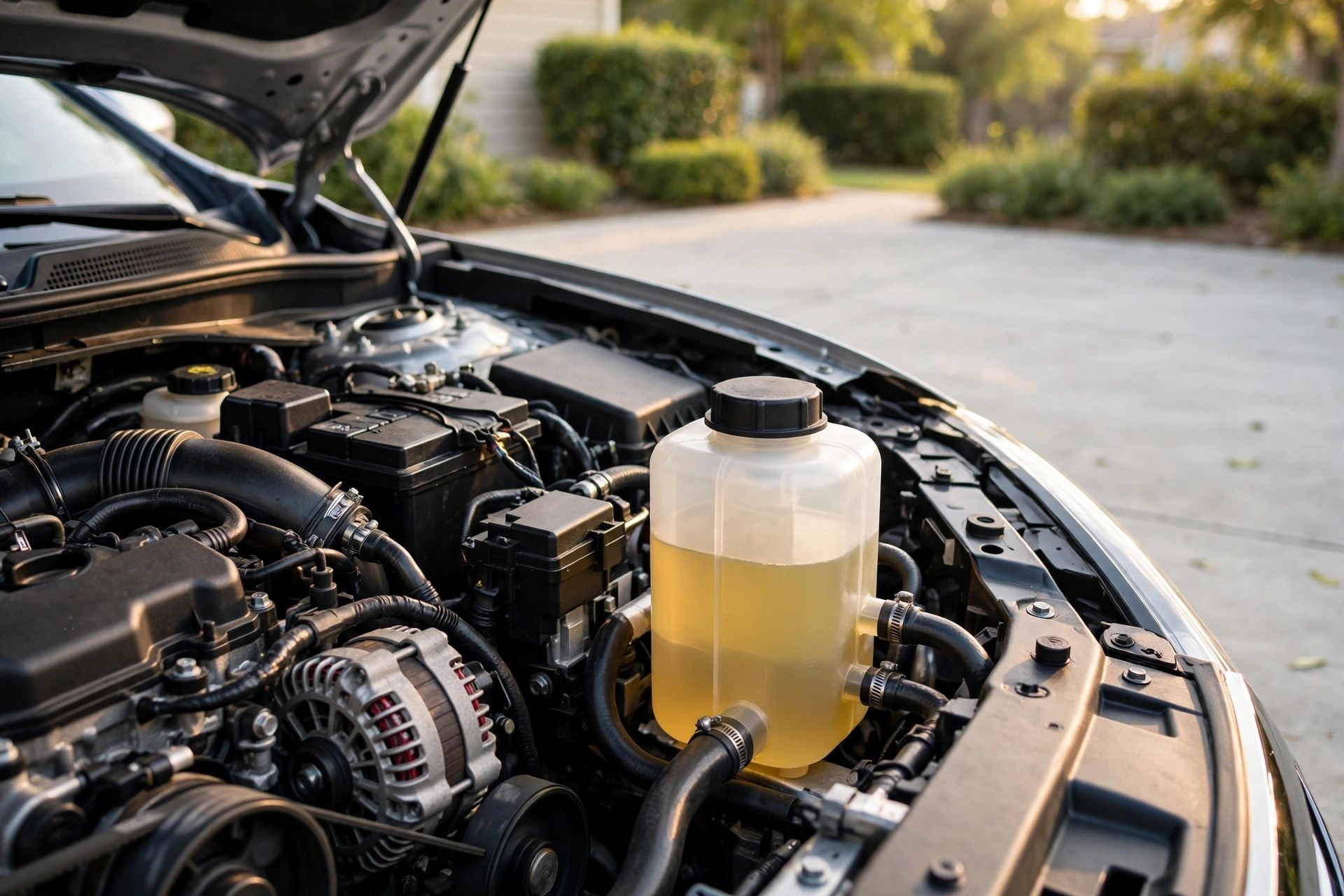
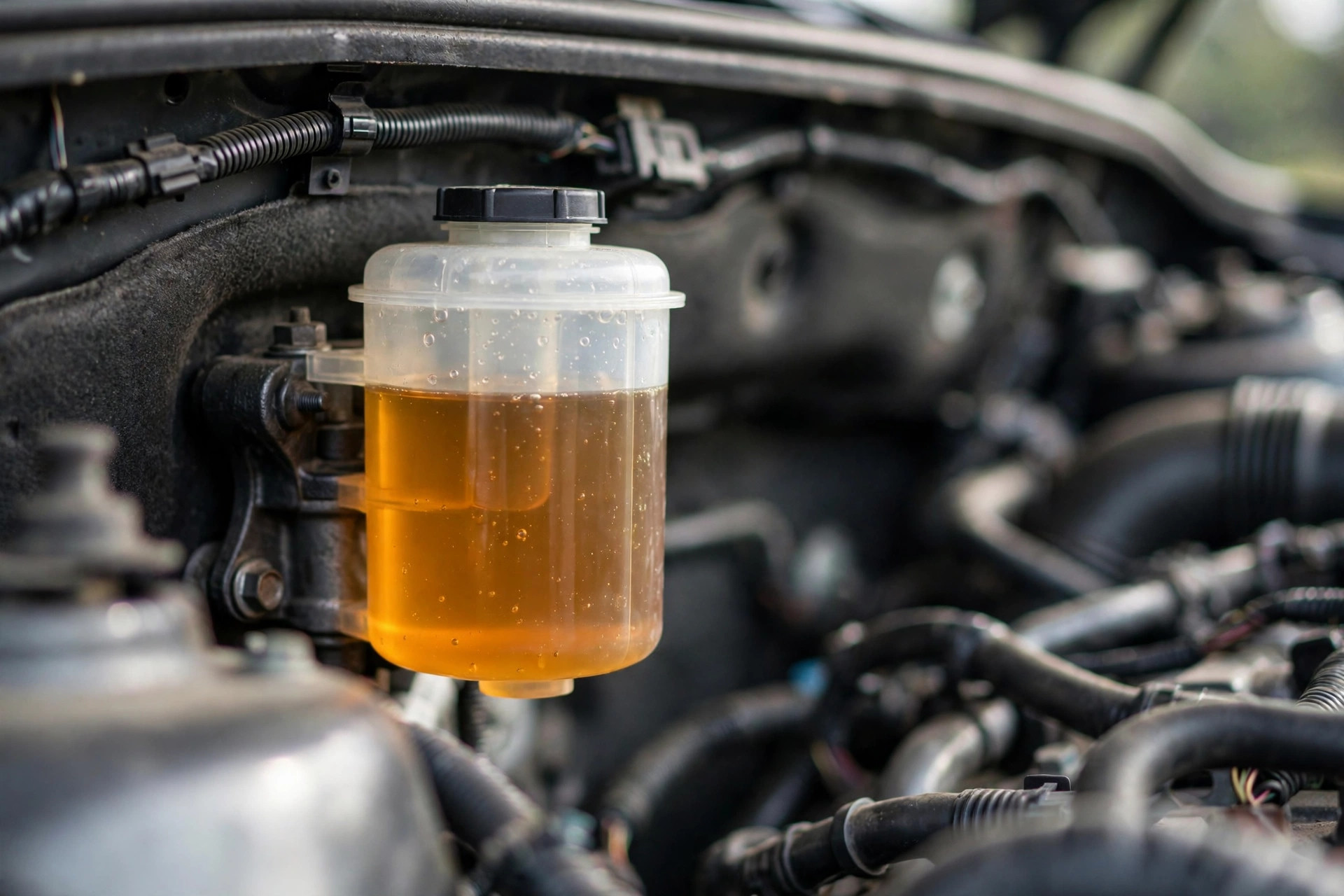
Find the coolant reservoir: a translucent plastic tank near the front of the engine bay, usually marked with MIN and MAX lines. If the level is below MIN or the tank is empty, low coolant is very likely the cause. For a deeper look, see our guide to coolant leak symptoms.
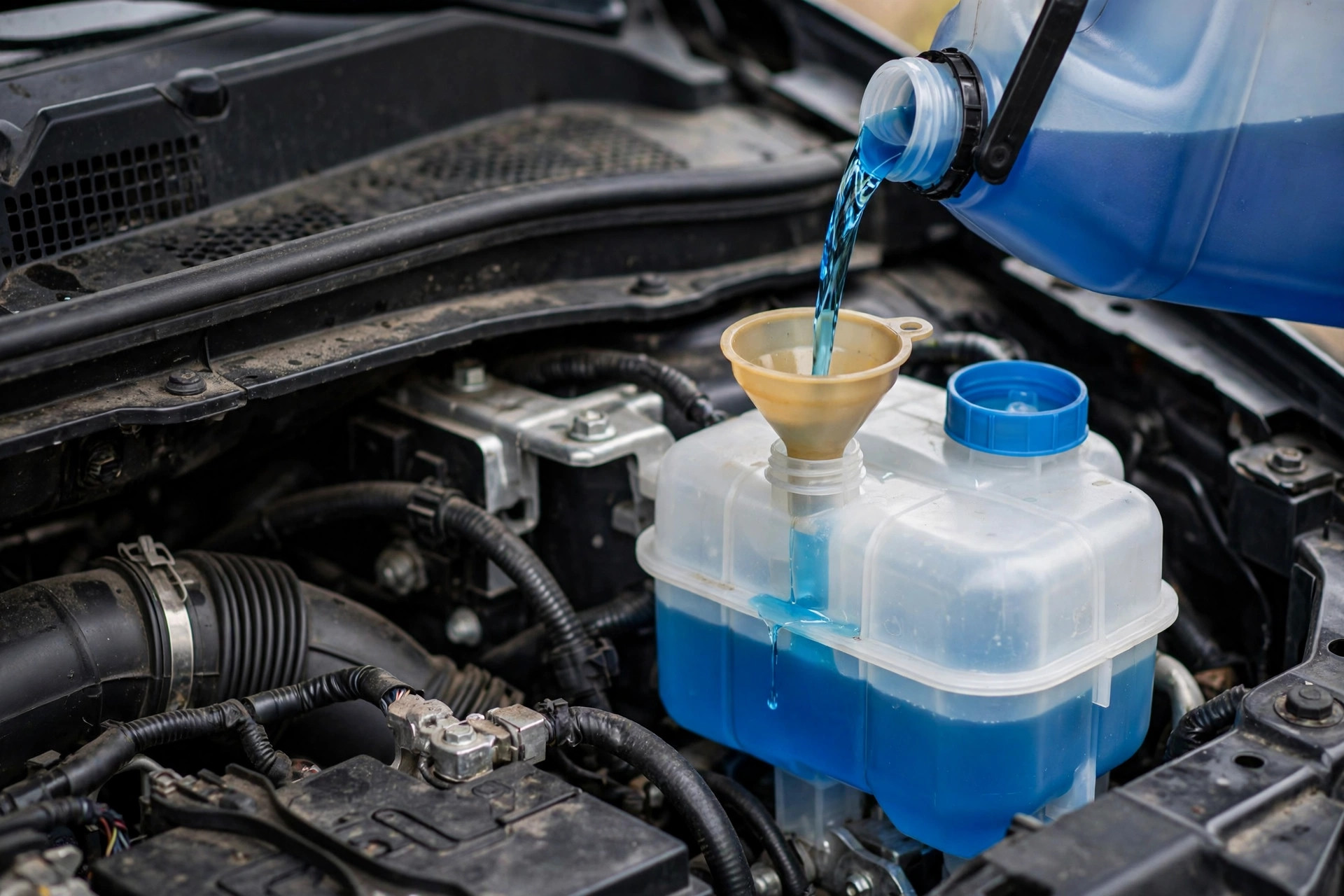
If you have coolant in the car, top the reservoir up to the MAX line, using the type your owner's manual specifies. If you only have water, plain water is acceptable as a temporary emergency measure to get you to a garage — but have the system checked and refilled with the correct coolant mix as soon as possible. Never pour cold water into a still-hot engine; the sudden temperature change can crack engine parts.
Step 5: Look for Obvious Leaks — Then Decide Whether to Drive On
With the engine cool, look under the car and around the engine bay. Puddles of green, orange, or pink fluid point to a coolant leak. Also look for a split or loose hose, or a belt that has slipped off or snapped.
Now make the decision:
- Gauge back to normal, no visible leak, coolant topped up: Drive carefully to the nearest garage. Keep the heater on, watch the gauge constantly, and pull over again immediately if the needle climbs.
- Gauge climbs again within a few minutes: Stop and do not keep driving. The problem is deeper than low coolant.
- Visible leak, steam after topping up, or strange noises: Do not drive. Call for a tow.
When in doubt, choose the tow. A tow bill is always cheaper than an engine rebuild.
Step 6: Call for Help and Tell the Mechanic What Happened
If you have roadside assistance, call them first. Otherwise call a local garage and describe exactly what happened: how far the gauge went, whether there was steam, whether you found a leak, and whether the car restarted. Take a photo of any puddle or leaking hose — it helps the mechanic diagnose the problem faster. If you do drive to a garage, tell them the car overheated and ask them to pressure-test the cooling system, the standard way to find hidden leaks.
Common Causes of Overheating (So You Know What to Expect)
Knowing the likely cause helps you talk to your mechanic with confidence.
- Low coolant: The most common cause, usually from a slow leak in a hose, the radiator, or the water pump.
- Stuck thermostat: The thermostat controls coolant flow. If it sticks closed, coolant cannot circulate and the engine overheats quickly.
- Failed water pump: The pump circulates coolant through the engine. When it fails, coolant sits still and heats up.
- Broken radiator fan: The fan pulls air through the radiator, especially in slow traffic. If it fails, the car overheats at idle but may be fine at highway speed.
- Clogged radiator: Dirt, rust, and old coolant deposits restrict flow inside the radiator over time.
- Hard driving conditions: Towing a heavy trailer, climbing steep hills, or sitting in a traffic jam on a very hot day can push a healthy cooling system to its limit.
How to Prevent Overheating in the First Place
Most overheating is preventable with a few cheap habits:
- Check the coolant level monthly. It takes 30 seconds — look at the reservoir against the MIN and MAX marks as part of your monthly maintenance routine.
- Service the cooling system on schedule. Your owner's manual lists when to flush and replace the coolant — usually every few years. Old coolant loses its ability to protect against rust and overheating.
- Check belts and hoses. During a service, ask the mechanic to look for cracked hoses and worn belts; both are cheap to replace before they fail.
- Keep a bottle of coolant in the boot. A litre of the correct coolant, plus a funnel, turns a roadside emergency into a 5-minute top-up.
- Never ignore a small leak. A few drops of coolant under the car today is a breakdown waiting to happen next month.
Frequently Asked Questions
Can I drive my car if it is overheating?
Only a very short distance to a safe stopping point or the nearest garage, and only if the gauge has dropped back to normal after cooling and topping up the coolant. If the needle climbs into the red again, stop immediately and call for a tow — continuing to drive risks warping the engine.
How long should I wait before opening the radiator cap?
At least 30 minutes, and longer if steam is still visible. The system stays pressurised while hot. Squeeze the top radiator hose first with a cloth — if it feels hard and hot, the cap must stay on.
Can I put water in the radiator instead of coolant?
Yes, as an emergency measure only, and only once the engine is fully cool. Plain water will get you to a garage, but it does not protect against rust or freezing, and it boils at a lower temperature than coolant. Have the system refilled with the correct coolant mix as soon as possible.
Why does my car overheat only in traffic?
This usually points to a failing radiator fan. At speed, airflow through the radiator cools the engine naturally; in slow traffic the fan does that job. If the fan motor, fuse, or sensor fails, the car overheats when stationary but behaves normally on the highway. A mechanic can test the fan in minutes.
Conclusion
An overheating engine feels like an emergency — and in one sense it is — but the fix is mostly about staying calm and doing things in the right order: heater on, A/C off, pull over safely, switch off, wait until everything is cool, then check the coolant and look for leaks. Never open a hot radiator cap, and never gamble on driving a car whose gauge is in the red.
Keep a bottle of coolant in the boot, check the level once a month, and treat any small leak as a warning, not a nuisance. Do that, and the red zone on your temperature gauge will stay a sight you only read about.