

Your engine oil dipstick is the simplest health check your car has — and it takes about 60 seconds. No tools, no mechanic needed. Yet many new drivers never check it, or read it wrong, and low oil is one of the easiest engine problems to prevent.
This guide shows you exactly how to read a dipstick: where to find it, the wipe-and-reinsert method that gives a true reading, what every marking means, and what the oil's color and texture are telling you.
What a Dipstick Actually Tells You
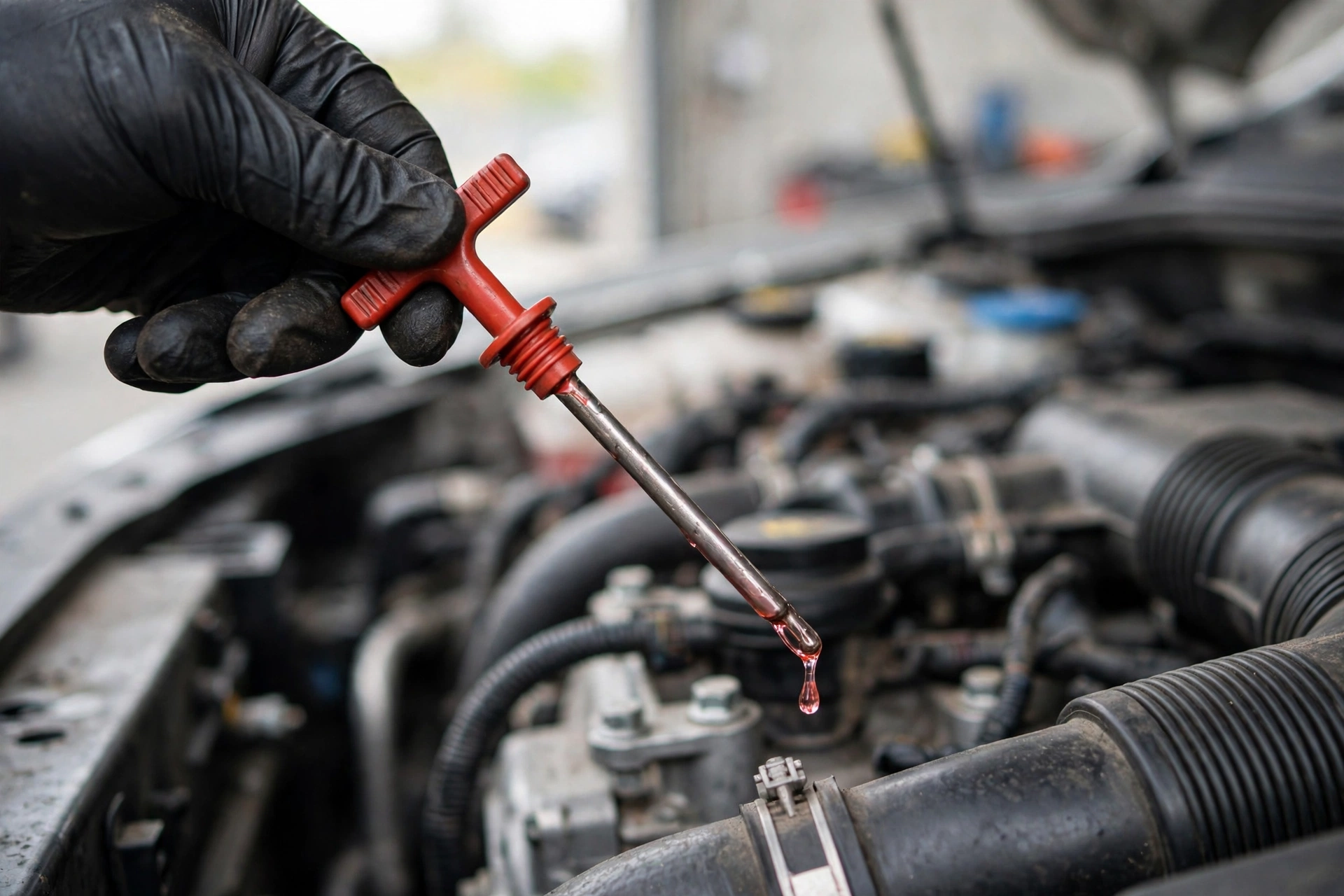
A dipstick is a long metal blade in a tube running down to the oil pan. The oil on its tip shows your oil level and its condition — whether a change is due or something is wrong.
That is why AAA recommends checking your oil at least once a month, and always before a long road trip. Catching a low level early can be the difference between a top-up and a ruined engine.
Before You Start: 3 Things to Get Right
A dipstick reading is only trustworthy if the conditions are right.
1. Park on level ground
Oil pools in the pan. On a slope it runs to one side and the reading is falsely low or high. A flat driveway is all you need.
2. Let the engine sit
If you have just been driving, switch the engine off and wait 5 to 15 minutes so oil drains back into the pan. Check too soon and the level reads low. Your owner's manual may prefer a cold-engine check or a warm engine plus a wait — follow it. Never pull a dipstick while the engine is running.
3. Have a clean rag or paper towel ready
You need it to wipe the dipstick clean. A lint-free cloth is ideal; a paper towel works fine.
How to Read a Dipstick: The 60-Second Method
Follow these steps in order — the wipe-and-reinsert step is the one beginners skip, and the one that matters most.
- Pop the hood. Use the release under the dashboard, then the safety latch at the front.
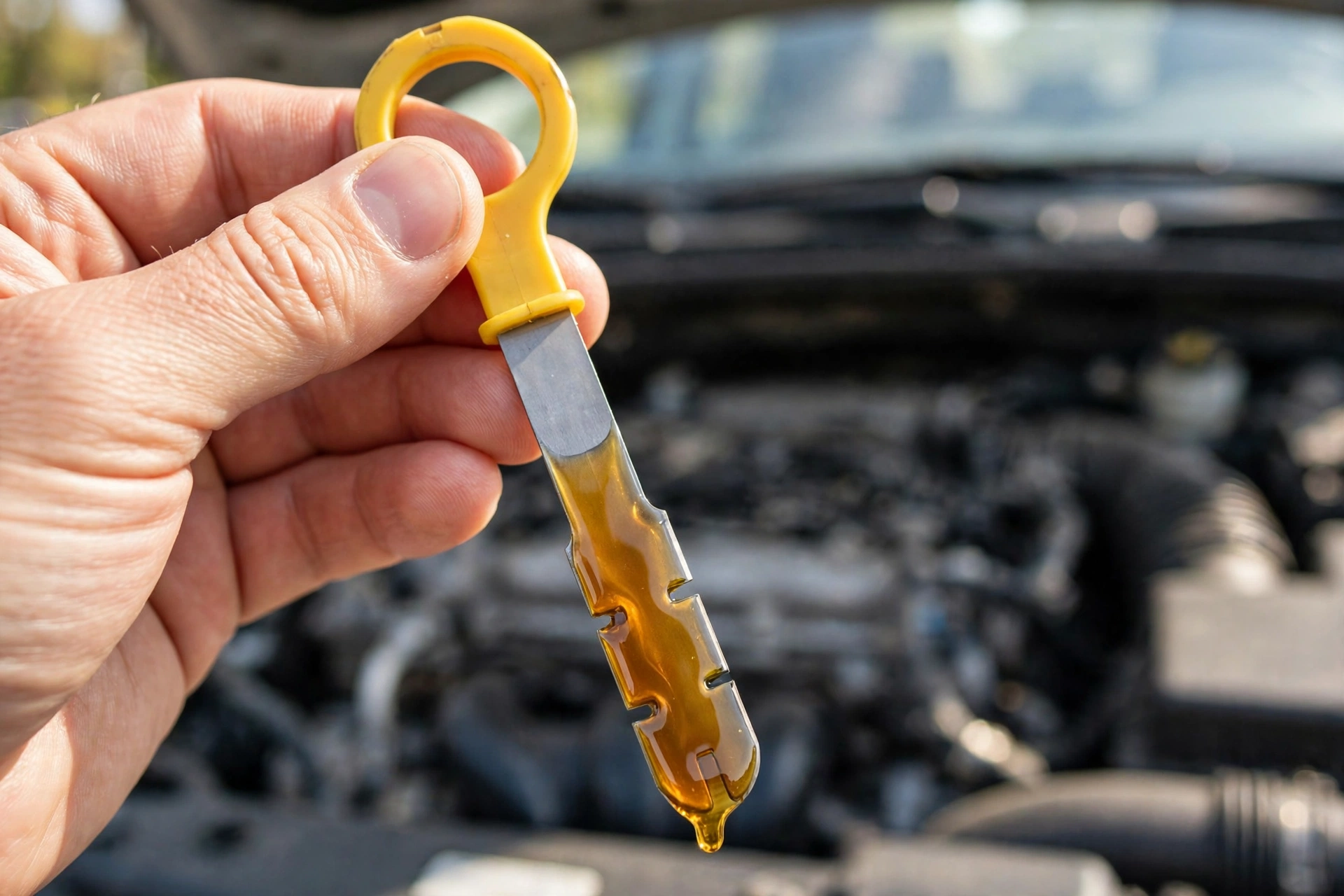
- Find the dipstick. Look for a bright yellow or orange handle, often marked with an oil-can symbol; your owner's manual shows its exact spot. Do not confuse it with the transmission dipstick or the oil filler cap.
- Pull it out and wipe it clean. The first pull only shows oil splashed inside the tube — not a real reading.
- Push it all the way back in until it seats. If it is not fully inserted, the reading will be wrong.
- Pull it out again and read it. Hold the dipstick roughly horizontal, tip slightly down, so oil does not run along the blade and blur the line. Note where the oil film ends against the markings. Read both sides and take the lower clear line if they differ slightly.
- Push it back in and seat it fully so the tube stays sealed.
If the reading looks smeared, wipe and repeat it.
Understanding the Marks on Your Dipstick
Not all dipsticks look the same. Manufacturers use four common marking systems, all meaning the same thing — a safe zone with a lower and an upper limit:
| Dipstick design | Lower mark | Upper mark | How to read it |
|---|---|---|---|
| MIN and MAX lines | MIN or LOW line | MAX or FULL line | Oil between the lines, ideally upper half. |
| Two holes | Hole nearest the tip | Hole farther from the tip | Oil over the lower hole only is in range. |
| Crosshatched section | Bottom of the crosshatch | Top of the crosshatch | Oil inside the hatched area is safe. |
| L and H (or L and F) letters | L (Low) | H (High) or F (Full) | Oil between the letters is fine; near L, top up soon. |
Anywhere between the marks is safe, but closer to the top is better — more reserve for hard acceleration, steep hills, and motorway runs, when oil pressure matters most.
As a rough guide, the gap between the marks usually represents about one quart (roughly one liter) of oil, though this varies by engine. Oil exactly on the minimum mark means you are about a quart low.
What the Reading Means — and What to Do Next
- Between the marks: Your level is fine. Note the position to spot a slow drop next month.
- At or below the lower mark: Add oil soon. Use the exact grade your owner's manual specifies (for example 5W-30), add a little at a time through the filler cap, wait a minute, and recheck. Never guess the grade — the wrong viscosity can cause real damage.
- Above the upper mark: Recheck first — a smeared first pull is the usual cause. If a clean recheck still shows over MAX, do not drive on; too much oil can foam and damage seals. A mechanic can drain the excess in minutes.
- No oil on the dipstick at all: Stop. Do not start or drive the car. Add oil if you have the right grade, or call for help — running with no measurable oil can destroy an engine in minutes.
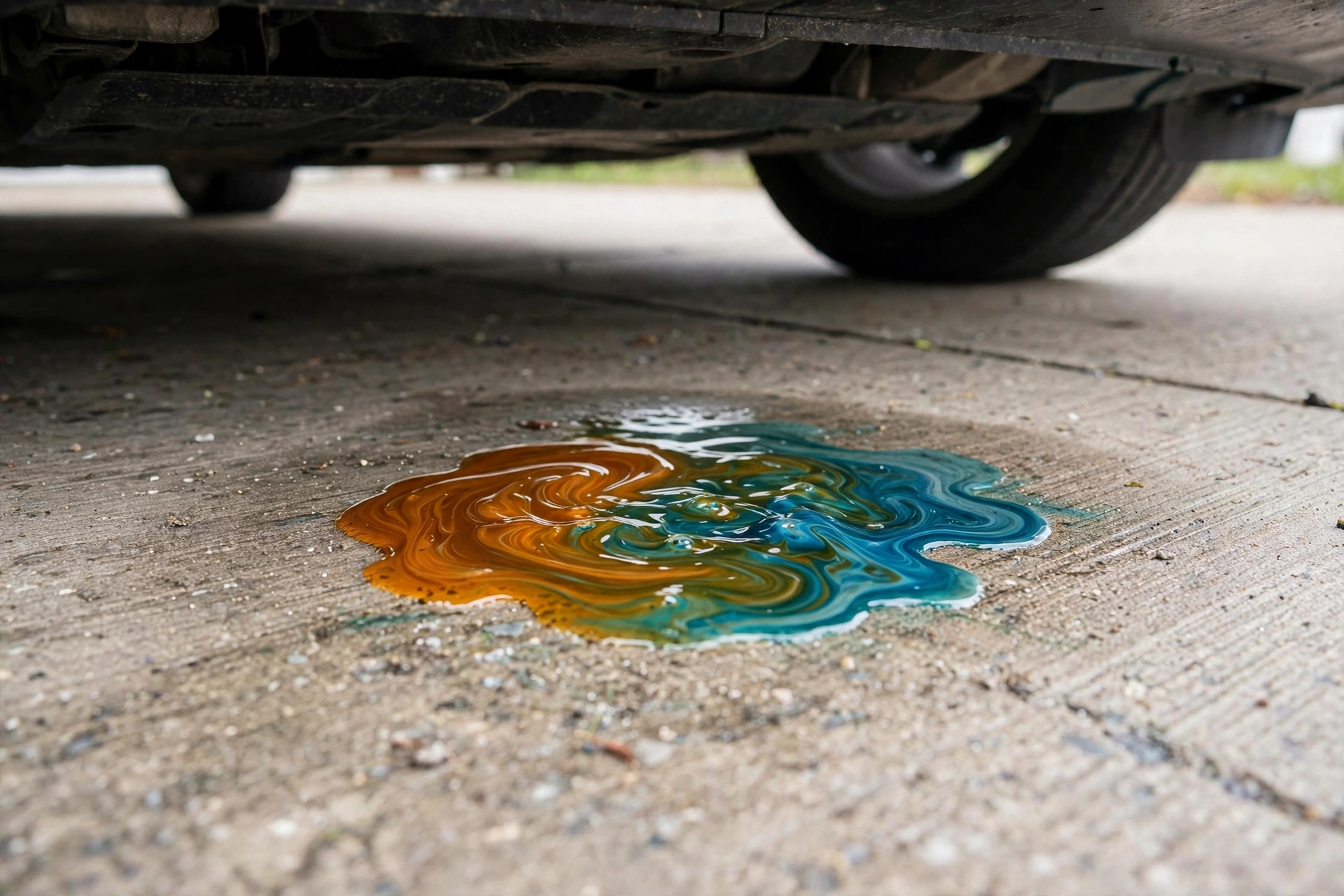
If your level keeps dropping month after month, your engine is burning or leaking oil. A small, steady drop is normal on older cars, but a fast drop — or a puddle under the car — deserves a mechanic's look.
What the Oil's Color and Texture Tell You
While the dipstick is in your hand, look at the oil itself — color is a useful clue.
- Amber or light honey: Fresh oil in good condition.
- Dark brown or black: Normal for working oil — it darkens as it picks up combustion byproducts. Plan the change if it is near its interval.
- Thick, sludgy, or gritty: Overdue for a change. Grit you can feel, or a silvery sheen, can point to wear inside the engine — get a mechanic's opinion.
- Milky or coffee-colored: Water or coolant may be mixing with the oil. A serious warning sign — see a mechanic before driving far.
- Smells of fuel: Fuel may be diluting the oil — worth a mechanic's check.
For change intervals and oil choice, see how often to change your engine oil and engine oil grades explained.
5 Mistakes Beginners Make With a Dipstick
- Reading the first pull. It is splash, not a measurement. Always wipe, reinsert, and read the second pull.
- Checking on a slope or right after driving. Both give false readings — level ground and a short wait are non-negotiable.
- Holding the dipstick upright. Oil runs down the blade and blurs the line. Keep it horizontal.
- Adding oil without rechecking. Pour a little, wait, recheck — overfilling is its own problem.
- Checking once and forgetting it. Monthly checks reveal a slow leak or burn before it becomes a breakdown.
What If Your Car Has No Dipstick?
Many newer cars — especially from BMW, Mercedes-Benz, and Audi — have dropped the physical dipstick in favor of an electronic oil-level sensor, shown on the dashboard or infotainment screen instead.
If your engine bay has no dipstick, do not pull random tubes or caps. Follow your owner's manual for the menu path and conditions (usually warm engine, level ground, car in Park). For the full walkthrough, see how to check your engine oil level.
Quick Checklist: Your Monthly 60-Second Oil Check
- Level ground; engine off 5–15 minutes
- Find the yellow/orange handle
- Pull, wipe, push fully back in
- Pull again, hold horizontal, read it
- Between the marks? Good — note the position
- Below MIN? Top up with the manual's grade, a little at a time
- Check color and texture too
- Push the dipstick back in
Frequently Asked Questions
How often should I check my oil with a dipstick?
At least once a month, and before any long trip — every couple of weeks if your car is older or losing oil.
Should I check my oil when the engine is hot or cold?
Follow your owner's manual. Most cars can be checked cold or warm after a 5–15 minute wait — what matters is that the oil has settled back into the pan. Never check right after driving or while the engine is running.
What does it mean if the oil is above the MAX mark?
Recheck first with a clean wipe-and-reinsert — a smeared reading is common. If it is genuinely over MAX, have a mechanic drain the excess; too much oil can foam and damage seals.
Can I drive if the oil is just below the MIN mark?
Top it up before driving hard or far. A short, gentle trip to buy oil is usually fine, but running below MIN on a motorway or steep hills risks serious wear. Add a little at a time and recheck.
Why is my dipstick reading different on each side?
Slight differences are normal — oil smears as the blade slides through the tube. Take the lower clear line, and repeat the wipe-and-reinsert if the sides disagree by a lot.
Conclusion
Reading a dipstick is one of the easiest skills a new car owner can learn — and one of the most valuable. Sixty seconds a month tells you whether your engine is protected, whether an oil change is due, and whether something needs attention.
Make it a habit: same day each month, level ground, wipe, reinsert, read. If anything looked unfamiliar — milky color, no oil on the stick, a level that keeps dropping — top up carefully, or see a mechanic before the small problem grows.
Sources: AAA's oil-check guide (cluballiance.aaa.com) and Mobil's engine-oil guide (mobil.co.uk).