Every car develops a smell eventually. Coffee spills, gym clothes, fast-food bags, wet floor mats — it all adds up. And the most common beginner mistake is grabbing an air freshener to mask it. Here's the truth: an air freshener layered over a dirty interior just smells like pine trees over garbage. The fix is simpler than you think — find the source, remove it, then keep it fresh with a few easy habits.
1. Find the Smell Source First
Before you clean anything, do a quick smell audit. It's free and it tells you exactly what you're fighting.
- Check under the seats. Forgotten food wrappers, spilled drinks, and old snacks are the #1 source of mystery smells.
- Check the trunk. Damp sports gear, groceries that leaked, or a wet spare-tire well can stink for weeks.
- Sniff the seats and mats. Fabric holds onto odors. If the smell gets stronger when you press your nose near the upholstery, the fabric is the problem.
- Turn on the fan. If the smell gets worse with the ventilation running, the source is inside the HVAC system (cabin filter or vents) — jump to tip 6.
2. Do a Deep Vacuum
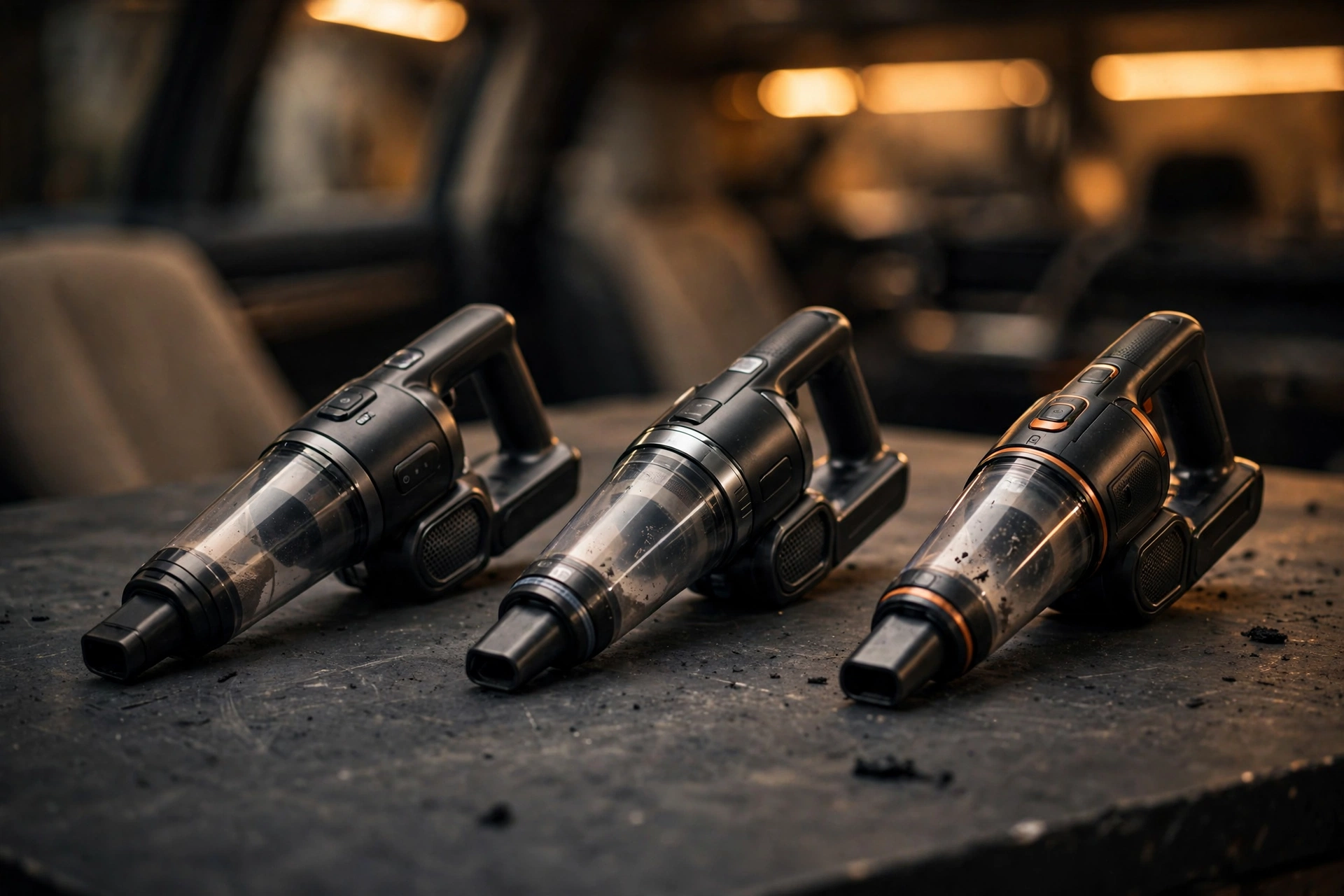
Loose dirt and crumbs trap bacteria that create odors. Vacuum the entire interior with a crevice tool: between the seats, under the seats, around the seat rails, and inside the trunk. For a full walkthrough, see our beginner's guide to washing your car properly — the same principles apply inside. Don't forget to shake out and wash the floor mats; rubber mats can be scrubbed with soapy water, carpet mats can be vacuumed thoroughly.
3. Wipe Down Every Hard Surface
Plastics, vinyl, and leather hold onto smoke, food grease, and stale air. Wipe the dashboard, door panels, center console, and steering wheel with a microfiber cloth dampened with water and a small drop of mild dish soap. Dry everything afterward — moisture left behind becomes tomorrow's musty smell.
4. The Baking Soda Overnight Trick
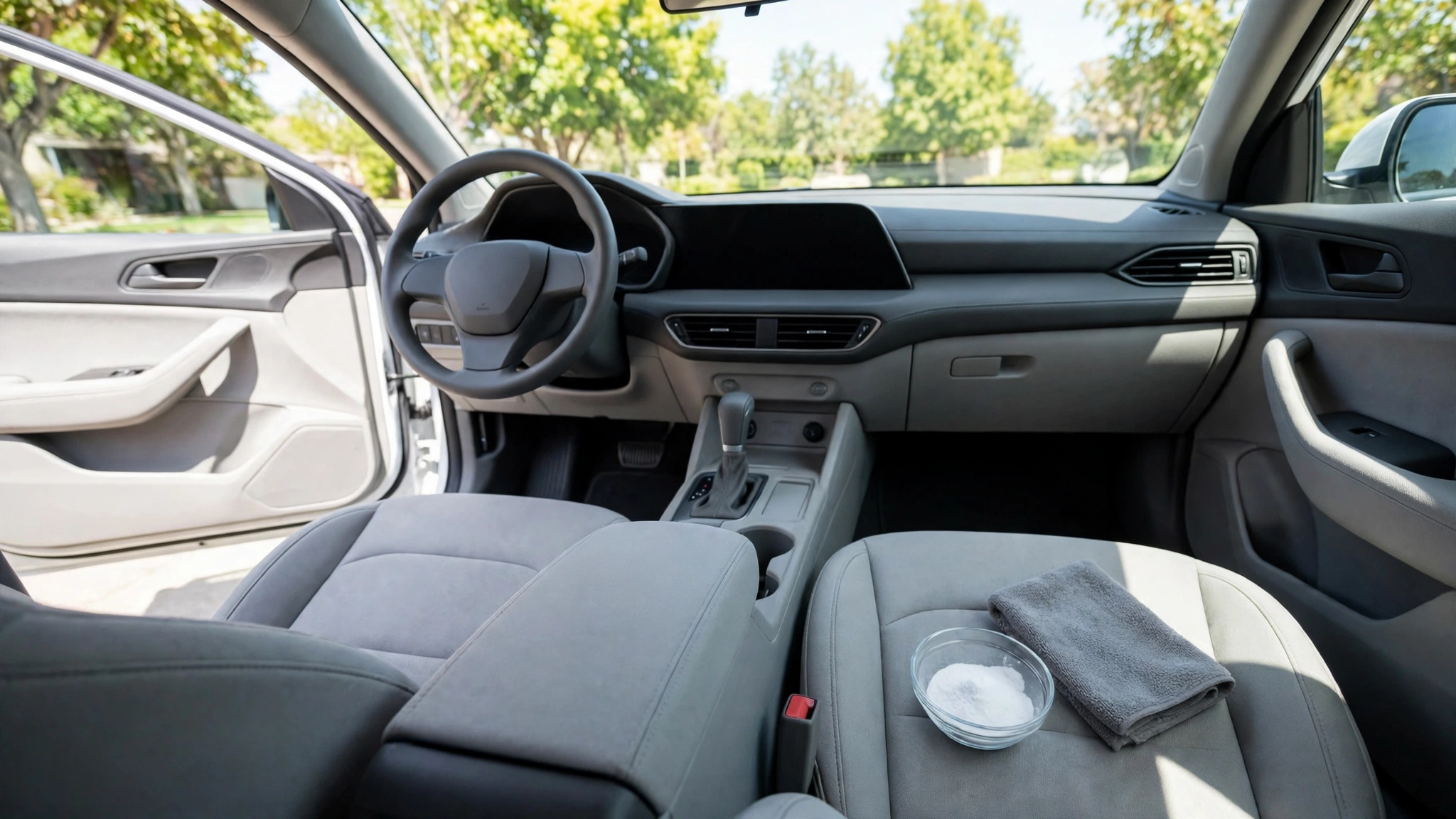
This is the cheapest odor remover that actually works. Baking soda (sodium bicarbonate) is a genuine odor neutralizer, not a fragrance mask — it absorbs odor molecules from fabrics.
- Sprinkle baking soda generously over the seats and carpets.
- Let it sit for at least 8 hours (overnight is ideal), with the windows closed.
- Vacuum it all up thoroughly.
For stubborn spots like spilled milk or pet accidents, use an enzymatic cleaner designed for upholstery first — enzymes break down the organic residue that feeds odor-causing bacteria. Baking soda handles what the cleaner leaves behind. For a full walkthrough of this natural approach, see Carwow's guide to removing bad car smells.
5. Don't Forget the Headliner and Windows
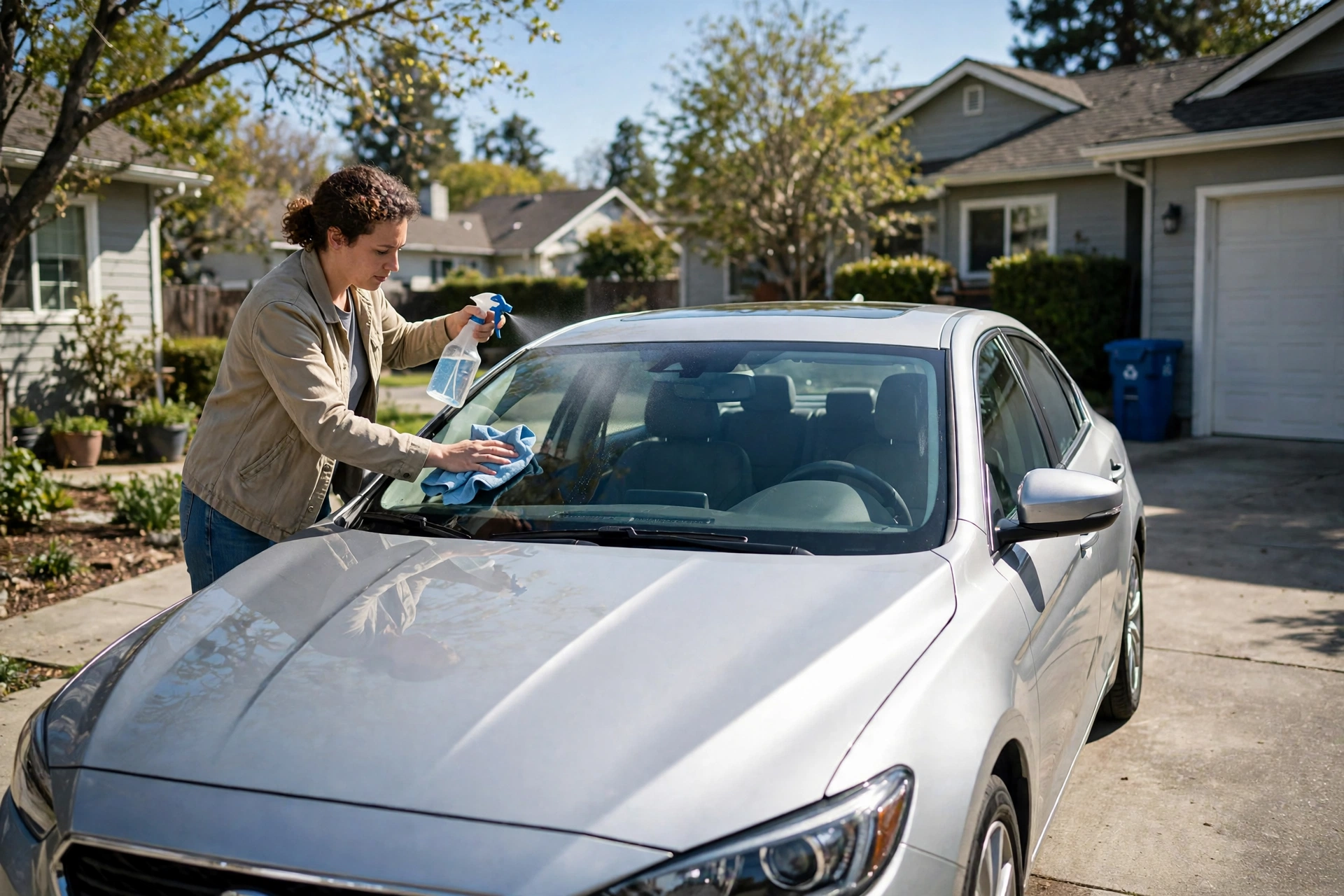
Smoke and cooking smells rise and settle into the headliner (the fabric on the ceiling). Lightly mist it with a fabric-safe cleaner and wipe gently — scrubbing hard can loosen the adhesive. Streaky windows also trap film that smells stale; clean the inside of all glass with a dedicated glass cleaner. Our guide on how to clean car windows without streaks walks you through it step by step.
6. Replace the Cabin Air Filter
If your car smells musty every time you turn on the air conditioning, the cabin air filter is very often the culprit. It traps dust, moisture, and spores — and when it's clogged, all of that gets blown straight into your face. Most cars hide it behind the glove box, and swapping it takes 10–20 minutes with no tools. Replace it every 12 months or 12,000–15,000 miles (check your owner's manual). Consider an activated-carbon filter — it neutralizes odors instead of just trapping dust.
7. Clean the AC Vents
Your car's air conditioner naturally collects condensation on the evaporator core, creating a damp, dark environment where mildew grows. That's the classic "musty AC" smell. You can treat it yourself with a foaming evaporator cleaner sprayed into the fresh-air intake at the base of the windshield (follow the product instructions carefully). After running the AC, switch to heat for a few minutes to dry the system out — it discourages future mold growth. Also check the AC drain tube isn't clogged; a blocked drain leaves water sitting inside the system. EngineerFix's HVAC odor guide explains this deep-cleaning step in more detail.
8. Tackle Smoke Smell Properly
Cigarette or vape smoke is the hardest odor to remove because it coats every surface. Baking soda alone won't cut it. You need to: wipe all hard surfaces with a vinegar-water solution (white distilled vinegar neutralizes smoke residue), deep-clean all fabrics, replace the cabin air filter, and ventilate the car for a full day. If the smell survives all that, a professional ozone or enzyme treatment at a detailer is the next step — ozone breaks down odor molecules at a chemical level.
9. Keep It Fresh With Simple Habits
Once the car smells good, keep it that way with five low-effort habits:
- Remove trash and food every time you park. Don't let fast-food bags sit overnight.
- Crack the windows when you park in sun. Heat accelerates odor buildup; ventilation prevents it.
- Use rubber floor mats in wet weather and dry them regularly — damp carpet mats are a musty-smell factory.
- Run the fan with AC off for the last 2 minutes before parking. It dries the evaporator and prevents mildew.
- Keep a small open box of baking soda or activated charcoal under a seat. It passively absorbs odors for a month or two, then you replace it.
Now — and only now — a mild air freshener makes sense, as a finishing touch rather than a cover-up. One freshener is enough; five of them is how you get a headache.
When to Call a Professional
Most car smells are DIY-fixable, but see a mechanic or detailer if:
- The smell is sweet and syrupy — that can be a coolant leak (antifreeze). Check your coolant level guide and get it inspected.
- You smell rotten eggs (sulfur) — that can indicate an exhaust or catalytic converter issue. Don't ignore it.
- The musty smell returns after cleaning — you may have a water leak (door seals, sunroof drains, windshield) that needs repair.
- Gasoline smell — treat as urgent. A fuel leak is a fire risk; don't drive it, call a mechanic.
Frequently Asked Questions
Does baking soda really remove car odors?
Yes. Baking soda is a proven odor neutralizer — it absorbs odor molecules rather than masking them. Sprinkle it on fabrics, leave it overnight, and vacuum thoroughly. It works best on mild, general staleness; for spills like milk or pet urine, use an enzymatic cleaner first.
How often should I replace my cabin air filter?
Roughly every 12 months or 12,000–15,000 miles, whichever comes first. If you drive on dusty roads or notice a musty smell when the AC runs, replace it sooner. An activated-carbon filter adds odor-neutralizing ability on top of normal filtration.
Why does my car smell musty only when the AC is on?
Moisture collects on the AC's evaporator core and breeds mildew — that's the musty smell. Replace the cabin air filter, treat the system with a foaming evaporator cleaner through the fresh-air intake, and dry the system by running the fan with the AC off before parking.
Can I use essential oils to make my car smell better?
A light essential-oil diffuser designed for cars is fine as a finishing touch, but never drip oils directly onto seats or the dashboard — they can stain fabrics, damage leather, and make surfaces slippery. Fix the source of the odor first, then scent lightly.
Does ozone treatment work for stubborn car smells?
Yes — ozone oxidizes odor molecules and can permanently eliminate smoke and deep-seated smells. It's best left to a professional detailer, since ozone can damage rubber and electronics with overuse and you must ventilate the car thoroughly afterward.
The Bottom Line
A fresh-smelling car isn't about buying the strongest air freshener — it's about removing the source of the smell and keeping the interior dry and clean. Vacuum thoroughly, wipe down surfaces, treat fabrics with baking soda, replace the cabin air filter yearly, and keep the AC system dry. Do that, and your car will smell like a clean car — which is exactly what it should smell like. For a simple ongoing routine, add these steps to your monthly car maintenance checklist.