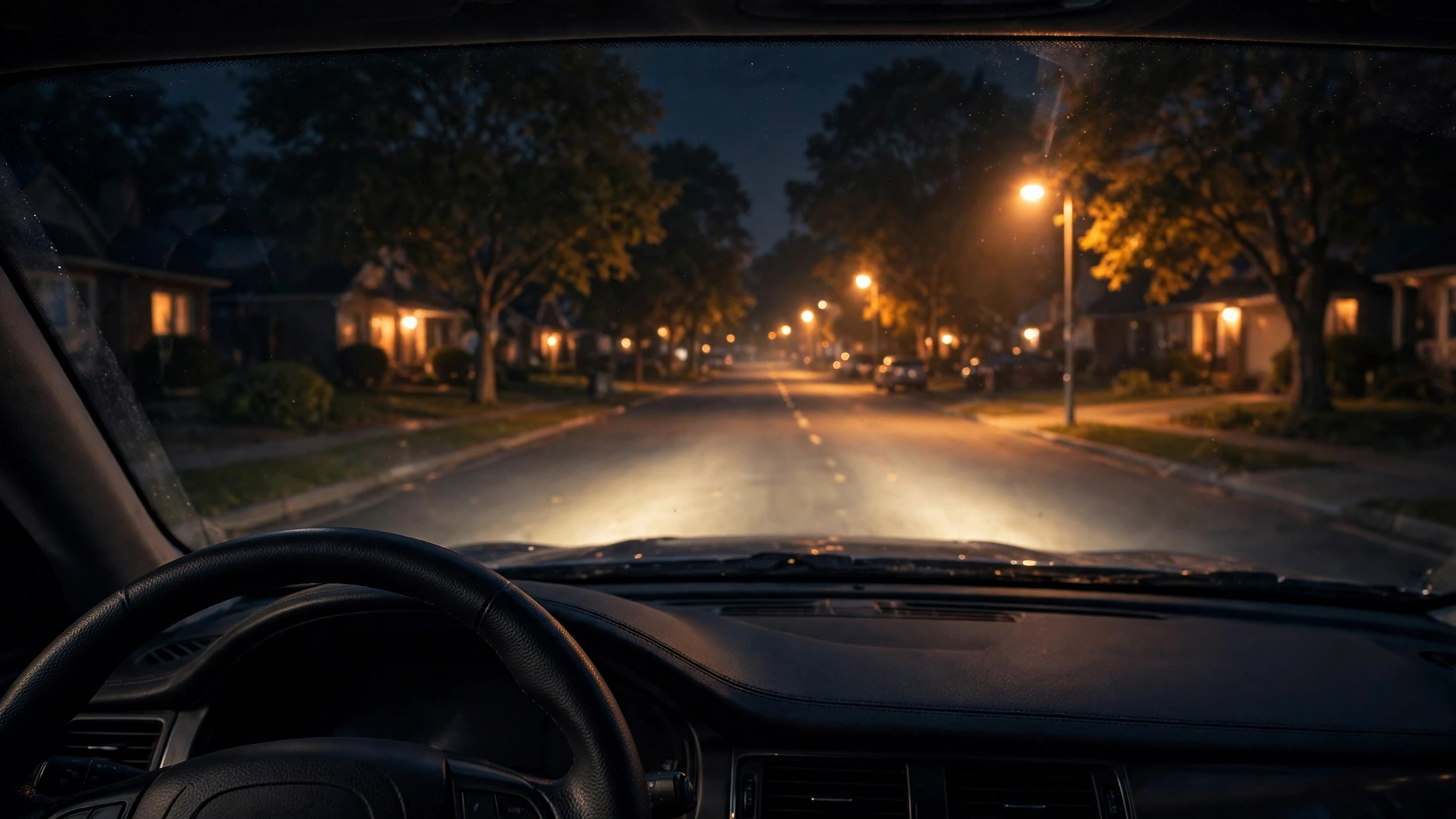
Your first drive after dark feels different from every daytime drive you have done. The road looks narrower, distances are harder to judge, and every set of headlights coming toward you feels brighter than it should. That nervousness is normal — and useful. Night driving really is riskier: according to the National Highway Traffic Safety Administration (NHTSA), fatal crashes are about three times more likely at night than during the day, and roughly half of all traffic deaths happen after dark even though only about a quarter of driving takes place at night.
The good news is that night driving is a skill, not a talent. With a short pre-drive check, a clear plan for your first trip, and ten simple habits, you can drive after dark calmly and safely. This guide is written for US drivers — the rules it quotes are US rules — and it covers everything in one place: no app to download, no driving school to join.
Why Night Driving Feels So Different
After sunset, your eyes give you far less information. Your low-beam headlights light up only about 160 to 250 feet of road ahead. At 55 mph your car covers roughly 80 feet every second — so on low beams you have only two or three seconds between seeing something and reaching it. That is why slowing down at night is not timid; it is the only way the math works.
Three things make it harder at once: depth perception drops, so it is genuinely hard to tell how far away an oncoming car is; glare from headlights and wet roads briefly blinds you; and fatigue peaks after midnight — NHTSA says drowsy-driving crashes happen most often between midnight and 6 a.m. Drunk-driving crash rates are also almost four times higher at night. A careful beginner treats darkness as a different kind of driving, not just daytime driving with the lights on.
Before You Leave: The 3-Minute Night Check
Do this quick check every time you drive at night. It takes three minutes and prevents most beginner night-driving problems before they start.
- Headlights and taillights: walk around the car and check that both headlights, both taillights, and the brake lights work. A dead bulb at night makes you nearly invisible from behind or ahead.
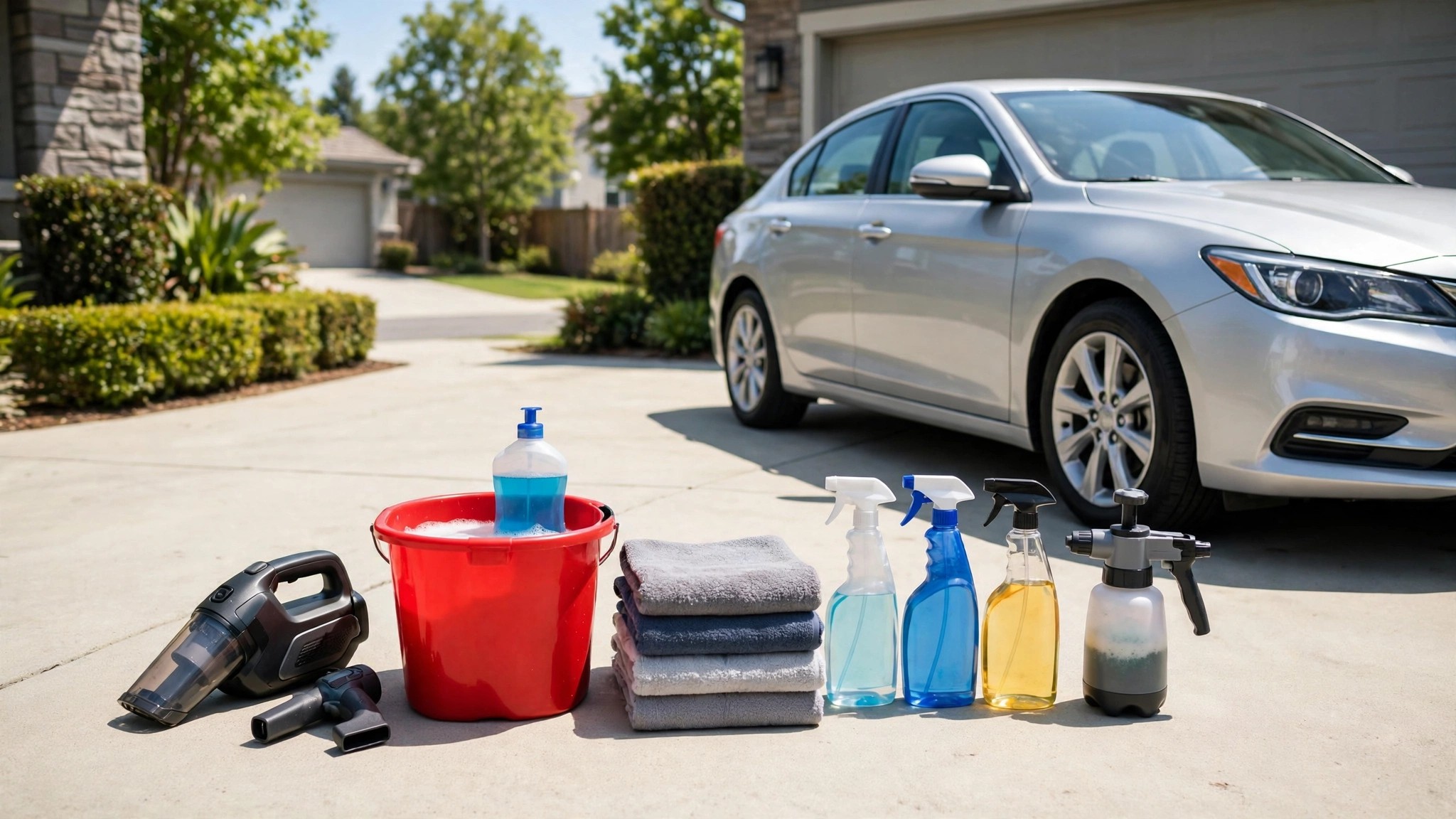
- Windshield, inside and out: wipe the glass clean on both sides. A film of dirt or haze on the inside scatters oncoming headlight glare across your whole field of view.
- Mirrors: adjust your side mirrors and rear-view mirror before you move. Flip the rear-view mirror to its night setting (the small tab underneath) so headlights behind you do not dazzle you.
- Dashboard brightness: dim your dashboard lights. A bright dashboard makes your pupils shrink, which makes the dark road outside harder to see.
- Fuel and phone: make sure you have enough fuel for the trip plus a margin, and set your navigation before you pull out — never program it while driving in the dark.
Your First Night Drive, Step by Step
Do not make your first night drive a long highway trip at midnight. Build up instead. Here is the exact sequence that works for most beginners:
- Go just after sunset first. Dusk is the gentlest introduction: there is still some light, and you learn how your headlights look on the road without full darkness.
- Pick a short, familiar route. Drive streets you already know in daylight — your own neighbourhood, the road to a nearby store. You should be thinking about the dark, not about where to turn.
- Bring a calm passenger. An experienced driver in the passenger seat helps you stay relaxed and can spot things you miss.
- Drive slower than you would in daylight. Drop 5 to 10 mph below the posted limit on your first few night drives. You are matching your speed to what you can actually see.
- Signal earlier than usual. At night, other drivers need more time to notice you. Signal well before turns and lane changes, and brake gently and early.
- Keep your eyes moving. Scan the road ahead, the mirrors, and the edges of your lane in a slow, steady rhythm. Never fix your gaze on one spot — especially not on oncoming headlights.
- End early. Keep the first night drive to 15 or 20 minutes. End on a good note, while you still feel calm. You can go further next time.
Headlights: Low Beams, High Beams, and When to Switch
Low beams are your default: use them in traffic, in built-up areas, and whenever other cars are near. They light about 160 to 250 feet ahead — enough for roughly 35 to 45 mph stopping distances, not highway speed. High beams reach 350 to 500 feet and are for dark, empty roads with no traffic around. They are underused by beginners, but they are the only way to see far enough ahead on an unlit rural road.
In the US, the rule of thumb is to switch to low beams when an oncoming vehicle is within about 500 feet — roughly a city block and a half — and never drive with high beams on when you are following another car. Dim early; the other driver will thank you by not being blinded. Practice finding the high-beam stalk in daylight, parked, so you are not fumbling for it at 55 mph in the dark. And if your headlights look yellowed or cloudy, get them cleaned: AAA found that oxidized headlight covers can reduce light output by up to 80%.
How to Handle Headlight Glare
Glare from oncoming headlights is the number one complaint new night drivers report, and it has a simple fix: do not look at the lights. When a bright car approaches, shift your eyes down and to the right, and follow the white line at the right edge of your lane. That line keeps you tracking straight while your eyes stay out of the beam.
Keep your windshield clean inside and out — dirt and haze are what turn a bright light into a blinding starburst. Dim your dashboard so your eyes stay adjusted to the dark, and flip your rear-view mirror to night mode. If glare from a car behind you is bad, slow down slightly and let it pass — never speed up to escape it. Never wear sunglasses or tinted glasses at night, and never flip your own high beams on to "answer" someone else's glare.
Slow Down and Leave More Space
At night, your stopping distance does not change — but the distance you can see does. The rule is simple: drive slowly enough that you can stop within the distance your headlights show you. Speeding is a bigger factor at night than during the day: NHTSA data shows speeding-related crashes account for 37% of nighttime-driving fatalities, compared with 21% during daylight hours.
Also stretch your following distance. In daylight, the 3-second rule is the standard. At night, make it 4 to 5 seconds — pick a fixed object, and count four or five seconds after the car ahead passes it. That extra gap lets you brake gently instead of slamming the brakes when something appears in your headlights. It also protects you from the driver behind you: if you need to stop suddenly, a tailgater with no gap has nowhere to go. Our guide on how to handle tailgaters safely covers what to do when someone is riding your bumper at night.
Fatigue: The Hidden Night Hazard
Being tired behind the wheel is as dangerous as driving after a drink — and night is when tiredness hits hardest. NHTSA reports 644 deaths from crashes involving a drowsy driver in 2024, and the riskiest hours are midnight to 6 a.m., when your body's alertness is naturally at its lowest. Watch for the warning signs: heavy eyelids, yawning, missing an exit or a road sign, drifting toward the edge of your lane, or not remembering the last few miles.
If you notice any of these, do not push on. Pull into a safe, well-lit place — a gas station, a rest area, a parking lot — and stop. A 15 to 20 minute nap, some fresh air, and a coffee help for a short stretch, but the only real cure for sleepiness is sleep. The honest rule for a beginner: if you are already tired before you start, do not drive at night at all. Reschedule the trip, ask someone else to drive, or take a rideshare. No trip is worth the risk.
Build Your Night Confidence Over 4 Nights
Confidence at night comes from repetition, not from one brave drive. Try this ladder over a week or two:
- Night 1 — dusk, familiar streets: a 15-minute loop around your neighbourhood just after sunset, with a passenger.
- Night 2 — lit main roads: a 20 to 30 minute drive on well-lit streets and a main road, still with a passenger. Practice the 4-second following gap and the high-beam switch.
- Night 3 — an unlit road, with a passenger: a short stretch of darker road so you learn what high beams really do — and how little low beams show. Keep it slow.
- Night 4 — solo, short highway stretch: once the first three feel calm, try a short solo highway drive at night. Our guide on driving on the highway for the first time pairs well with this step, and the highway merging guide covers the trickiest part of the trip.
If any step feels scary, repeat it before moving on. There is no deadline. Drivers who build up gradually end up far more confident than drivers who force one long night drive and spend the whole time white-knuckled.
Frequently Asked Questions
Is it harder to drive at night for the first time?
Yes — and that is normal. Your depth perception is worse, your headlights show only 160 to 250 feet on low beam, and glare from other cars is distracting. Most beginners feel comfortable after three or four short, gradual night drives on familiar roads.
How slow should I drive at night as a beginner?
Drive 5 to 10 mph below the posted limit on your first few night drives, and always slowly enough that you can stop within the distance your headlights light up. On low beams that is a shorter distance than you think.
When should I use high beams at night?
Use high beams on dark, empty roads with no traffic around — they reach 350 to 500 feet, about twice as far as low beams. Dim them when an oncoming vehicle is within about 500 feet, and never use them while following another car. In built-up, well-lit areas, low beams are enough.
What should I do if headlights blind me?
Look down and to the right at the white edge line of your lane — never stare into the lights. Slow down slightly, keep your windshield clean, dim your dashboard, and flip your rear-view mirror to night mode.
Is it safe to drive at night as a new driver?
Yes, with the right habits. Night driving is statistically riskier — fatal crashes are about three times more likely after dark, according to NHTSA — but the risk drops sharply when you slow down, keep a 4 to 5 second following gap, use your lights properly, and never drive tired. Many US states also restrict new teen drivers from driving late at night under graduated licensing rules, so check your state's rules if you are a teen driver.
The Bottom Line
Your first night drive does not need to be brave — it needs to be boring. A short, familiar route just after sunset, a clean windshield, lights checked, speed matched to what you can see, and a calm passenger beside you. Then repeat it, a little further and a little darker each time. Within a week or two, night driving stops feeling like a different world and starts feeling like driving — just with the headlights on. That is exactly how confidence is supposed to build: one quiet, uneventful drive at a time.
Sources: NHTSA crash data and drowsy-driving guidance as cited by GEICO's night-driving safety tips; following-distance and visibility guidance from NZ Transport Agency's night-driving guide. Lighting rules vary by state and country — always check your local rules and your owner's manual.