
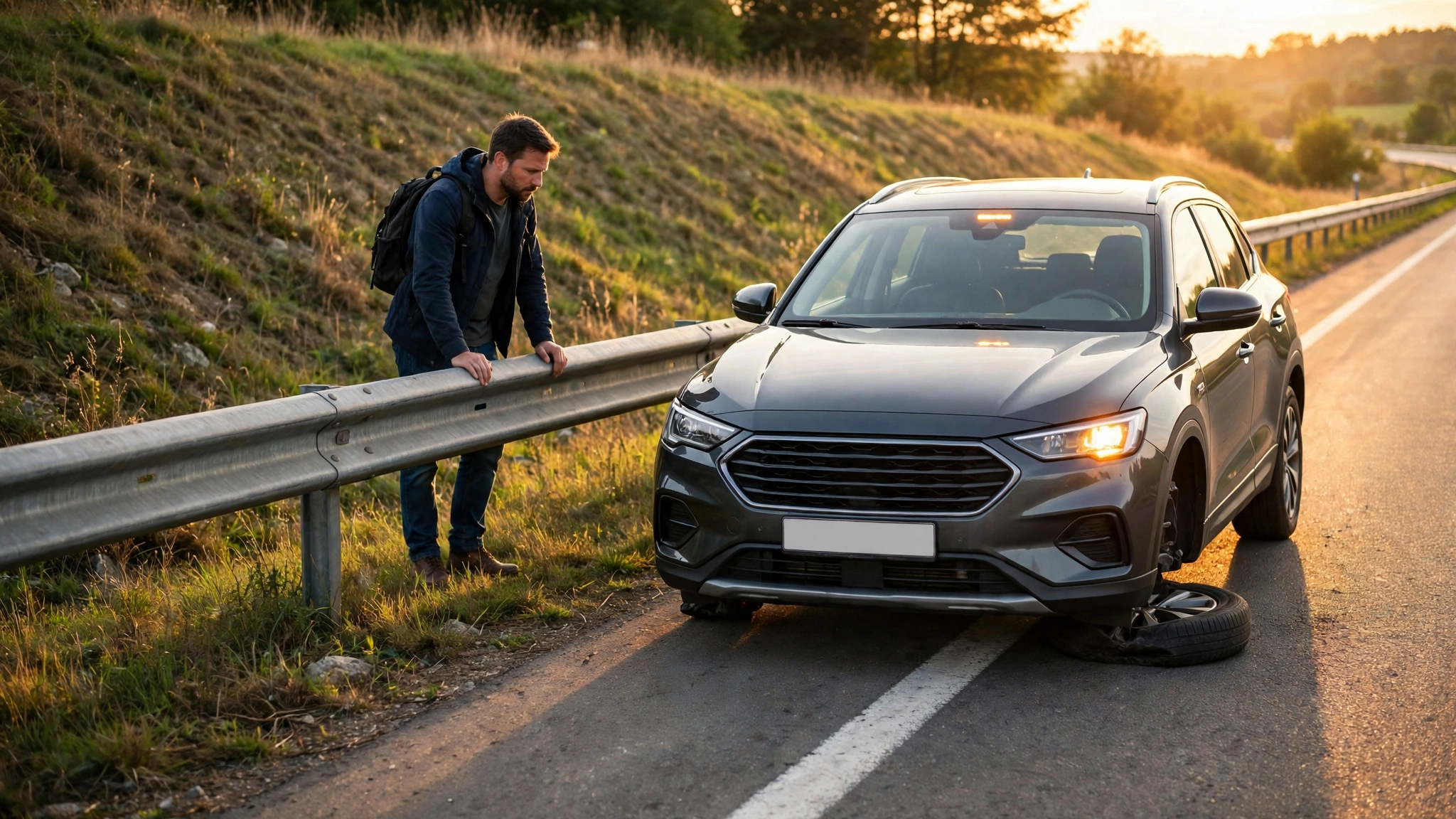
A tire blowout is one of the scariest things that can happen while you are driving. One second everything is normal, the next there is a loud bang, the car pulls hard to one side, and your heart is racing. The good news is that most drivers who stay calm and follow the right steps walk away without a scratch. The wrong instinct — slamming the brakes or jerking the steering wheel — is what turns a blown tire into a crash.
This guide explains exactly what to do when a tire blows out, what never to do, and how to stop blowouts from happening in the first place.
What a Tire Blowout Actually Is
A blowout is a sudden, complete loss of air pressure in a tire, usually caused by the tire bursting or tearing open. It is different from a slow puncture, where air leaks out gradually. A blowout happens in a fraction of a second, often at highway speed.
Here is what it usually feels and sounds like:
- A loud bang or boom — the sound of the tire bursting, followed by a flapping noise as the deflated rubber hits the road.
- A strong pull to one side — the car drags toward the side of the blown tire.
- Shaking through the steering wheel if it is a front tire, or shaking through the seat and body of the car if it is a rear tire.
- The car slowing down on its own as the flat tire creates drag.
According to the U.S. National Highway Traffic Safety Administration (NHTSA), tire failure causes around 11,000 crashes every year, and under-inflation is the leading cause. Allstate's tire blowout guide confirms the same core advice you will find below: stay calm, do not brake, and steer straight.
The 6 Steps to Survive a Tire Blowout
Your goal in the first few seconds is simple: keep the car going straight and slow down gradually.
Step 1: Stay calm and grip the wheel firmly
Take a breath. Put both hands on the steering wheel and hold it firmly, at roughly the 9 and 3 o'clock positions. A firm grip stops the pull of the blown tire from jerking the wheel out of your hands.
Step 2: Do NOT touch the brake pedal
This is the hardest step, because braking is every driver's first instinct in an emergency. Resist it. Slamming the brakes during a blowout can lock the wheels and send the car into a spin or a skid. NHTSA's guidance is clear: do not brake suddenly.
Step 3: Ease off the accelerator — slowly
Lift your foot off the accelerator gradually and let the car lose speed naturally. The drag from the flat tire is already slowing you down, and gentle deceleration keeps the car stable.
Step 4: Steer straight and steady
Keep the car travelling in a straight line. Make only small, smooth steering corrections to counteract the pull toward the blown tire. Do not make sharp steering movements or try to change lanes while the car is still unstable.
Step 5: Turn on your hazard lights
Once the car is stable and slowing, switch on your hazard lights. This warns drivers behind you that something is wrong and that you are about to pull over.
Step 6: Pull over only when it is safe
When your speed has dropped to around 25–30 mph (40–50 km/h) and the car feels stable, gently steer toward the right-hand shoulder. Avoid stopping on a curve or a narrow shoulder. Once stopped, keep your hazard lights on, apply the parking brake, and turn the engine off.
What NOT to Do During a Blowout
- Do not slam the brakes. Sudden braking is the single biggest cause of blowout-related loss of control.
- Do not yank the steering wheel. Overcorrecting can throw the car across lanes or into a spin.
- Do not take your hands off the wheel to reach for your phone while the car is still unstable.
- Do not try to drive on the flat tire to reach the next exit. A few hundred metres at low speed to reach a safe spot is one thing; continuing at normal speed will destroy the wheel rim.
- Do not get out of the car on the traffic side. Always exit from the side away from passing traffic, and get behind a guardrail if there is one.
Front vs Rear Tire Blowout: Does It Matter?
Your reaction should be exactly the same either way:
- Front tire blowout: You will feel it mostly in the steering wheel — strong vibration and a hard pull to one side.
- Rear tire blowout: You will feel it more in the seat and the body of the car — a swaying or fishtailing feeling at the back.
Either way, do not try to guess which tire blew while you are still moving. Focus on control first; check the tires once you have stopped safely.
After You Have Stopped: What to Do Next
Once the car is safely parked, work through this checklist:
- Stay visible. Keep the hazard lights on. If you have a reflective vest or warning triangle in your car, use them — place a triangle 45–90 metres behind the car if it is safe to walk there.
- Check the damage. Look at all four tires. The blown one will be obvious. Also check the wheel rim for damage and look for any fluid leaking under the car.
- Decide: change it or call for help? If you know how to change a flat tire, you have a usable spare, and the location is safe (flat ground, away from traffic), you can change it yourself. If any of those is not true, call roadside assistance or a tow truck instead. Changing a tire next to highway traffic is genuinely dangerous.
- Never drive on a space-saver spare at full speed. Temporary "donut" spares are usually limited to 50 mph (80 km/h) and short distances. Drive gently to the nearest tire shop.
- Call your insurer if needed. If the blowout damaged the wheel, suspension, or bodywork, take photos and contact your insurer — some policies cover it.
If you have not already built one, now is a good time to put together an emergency kit for your car — a reflective vest, warning triangle, and flashlight matter most in exactly this situation.
How to Prevent a Tire Blowout
Most blowouts are the end result of a tire that was already in trouble. A few simple habits cut your risk:
- Check tire pressure monthly. Under-inflation is the number one cause of blowouts: a soft tire flexes too much, overheats, and eventually fails. Learn how often to check tire pressure and keep a small gauge in your glovebox.
- Inspect your tires regularly. Look for cracks in the sidewall, bulges, cuts, and nails or screws stuck in the tread. A bulge in the sidewall means the tire should be replaced before it blows.
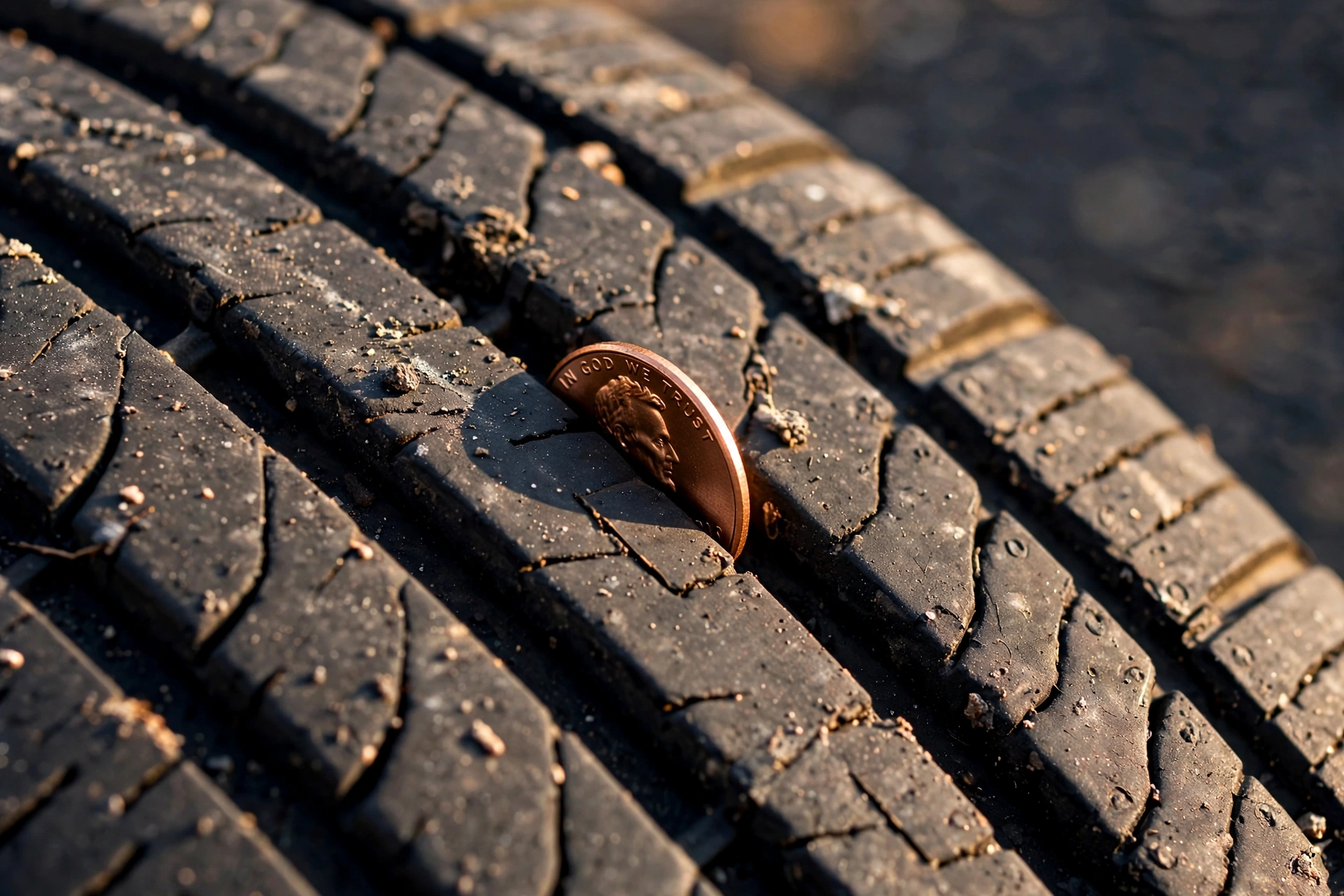
- Check tread depth. Worn tires are more vulnerable to punctures and heat damage. The tire tread depth coin test takes two minutes.
- Do not overload your car. The maximum load rating is on the door-jamb sticker. Overloading puts extra heat and stress on the tires, especially on long highway trips in hot weather.
- Replace old tires, even if the tread looks fine. Rubber degrades with age. Most manufacturers recommend replacing tires after six years, and no later than ten years — check the four-digit date code on the sidewall.
- Avoid potholes and kerbs where you can. A hard hit can damage a tire internally without any visible mark, and the tire can fail days or weeks later.
- Slow down in extreme heat. Hot roads plus high speed plus an under-inflated tire is the classic blowout combination.
Frequently Asked Questions
Should I brake during a tire blowout?
No. Sudden braking can lock the wheels and cause you to lose control. Grip the wheel firmly, ease off the accelerator gradually, and let the car slow down on its own before gently pulling over.
Can I drive on a blown tire to the nearest garage?
Only for a very short distance at very low speed to reach a safe stopping place. Driving further will destroy the wheel rim and damage the suspension. Stop as soon as it is safe, then change to the spare or call for help.
What causes a tire to blow out?
The most common causes are under-inflation, overloading, old or worn tires, and hitting a pothole or sharp object at speed. Heat makes all of these worse, which is why blowouts are more common on long summer highway trips.
Is a front or rear tire blowout more dangerous?
Both are dangerous. A front blowout is felt through the steering wheel; a rear blowout makes the back of the car sway. The correct response is identical for both.
How do I know if my tires are at risk of a blowout?
Warning signs include low tire pressure, cracks or bulges in the sidewall, tread worn below the legal limit, vibration at speed, and tires older than six years. A monthly pressure check and a quick visual inspection catch most of these.
Conclusion
A tire blowout feels terrifying, but it is survivable — and usually preventable. Remember the three golden rules: grip the wheel, do not brake suddenly, and ease off the accelerator. Slow down gradually, switch on your hazards, and pull over only when it is safe.
The best blowout is the one that never happens. Spend five minutes a month checking your tire pressure and looking over your tires.