
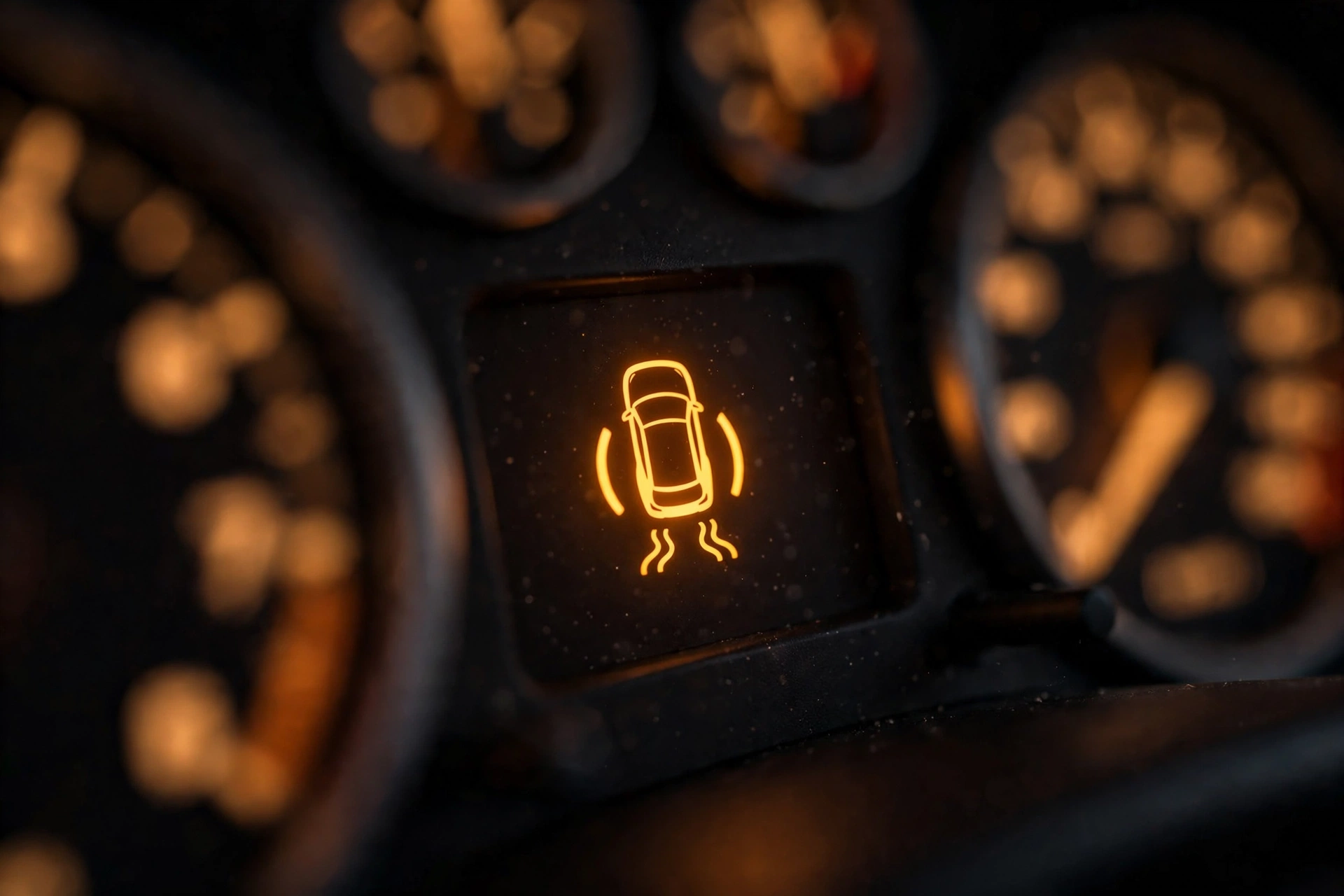
You glance at your dashboard and spot it: a small amber light showing a car with squiggly lines behind it. That's your Toyota's VSC light — and if you've never seen it before, it's natural to feel a jolt of worry. Is something broken? Is it safe to keep driving?
Take a breath. In most cases, a VSC light is not an emergency, and some causes are surprisingly simple (including one that happens after something as ordinary as a battery change). This guide explains what the light means, how to read it correctly, and exactly what to do — in plain English, no mechanic jargon required.
What Does "VSC" Actually Mean?
VSC stands for Vehicle Stability Control. It's Toyota's name for a safety technology called Electronic Stability Control (ESC), which has been required on all new cars in the US since 2012.
Here's what it does in simple terms: when you're turning or driving on a slippery surface, your car can start to slide sideways — the front "pushes" wide (understeer) or the rear swings out (oversteer). The VSC system detects that slide using sensors and automatically brakes individual wheels and reduces engine power to help pull the car back onto the path you intended. It works together with your ABS brakes and traction control, and you normally never notice it doing its job.
When the VSC light comes on, it means this helper system is currently inactive — either you (or someone) turned it off, or the car detected a problem and shut it down. Your regular brakes and steering still work normally, but you've lost the automatic skid-prevention backup. If you're unsure about any of these lights, our dashboard warning lights guide explains what each one means.
Flashing vs Solid vs "VSC OFF": Read the Light Correctly
Not every VSC light means the same thing. What matters most is how the light is behaving:
- Flashing VSC light (brief blinks): This is good news. It means the system is actively working — helping you stay stable on a slippery patch of road, in rain, or during a sharp turn. It's doing its job. Keep driving normally; the blinking should stop once traction returns.
- Solid VSC light (stays on): The system has detected a fault and is turned off. The car is still drivable, but you have no stability assistance. Plan to get it checked soon.
- "VSC OFF" light: The system was manually switched off, usually by pressing the VSC or traction-control button. You'll often see a "TRAC OFF" light next to it. Pressing the button again should turn the system back on.
So: flashing = the system is helping you, solid = something needs attention, and VSC OFF = someone pressed a button. That one distinction saves a lot of beginners from an unnecessary panic — or an unnecessary mechanic visit.
5 Common Reasons Your Toyota's VSC Light Comes On
1. You (or a passenger) pressed the VSC OFF button
This is the most common — and most embarrassing — cause. The VSC/traction button usually sits near the gear selector or on the dashboard, and it's easy to bump while cleaning or reaching for something. If you see "VSC OFF," press the button once and the system should come back on. Many Toyotas also re-enable it automatically after you turn the car off and on again.
2. The check engine light is also on
Here's the surprise most beginners don't expect: on Toyotas, any engine fault automatically disables VSC as a safety precaution. The stability system needs reliable engine data to work, so when the engine computer reports a problem, VSC shuts itself down and both lights appear together.
The engine problem can be something minor — a loose gas cap is a classic example. That means the VSC system itself is often perfectly fine; once the engine issue is fixed, the VSC light usually clears too. If your check engine light is on, read our guide to the check engine light before assuming the worst.
3. A wheel speed sensor problem
VSC depends on wheel speed sensors — small sensors at each wheel that tell the car how fast every wheel is turning. These sensors live in a harsh spot: they can get dirty, corroded, or damaged by road debris, and their wiring can wear out. When one fails, the VSC computer can't trust its data and disables the system. You'll often see the ABS light come on at the same time, since both systems share those sensors (our ABS warning light guide covers that in detail).
4. A recent battery disconnect or replacement
If the VSC light appeared right after a battery change or a jump start, the cause may simply be that the car's steering and sensor calibrations were reset. The VSC system sometimes needs to "relearn" the straight-ahead steering position. In many cases the light clears after driving straight for a short distance, or a mechanic can recalibrate it quickly during a visit.
5. A steering angle or yaw sensor issue
VSC compares where you're pointing the steering wheel with which way the car is actually rotating. The sensors that measure this can drift out of calibration (after an alignment, suspension work, or just over time) or fail outright. A mechanic's scan tool reads the fault codes and can usually tell the difference in minutes.
The 5-Minute Beginner Checklist: What to Do Right Now
Do these steps in order — they solve the problem for a surprising number of drivers:
- Look at exactly which lamp is on. Flashing? Solid? Or does it say "VSC OFF"? That tells you whether the system is working, faulted, or simply switched off.
- Find the VSC/traction button. It's usually near the gear selector or lower dashboard. If the light says "VSC OFF," press the button once and watch the light. If it goes out, you're done.
- Check for companion lights. Is the check engine light or ABS light also on? Write down which lights are lit — this is exactly what the mechanic will ask you.
- Restart the car. A simple off-and-on can clear a temporary glitch, especially if the light appeared after hitting a big bump or driving through deep water. If the light returns, it's a real fault, not a fluke.
- Note the timing. Did the light appear right after a battery change, a car wash, driving on a rough road, or getting gas? These clues make diagnosis much faster — and protect you from paying for guesswork.
Is It Safe to Drive With the VSC Light On?
For normal, everyday driving in dry conditions: yes. Your engine, steering, and regular brakes all work normally — you've only lost the electronic skid-prevention backup. Many people drive to work for days with this light on without any drama.
But adjust your driving while it's lit:
- Avoid slippery conditions if you can — rain, ice, gravel, and wet leaves are exactly when VSC earns its keep. Our guide to driving in heavy rain is worth a read if the forecast turns.
- Slow down and drive smoothly. No sharp lane changes, no aggressive cornering, no tailgating. Give yourself extra following distance.
- Get it checked soon, not someday. A solid VSC light is a "schedule a visit" warning, not a "panic" one — but don't ignore it for months. If the fault gets worse, you want to know before a rainy night finds out for you.
The exception: if the VSC light is joined by a red brake warning light, or the car is pulling, grinding, or handling strangely, treat that as urgent — see a mechanic immediately. And if you're ever unsure, the "see a mechanic if unsure" rule always applies.
3 Mistakes Beginners Make With the VSC Light
Mistake 1: Turning VSC off and leaving it off. Some drivers disable it out of curiosity (or by accident) and never re-enable it. There is exactly one good reason to switch it off: rocking the car free when stuck in snow, mud, or sand. For normal driving, it should stay on.
Mistake 2: Paying for a "VSC module" before a basic scan. An unscrupulous or guess-happy shop might quote you a pricey control-module replacement. In reality, many VSC lights trace back to a wheel speed sensor, a steering-angle recalibration, or even a loose gas cap triggering an engine code. Always ask: "What are the fault codes, and what is the cheapest likely cause?" A scan comes first; parts come second.
Mistake 3: Clearing the codes and calling it fixed. Disconnecting the battery or having someone clear the codes can make the light disappear — temporarily. But clearing codes also erases the clues the mechanic needs, and the light almost always returns if the underlying fault is real. Get the diagnosis before anyone clears anything.
When to See a Mechanic Right Away
Book a visit promptly if:
- The VSC light came on together with the ABS light or a red brake warning — shared sensors may be involved, and your braking safety net is reduced.
- The car handles oddly — pulling to one side, shaking, or warning beeps.
- The light appeared right after repairs, an alignment, or new tires — a sensor may need recalibration, which a shop can do quickly.
- You've tried the checklist above and the solid light keeps returning.
Ask the shop to read both the engine codes and the chassis (ABS/VSC) codes — a proper diagnosis needs both. And ask the diagnostic fee up front so there are no surprises.
Frequently Asked Questions
Why did my VSC light come on together with the check engine light?
On Toyotas, any engine fault automatically disables the stability control as a fail-safe, so both lights appear together. The VSC system itself usually isn't broken — fix the engine issue (which can be as small as a loose gas cap) and the VSC light often clears along with it. For a deeper look at engine-code issues, see this breakdown of driving with the VSC light on.
Can I turn the VSC light off myself?
If the dashboard says "VSC OFF," yes — pressing the VSC/traction button again re-enables the system and the light goes out. But if the VSC warning light is solidly on, that signals a fault, and it won't stay off until the underlying issue is diagnosed and fixed.
Is it safe to drive to work with the VSC light on?
For careful, normal driving in dry weather, yes — your regular brakes and steering work fine. Avoid slippery roads and aggressive maneuvers, drive smoothly with extra following distance, and get it checked soon.
Will disconnecting the car battery reset the VSC light?
It might clear the light temporarily, but it also erases the diagnostic codes your mechanic needs to find the real cause — and the light usually returns if the fault is genuine. A proper scan is the smarter first step. For the technical side of VSC diagnostics, this step-by-step diagnostic guide explains what mechanics actually check.
Does the VSC light mean my brakes are broken?
No. Your normal brakes still work exactly as before. The VSC light only means the electronic stability assistance — the automatic skid-prevention — is unavailable. You lose a safety helper, not your brakes.
The Bottom Line
A Toyota VSC light is your car telling you its stability helper is offline — not that your car is falling apart. Start with the simple checks: make sure it isn't just the VSC OFF button, note any companion warning lights, and restart the car. If the light stays solidly on, get a proper code scan, ask about the fault codes before approving any repair, and drive gently in the meantime.
Handled this way, most VSC lights turn out to be small, affordable fixes — and you'll know exactly what your mechanic is talking about when they explain the codes. That's what being a confident first-time car owner looks like.