
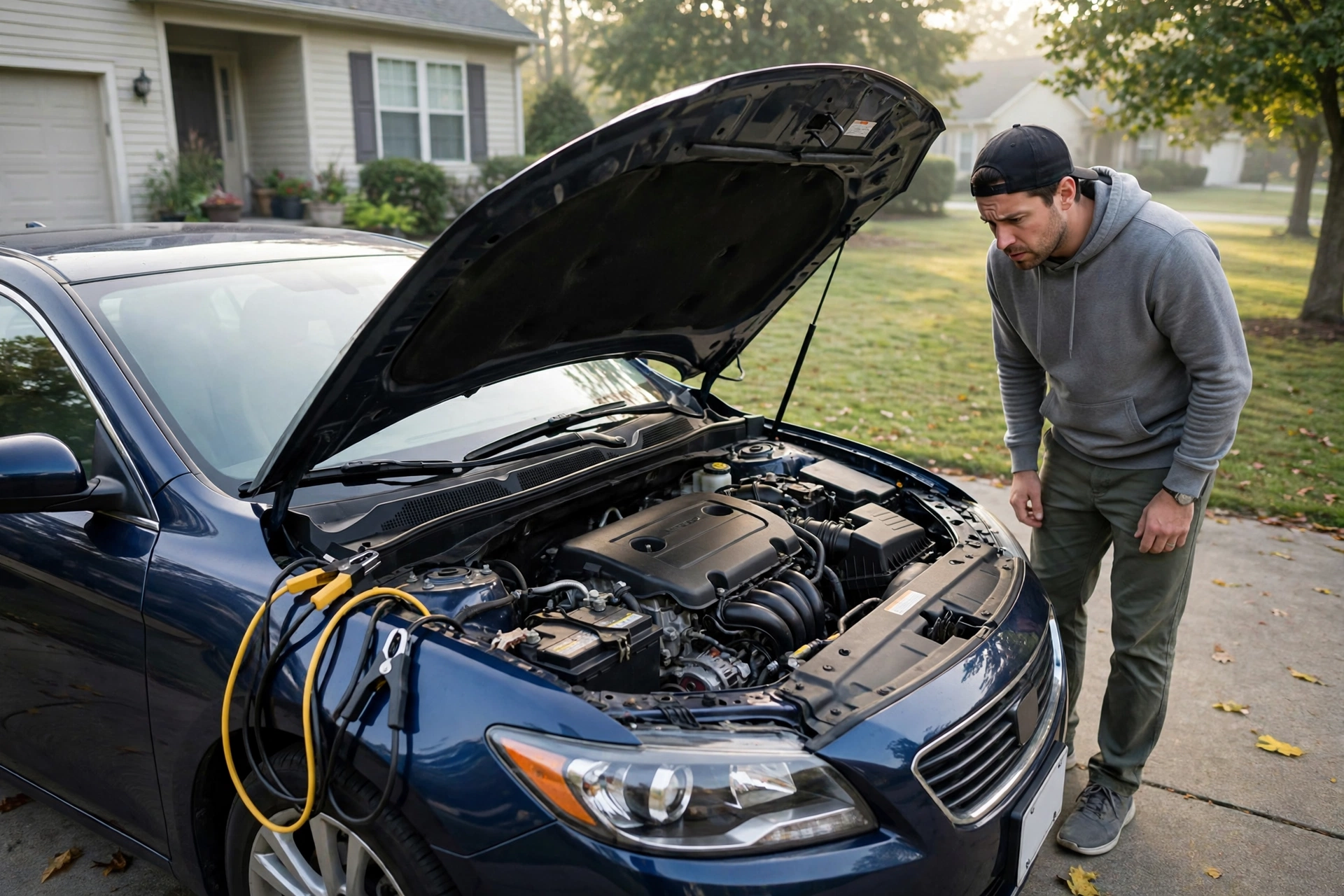
You turn the key — or press the start button — and nothing happens. Maybe a rapid clicking sound, or the dashboard lights up but the engine stays silent, or total silence. A car that will not start is stressful, especially when you are already running late.
The good news: most no-start problems are simple. A dead or weak battery causes the large majority of them, and the next most common culprits — a loose battery connection, a blown fuse, or the car simply not being in Park — are things you can check yourself in a few minutes. Work through the checks below in order.
Safety note: never crank for more than about 10 seconds at a time, and wait at least 30 seconds between attempts. If you smell fuel, see smoke, or notice fluid leaking under the car, stop and call for help instead of trying again.
Step 1: Listen to What the Car Is Telling You
Before you open the hood, note what happens when you try to start the car. The sound — or silence — is your best clue:
- Rapid clicking, like a machine gun: the starter is trying to engage but the battery lacks the power to turn the engine — the classic weak-battery symptom.
- One single loud click, then nothing: the starter solenoid is engaging but the motor is not turning. A failing starter can cause this — but so can a weak battery or bad connection.
- Slow cranking, like a tired groan: low power again — a weak battery or poor connections.
- The engine cranks normally but will not fire up: the battery and starter are fine. The problem is elsewhere — fuel, spark, or an engine sensor — and that is a job for a mechanic.
- Complete silence, no dashboard lights: no electrical power at all — focus on the battery and its connections.
If you call a mechanic later, "rapid clicking with dim lights" tells them far more than "it won't start."
Step 2: Check the Simple Things First
A surprising number of no-starts are caused by something small:
- Is the car in Park (automatic) or Neutral with the clutch pressed (manual)? Most cars will not start in any other gear. Push the lever firmly into Park, or press the clutch all the way down.
- Is your foot on the brake? Many push-button-start cars need the brake pedal pressed before they start.
- Is the key fob battery dead? With push-button start, hold the fob against the start button — most cars have a backup sensor there.
- Is there fuel in the tank? A faulty gauge can read a quarter-tank when the tank is empty.
- Is the steering wheel locked? If the wheel will not move and the key will not turn, gently turn the wheel left and right while turning the key.
- Is the security light flashing? A blinking anti-theft light means the car may not recognize your key — try your spare.
Also check the dashboard and headlights: turn the key to "on" without cranking. Bright lights mean the battery still has charge for the electronics, but the starter needs far more power, so a battery problem is still possible. Dim lights that die when you crank point at a weak battery or poor connection; no lights at all means the battery is flat, a fuse has blown, or a cable has come loose. If the headlights go very dim or switch off while you crank, you have a severe power shortage.
Step 3: Inspect the Battery and Its Connections
Pop the hood and find the battery — a rectangular box near one corner of the engine bay, with two thick cables attached. Check three things:
Loose connections
Grab each battery cable clamp and try to twist it gently — it should not move at all. A loose clamp can mimic a dead battery perfectly, because the starter cannot draw enough current through it. Tighten the clamp bolt with a wrench (usually 10 mm) until snug, then try starting.
Corrosion
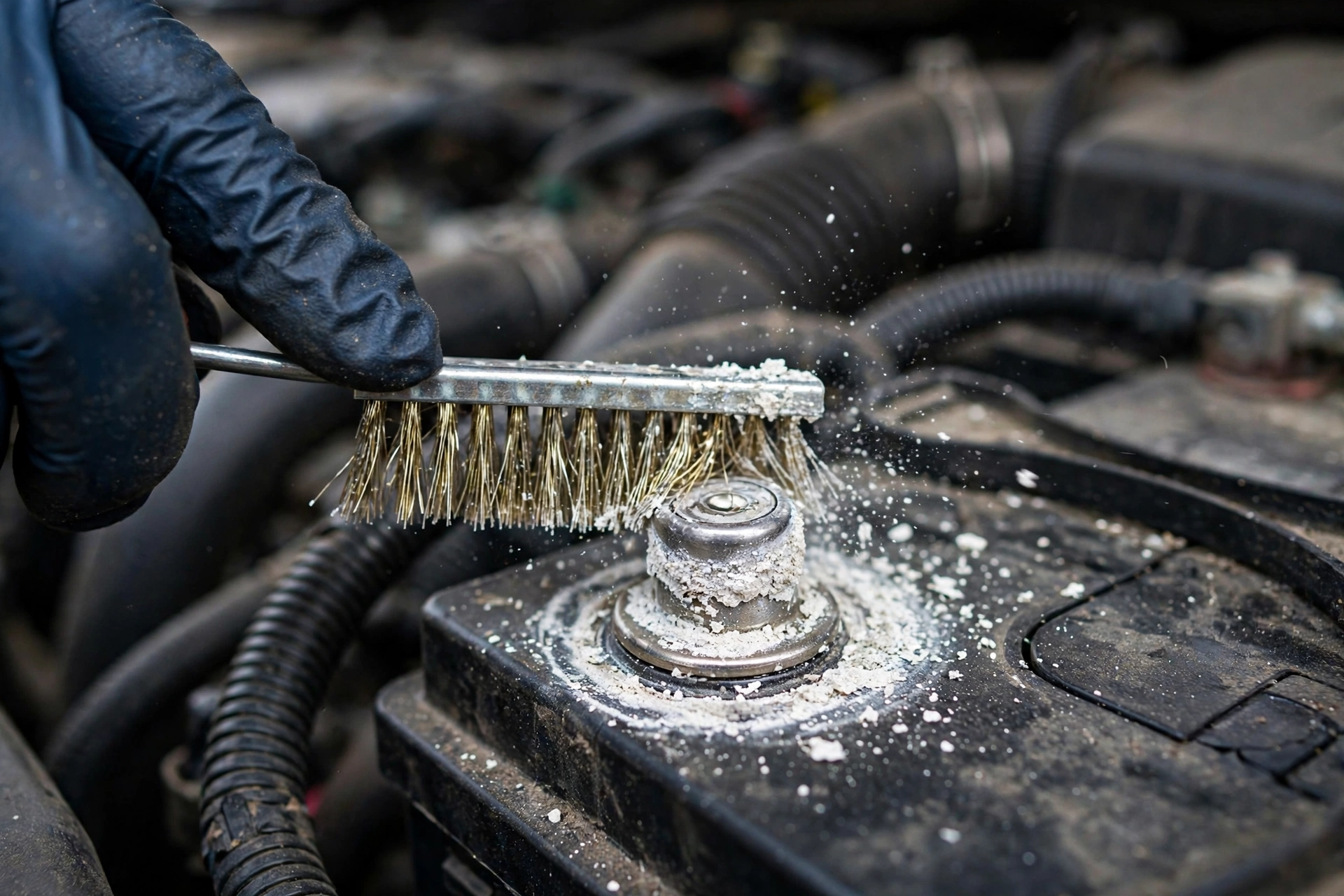
Look for white, blue, or green crusty buildup around the battery posts — corrosion creates resistance and can stop the car from starting even when the battery is fine. Disconnect the negative cable first, then the positive, clean the posts and clamps with a wire brush, then reconnect positive first and negative second. Full walkthrough: how to clean corroded battery terminals safely.
Battery age and condition
Most car batteries last three to five years. If yours is that old — and the car has been slow to start on cold mornings — the battery is the prime suspect. See how long car batteries last and the signs yours is dying.
With a multimeter, a healthy battery reads around 12.6 volts with the engine off; below 12.0 volts means it is severely discharged. Most auto parts stores test batteries for free.
Step 4: Try a Jump Start
If the battery looks weak, a jump start is the fastest way to find out whether the battery is the whole problem. You need jumper cables and a second car — or a portable jump starter.
- Park the working car close enough for the cables to reach; switch both cars off.
- Connect red to the dead battery's positive (+) terminal, then red to the working battery's positive terminal. Connect black to the working battery's negative (−) terminal, then black to an unpainted metal surface on the dead car's engine — not its negative terminal.
- Start the working car, wait a couple of minutes, then try yours.
- Once yours is running, remove the cables in reverse order.
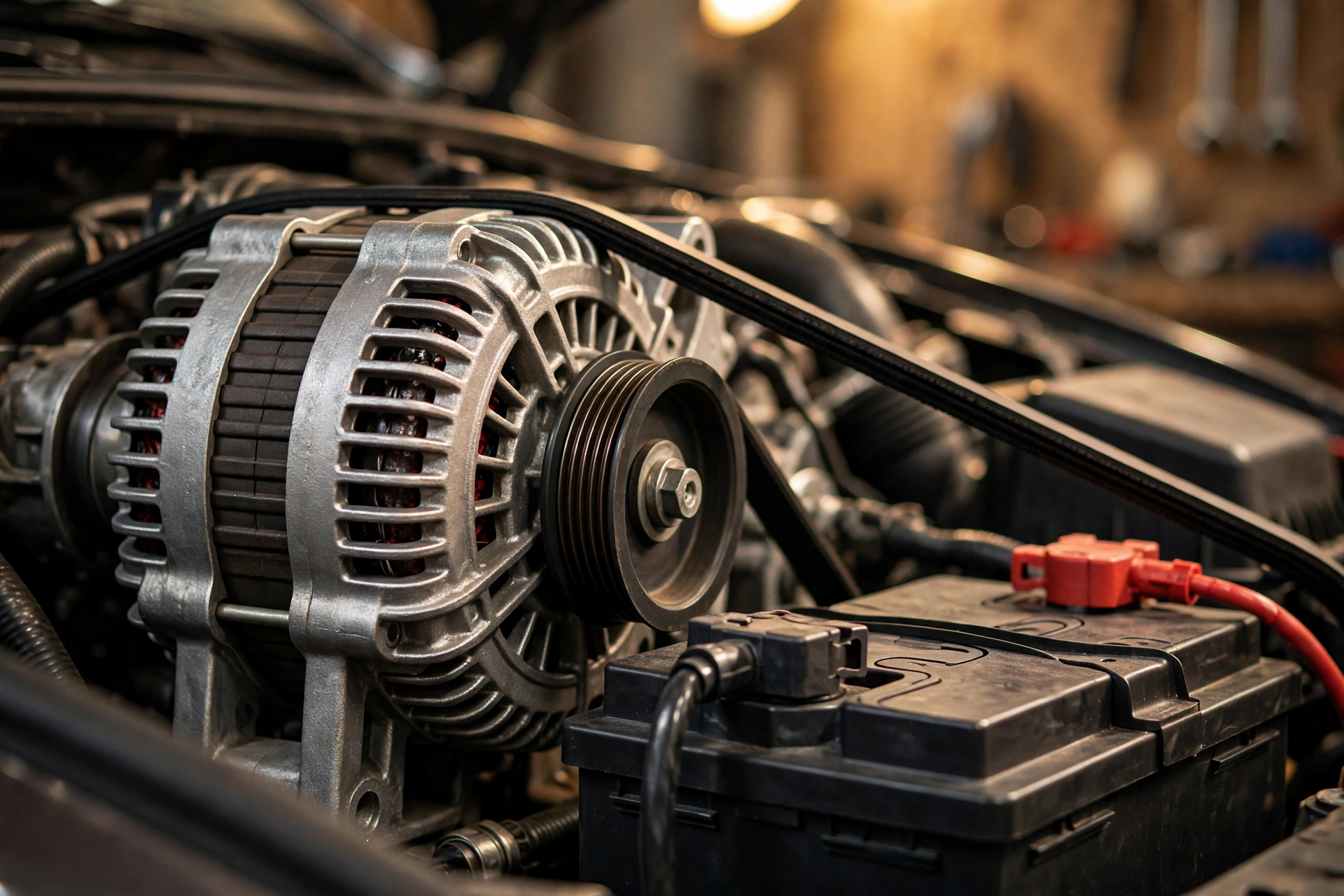
Full guide with safety warnings: how to jump start a car safely. If the car starts with a jump, drive it for at least 20–30 minutes so the alternator can recharge the battery, then switch off and try restarting. If it starts fine, the battery was drained. If it will not restart, the battery may no longer hold a charge, or the alternator may not be charging it — see alternator vs battery: how to tell which one failed.
Step 5: Check the Fuses
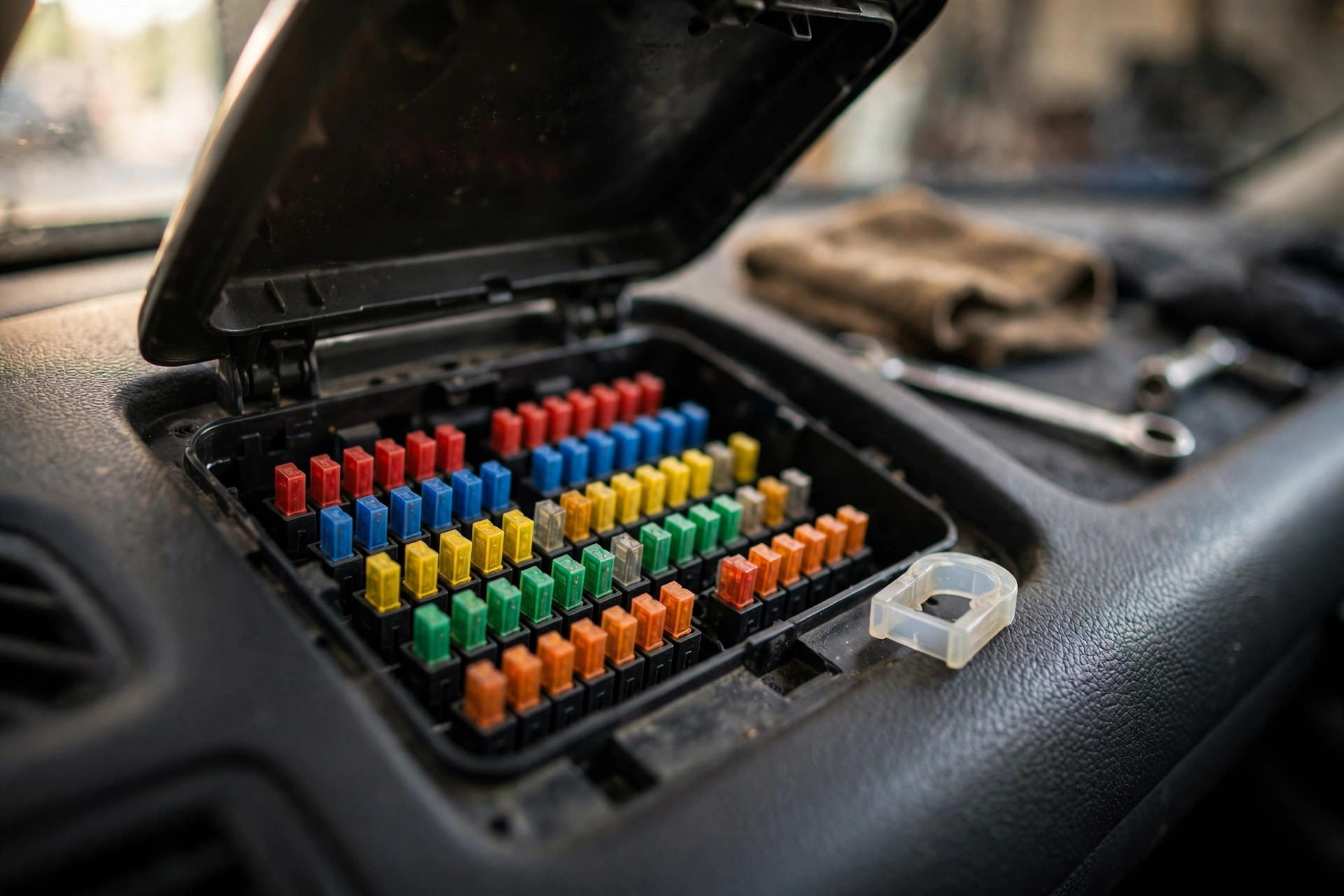
If the battery is fine but the car is completely dead — or the starter does nothing at all — a blown fuse could be the cause. Cars have two fuse boxes: one under the dashboard, one under the hood; your owner's manual shows which fuse protects the starter circuit. Pull it and hold it up to the light: if the thin metal strip inside is broken or melted, it is blown. Replace it with a fuse of the exact same rating (the number printed on top, such as 10A or 30A) — never a higher one. If the new fuse blows immediately, there is a short circuit — a mechanic's job. Full procedure: car fuses explained: how to check and replace a blown fuse.
Step 6: Know When to Stop and Call a Professional
Some no-start causes are beyond beginner DIY. Call a mechanic if the engine cranks normally but will not start (usually fuel, ignition, or a sensor), if you hear a single loud click with a good battery and connections (the starter may have failed), if the car starts with a jump but dies again while driving (the charging system is likely at fault), or if you smell fuel, see smoke, or find fluid leaking under the car.
When you call, describe what you found: "rapid clicking, dim lights, four-year-old battery, jump start worked but it wouldn't restart." That saves diagnostic time — and money.
Keep a small emergency kit in the trunk — jumper cables, a flashlight, and a portable jump starter turn a stressful morning into a 10-minute fix. See the emergency kit every first-time driver should keep in the car.
Frequently Asked Questions
Why won't my car start if the lights still work?
The lights need very little power; the starter needs a huge burst of current — several hundred amps — to turn the engine over. A weak battery can still light the dashboard while failing to crank, so working lights never rule out a battery problem.
Can a car battery die suddenly overnight?
Yes. A battery near the end of its life can work fine one day and fail the next, especially in cold weather — cold thickens the engine oil and reduces the battery's output. A light left on or a door left ajar can also flatten it overnight. See why your car battery keeps dying overnight.
How long should I drive after a jump start?
Drive for at least 20–30 minutes at normal road speeds — idling alone is not enough. Then switch off and try restarting: that tells you whether the battery is holding a charge.
Is it safe to keep trying to start the car?
No — repeated long cranking can overheat and damage the starter and drain the battery further. Crank for no more than 10 seconds at a time, wait 30 seconds between tries, and stop after three or four attempts.
Conclusion
A car that will not start feels like a disaster, but usually it is a fixable problem. Start with your ears — the clicking, cranking, or silence tells you where to look. Then work through the easy checks: gear position, key fob, fuel, dashboard lights, battery connections, and corrosion. A jump start usually confirms whether the battery is the culprit.
Keep jumper cables and a portable jump starter in your trunk and note your battery's age. Next time the car refuses to start, you will know what to check first.