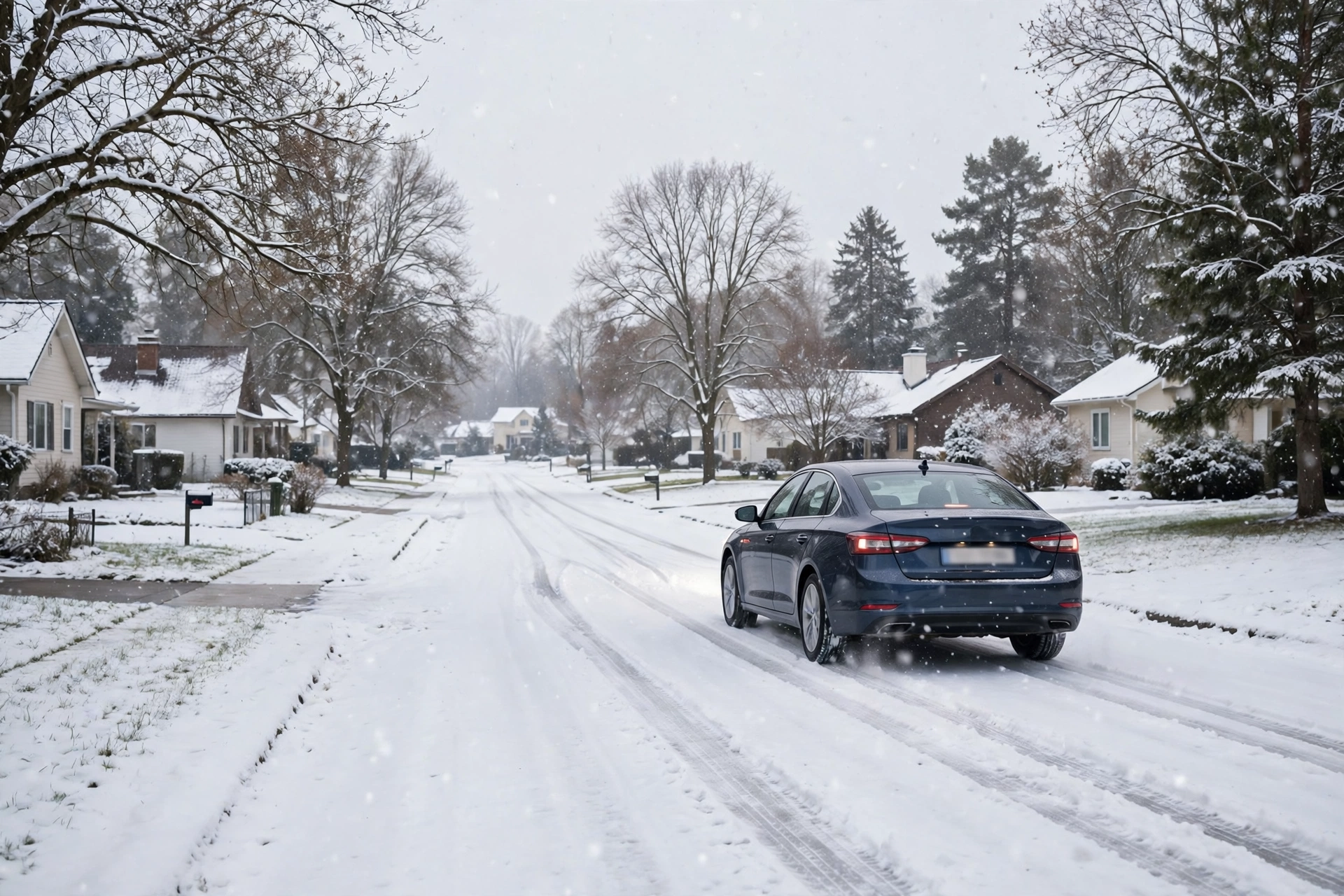
Your first drive in snow feels nothing like driving on a dry road. Familiar streets become slippery, your car takes far longer to stop, and even a gentle turn can send the back end sliding. It is normal to feel nervous — most new drivers do. Snow driving is a skill, not a talent, and it comes down to a few simple habits: slow down, leave space, and make every move gentle.
This guide covers 12 practical tips for driving in snow for the first time, written for beginners driving an automatic car. No jargon — just what to do before you leave, what to do behind the wheel, and when to stay home.
Why snow driving feels so different
On dry pavement, your tires grip the road and your car does what you expect. On snow and ice, that grip drops sharply. The UK's AA motoring association notes that stopping distance at 30 mph can stretch from about 23 metres on a dry road to as much as 230 metres in snow — roughly ten times longer. That single fact explains almost every tip in this guide: everything in snow takes more time and more space.
Snow also hides danger. A road that looks merely wet can be covered in black ice, a thin transparent layer that is nearly invisible — and a light dusting can turn into a whiteout in minutes.
Before you leave: the 5-minute winter check
Most snow-driving mistakes happen before the car even moves. Run through this quick check every time you drive in winter:
- Tires: check the tread and the pressure. Worn tires are the number-one reason beginners slide, and cold weather drops tire pressure — the correct pressure is on the sticker inside the driver's door jamb.
- Clear ALL the snow off the car: not just a peephole in the windshield — clear the roof, hood, trunk, lights, mirrors, and plate. Snow sliding off your roof can blind you when you brake, and some US states fine drivers for snow blowing off their car.
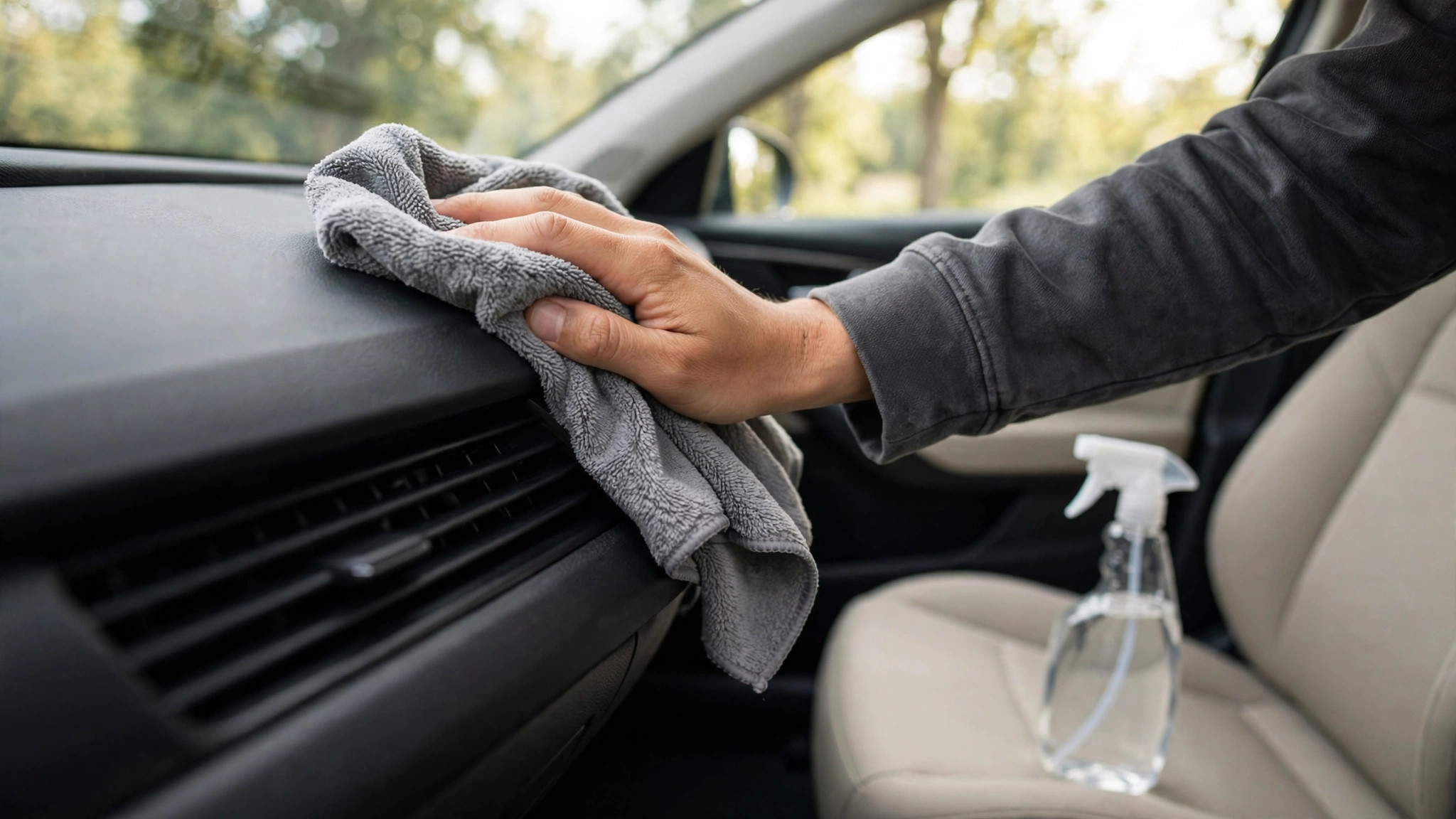
- Defrost fully: start the car, set the airflow to defrost on maximum heat, and wait until every window is clear — see our guide on how to defog your windshield quickly if you are short on time.
- Top up the washer fluid: use a winter-grade fluid rated for freezing temperatures, and make sure your wipers are not frozen to the glass before switching them on.
- Keep the fuel tank at least half full: if you get stuck or delayed, you will need the heat.
- Pack the basics: a phone charger, blanket, flashlight, ice scraper, and a small bag of sand or cat litter for traction — see our full emergency kit checklist.
For the full seasonal prep list, see our winter car care checklist for beginners.
Tip 1: Slow down — then slow down more
The single most important snow-driving rule is speed. Drive well below the posted limit — in steady snow, half the normal speed is a sensible starting point. Posted speed limits assume dry roads. Leave early so you never feel rushed into driving faster than conditions allow.
Tip 2: Leave 5–6 seconds of following distance
On dry roads, the usual advice is 3 seconds behind the car ahead. In snow, double it: AAA recommends around five or six seconds, because your stopping distance can be many times longer. Pick a fixed object — a sign or a lamppost — and count the seconds after the car ahead passes it. If you reach it in under five seconds, back off.
Tip 3: Brake gently and early
Start braking much earlier than usual and press the pedal smoothly, not suddenly — slamming the brakes locks the wheels and sends you sliding. If your car has ABS (anti-lock brakes — almost every car built in the last 20 years does), press the pedal firmly and steadily and let the system work. You may feel the pedal vibrate or pulse. That is normal. Do not pump the pedal or lift off in a panic.
Tip 4: Accelerate gently — no sudden throttle
Press the gas pedal slowly and steadily. A sharp push spins the wheels and can swing the car sideways. If your wheels spin when you pull away, ease off the gas completely, then try again very gently. If you are stuck in deep snow, a little sand or cat litter under the drive wheels can help you get moving.
Tip 5: Steer smoothly, with no sudden moves
Turn the wheel slowly and gradually. Jerky steering is what starts most beginner skids. Slow down before the turn (not during it), and keep a steady, gentle steering input through the corner. The same rule applies to lane changes: signal early, check your mirrors, and move over in one smooth motion.
Tip 6: Turn off cruise control
Never use cruise control on snowy or icy roads. The US National Weather Service advises against it: cruise control holds a steady speed, which is the opposite of what you want when grip is changing every few metres. If your wheels hit ice, it can keep accelerating and make a slide worse.
Tip 7: Watch for black ice
Black ice is a thin, transparent sheet of ice that looks like a wet patch of road. It forms most often on bridges and overpasses (which freeze first), in shaded areas, and in the early morning. If the road ahead looks wet but the temperature is near or below freezing, assume it could be ice: lift off the gas, do not brake suddenly, and keep the wheel straight until you are past it.
Tip 8: Use your headlights
Turn your headlights on in snow, even during the day. Falling snow cuts visibility for everyone, and your lights make your car visible to other drivers. Use low beams, not high beams — high beams reflect off the snowflakes and make it harder for you to see. Make sure your lights are clear of snow before you set off.
Tip 9: If you skid, do this
Sooner or later, most drivers feel the car slide. Staying calm and doing the right thing in those two seconds is a skill you can learn now:
- Take your foot off the gas — do not brake hard.
- Look where you want to go, not at the thing you are afraid of hitting. Your hands follow your eyes.
- Steer gently in the direction you want the front of the car to go. If the back end slides left, steer left. Small corrections only — never yank the wheel.
- Wait for the tires to grip again, then straighten the wheel slowly.
- If you have ABS and need to stop, press the brake pedal firmly and hold it — the pulsing you feel is the system working.
Do not overcorrect. The most common beginner mistake in a skid is steering too far, too fast, which starts a slide in the opposite direction.
Tip 10: Hills need a plan
Going uphill, keep a steady speed and do not stop halfway — starting again on a snowy slope is hard. If traffic is crawling up the hill, wait at the bottom until it clears. Going downhill, slow down before the slope, use a low gear (shift to L or 2 on an automatic) so the engine helps hold your speed, and brake gently.
Tip 11: Practice first in an empty parking lot
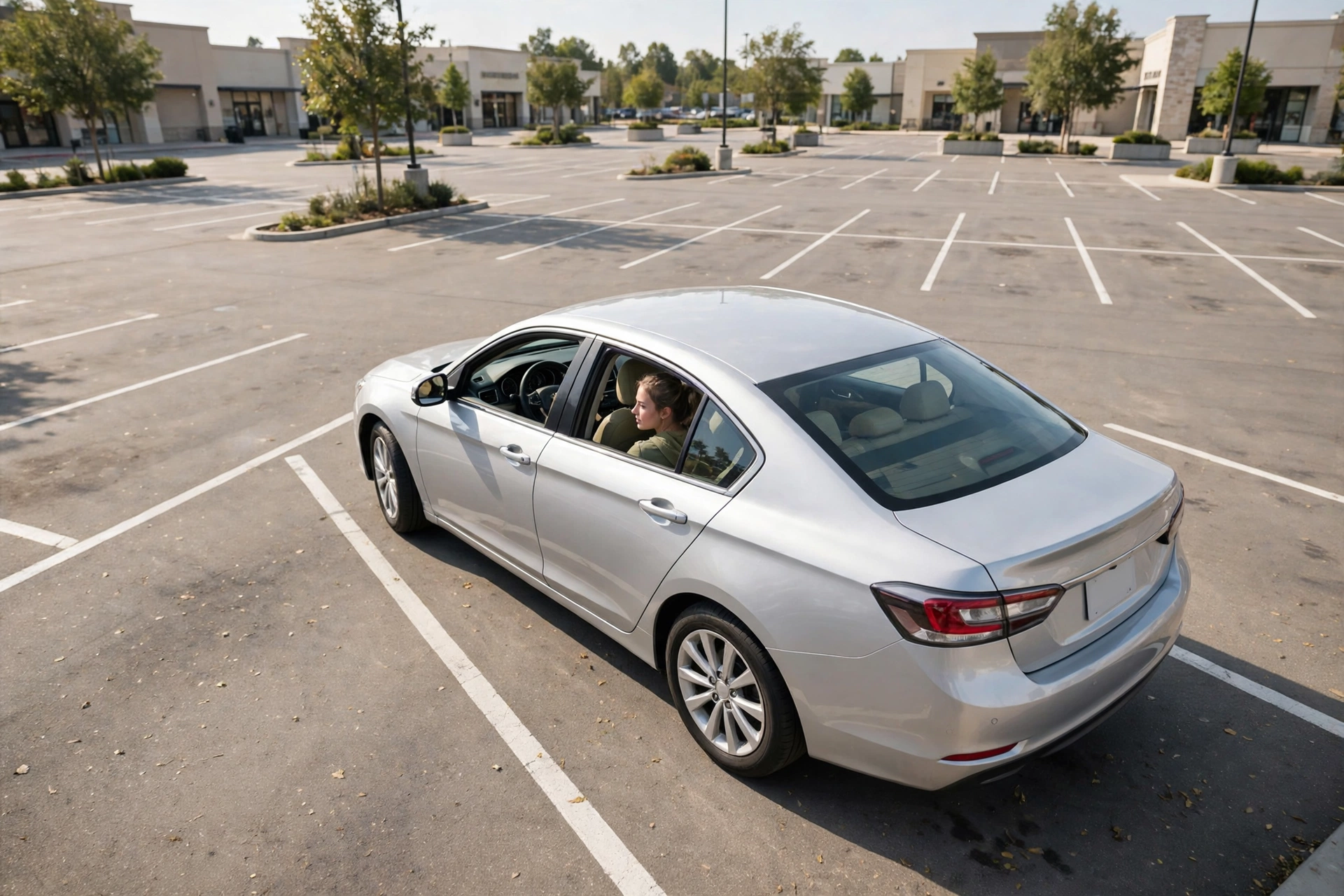
Before your first real snowy drive, spend 15 minutes in a large, empty, snow-covered parking lot with an experienced driver beside you. At very low speed, practice gentle braking to feel how long stopping takes, make a slow turn to feel the car slide, and practice recovering from a small skid. Learning what a slide feels like in a safe place means it will not panic you on a real road.
Tip 12: Know when NOT to drive
The bravest snow-driving decision is staying home. Do not drive as a beginner when freezing rain is falling, when a blizzard or whiteout is forecast, or when authorities have issued a travel warning. Freezing rain is far more dangerous than snow — it coats everything in ice. If the trip is not essential, wait it out. No appointment is worth a crash.
What to do if you get stuck
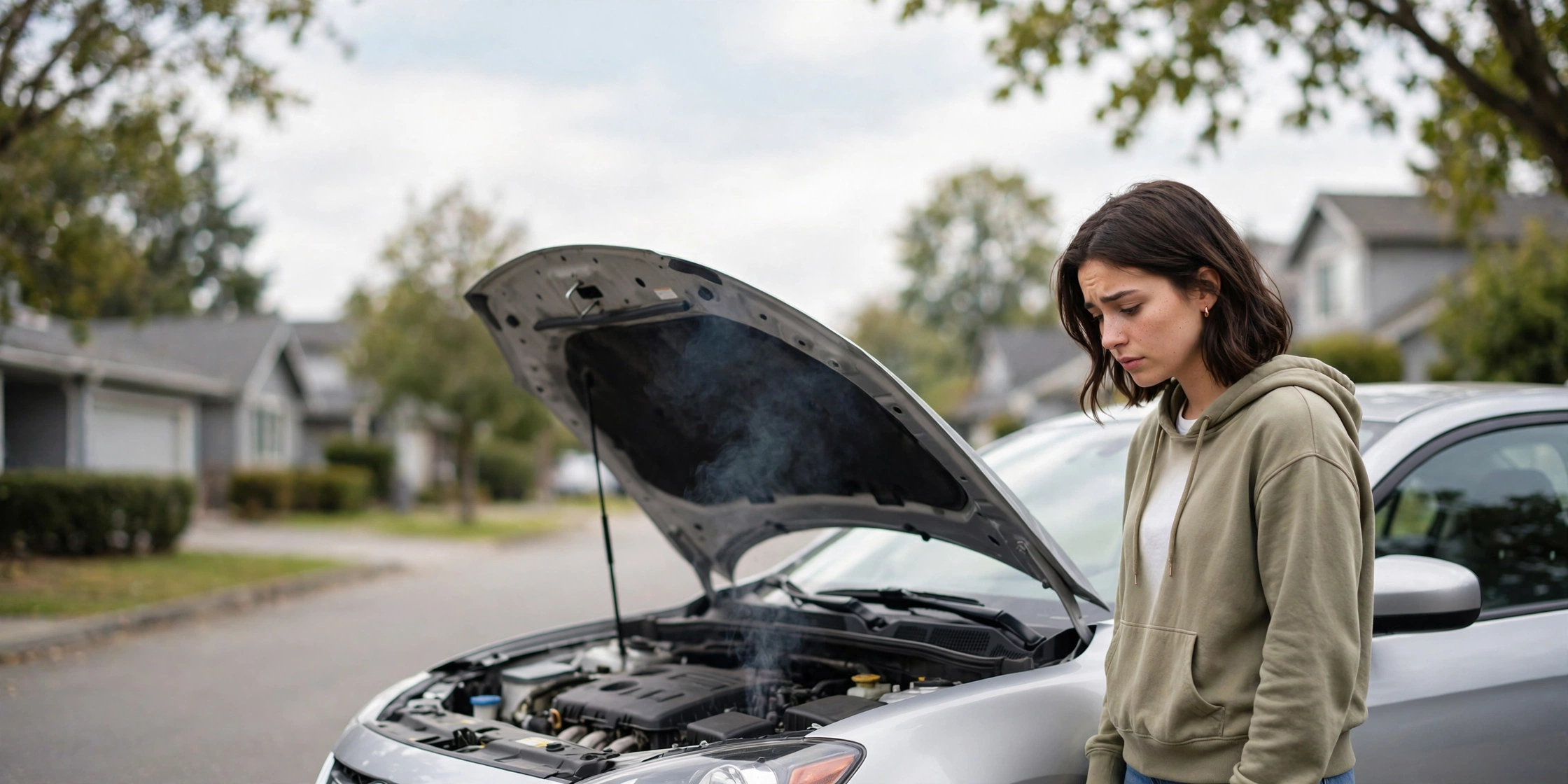
If your car gets stuck, stay calm and stay with the car. Turn on your hazard lights, clear the exhaust pipe of snow (a blocked exhaust can push carbon monoxide into the cabin), and call for help. Try rocking gently between drive and reverse with light throttle, or put sand or cat litter under the drive wheels. Never spin the wheels at high speed — it digs the car deeper.
Frequently asked questions
Is it safe for a beginner to drive in snow?
Yes, in light snow on treated main roads, if you slow down, leave plenty of space, and avoid sudden moves. Your first snowy drive should be a short, familiar route in daylight — not a long highway trip in a storm.
How much slower should I drive in snow?
As a starting point, drive at about half your normal speed in steady snow, and slower still on untreated roads or ice. The right speed is the one at which you feel in control and can stop in the distance you can see ahead.
Do I need winter tires to drive in snow?
Winter tires help a lot below about 7°C (45°F), but you can drive in light snow on all-season tires with good tread if you slow down and drive carefully. If your tires are worn, do not drive in snow until they are replaced.
What should I do if my car starts sliding?
Take your foot off the gas, do not brake hard, look where you want to go, and steer gently in that direction. Wait for the tires to grip again, then straighten the wheel. Small, calm corrections beat big, panicked ones every time.
Is it okay to use cruise control in light snow?
No. Cruise control should always be off on snowy or icy roads, even in light snow. It can keep accelerating when your wheels lose grip and make a slide worse.
Conclusion
Driving in snow for the first time is mostly about unlearning dry-road habits: everything happens slower, gentler, and with more space. Slow down, double your following distance, brake and steer smoothly, keep the cruise control off, and practice in an empty parking lot. And remember tip 12 — knowing when to stay home is part of being a good driver. Make your first snowy drive a short, calm one. For official guidance, see the NHTSA's winter driving tips.
If you found this guide useful, read our winter car care checklist to get your car ready for the season, and our guide to driving safely in heavy rain for the other half of bad-weather driving.